Thermal Imaging for Roof Leaks in Ipswich: Detection Costs
11 November 2026 · 11 min read
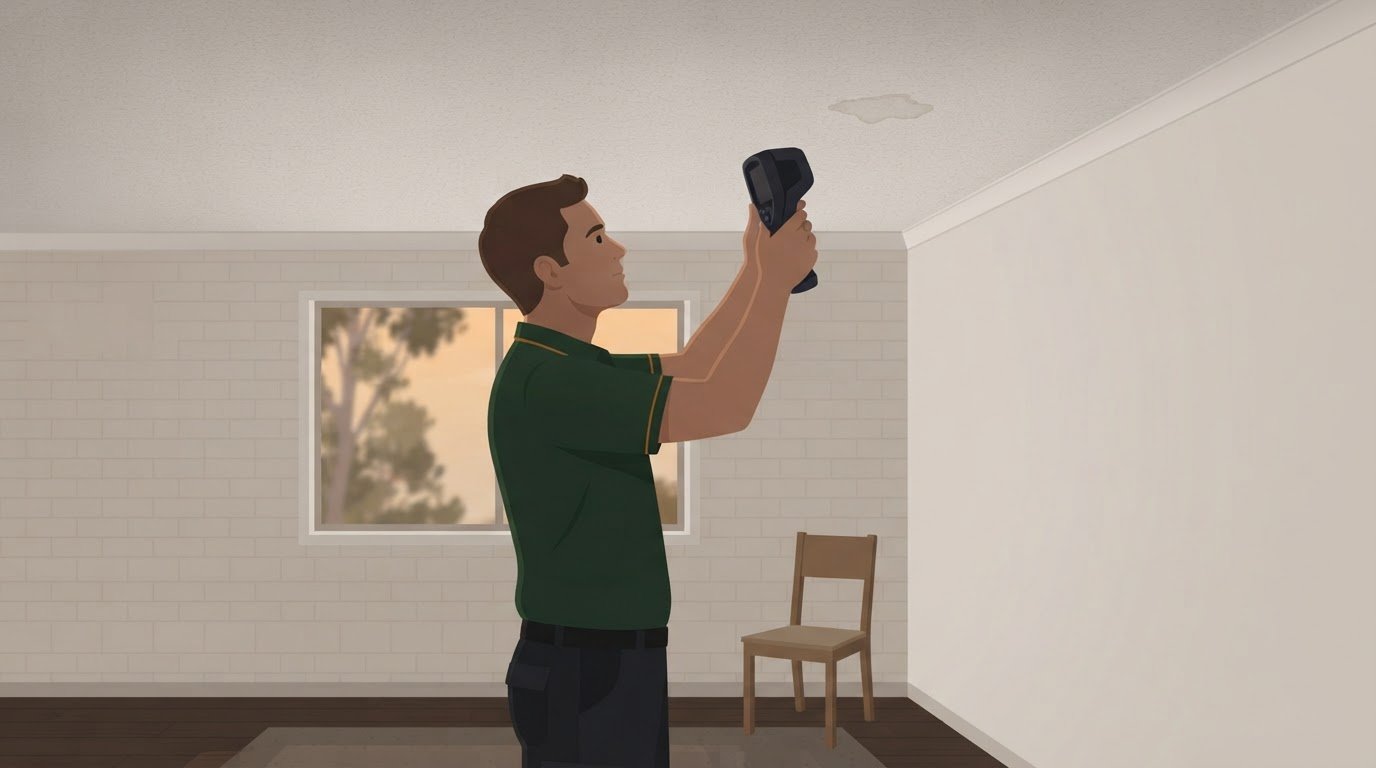
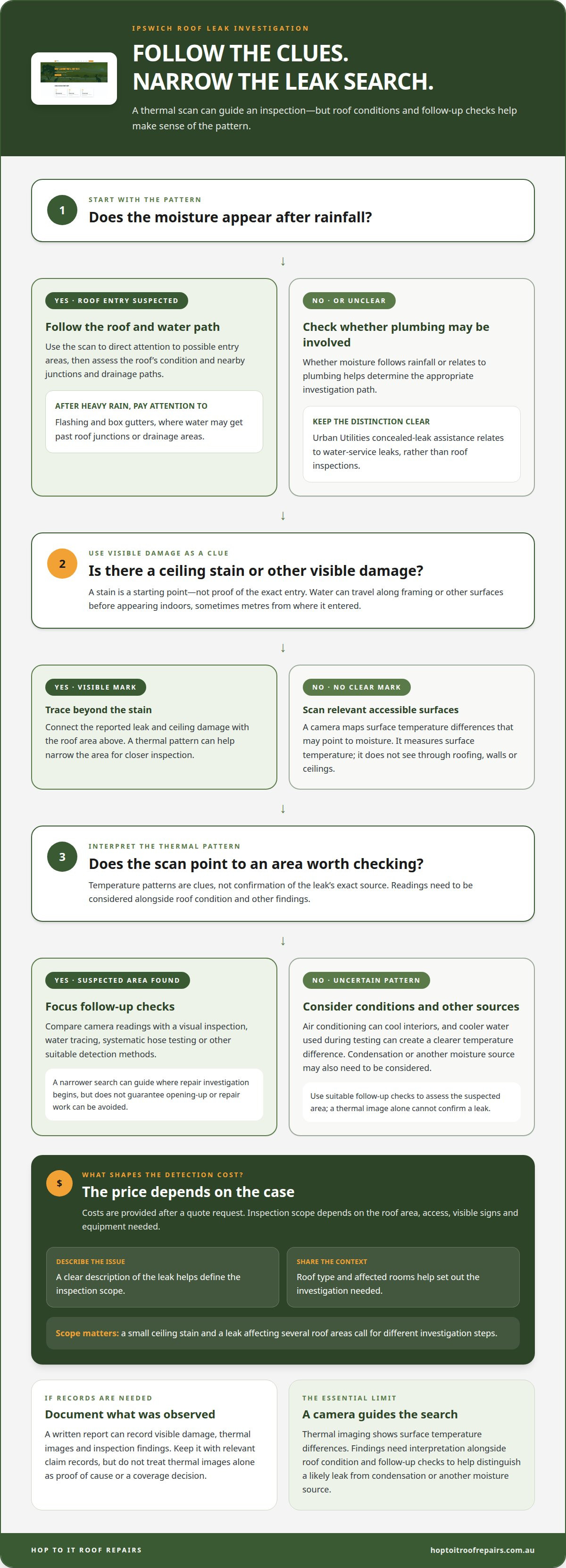
A roof leak can appear well away from the flashing or box gutter where rain enters. Thermal imaging for roof leaks in Ipswich can help trace moisture by showing temperature differences across roof and ceiling surfaces, without opening them during the initial inspection.
It’s understandable to want a clear answer and cost before deciding what to do. Thermal imaging is a detection aid, not a camera that sees through a roof or wall, so findings need to be interpreted alongside the roof’s condition and the path water may be taking. Detection costs depend on the case and are given after a quote request.
This guide explains how thermal cameras help locate leaks, what affects detection costs, and why flashing and box gutters can let water in after heavy rain. You’ll also learn what the images can and can’t show, so you can understand the next step with less guesswork.
Key Takeaways
- Thermal imaging can help locate moisture without opening up the roof, but the image needs to be interpreted alongside the roof’s condition.
- Water stains may appear far from the entry point, so tracing the leak path matters as much as finding the visible damage.
- After heavy rain, pay particular attention to flashing and box gutters, where water can get past roof junctions or drainage areas.
- Clear detection findings can guide the next step, whether that involves roof leak detection, roof repairs or work on gutters and downpipes.
How much does leak detection cost in Ipswich?
Leak detection costs in Ipswich depend on the roof area, access, visible signs and equipment needed. The price depends on the case and is given after a quote request. A clear description of the leak, roof type and affected rooms helps define the inspection scope before work begins. A small ceiling stain and a leak affecting several roof areas call for different investigation steps.
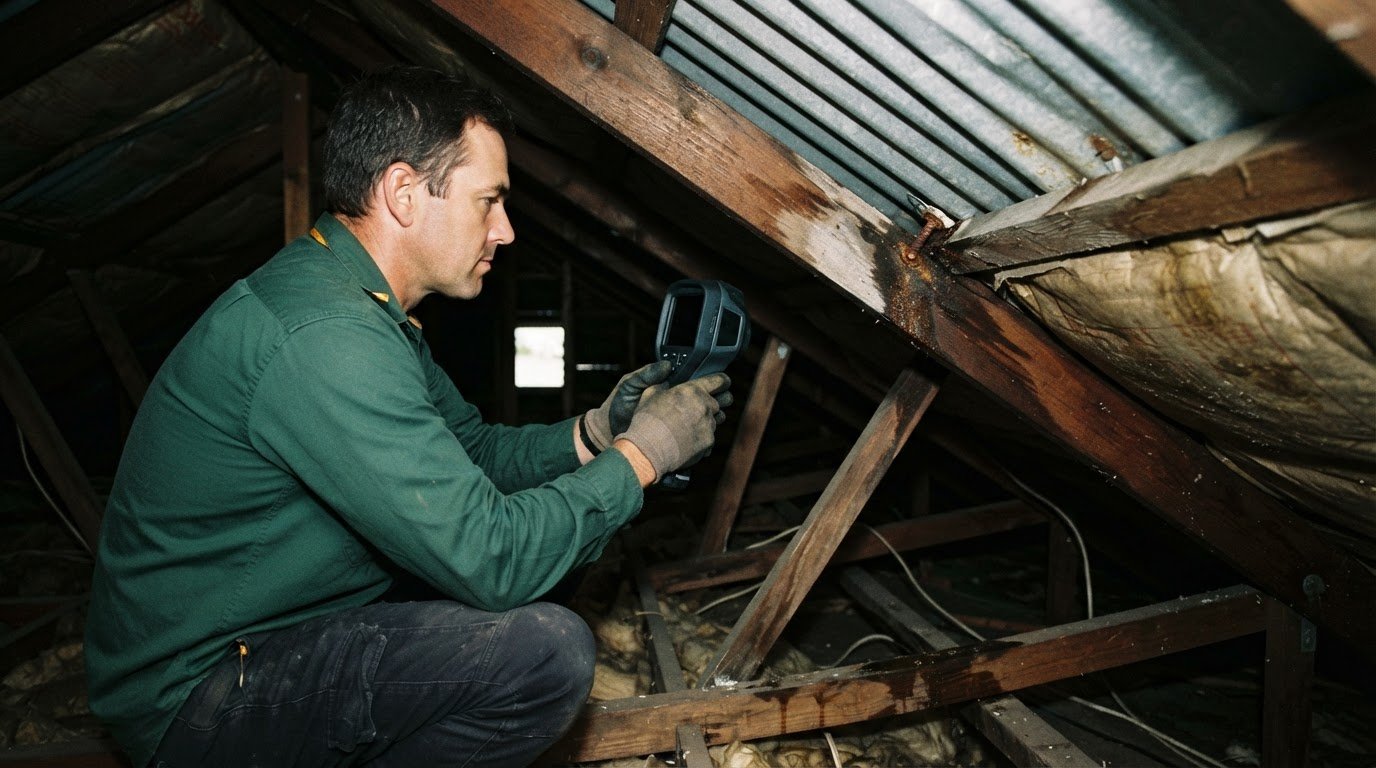
Thermal imaging is a non-destructive detection method. A camera scans surfaces without cutting into ceilings or removing roof materials during the initial inspection. It identifies temperature differences that may point to moisture in ceilings, flat roofs or behind walls. The camera measures surface temperature; it doesn’t see through walls or confirm the leak source on its own.
That distinction matters when a damp patch appears below a wall cavity or roof space. The camera may show a cooler or warmer surface pattern consistent with moisture, which a roof plumber can compare with visible damage and the building layout. Follow-up checks can then focus on the suspected area instead of opening up a broad section without direction.
Thermal imaging works best as part of a considered investigation. Checks may combine camera readings with a visual inspection, water tracing, systematic hose testing or other suitable detection methods. For example, a ceiling pattern can guide checks above the stain, while a roof inspection assesses nearby junctions and drainage paths. Each method adds evidence to help distinguish a likely leak from condensation or another source of moisture.
That evidence may help limit unnecessary exploratory damage. If a scan narrows the likely area, follow-up work can focus on a smaller section instead of removing materials across a wider surface. It can also indicate where the repair investigation should begin. Better-targeted work is useful, but thermal imaging does not guarantee that opening-up or repair work can be avoided.
How Do Thermal Imaging Cameras Work?
Thermal cameras map surface temperature differences, helping trace moisture patterns rather than viewing a leak directly. Thermal imaging for roof leaks in Ipswich can guide an inspection, but readings need to be assessed alongside roof conditions and other findings.
Finding leak sources beyond visible damage
A ceiling stain can appear metres from where water enters because it may travel along framing or other surfaces before showing indoors. The visible mark is a starting point, not proof of the exact source. A thermal scan can help trace temperature patterns away from the stain, narrowing the area for closer inspection and repair planning.
Infrared detection has no single accuracy percentage for every Ipswich roof. It identifies surface temperature differences, so results depend on conditions and interpretation. Follow-up checks help establish whether a suspected area is linked to a leak.
Thermal imaging for roof leak searches
During a roof search, a camera can help inspect hard-to-reach areas from a distance. It measures infrared energy emitted from surfaces and displays temperature variations as an image. Thermal imaging can help direct attention to a suspected roof area, but thermal patterns are clues rather than confirmation of the leak’s exact entry point.
Roof plumbers and specialist leak-detection businesses are relevant providers for thermal-assisted roof inspections in Ipswich. Urban Utilities concealed-leak assistance relates to water-service leaks, rather than roof inspections. Identifying whether moisture follows rainfall or relates to plumbing helps determine the appropriate investigation path.
For an insurance claim, a clear written report can record visible damage, thermal images and inspection findings. These details can help document what was observed and where follow-up checks focused. Keep the report with relevant claim records, but don’t treat thermal images alone as proof of the cause or a coverage decision.
Where roof entry is suspected, a roof leak inspection can connect thermal clues with roof-condition findings.
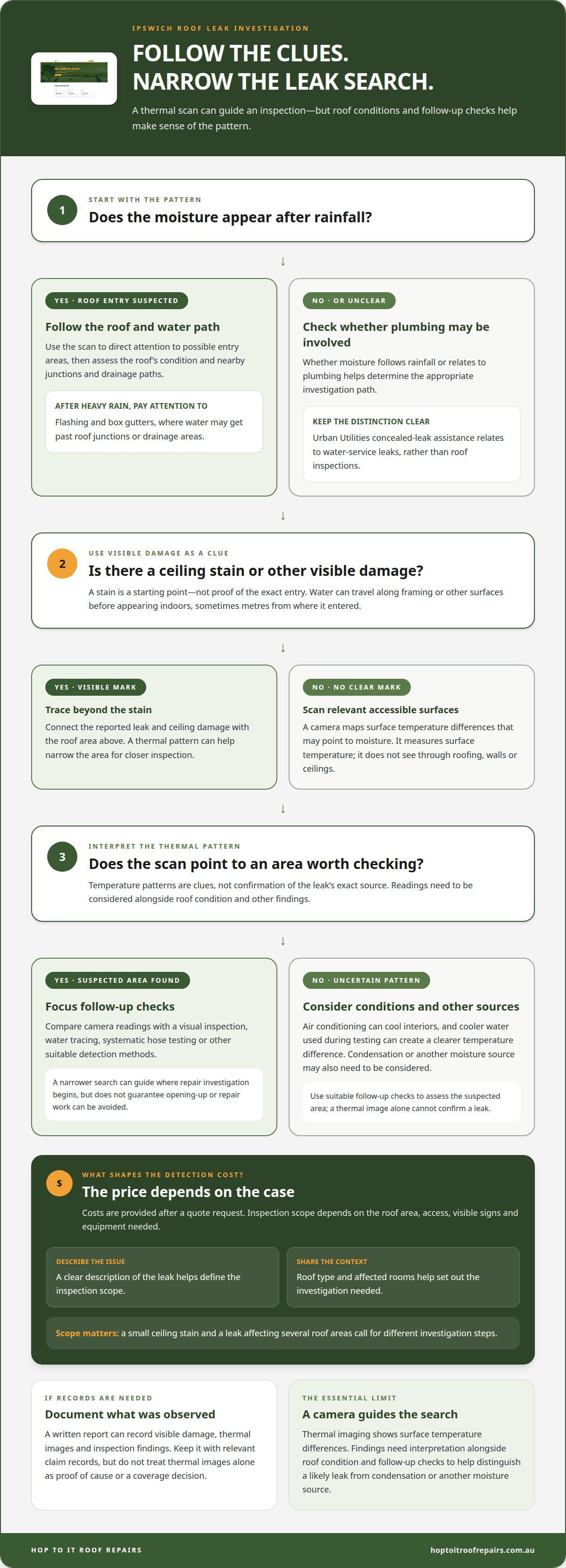
Using thermal imaging to locate roof leaks
A thermal roof inspection scans relevant surfaces, maps temperature patterns and directs follow-up checks to suspected areas. It can help narrow a leak search, but it cannot see through roofing or confirm water entry from an image alone.
Thermal roof inspection steps
The inspection begins by connecting the reported leak and visible ceiling damage with the roof area above. The camera scans accessible surfaces for temperature patterns that may indicate moisture. In South East Queensland, air conditioning can cool interiors, while cooler water used during testing can create a clearer temperature difference. Findings guide closer roof checks or further testing.
For roof leaks, the camera helps focus attention on possible entry points and the route water may follow. A suspected area still needs to be assessed alongside the roof’s condition, including nearby junctions and drainage paths. Water can travel before appearing indoors, and the thermal pattern may point away from the actual opening.
Inspection limitations and risks
Thermal imaging provides a view of surface temperature patterns, so its findings should be considered alongside other inspection checks. A temperature pattern can suggest where to investigate, but it does not prove that a roof is leaking. Surface conditions, including air conditioning, can affect temperature contrast. Treat the image as one inspection clue, then use suitable follow-up checks to assess the suspected area.
Thermal cameras can also help locate hot-water pipes concealed in walls, supporting targeted checks with less wall damage. In one bathroom investigation, a pressure test identified leaking hot-water pipework, while thermal imaging indicated the leak beside the shower alcove. This example shows how a separate test and camera scan can work together to guide an investigation.
The same temperature mapping can reveal floor-heating wires beneath bathroom surfaces and help assess water temperature. For a suspected roof leak, those plumbing uses are separate from roof inspection. Keep the investigation focused on the moisture source: roof entry, concealed pipework or another temperature pattern. That distinction helps direct the next check without treating every thermal anomaly as a leak.
Roof flashing and box gutter leaks after heavy rain
Thermal cameras can operate in varied weather, including freezing conditions, and aren’t affected by weather alone. A useful inspection still depends on reading surface temperature patterns in context, including the roof materials and recent rain.
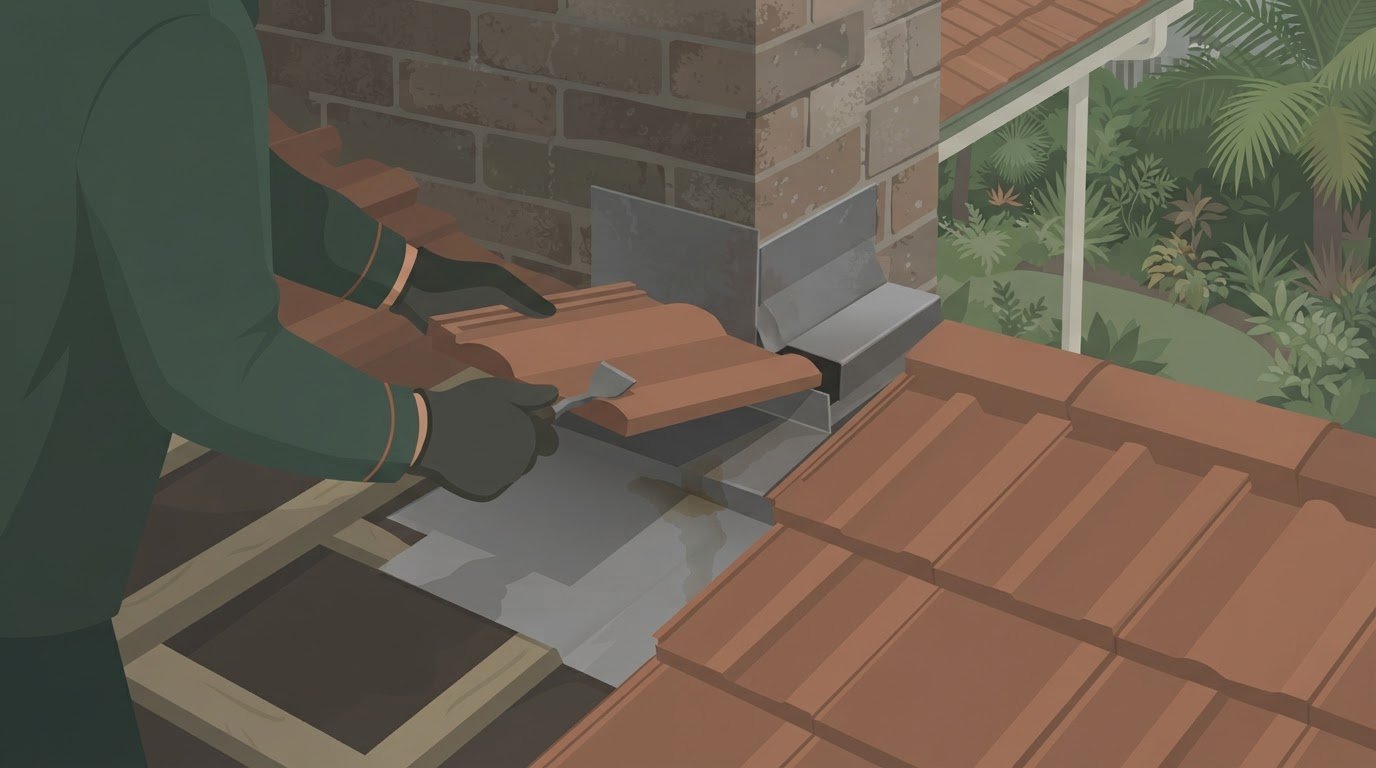
Heavy rain can expose weaknesses at flashing, where roof edges, valleys or penetrations meet. Water may pass a lifted edge or worn junction, then travel along framing before appearing as a ceiling stain elsewhere. The entry point can therefore be away from the visible damage. An inspection should consider both the stain’s position and the roof junctions above it.
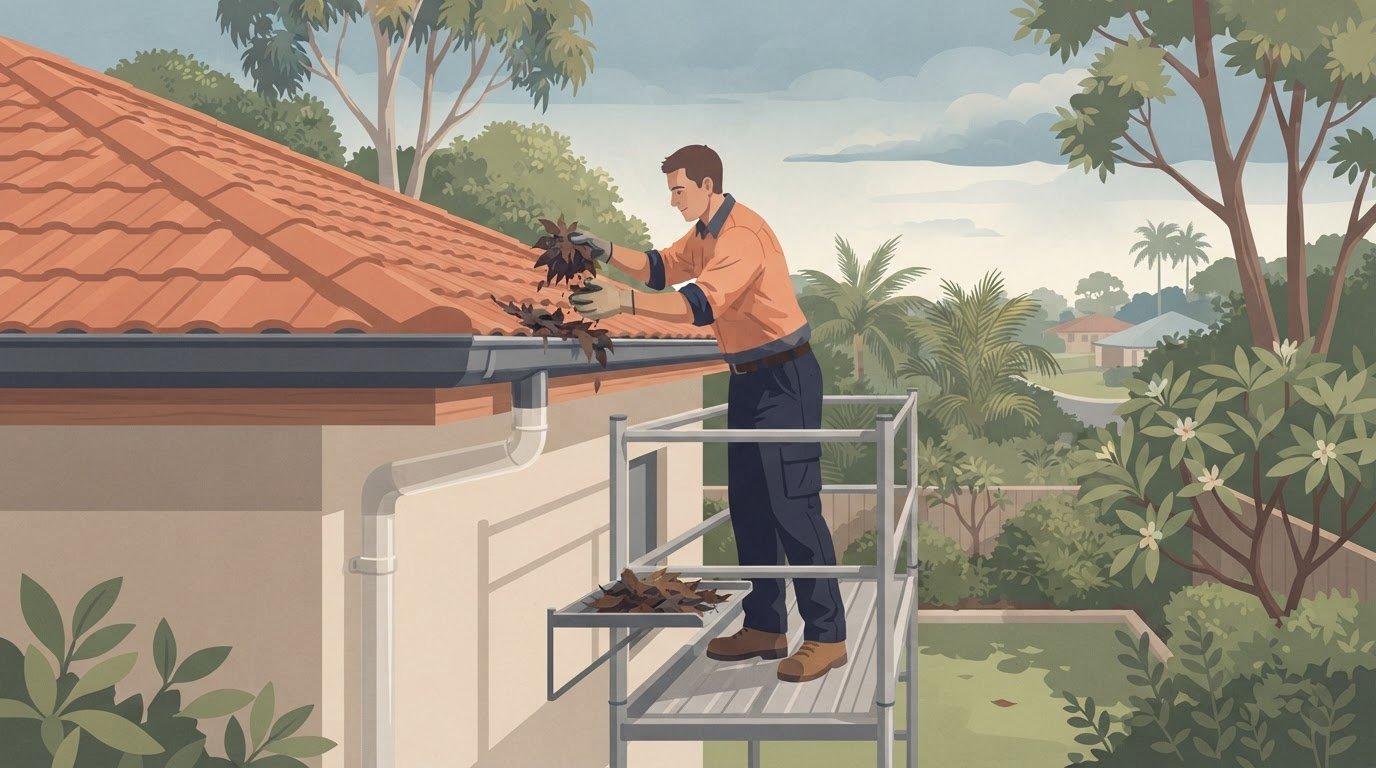
Box gutters need close attention after intense rainfall. They collect water between roof sections, so restricted drainage or a faulty joint can allow water to escape into the building. A thermal scan can help identify a moisture pattern below the gutter, while a roof inspection checks the gutter’s condition and nearby outlets. Neither image alone proves the precise entry point.
Ipswich’s building stock adds context to the investigation. The city has more than 6,000 heritage-listed places, and roof layouts and materials vary across properties. A thermal reading on one roof surface may differ from another, so the pattern must be interpreted against the material and construction. The key is to connect the indoor moisture with plausible roof pathways, not assume every cool patch indicates a leak.
After rain, note where water appears and whether it returns near a ceiling edge, wall or roof junction. That observation helps focus an inspection on likely routes, including flashing and box gutters. Thermal imaging can help narrow the search, while physical roof checks assess the suspected detail and drainage path.
If heavy rain has exposed a suspected flashing or box gutter leak, arrange a roof leak inspection to investigate the entry point and affected roof area.
Hop To It Roof Repairs
Hop To It Roof Repairs can connect thermal inspection findings with the roof’s condition and the next practical step. If rain has left a ceiling stain, or flashing and a box gutter appear to be letting water through, a focused assessment can identify where further investigation is needed.
Its roof leak detection work covers leak investigations, while metal roof repairs, tile roof repairs, and gutters and downpipes address common roof and drainage issues. Detailed written reports document findings, and fixed-price quotes clarify the proposed work before it begins. This gives you a clear basis for deciding how to proceed, without treating a thermal image alone as proof of the leak source.
If you’re dealing with a suspected roof leak in Ipswich, contact Hop To It Roof Repairs to discuss the issue.
Make the next step a clear one
Once you suspect a leak, focus on turning inspection findings into a practical decision. A thermal imaging assessment for roof leaks in Ipswich should help clarify which roof area needs attention and whether repair work is the next step. Keep the goal simple: resolve the source, not just the visible sign of water.
Useful details include where the moisture appeared, whether it followed heavy rain, and whether it has returned. These observations help connect indoor symptoms with the roof’s condition. From there, the right response may involve further roof leak detection or repairs suited to a metal or tile roof.
Hop To It Roof Repairs handles roof leak detection, metal roof repairs and tile roof repairs. If you’re ready to discuss the issue and decide on a practical next step, contact Hop To It Roof Repairs. A clear path forward starts with a conversation.
Frequently Asked Questions
How does thermal imaging detect roof leaks?
A thermal camera detects differences in surface temperature that can help indicate moisture around a roof or ceiling. For example, a cooler patch beside an otherwise consistent ceiling may guide further inspection. The camera records surface patterns, not water moving behind materials. A roof specialist interprets the image alongside visible conditions and other checks before deciding where to investigate further.
How much does thermal imaging roof leak detection cost in Ipswich?
There isn’t one cost for every Ipswich property. The price depends on the case and is given after a quote request. Factors include roof access, the area being investigated and whether additional checks are needed. A straightforward inspection may require a different scope from a complex leak affecting several roof sections. A clear description of the symptoms helps establish what the investigation needs to cover.
What alternatives to thermal imaging can locate a roof leak?
A visual roof inspection can identify issues such as displaced tiles, damaged flashing or debris affecting drainage. Systematic hose testing can help trace water entry by wetting a specific area, while water tracing can help follow its path. These methods complement one another: an inspection may identify a suspect junction, then targeted testing can assess whether water enters there.
Can thermal imaging identify the source of a leak or only damp areas?
Thermal imaging can highlight temperature patterns that suggest damp areas and help narrow the search, but it can’t prove the exact entry point by itself. Water may travel from a roof opening before appearing on a ceiling. In Ipswich, combining the thermal pattern with the roof’s condition, water pathways and follow-up testing helps distinguish a likely source from where moisture becomes visible.