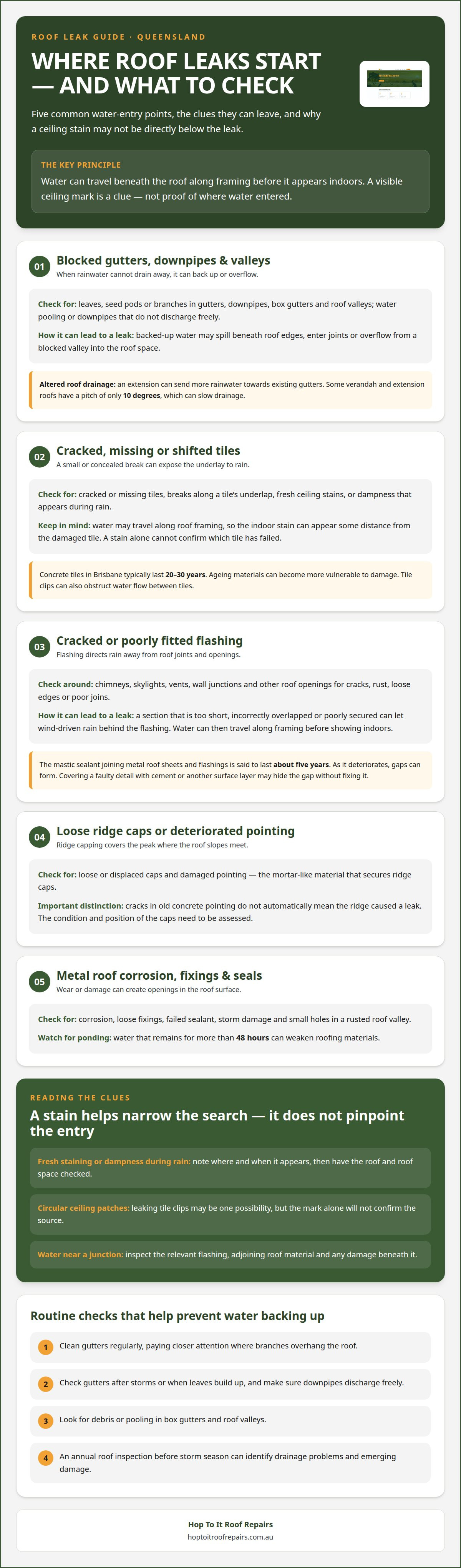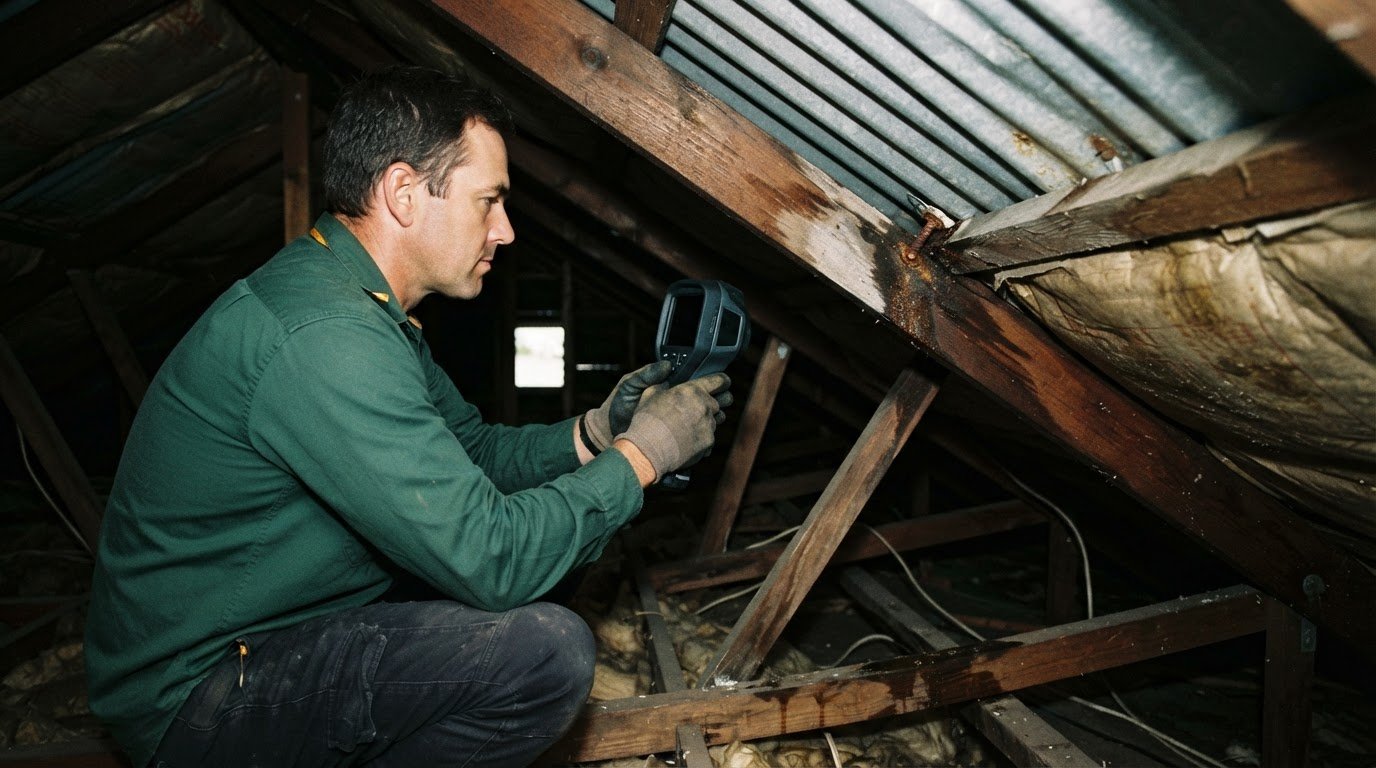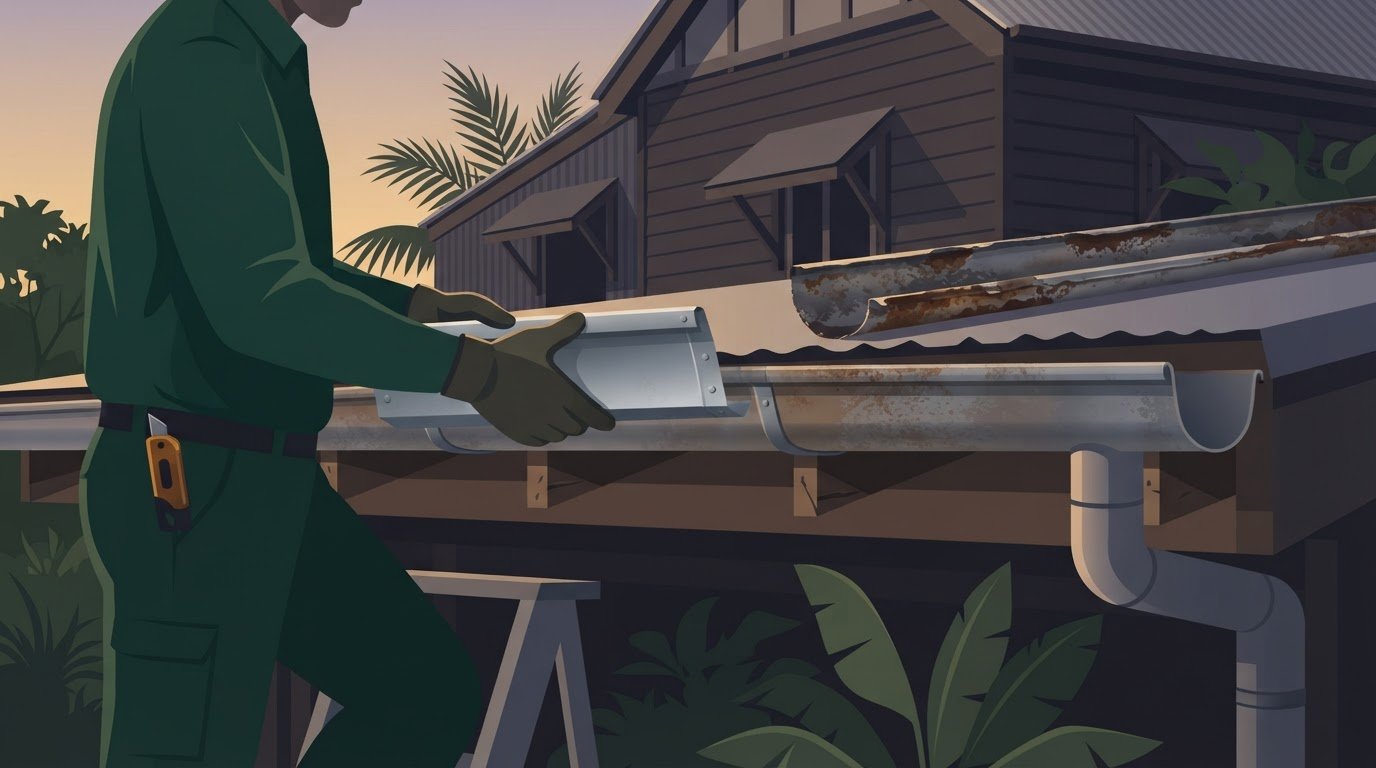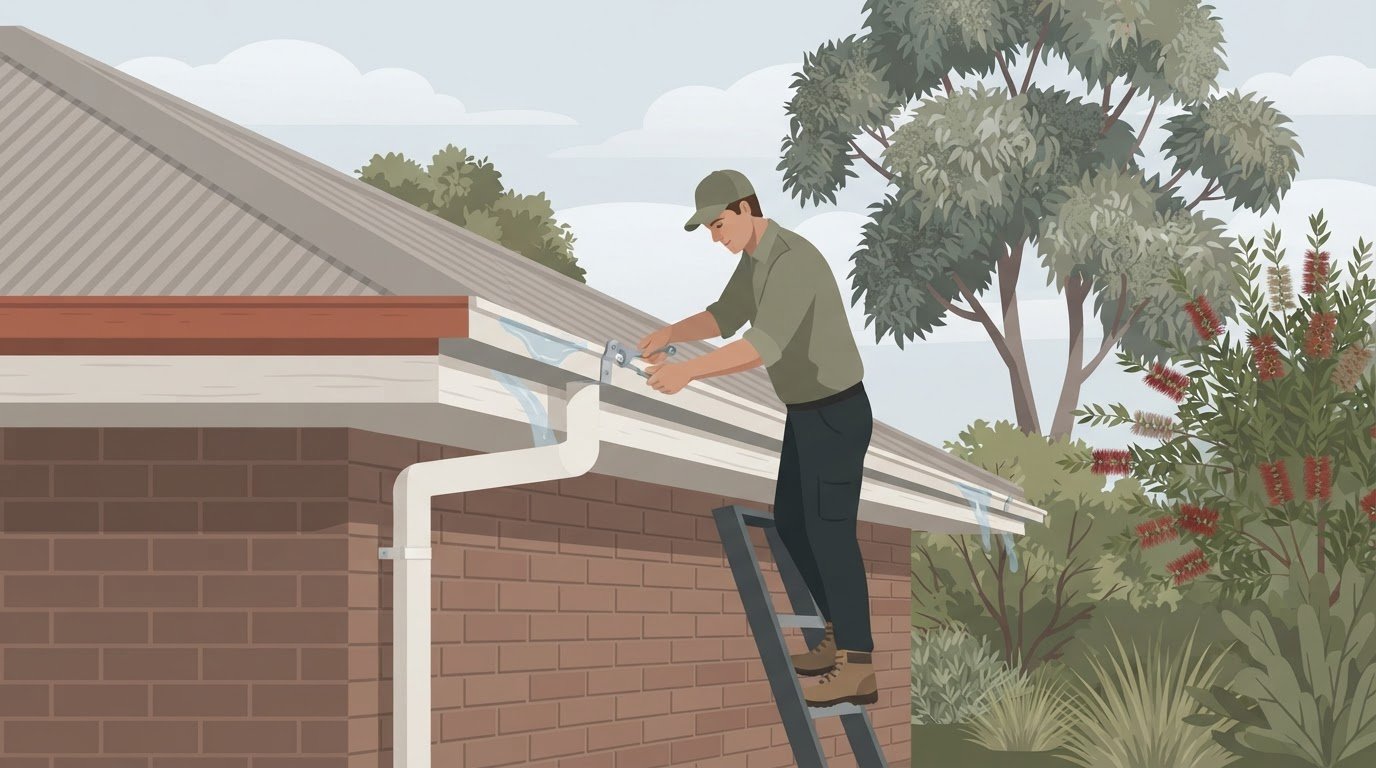
A recurring roof leak usually means the water entry point hasn’t been properly fixed. Common causes of roof leaks in Queensland include blocked gutters and downpipes, faulty flashing, broken tiles and worn ridge capping. Water can travel beneath the roof before appearing as a ceiling stain, so the visible damage may not show where the leak starts.
A leak that returns after rain is frustrating, especially when its source isn’t obvious. The right repair starts with finding how water is getting in, not just covering the mark it leaves behind.
This article explains how common roof problems let water into a home and what signs to look for. You’ll also learn why roof valleys, loose ridge caps and deteriorated seals need attention, and how a professional inspection can help trace the cause.
Key Takeaways
- Clear gutters and downpipes help rainwater drain away instead of backing up beneath the roof.
- Leaks can start in roof valleys or around damaged tiles, even when the ceiling stain appears elsewhere.
- Flashing protects roof joints and openings, so cracks or poor installation can leave vulnerable points for water entry.
- Loose ridge caps and damaged tiles need the right repair, not a quick seal that may hide the underlying problem.
1. Blocked gutters and downpipes
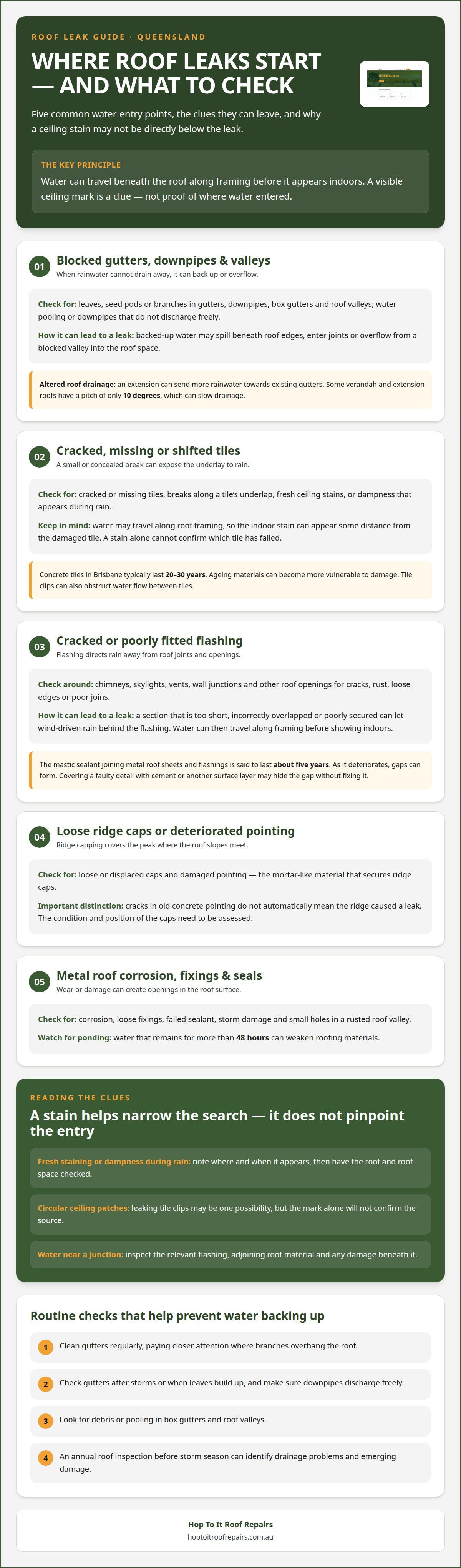
Leaves, seed pods and branches can block gutters, downpipes and box gutters. In heavy rain, water may back up instead of draining away, spilling beneath roof edges, entering joints or collecting around roof valleys. Valleys are channels where roof slopes meet and direct rainwater towards gutters. If debris blocks a valley, water can overflow into the roof space and damage ceilings.
Extensions can change how much rainwater a roof sends towards existing gutters. A new roof area may overload the old drainage system, particularly if its downpipes cannot carry the added flow. Some verandahs and extensions have a roof pitch of only 10 degrees, which can slow drainage. A professional inspection can assess whether the gutter capacity, downpipe positions and roof junctions suit the altered layout.
Make gutter cleaning part of routine property maintenance. Clean gutters regularly, paying closer attention where branches overhang the roof. Check them after storms or when leaves build up, and make sure downpipes discharge freely. Look for debris or pooling in box gutters. An annual roof inspection before storm season can identify drainage problems and emerging damage before heavy rain tests the system.
In Queensland, roof plumbing work on sheet metal, flashings and gutters requires the appropriate licence. Tiled roofing is a separate licensing class, so the required licence depends on the repair. Tenants should report leaks promptly to the property manager. The landlord generally arranges roof repairs, though responsibility may differ if a tenant’s actions caused the damage. Blocked gutters, valleys and downpipes slow or stop drainage, allowing rainwater to back up, overflow or enter vulnerable roof joints.
2. What causes a leaky roof?
Common causes of roof leaks in Queensland homes include broken tiles, failed seals, rusted metal and storm damage. Water may enter through a roof opening, travel along rafters and appear as a ceiling stain elsewhere. Blocked or damaged gutters and downpipes can also overflow, while tree branches may scrape roofing or drop debris onto it.
On tiled roofs, cracked or missing tiles expose the underlay to rain. Concrete tiles in Brisbane typically last 20-30 years, and ageing materials can become more vulnerable to damage. Tile clips can also obstruct water flow between tiles. Circular ceiling patches may point to leaking clips, but the visible mark alone won’t confirm the source.
On metal roofs, corrosion, loose fixings and failed sealant can open paths for water. A small hole in a rusted roof valley may leak during extended heavy rain. Ponding water that remains for more than 48 hours can weaken roofing materials. Flashing around skylights and other openings is another potential entry point.
Insurance cover depends on the policy and the cause of damage. ASIC has reported a hailstorm claim where roof damage was denied because it was excluded due to maintenance issues. That example doesn’t determine how another claim will be assessed. Document storm damage and review your policy wording.
To reduce further water damage, move belongings away from drips and place a container beneath active leaks. Don’t climb onto a wet roof or work in severe weather. Trim overhanging branches to reduce the risk of impacts and leaves collecting on the roof. For urgent damage, a temporary roof make-safe can help limit exposure until permanent repairs are completed.
3. Cracked or improperly installed flashing
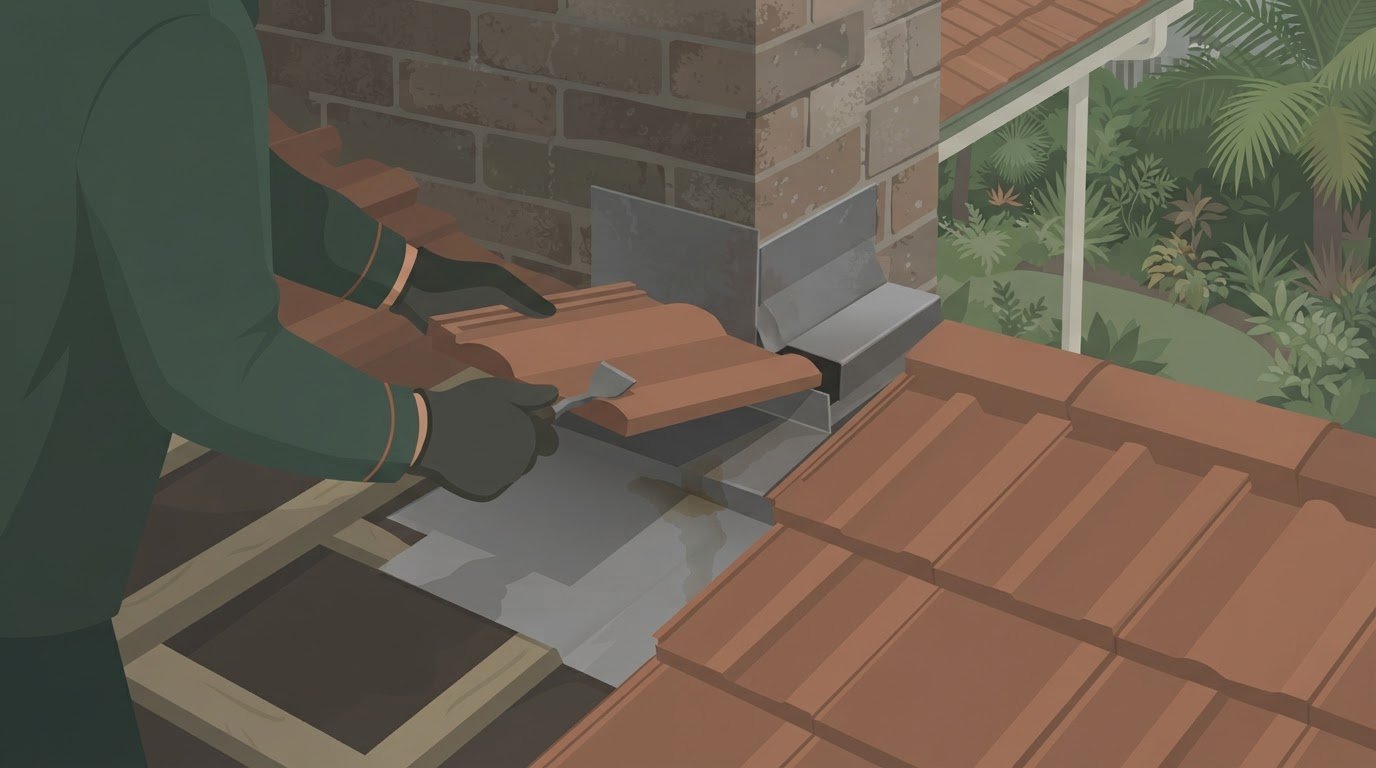
Flashing is thin metal fitted around roof joints, chimneys, skylights and vents. It directs rainwater away from gaps where surfaces meet. A poorly formed edge or loose join can leave a path beneath the roofing. Water may then travel along framing before appearing as a ceiling stain, well away from the faulty flashing.
Wall and chimney flashings need to suit both the roof material and the adjoining surface. If a section is too short, overlapped incorrectly or poorly secured, wind-driven rain can get behind it. Flashing around roof openings, such as vents, also needs a close fit. Smearing cement over a joint may hide a gap, but it won’t correct an incorrectly installed metal flashing detail.
Cracks, rust and loose edges can develop as flashings age and face ongoing weather exposure. The mastic sealant joining metal roof sheets and flashings is said to last about five years. As it deteriorates, gaps can form at joins and let water beneath the surface. Queensland’s heat, rain and storms expose roof components to changing conditions, so an old seal shouldn’t be treated as a permanent repair.
An effective repair starts by locating the entry point and assessing the flashing, adjoining roof material and any damage beneath it. The affected metal may need to be refitted or replaced rather than covered with another surface layer. The right method depends on the junction: chimneys, wall abutments and roof openings each need suitable flashing. Check for indoor staining, but don’t assume the mark is directly below the defect. If water has reached structural timber or insulation, those areas also need assessment. The repair should address the water path and properly integrate the surrounding roof junction.
4. Broken tiles and deteriorated ridge capping
A cracked or shifted roof tile can leave an opening for rain. Some breaks split a tile down the middle, while damage along its underlap may be hard to see. The roof surface can look intact even when water passes through a concealed break in heavy rain. Water can also travel along roof framing, so the ceiling stain may appear some distance from the damaged tile.
Look for indoor signs such as fresh ceiling stains or dampness that appears during rain. These clues can help narrow down the affected roof area, but they don’t show which tile has failed. A proper inspection checks the tile’s position, surrounding tiles and roof space. Don’t walk on tiles to investigate. Their condition and the support beneath them affect how safely they can be inspected.
Ridge capping covers the roof’s peak, where the slopes meet. Loose caps can let water in and need attention. Cracks in old concrete pointing, the mortar-like material that secures ridge caps, don’t automatically mean the ridge caused a leak. Look for loose caps, displaced pointing and water marks beneath the ridge. Filling cracks with silicone isn’t a sound fix because it can mask the issue without securing the ridge.
Repairs should match the fault. A broken tile may need replacement, while shifted tiles or loose ridge caps need to be repositioned and secured with suitable bedding or pointing. The repairer should also inspect adjoining tiles, as movement or damage may extend beyond the obvious break. Fixing the source helps limit further water damage when rain is on the way.
If a tile or ridge fault keeps leaking, arrange a tile roof inspection and repair to identify the cause and determine the appropriate fix.
Hop To It Roof Repairs
Hop To It Roof Repairs can help when a leak’s source is unclear or an earlier repair hasn’t stopped it. Roof Leak Detection traces where water is entering, while Metal Roof Repairs and Tile Roof Repairs address damage to the relevant roof material. Gutters & Downpipes can also be repaired when drainage contributes to the problem. Hop To It serves Brisbane, the Gold Coast, Redland Bay, Moreton Bay and Ipswich.
For each job, you receive a fixed-price quote and a detailed written report, so the findings and proposed work are clear. This can help you understand the issue before repairs proceed, whether the cause is a damaged tile, failed roof junction or blocked drainage.
If you’re dealing with a roof leak, contact Hop To It Roof Repairs to discuss the problem and next steps.
Take the next step towards a dry, secure roof
Understanding common causes of roof leaks in Queensland gives you a useful starting point. Next, note when water appears, which rooms are affected and whether the signs change after rain. These details can help clarify the problem, but don’t climb onto the roof or attempt repairs in unsafe conditions.
A recurring leak or unexplained ceiling stain needs attention before more water enters the home. Having the source assessed can help you make an informed decision about the required work, rather than relying on a surface fix that may miss the entry point.
For clear guidance on what to do next, contact Hop To It Roof Repairs to discuss your roof leak. A practical next step can make the problem easier to manage and help you move forward with confidence.
Frequently Asked Questions
Why Does My Roof Keep Leaking?
A roof that keeps leaking may have an unresolved entry point, or water may be getting in somewhere different from where the damage appears. A patch might stop one path while leaving another open, especially around intersecting roof sections. Note whether the leak occurs in particular wind or rain conditions and whether the affected area changes. This information can help narrow down what needs investigation.
Is It a Leak or Is It Condensation?
Condensation is more likely when moisture appears across a cool surface without a clear link to rain. A roof leak often worsens during or after wet weather. Kitchens, bathrooms and poorly ventilated roof spaces can develop condensation. Look for a localised stain, damp insulation or water marks that change after rainfall. If the signs are unclear, a roof inspection can help distinguish moisture build-up from water entering through the roof.
What causes a leaky roof?
Common causes of roof leaks in Queensland include failures in roof coverings, drainage and junctions. The timing of the leak can offer extra clues: water appearing only during wind-driven rain may point to an exposed roof edge or joint, while a leak after prolonged rain may involve drainage or an area becoming saturated. The entry point still needs to be traced before repairs can address the cause.
How do Queensland’s heavy rain, storms and cyclones contribute to roof leaks?
Heavy rain can expose weaknesses that go unnoticed in dry weather, while strong winds may lift roofing edges or drive rain beneath joints. Storm debris can crack tiles or damage metal sheets. After severe weather, check ceilings and accessible roof spaces for new damp patches, but stay off the roof. If water is entering, move belongings clear and arrange an assessment when conditions are safe.
Can damaged roof flashing, ridge caps or roof penetrations cause leaks?
Yes. Damage or gaps around roof junctions can let rain in, particularly when the weather pushes water against them. Roof openings include vents and other fittings. A leak near a chimney, skylight or ridge doesn’t always begin directly above the indoor mark, so tracing the water path matters. Avoid sealing visible cracks as a quick fix, since a surface cover may leave the underlying junction unresolved.
What are the signs of a roof leak and how can homeowners trace its source?
Watch for fresh ceiling stains, peeling paint, damp insulation, mould or a musty smell in the roof space. Note when each sign appears and photograph any changes after rainfall. Water can travel along framing, so an indoor mark may not line up with the roof defect. Homeowners in Brisbane, the Gold Coast, Redland Bay, Moreton Bay and Ipswich can arrange professional leak detection when the source remains unclear.