Roof Leak Detection in Moreton Bay: Costs and Hidden Leaks
9 November 2026 · 12 min read
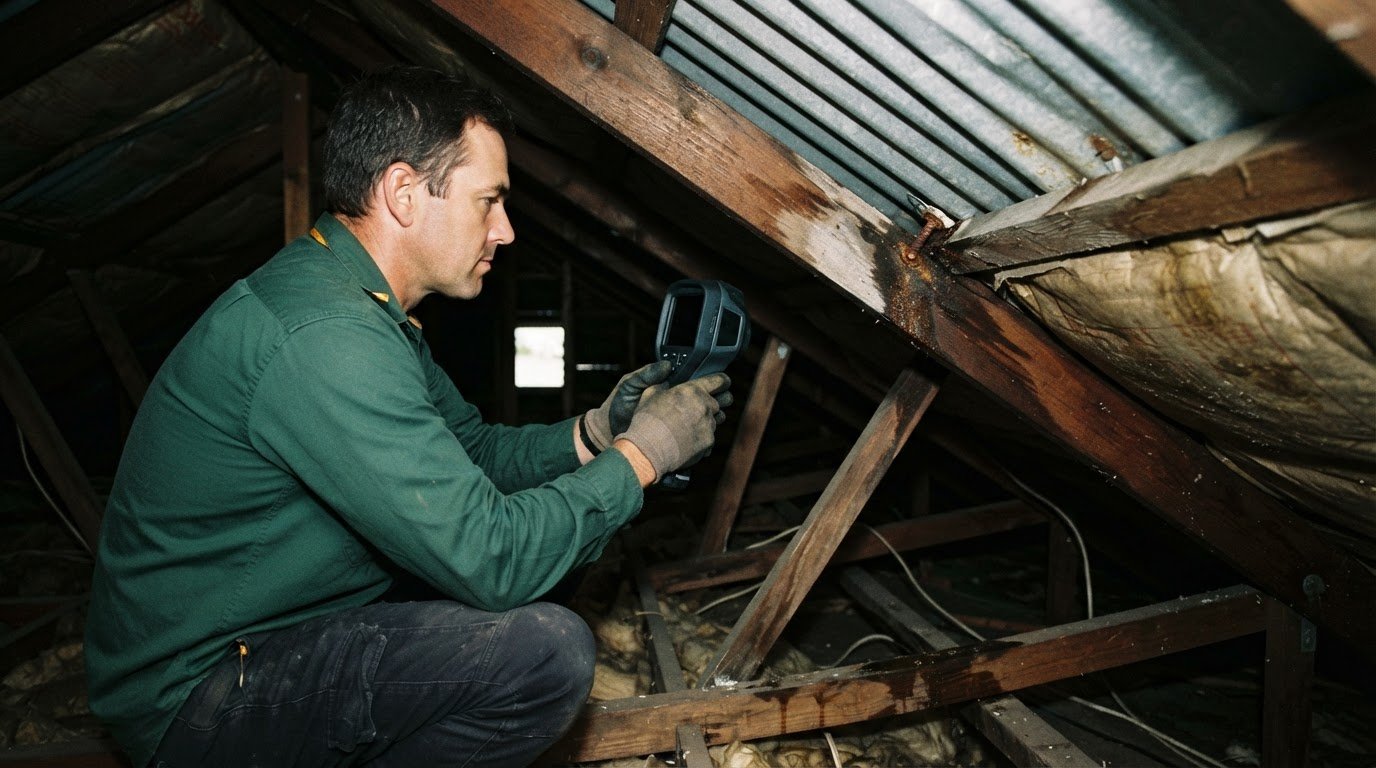
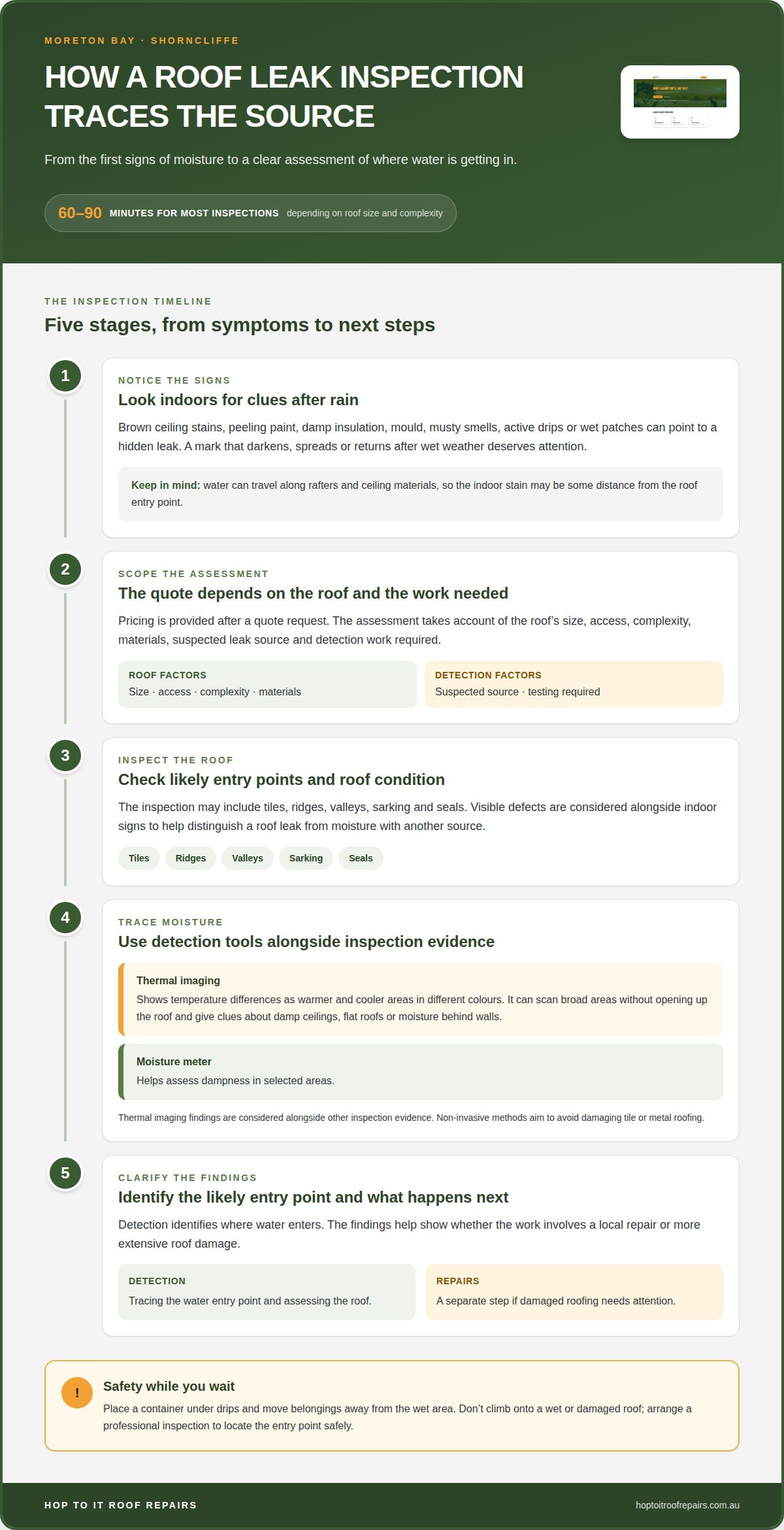
A roof leak can cause damage well beyond the spot where water appears. Roof leak detection in Moreton Bay helps trace water to its entry point early, before ongoing moisture contributes to timber rot, mould or damaged ceilings. Water can travel along roof framing, so an indoor stain doesn’t always show where the leak began.
It’s understandable to want a clear answer on both the cause and the likely cost, especially when a leak only shows up after heavy rain. In Shorncliffe, the cost depends on factors such as roof size, complexity, access and the testing needed, with pricing provided after a quote request. This guide explains the signs of hidden leaks, how thermal imaging and moisture meters can help locate moisture, and how an inspection can reduce the risk of further water damage. You’ll also learn what to expect from the detection process and what can affect the cost.
Key Takeaways
- Thermal imaging can help locate moisture by showing temperature differences across surfaces, with minimal disruption during an inspection.
- Ceiling stains, peeling paint, mould and musty smells can point to a hidden leak, even when the water entered elsewhere on the roof.
- Tracing a leak early can help limit ongoing moisture damage to ceilings, roof framing and other parts of the home.
- Inspection costs depend on the roof’s size, complexity, access and detection requirements; the article explains what affects a quote in Shorncliffe.
How much does roof leak detection in Shorncliffe usually cost?
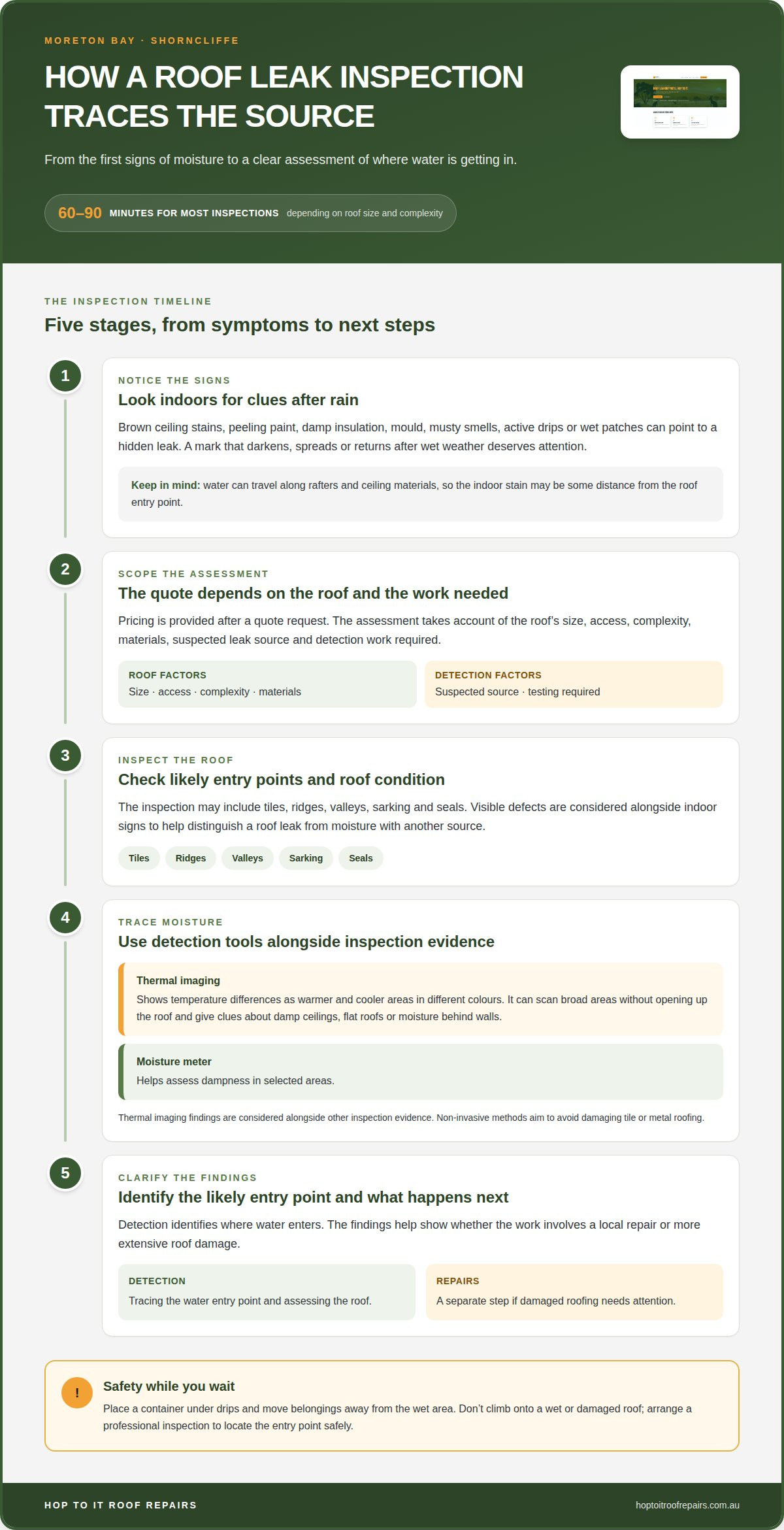
Across the Moreton Bay region, including local suburbs, the cost of roof leak detection depends on roof size, access, complexity and the detection work required. Pricing is provided after a quote request, with the roof’s materials and suspected leak source shaping the assessment. A detection inspection identifies where water enters; repairs are a separate step if damaged roofing needs attention.
Thermal imaging helps locate moisture by showing temperature differences across surfaces. The camera displays warmer and cooler areas in different colours, giving the inspector clues about damp ceilings, flat roofs or moisture behind walls. It can scan broad areas without opening up the roof, but its findings need to be considered alongside other inspection evidence. Moisture meters can help assess dampness in selected areas.
Most roof leak inspections take 60-90 minutes, depending on roof size and complexity. Inspection may include checking tiles, ridges, valleys, sarking and seals, then tracing moisture towards its entry point. Non-invasive methods aim to avoid damaging tile or metal roofing. The inspection can also help distinguish a roof leak from moisture with another source.
When arranging roof leak detection in Moreton Bay, look for a clear explanation of the inspection process, findings and recommended next steps. Ask for a written report and a fixed-price quote that explains what detection covers and whether repairs are included. Arrange an inspection when a leak appears or storm damage is suspected. Inspection timing depends on the roof’s condition and any signs of damage.
Does home insurance cover detection and repairs in Queensland? It depends on your policy, the cause of the damage and the cover terms. Check whether your policy treats the inspection and resulting repairs differently, and keep records of the damage and assessment.
Are roofers in Queensland required to be licensed for roof leak repairs? Requirements depend on the work involved. Hop To It Roof Repairs is a QBCC licensed roof plumbing company.
To temporarily limit a leak, place a container under drips and move belongings away from the wet area. Don’t climb onto a wet roof. Arrange a professional inspection to locate the entry point safely.
Signs of hidden water leaks
A roof leak may stay out of sight until moisture reaches an indoor surface. In Queensland, signs can become clearer during or after heavy rain.
Hidden Roof Leak Indicators
Look for brown ceiling stains, peeling paint, damp insulation, mould growth or a musty smell. These signs can point to moisture building up above a ceiling or behind a wall, even without a visible drip. A stain may appear some distance from the roof entry point because water can travel along rafters and ceiling materials.
Compare the affected area after rain with how it looked before. A mark that darkens, spreads or returns after wet weather deserves prompt attention. Mould or a persistent musty smell can also indicate ongoing dampness, rather than a single splash or spill.
Other Roof Leak Signs
Check for active dripping, wet patches on ceilings and water marks around ceiling edges. A leak may appear only during or after heavy rain, so note when symptoms show. A dry ceiling between storms doesn’t rule out a roof leak if stains return with the next downpour.
Roof deterioration can offer clues from the ground. Cracked or missing tiles, rusted flashing, degraded sarking and blocked valleys can allow water to enter or collect. Don’t climb onto the roof to inspect them, especially in wet weather.
Sun exposure and seasonal storms can wear roofing over time. A damaged tile or flashing may let in water during heavy rain, while a blocked valley can interfere with drainage. Together with indoor signs, these visible changes help identify areas that need professional assessment. Record where stains appear and whether they change after rain. If symptoms persist, arrange a roof leak inspection promptly to trace the source.
Can leak detection prevent major water damage?
Early detection can help limit water damage by locating where water enters before moisture spreads. An inspection can also identify roof damage that needs attention.
Water Damage, Mould and Structural Risks
Water can travel along rafters and ceilings, so an indoor stain may be some distance from the roof entry point. If moisture continues, timber can rot, mould can grow and ceiling materials can weaken or collapse. Water near electrical fittings can also create a hazard. Tracing the source helps focus repairs on the damaged area, rather than treating only the visible mark.
Assessing Damage Before Quoting
A roof needs an inspection before repair work can be properly scoped. The assessment can check tiles, ridges, valleys, sarking and seals, then connect visible defects with signs of water entry. For example, a ceiling stain below a valley doesn’t necessarily identify the exact leak point. The findings help determine whether the work involves a local repair or more extensive roof damage.
After a storm, have damaged roofing assessed promptly. Missing or cracked tiles, rusted flashing and blocked valleys can all let water in or disrupt drainage. Repairs have followed ex-tropical cyclones with gusts of 150 km/h, making a post-storm check important when roof damage is suspected. Don’t climb onto a wet or damaged roof to inspect it yourself.
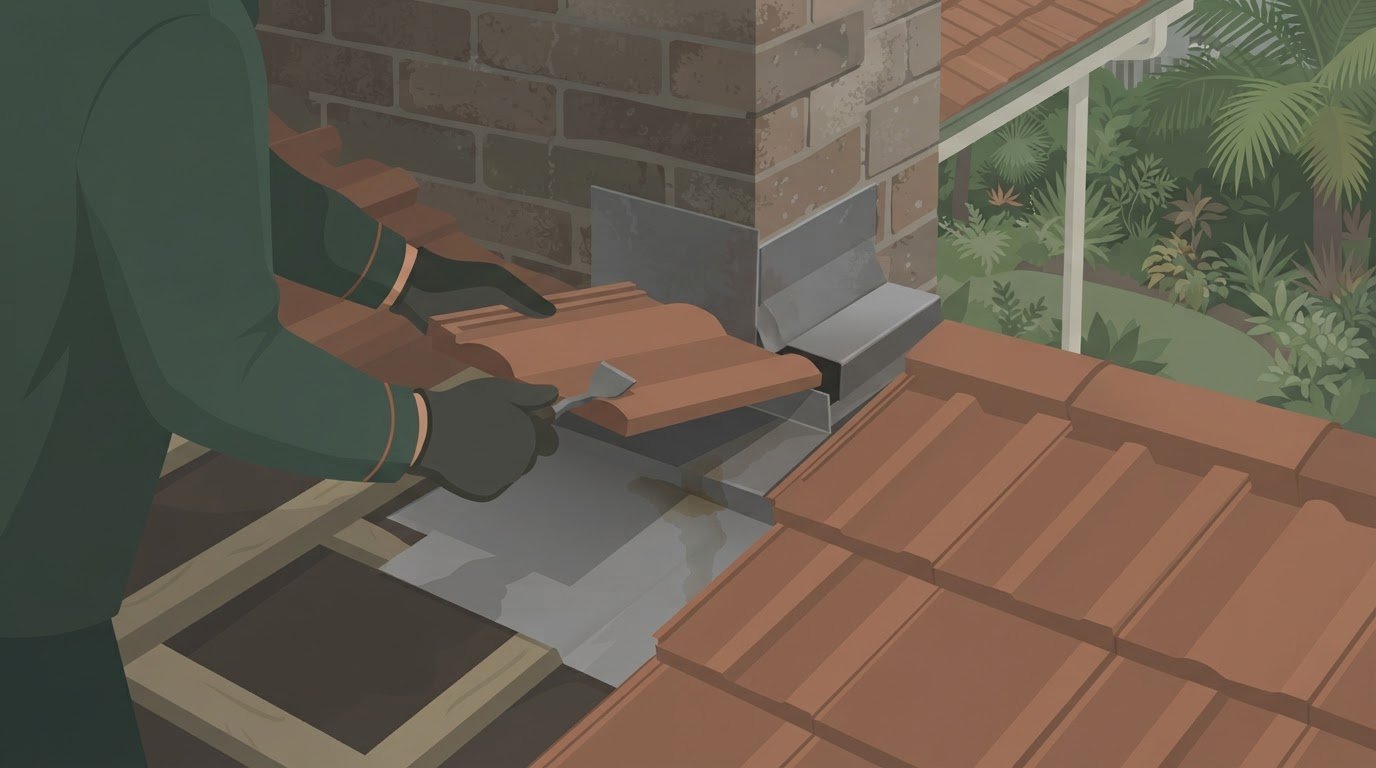
To reduce leak risks in Moreton Bay’s coastal and storm-prone conditions, arrange an inspection when you notice deterioration or after severe weather. Keep valleys and drainage paths clear, and address damaged tiles or flashing before the next downpour. Replacing a cracked or missing tile can close an entry point, but the surrounding roof should also be assessed for related damage.
Prompt detection can’t prevent every storm-related leak, but it can reveal damage before ongoing moisture creates further problems. A clear assessment identifies the likely source, affected roof components and repairs needed to address the issue.
Water leak detection in Redcliffe, Moreton Bay and North Brisbane
Roof leak detection in Moreton Bay starts by connecting indoor signs with roof details that could explain water entry. In Redcliffe, a bedroom ceiling stain may sit beneath a different part of the roof from the damaged tile or flashing. Treat the mark as a clue, not a map. The likely entry point needs to be traced against the roof’s layout and condition.
Homes across Moreton Bay and North Brisbane have different roof shapes, materials and drainage paths. A useful inspection considers those differences rather than relying on one method alone. Thermal checks can help identify temperature patterns, while moisture readings and a visual assessment provide additional evidence. For example, a damp patch near a wall may point towards a roof junction or valley, not just the nearest ceiling edge.
Give the inspector practical details: which room is affected, whether the mark changes after rain, and whether water appears near a fitting or wall. These observations help focus the assessment. In Brisbane, a recurring leak after wet weather can point towards a specific roof section, drainage path or flashing detail. A roof leak detection assessment in Moreton Bay can compare those clues with the roof’s materials and visible condition.
A useful report explains the suspected source, the evidence behind the finding and the next steps. Clear documentation helps you understand what needs attention before deciding on repairs. If water entry is recurring in Redcliffe or nearby, book a roof leak inspection to investigate the cause and assess the affected roof area.
Hop To It Roof Repairs
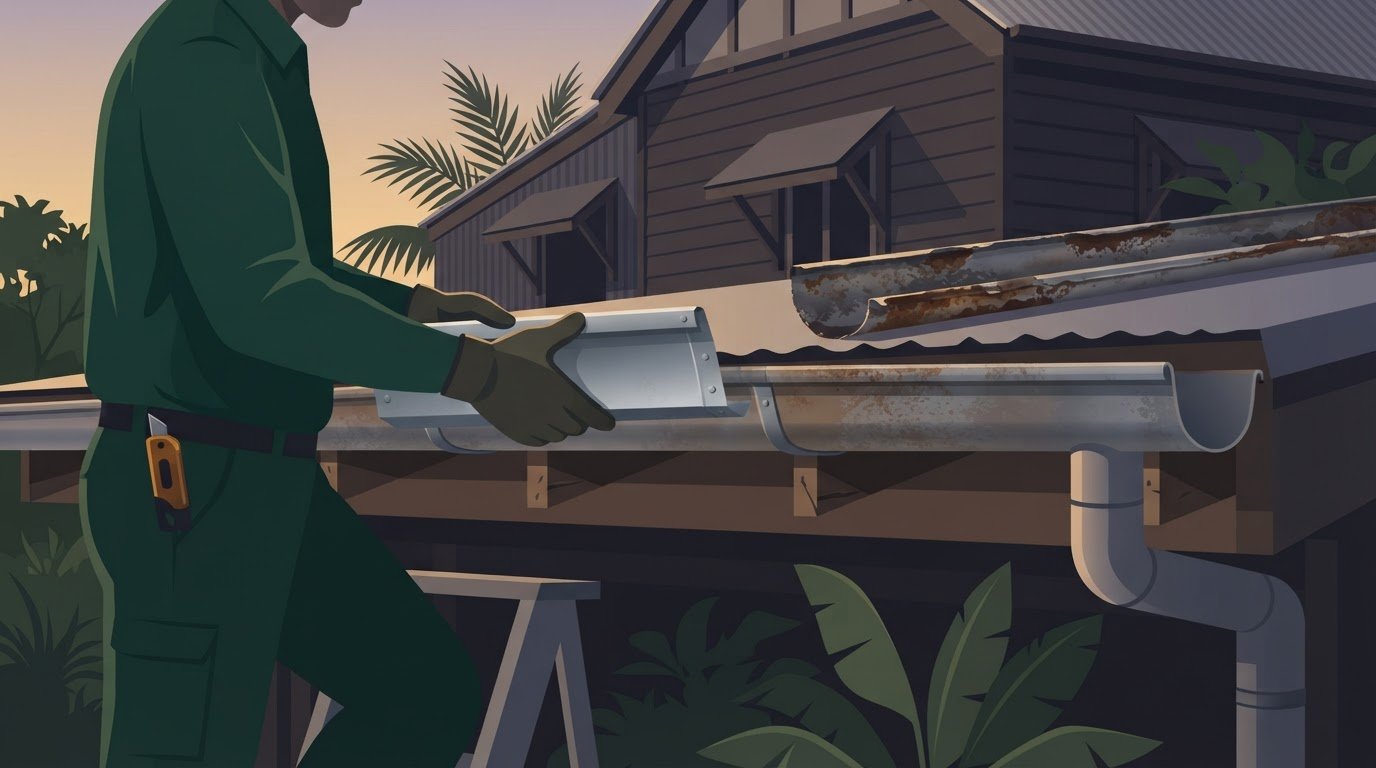
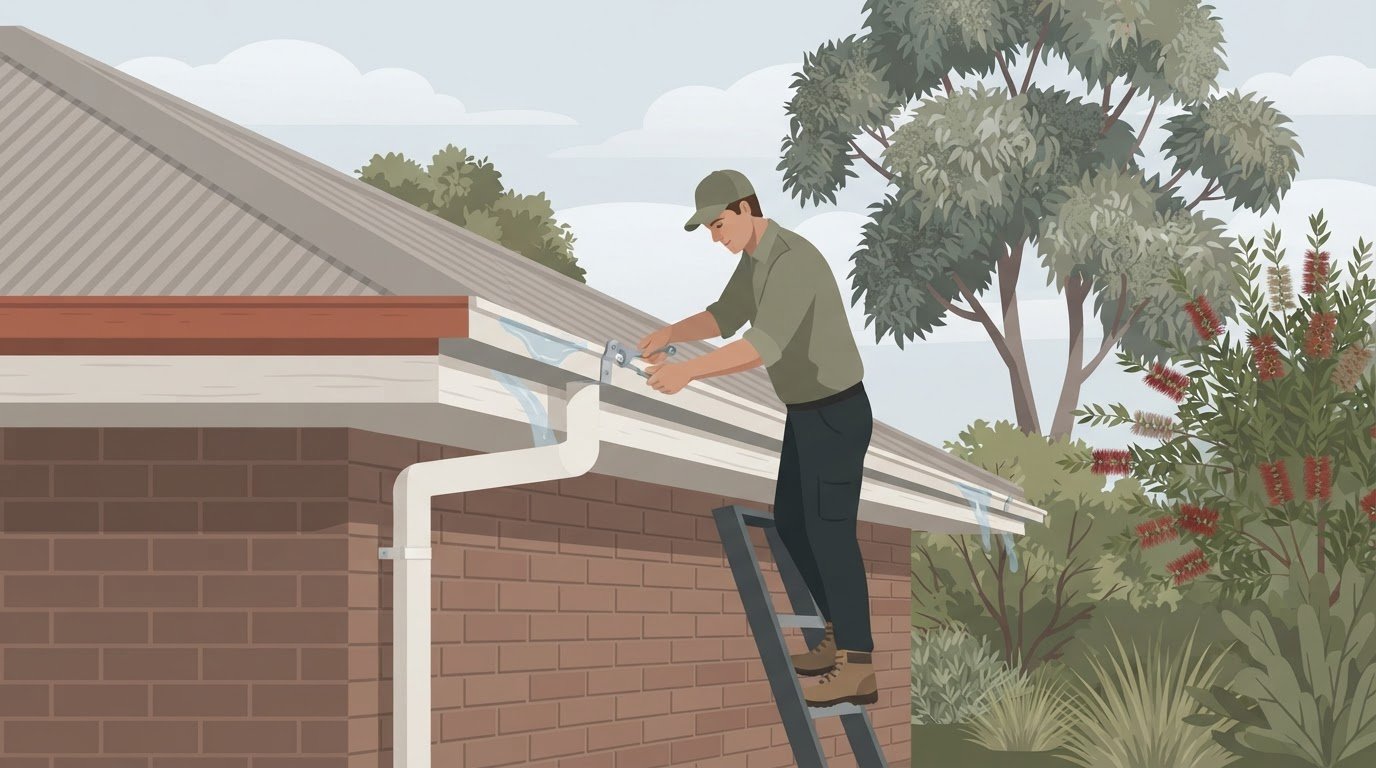
Hop To It Roof Repairs helps homeowners move from suspected roof leaks to a clear next step. Its roof leak detection service identifies where water is entering, while metal and tile roof repairs address damaged roofing. Gutters and downpipes can also be repaired when drainage problems contribute to water entry.
Every job includes a detailed written report and a photo report of each fault found, so you can understand the findings and recommended work. A fixed-price quote sets out the cost before repairs proceed, and repair work is backed by a workmanship warranty. Turn to Hop To It Roof Repairs when you notice recurring damp, ceiling marks or signs of roof damage and need an assessment.
Contact Hop To It Roof Repairs to discuss the leak or roof concern affecting your home.
Take the next step with a clear plan
Turn your observations into a useful starting point for the inspection. Note which rooms are affected, when dampness appears and whether it changes after rain. A photo taken indoors can show how a ceiling mark develops over time. Keep these details together so the inspection can focus on what has changed, rather than relying on memory.
Before arranging an assessment, describe any recent roof work or storm exposure, and note where dripping or dampness recurs. These details don’t diagnose the cause, but they help establish a clear starting point. Avoid climbing onto the roof or disturbing wet materials. Professional roof leak detection in Moreton Bay can help turn your observations into a practical plan for addressing the issue.
Hop To It Roof Repairs can assess the roofing concern and explain the next step. Contact Hop To It Roof Repairs to discuss what you’ve noticed and move forward with confidence.
Frequently Asked Questions
How do thermal imaging cameras work?
Thermal imaging cameras show temperature differences across surfaces as a colour image. Warmer and cooler areas can help an inspector identify patterns that may indicate dampness. The camera doesn’t show water itself, so readings need context from the roof and affected rooms. For example, a cooler patch on a ceiling can guide further investigation, but it can’t confirm the leak’s exact entry point by itself.
How do I know if my roof has a hidden leak?
A recurring ceiling mark, musty smell or peeling paint can suggest moisture is entering your home, even without active dripping. Notice whether the affected area changes after rain and whether the same patch returns once the surface dries. A leak can also affect insulation above the ceiling before obvious indoor damage appears. Keep a record of where symptoms occur and when they reappear.
What are common signs of a roof leak in Moreton Bay homes?
Common clues include ceiling stains, damp insulation, mould, peeling paint and water marks near ceiling edges. In Moreton Bay, note whether these signs appear during or after heavy rain, then check whether they recur in later wet weather. A musty smell without a visible stain can also be a useful clue. Avoid climbing onto the roof; leave external checks to a roofing professional.
How much does roof leak detection cost in Moreton Bay, Queensland?
The cost depends on the property and the investigation required, including roof materials, access, size and complexity. A quote can set out the agreed price once the job’s scope is understood. Detection and any resulting repairs may involve different work, so check that the quote clearly explains what it covers. No single figure applies to every roof or leak investigation.
Which roof leak detection services operate in Moreton Bay and nearby suburbs?
Hop To It Roof Repairs provides roof leak detection in Moreton Bay, Brisbane, the Gold Coast, Redland Bay and Ipswich. Related services include metal and tile roof repairs. Every job includes a photo report of faults found, and repair work is backed by a workmanship warranty. You’ll have documented findings and a clear next step for the roof issue.
What methods do roof leak detection specialists use to find leaks?
Roof leak detection can include systematic hose testing, water tracing, thermal checks and photo documentation. Each method investigates a different part of the problem: water testing can reproduce entry conditions, tracing follows the suspected path, and thermal checks reveal surface temperature patterns. Photos document visible faults. Together, these methods help build a clearer picture of the likely leak source and the roof areas needing attention.