Roof preparation for Brisbane storm season: what to check
10 November 2026 · 11 min read
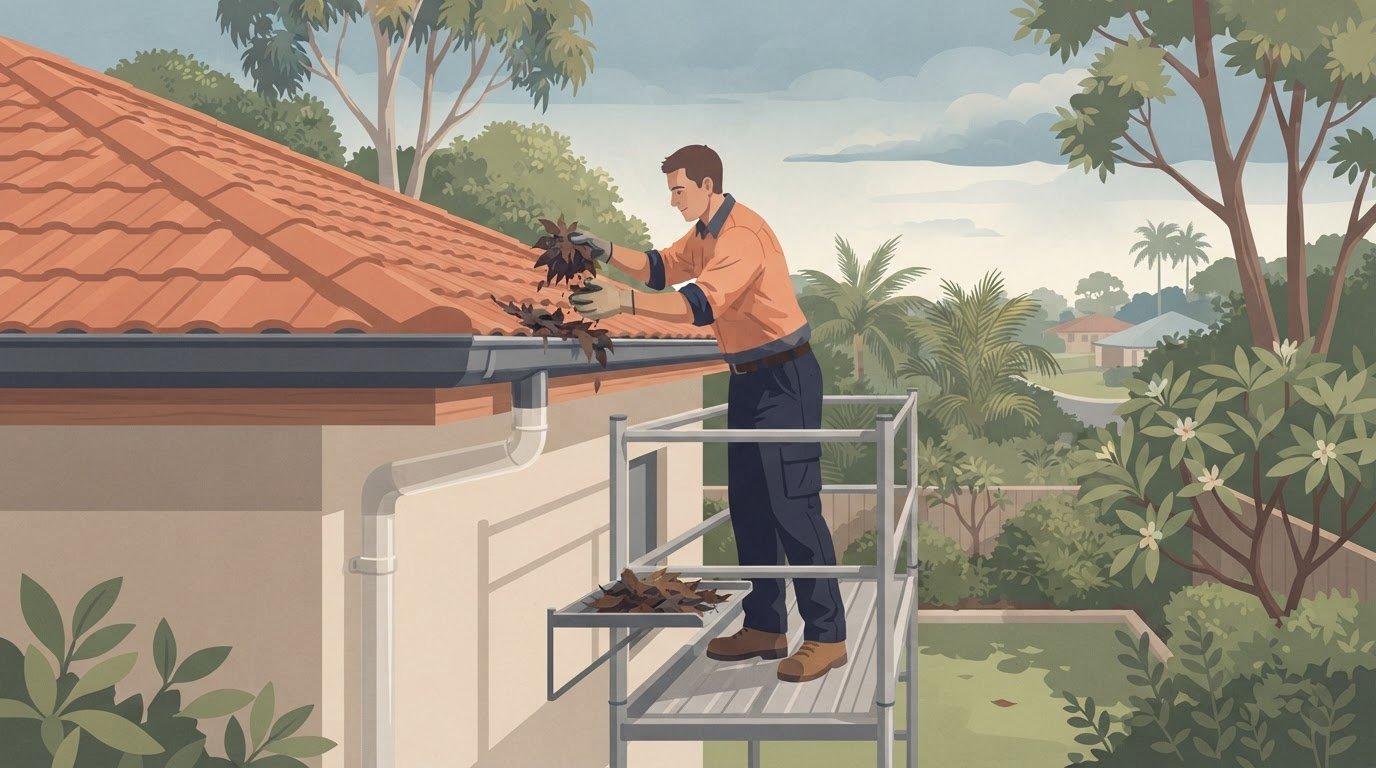
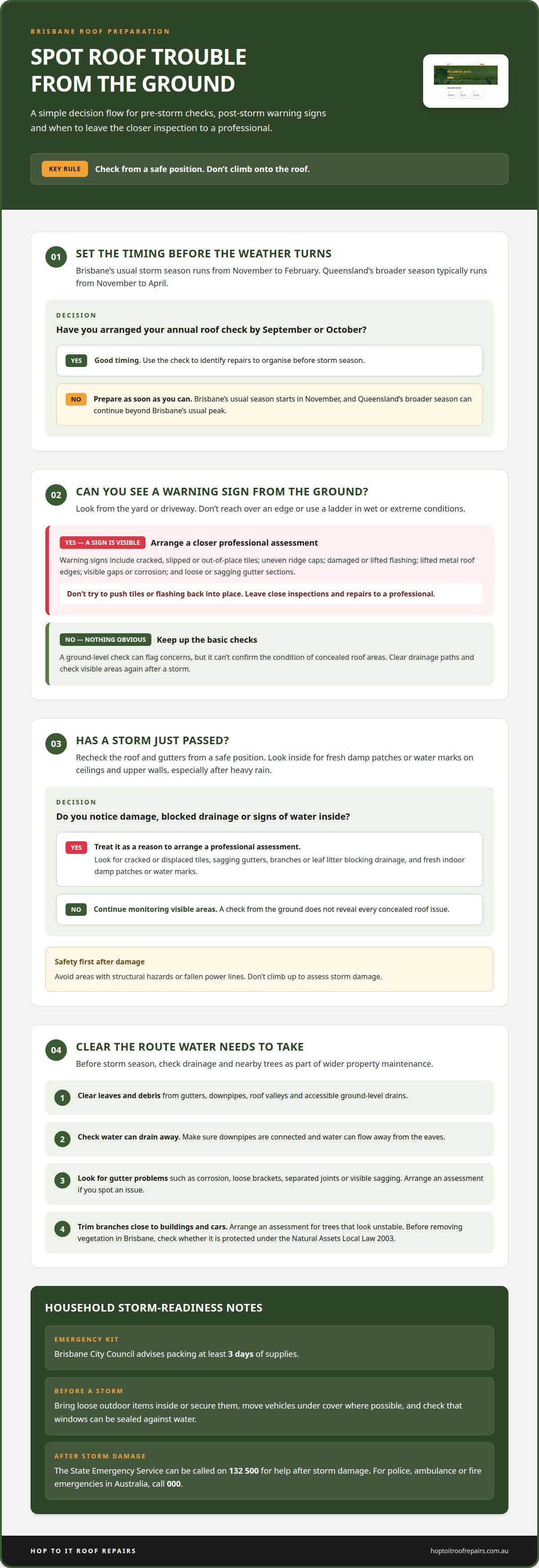
Preparing your roof for storm season in Brisbane starts before the first severe-weather warning. Queensland’s storm season typically runs from November to April. Arrange a roof check at least annually, ideally by September or October, and look for visible damage from the ground after storms.
It’s easy to focus on the forecast, but blocked gutters or loose tiles can also leave your home vulnerable when heavy weather arrives. Preparing early gives you time to spot problems and organise repairs before storm season. This guide covers when storms occur, how often to check your roof, and which maintenance tasks can help. You’ll also learn what warning signs to look for from the ground and when a professional inspection can reveal damage that isn’t easy to see.
Key Takeaways
- Clear leaf litter from gutters and downpipes, and keep branches trimmed back from the home.
- Look for visible warning signs from the ground, such as displaced tiles or damaged roof edges, rather than climbing onto the roof.
- Loose or cracked tiles and damaged flashing are reasons to arrange a closer roof assessment before severe weather.
- A tile roof inspection can help identify damage that’s difficult to spot from the ground and guide any needed repairs.
1. How often do I need to conduct DIY roof checks?
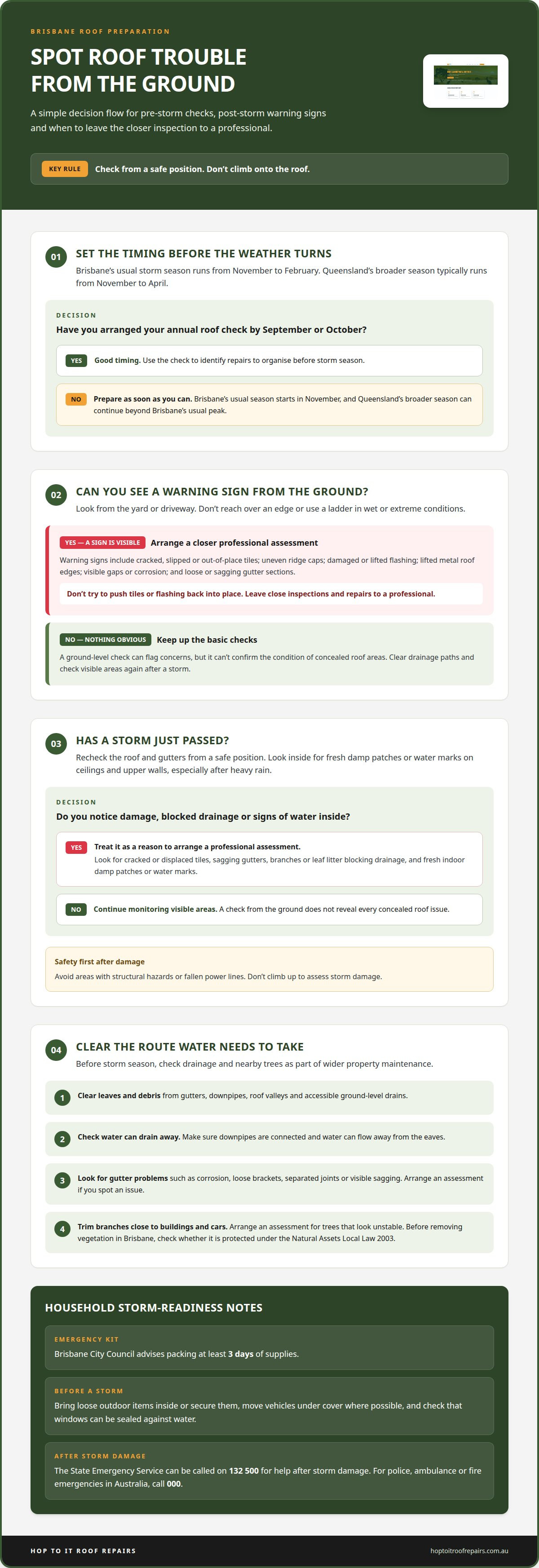
Arrange a roof check at least annually before storm season, ideally by September or October. From the ground, look for visible changes such as slipped tiles, bent gutters or debris around downpipes. Don’t climb onto the roof. Leave close inspections and repairs to a professional.
After a storm, check the roof and gutters again from a safe position. Look for cracked or out-of-place tiles, sagging gutter sections, and branches or leaf litter blocking drainage. Inside, check ceilings and upper walls for fresh damp patches or water marks, especially after heavy rain.
Clear gutters and downpipes before storm season, removing leaves that could obstruct water flow. Check that downpipes are connected and water can drain away from the eaves. Clear accessible ground-level drains too, as leaves can collect there and cause water to pool near the house.
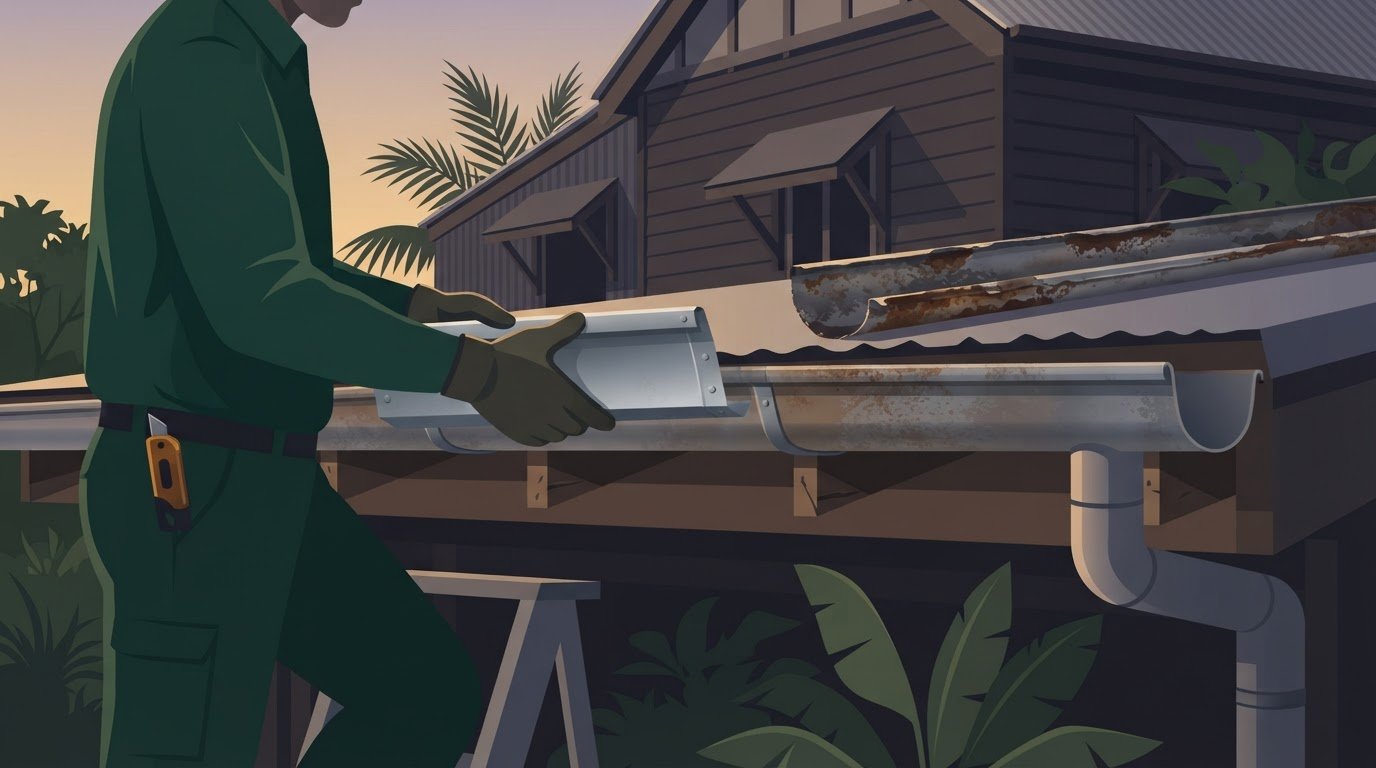
Check the condition of your gutters as well as their cleanliness. Corrosion, loose brackets, separated joints or visible sagging can affect how well gutters carry water away during severe weather. If you spot a problem, arrange an assessment rather than reaching over an edge or using a ladder in wet or extreme conditions.
Make preparation part of a wider household check. Brisbane City Council advises packing at least 3 days of supplies in an emergency kit. Before a storm, bring loose outdoor items inside or secure them, and move vehicles under cover where possible. Check that windows can be sealed against water entering the home.
After storm damage, avoid entering areas with structural hazards or fallen power lines. The State Emergency Service can be called on 132 500 for help after storm damage. For police, ambulance or fire emergencies in Australia, call 000, the emergency phone number according to the Australian Communications and Media Authority.
2. Preventative property maintenance
Preparing your roof for storm season in Brisbane works best as part of year-round property care. Walk around the house regularly and assess how trees, drainage and roofing could be affected by severe weather. Trim branches close to buildings and cars, and arrange an assessment for trees that look unstable. Before removing vegetation in Brisbane, check whether it is protected under the Natural Assets Local Law 2003.
Make sure windows can close and seal against water. Check exterior fittings for looseness, corrosion or damage, and look for signs of termites on accessible timber. Clear leaves from roof valleys, gutters and ground-level drains so water can flow away from the building. These simple checks can help you spot maintenance needs before summer weather puts extra pressure on your property.
Roof repairs require the right skills and safe access. A professional can assess the work and the safety measures needed for your roof and site. Don’t climb up to inspect or repair the roof yourself. A roofer can check cracked tiles, loose roofing materials and damaged flashing. Addressing defects before storm season gives you time to organise repairs ahead of severe weather.
Preparing your roof for storm season in Brisbane also means reviewing your home insurance policy. Cover depends on the policy wording, the cause of damage and the roof’s condition before the event. Check how your policy treats storm damage and existing problems, and keep records of maintenance and repairs to document the roof’s condition.
For roof issues that need professional attention, professional roof repairs can address loose or cracked tiles and damaged metal roofing. Deal with visible defects before severe weather puts added pressure on the roof.
3. Brisbane storm-season timing and weather risks
Queensland’s storm season typically runs from November to April. Brisbane’s usual storm season runs from November to February, so prepare before November rather than waiting for the first warning. Queensland’s broader season can continue beyond Brisbane’s usual peak, so keep monitoring local weather after summer.
Brisbane weather can change quickly in summer. Severe thunderstorms may last for hours and affect a wide area, bringing heavy rain, damaging winds and hail. These conditions can test roof tiles, flashing, gutters and downpipes, particularly where existing damage lets water in. Hail can also strike rooftop equipment, while wind-driven debris can damage roof surfaces.
Brisbane’s storm history shows why preparation matters. On 18 January 1985, a thunderstorm brought recorded wind gusts of up to 185 km/h. On 16 November 2008, golf-ball-sized hail fell during a Brisbane storm. These events are not a forecast for every season, but they show the range of weather a roof may face.
Use the seasonal calendar to plan practical checks. Before November, arrange repairs identified during a roof assessment and make sure drainage paths are clear. During storm season, follow severe weather warnings and inspect visible areas again after a storm has passed. Leaves and branches blown onto the roof can block water flow or conceal damage, so note where debris gathers around your property.
Before a storm, secure loose outdoor items and move vehicles under cover where possible. Keep your household plan current and know where to find local weather updates. If a storm damages your roof, stay clear of unstable areas and don’t climb up to assess the damage. Responding promptly can help limit further water entry while conditions are changing.
4. Pre-storm tile roof inspections
Before storm season, inspect visible roof areas from the ground without climbing onto the roof. From the yard or driveway, look for tiles that appear cracked, slipped or uneven. Check for branches resting on the roof and debris gathered in valleys. These signs can indicate damage or drainage problems that need closer attention.
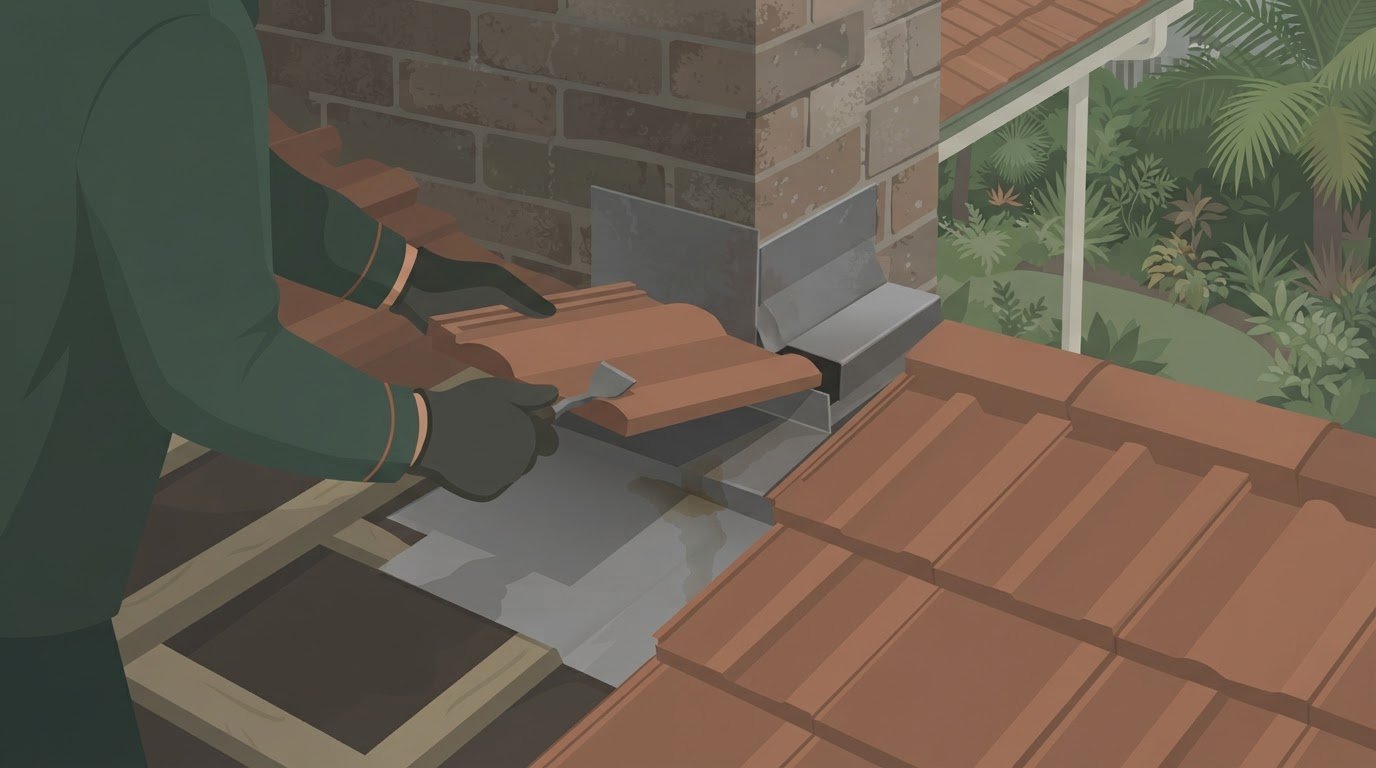
Check the roof edges and joins too. Ridge caps should look aligned, while flashing around vents, chimneys and roof intersections should sit flush. On metal roofs, look for lifted edges, visible gaps or corrosion. Don’t try to push tiles or flashing back into place. A ground-level check can flag concerns, but it can’t confirm the condition of concealed roof areas.
Arrange a professional inspection if you see cracked or displaced tiles, damaged ridge caps, loose-looking sheets or lifted flashing. Water stains on ceilings and walls, damp patches after rain, or recurring leaks are also reasons to seek an assessment. If storm damage lets water into your home, arrange help promptly and keep clear of unstable roof sections.
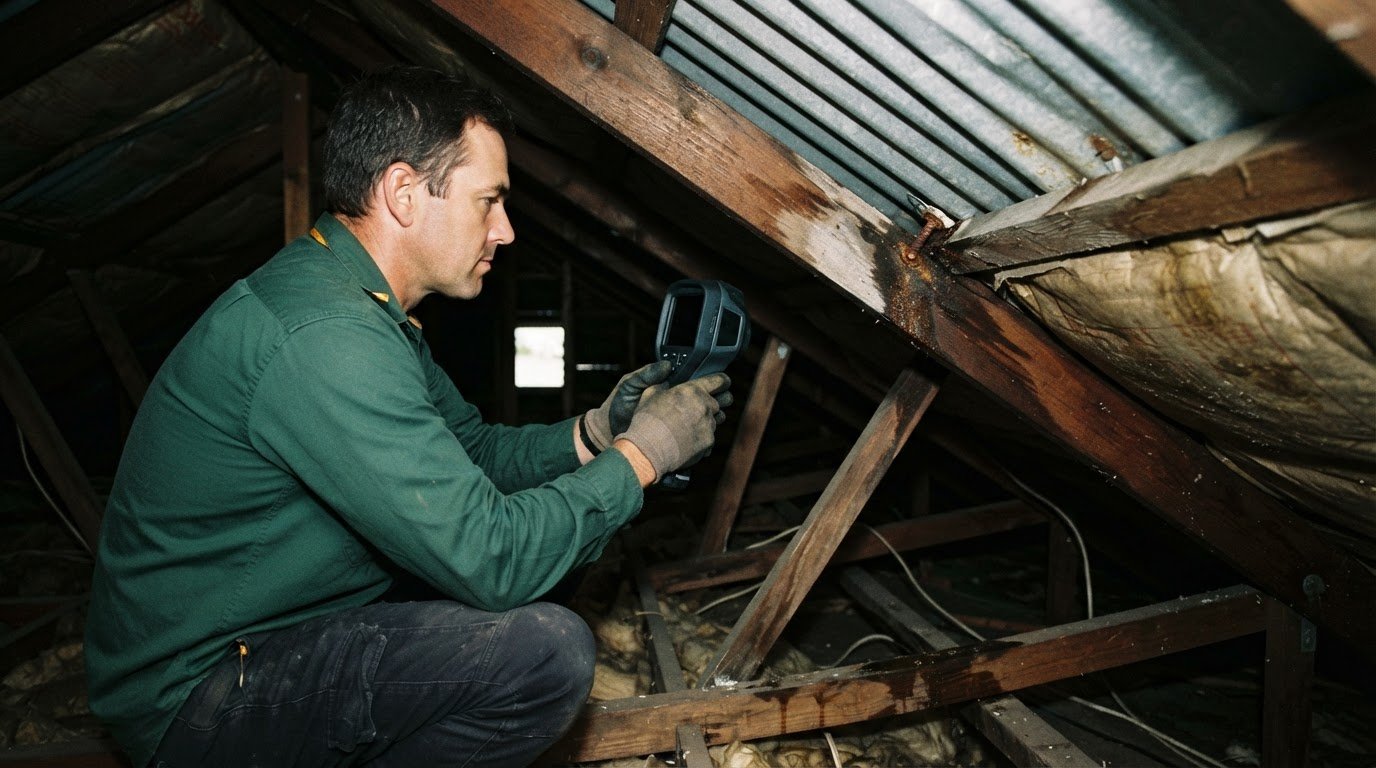
A professional inspection can assess the tile surface, ridge caps, flashing and accessible roof areas for signs of storm damage. It can help distinguish a loose tile from a broader problem, such as damage around a roof junction. If repairs are needed, the work should address the affected component and restore the roof’s weather protection.
Before November, use a ground-level check to record visible concerns and arrange an inspection for anything that needs closer assessment. Photographing a cracked tile or water mark from a safe position can help describe the issue. For a closer assessment of damaged tiles, arrange a tile roof inspection before severe weather arrives.
Hop To It Roof Repairs
Hop To It Roof Repairs can help turn roof concerns into a clear plan before Brisbane’s storm season. If a ground-level check reveals cracked tiles, damaged flashing, loose metal roofing or leaking gutters, arrange a professional assessment instead of attempting roof access yourself. The team provides roof leak detection, metal and tile roof repairs, and gutter and downpipe services across Brisbane, the Gold Coast, Redland Bay, Moreton Bay and Ipswich.
For an existing leak or storm-damaged roof, share what you’ve noticed and where water is entering. Photos taken safely from the ground can help describe the issue. Hop To It Roof Repairs provides fixed-price quotes and detailed written reports, giving you clear information about the recommended work.
If you’ve spotted a roof issue or need help assessing storm damage, contact Hop To It Roof Repairs to discuss the next step.
Keep your next step simple
Preparing your roof for storm season in Brisbane is easier when you turn concerns into clear, manageable actions. If you’ve noticed a leak, damaged tile or problem with metal roofing, don’t wait for another downpour to make it harder to assess. A professional can find the source of a leak and explain the repair needed, helping you make an informed decision.
Hop To It Roof Repairs provides Roof Leak Detection, Metal Roof Repairs and Tile Roof Repairs. The right next step depends on what you’ve seen and where the damage appears. Share the details of the issue, and use the assessment to understand what needs attention before severe weather returns.
Taking action now gives you a practical way to move from uncertainty to a documented repair plan. Contact Hop To It Roof Repairs to discuss a roof concern and decide on your next step. A clear assessment can help you approach the season with greater confidence.
Frequently Asked Questions
When do storms happen in Queensland?
Queensland’s storm season typically runs from November to April, while Brisbane’s usual storm season runs from November to February. Local conditions can vary, so keep an eye on weather warnings beyond Brisbane’s peak months. Before a storm system approaches, secure loose outdoor items and make sure you know where household emergency supplies are kept.
Are coastal homes more susceptible to storm damage?
Not automatically. The level of risk depends on a home’s exposure, roof condition and surrounding features, such as overhanging branches or nearby buildings. Wind-driven rain can reach vulnerable roof joins, while salt exposure can contribute to corrosion on metal components over time. For coastal properties around the Gold Coast or Redland Bay, include roof fixings and metal surfaces in regular maintenance checks.
Can wind alone damage a tile roof?
Yes. Strong winds can lift or dislodge tiles, particularly if tiles or ridge caps are already loose or damaged. Wind pressure can also drive debris across the roof and affect exposed edges. After windy weather, look from the ground for tiles that appear out of alignment, then check inside for fresh water marks. Don’t climb up to move or replace tiles yourself.
How do you handle roofing emergencies during a storm?
Stay indoors and away from damaged roof areas while severe weather continues. Don’t climb onto a wet roof or approach fallen power lines. For storm-related assistance, call the State Emergency Service on 132 500; for a life-threatening emergency requiring police, ambulance or fire services, call 000. Once conditions are safe, document visible damage from the ground and arrange a professional roof assessment.
How often do I need to conduct DIY roof checks?
Check visible roof areas annually before storm season, then again after storms that may have caused damage. From the ground, use the same viewpoints each time, such as the driveway and backyard, to notice changes in tiles, roof edges or gutters. Keep dated notes or photos of concerns. A record can help show when a leak or visible change first appeared.
When is storm season in Brisbane and what weather risks should homeowners prepare for?
Brisbane’s usual storm season runs from November to February, within Queensland’s broader November-to-April season. Prepare for severe thunderstorms that can bring heavy rain, damaging winds and hail, affecting roof coverings, drainage and outdoor property. Keep weather updates handy, secure loose items before storms arrive, and avoid inspecting or repairing the roof when wind or rain makes access unsafe.