Roof maintenance checklist: when to inspect and clean
29 October 2026 · 11 min read

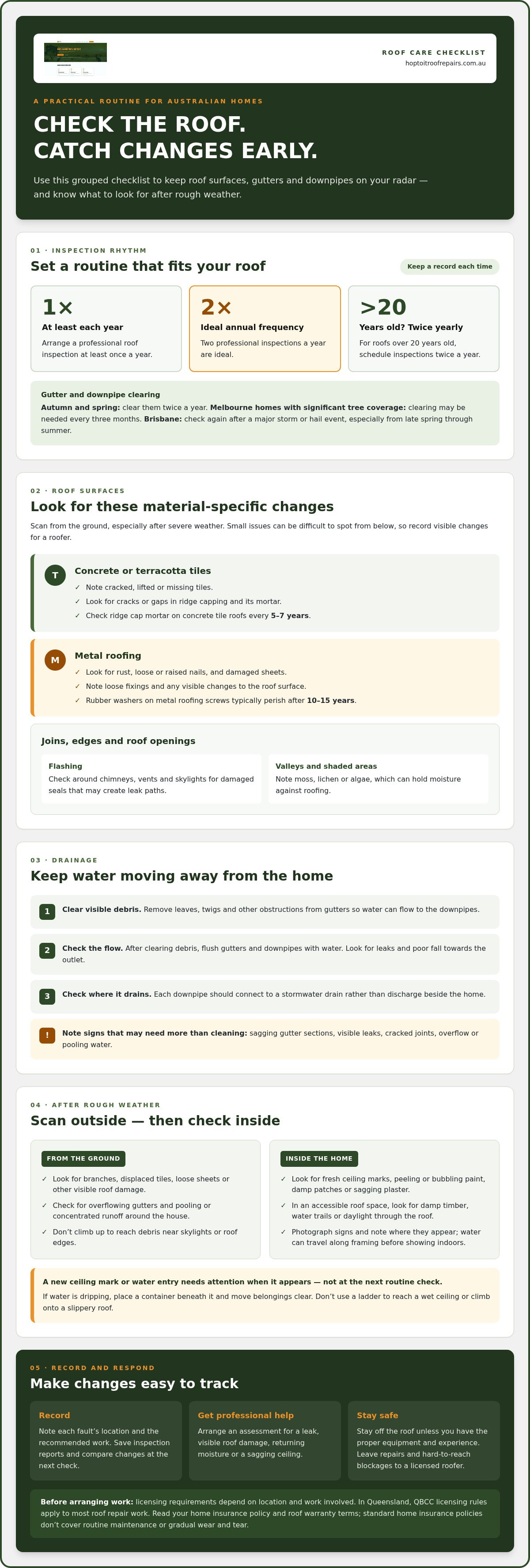
Don’t wait for a leak to check your roof. In Australia, arrange at least one professional roof inspection each year; two inspections a year are ideal. A roof maintenance checklist for homeowners should also cover gutters, downpipes, roof debris and signs of damage after rough weather.
Small issues on metal and tile roofs can be difficult to spot from the ground. A regular check helps you notice changes early and decide what needs attention, without climbing onto the roof or guessing at the cause.
This checklist explains what to look for on metal and tiled roofs, how to keep drainage clear, and what to do after a storm. You’ll also learn when a roof issue needs professional attention. Follow the steps in order to build a practical routine for checking your roof and drainage system.
Key Takeaways
- Clear leaves and debris from gutters, then check that water can flow freely through the downpipes.
- Look for moss, lichen or algae, which can hold moisture against roof surfaces.
- After rough weather, scan the roof from the ground and check ceilings and accessible roof spaces for signs of water.
- Note damaged tiles, loose metal fixings or flashing, and arrange professional help when you find a leak or visible roof damage.
Gutter and downpipe cleaning
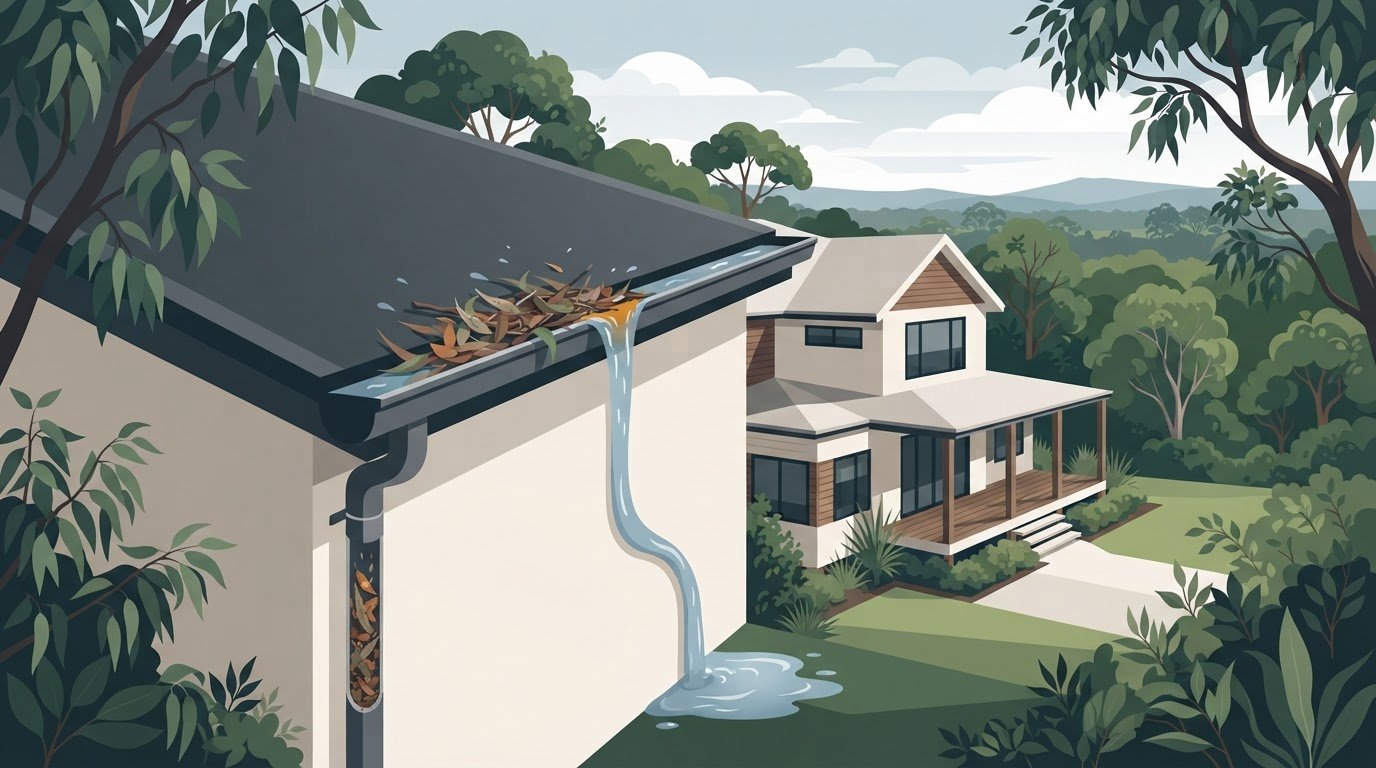
Clear leaves, twigs and other debris from gutters so water can flow to the downpipes. Blockages can cause gutters to overflow during heavy rain and wet walls or the ground around your home. From a safe position on the ground, look for sagging sections, visible leaks and cracked joints. These signs may mean the gutter needs more than cleaning.
Set a seasonal routine. Clear gutters and downpipes twice a year, in autumn and spring. Homes in Melbourne with significant tree coverage may need clearing every three months. In Brisbane, check again after a major storm or hail event, especially during the storm season from late spring through summer.
- Remove visible obstructions and debris, then check whether water can drain freely.
- Flush gutters and downpipes with water after clearing debris, and look for leaks or poor fall towards the outlet.
- Check that each downpipe connects to a stormwater drain, rather than discharging beside the home.
After rough weather, look from the ground for branches, broken or displaced roofing, overflowing gutters and pooling water. Check around the house for concentrated runoff. If debris is lodged near skylights or roof edges, don’t climb up to reach it. Damage to the roof surface may be difficult to see from below.
Roof repair licensing requirements depend on the location and work involved. In Queensland, QBCC licensing rules apply to most roof repair work. Standard home insurance policies don’t cover routine maintenance or gradual wear and tear, so read your policy and roof warranty terms before arranging work.
Gutter cleaning can carry fall and roof-damage risks. Stay off the roof unless you have the proper equipment and experience, and leave repairs or hard-to-reach blockages to a licensed roofer. Regularly clearing debris can help reduce trapped moisture and related damage.
How often should I have my roof professionally inspected in Australia?
Arrange at least one professional roof inspection each year; two inspections a year are ideal. An annual assessment gives a roofer a chance to identify changes before they develop into leaks or more extensive repairs. For roofs over 20 years old, schedule inspections twice a year, as ageing materials and fixings warrant closer attention.
Plan checks around your roof and local conditions. In Brisbane, the Gold Coast, Redland Bay, Moreton Bay and Ipswich, look for visible changes after a major storm or hail event. A new ceiling mark or water entry needs attention when it appears, not at the next routine check. Keeping a consistent inspection record makes changes easier to track.
A thorough inspection should cover roof surfaces, joins and drainage, not just the area near a visible stain. Record the location of each fault and the recommended work. A roofer can check:
- Cracked or lifted tiles, loose sheets, rust and raised fixings that may expose the roof to water.
- Flashing around chimneys, vents and skylights, where damaged seals can create leak paths.
- Ridge capping and mortar for cracks or gaps that may let water beneath tiles.
- Gutters and downpipes for leaks, blockages and drainage issues.
Inspection costs depend on roof material, access, condition and the scope of assessment. A steep roof, difficult access or visible damage can affect the work involved. A written record helps distinguish routine upkeep from repairs requiring a licensed contractor, and gives you a clear basis for prioritising work.
After each visit, save the report and note any changes before the next inspection. If it identifies damaged tiles or metal roofing, metal and tile roof repairs can address those defects.
Is lichen on my roof a serious problem?
Lichen, moss and algae can hold moisture against roofing, so note where they appear. Growth may indicate a persistently damp area, but it doesn’t prove there’s a leak. Pay particular attention to valleys, shaded slopes and roof penetrations, and include those areas in your inspection record.
If it’s safe, check inside during rain. Look beneath the affected roof area for fresh ceiling marks, peeling paint, damp insulation or a musty smell. In an accessible roof space, use a torch to look for damp timber, water trails or daylight through the roof. Don’t step on ceiling joists or move insulation to investigate.
- Mark the ceiling stain’s edges and note whether it grows after rain.
- Look for sagging plaster, bubbling paint and damp patches near skylights.
- Photograph interior signs and visible roof growth so a contractor can compare locations.
Water can travel along framing before appearing indoors, so a stain may be away from the entry point. If it’s safe, follow the damp trail upwards during rainfall to help narrow down the source. If water is dripping, place a container beneath it and move belongings clear. Don’t use a ladder to reach a wet ceiling or climb onto a slippery roof.
Arrange a professional assessment when moisture returns, a ceiling sags, or roof materials look damaged. A roofing contractor can trace the leak and assess whether repair or replacement is needed. Where possible, plan non-urgent roof work for dry conditions. Keep photos and inspection notes with your home records, and read your insurance policy for its maintenance and wear exclusions. Persistent lichen growth may need attention, but avoid scraping tiles or applying chemicals without knowing how they could affect the roof surface.
Tile and metal roof maintenance
Tile and metal roofs have different warning signs, so consider their fixings and joins when checking them. After severe weather, scan from the ground for displaced tiles, loose sheets, fallen branches or debris. Don’t climb onto the roof: tiles can crack underfoot, and wet metal can be slippery.
Use this checklist to record visible changes:
- Concrete or terracotta tiles: Note cracked, lifted or missing tiles, plus gaps in ridge capping. Ridge cap mortar on concrete tile roofs should be checked every 5-7 years.
- Metal roofing: Look for rust, loose or raised nails, and damaged sheets. Rubber washers on metal roofing screws typically perish after 10-15 years.
- Flashing: Check from the ground for lifted or detached flashing around vents and skylights, where gaps can let water reach the roof beneath.
- Overhanging branches: Look for limbs touching the roof or leaves collecting in valleys, as these can trap moisture or cause impact damage.
After a storm, check the yard for fallen roofing material and look inside for fresh water marks on ceilings. Branches, displaced tiles or damaged flashing need prompt attention. Don’t wait for another routine check if a leak appears. A roofer can assess the damage and identify the affected area.
Keep moss and mould in view, but don’t pressure-clean or scrape tiles yourself. The wrong method can damage roof surfaces or force water underneath them. If a metal roof’s coating is breaking down, arrange an assessment to find out whether it needs repair. Record the location and appearance of rust, loose fixings or damaged sheets, then compare your notes at the next check.
For visible damage to metal roofing, arrange metal roof repairs before the defect allows more water in. A prompt assessment can identify the affected area and the repair work required.
Hop To It Roof Repairs: Roof Leak Detection
If ceiling stains return, a leak’s source is unclear, or an inspection finds damaged tiles or metal sheets, Hop To It Roof Repairs can help. Roof Leak Detection traces water entry, while Metal Roof Repairs and Tile Roof Repairs address damage to those roof types. For blocked or damaged drainage, Gutters & Downpipes can help restore water flow.
Every job includes a detailed written report, a photo report of faults found, a fixed-price quote and a workmanship warranty. Share what you’ve noticed, such as where water appears indoors or which roof area looks damaged, to help focus the assessment. If you have a roof leak or visible damage, contact Hop To It Roof Repairs to discuss the next step.
Make your next roof check easier
Make each inspection a useful record, not a one-off task. Keep a roof maintenance checklist for homeowners with the date, weather conditions, areas checked and changes noticed. Add photos from the same ground-level viewpoints each time. This makes new damage easier to distinguish from older marks and gives a roofer clearer information if you need an assessment.
Use your record to plan future checks around your home’s conditions. Overhanging trees, recurring damp patches and past repairs can show which areas deserve closer attention. Keep reports and receipts with your home maintenance documents so the history is easy to find when needed.
If a leak or visible roof damage needs professional attention, Hop To It Roof Repairs can help determine the next practical step. Contact Hop To It Roof Repairs to discuss your roof concern and move forward with a clear plan.
Frequently Asked Questions
Does roof maintenance extend the life of my roof?
Regular maintenance can help you catch developing problems before they cause wider damage. Clearing debris reduces trapped moisture, while replacing a damaged tile or repairing a loose metal fixing can limit water entry. Maintenance can't prevent normal ageing or severe weather, so treat it as prevention and early detection, not a guarantee of a particular roof lifespan.
How much does roof maintenance cost?
For homeowners in Brisbane, the Gold Coast, Redland Bay, Moreton Bay and Ipswich, the work required depends on roof size, material and access. Gutter repairs, leak detection and roofing repairs involve different work. Describe the issue and any access constraints when requesting a fixed-price quote from Hop To It Roof Repairs, so the assessment can focus on the job.
What are the signs my roof needs professional maintenance?
Arrange professional attention if you notice recurring ceiling stains, water entering during rain, rust on metal roofing or tiles that appear displaced. A musty smell in a room below the roof can also prompt an internal check for moisture. Note where and when each sign appears. Changes that recur after rain can help a roofer narrow down the affected area.
What should be included in a roof maintenance checklist for homeowners?
A roof maintenance checklist for homeowners should record the inspection date, recent weather, visible faults and follow-up work. Include roof material, gutters, downpipes, flashing, ridge capping and interior signs such as ceiling marks. Add clear photos from consistent ground-level viewpoints, then note whether each issue has changed. This record builds a useful maintenance history and helps identify recurring trouble spots.
How often should Australian homeowners inspect and maintain their roof?
Arrange a professional roof inspection at least annually, with two inspections a year ideal. Roofs over 20 years old should be inspected twice a year. Check again after severe weather if you see damage from the ground, or if a new leak appears indoors. Set gutter clearing for autumn and spring, adjusting the routine where nearby trees regularly drop leaves or branches.
How can you safely inspect a roof from the ground or inside the roof space?
From the ground, scan the roofline for displaced tiles, loose sheets, branches and damaged flashing. Binoculars can help you see details without climbing. In an accessible roof space, use a torch to look for damp timber, water trails or daylight. Stay on a safe, stable surface, don't step on ceiling lining, and leave roof access and repairs to a professional.