Blocked gutter services in Brisbane for home drainage
27 October 2026 · 11 min read
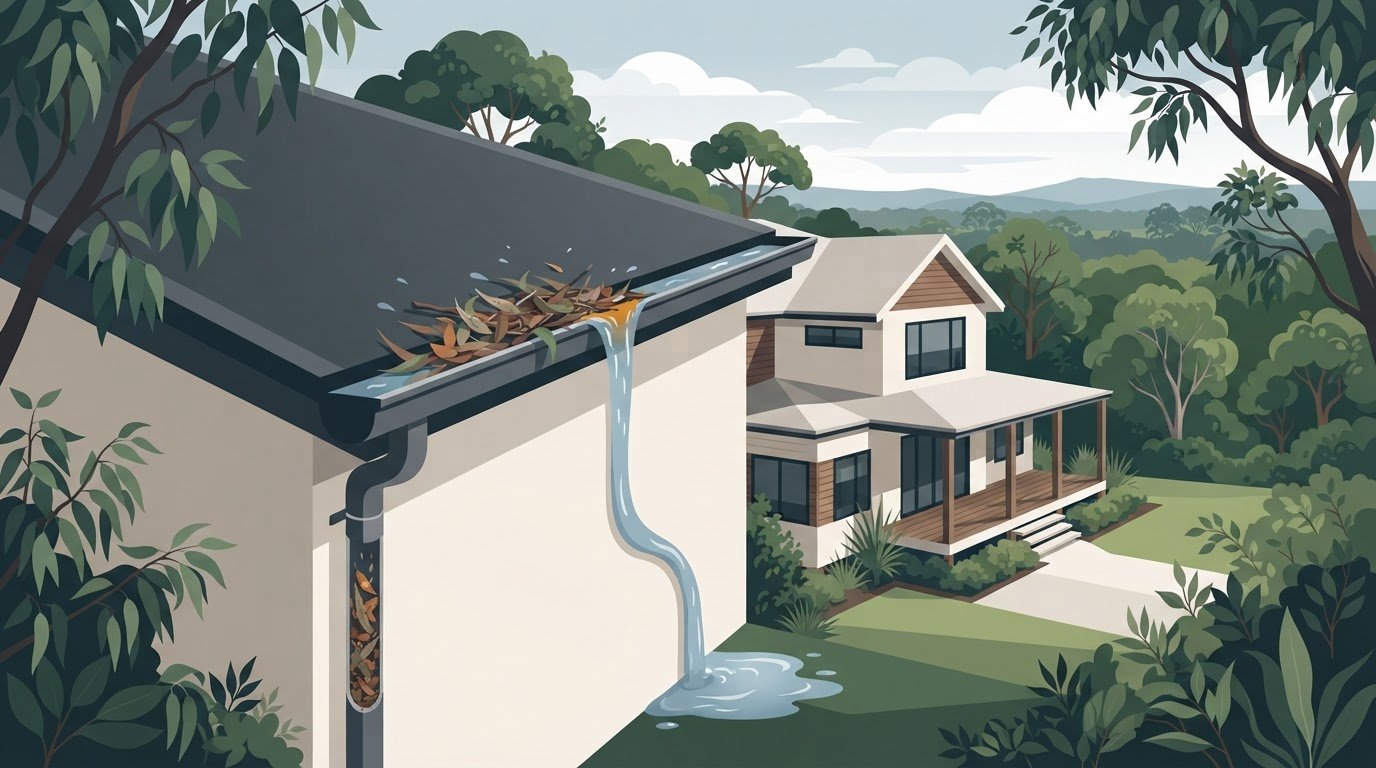
A blocked gutter can send water where it shouldn’t go. Blocked gutters in Brisbane can contribute to water stains, timber rot, mould and damage around a home’s foundations when rain overflows or leaks from the roof drainage system. Clearing visible debris may help, but it won’t fix a restricted downpipe or damaged gutter.
It’s easy to assume the problem is solved once the leaves are gone. If water still spills over the edge or a leak returns, the cause may lie further along the drainage path, from the gutter run and outlet to the downpipe or a roof junction.
This guide explains how gutter blockages can affect your home, what commonly causes leaks and how to assess where drainage is failing. You’ll also learn how Brisbane conditions, nearby trees and roof design influence maintenance, and when a repair or replacement may be the practical next step.
Key Takeaways
- Trace drainage from the gutter run through its outlet and downpipe; clearing visible debris alone may not resolve a blockage or leak further along the system.
- Watch for overflow, water marks and pooling near the home, as these can point to drainage problems that need attention.
- Set gutter maintenance around your home’s trees, roof shape and debris build-up rather than relying on one schedule for every property.
- Look for wear, rust, clogs, cracks or poor installation when tracking down a leak, as the underlying cause guides the repair.
Assessing gutter runs, outlets and downpipes
Trace the water path from each gutter run to its outlet, then down the downpipe. Gutter maintenance is part of property upkeep, and one cleaning schedule won’t suit every Brisbane home.
Gutter and Downpipe Repairs
Gutter and downpipe repairs address different faults. A leaking joint, hole or damaged section needs attention at the gutter; a leaking, broken or restricted downpipe needs its own assessment. Look along the full run for sagging, corrosion and water marks, then check whether water reaches the outlet and drains below.
Persistent overflow can point to gutter capacity, fall, outlet size, a blockage or a roof junction. Cleaning alone won’t fix damaged sections. Depending on the condition, repairs may involve patching a hole, replacing a broken section or fixing a downpipe connection.
Unblocking Downpipes
Removing leaves from a gutter doesn’t prove the downpipe is clear. Debris can remain at the outlet or inside the pipe, while a break or leak can interrupt drainage. Check whether water flows freely during rain and look for leaks along accessible sections.
For DIY clearing, work from the ground where possible. Use a stable ladder only if you can do so safely, and stay off the roof. Don’t lean out of an upper-storey window. If the blockage is out of reach or keeps returning, a professional assessment can show whether the downpipe needs clearing or repair.
Gutter Cleaning and Maintenance
How often should gutters be cleaned in Brisbane? There’s no single schedule for every home: nearby trees, roof shape, gutter profile, exposure and the amount of organic build-up all affect timing. Check when leaves or debris collect, and note whether the outlets and downpipes remain clear.
Brisbane council rules and Queensland laws don’t set a universal cleaning interval for every property. For safe DIY clearing, stick to accessible areas and avoid climbing onto the roof. Arrange professional help when debris is out of reach, water still overflows after cleaning, or a blockage appears to involve a downpipe, damaged section or roof junction.
Brisbane gutter blockages and local roof drainage
Across Brisbane, roof drainage depends on more than a clear gutter. Leaves and other debris can restrict an outlet, while damaged sections, gutter capacity, fall or a roof junction can contribute to persistent overflow. Trace the water path from the roof edge to the downpipe, then note where water spills or stains the exterior.
Common signs of blocked gutters include overflow during rain, visible debris, water marks below the eaves and pooling near the home. Record where and when each sign appears. Water spilling from one corner may point to a local blockage, while overflow along a longer run may indicate a broader drainage issue.
When arranging gutter work in Brisbane, look for a clear scope that covers the gutter runs, outlets and downpipes, as well as written details of any recommended repairs. A useful condition report identifies the affected section and separates cleaning from damage that may need repair or replacement.
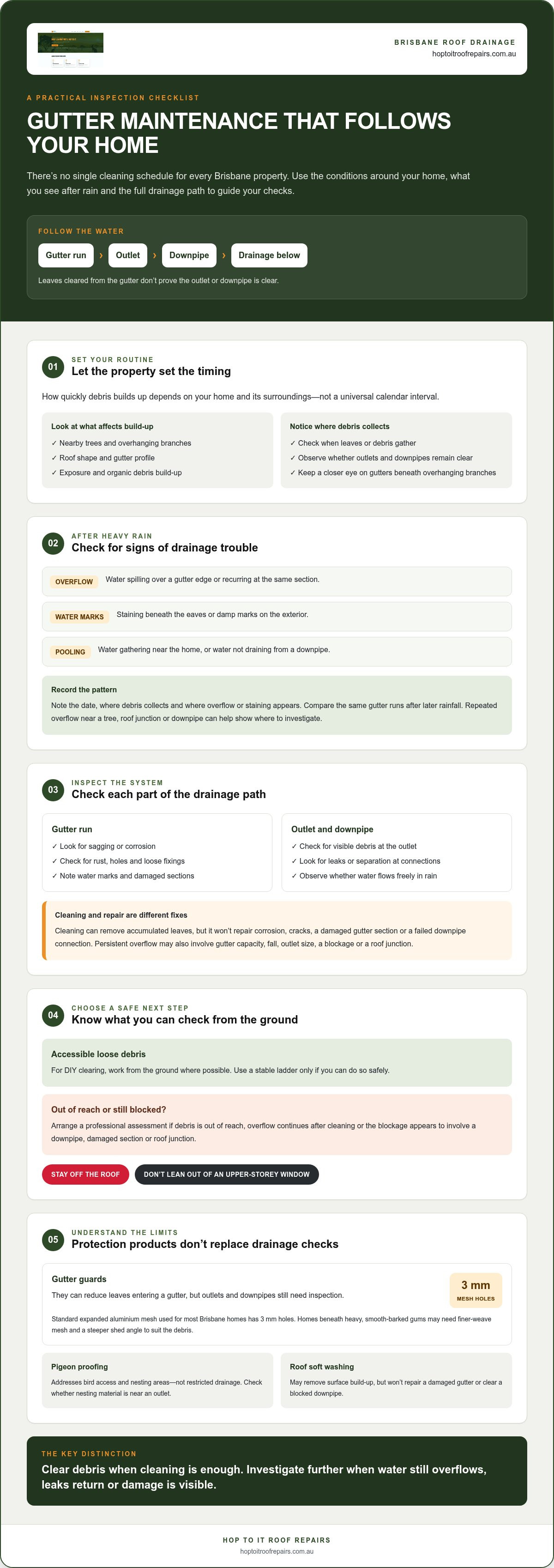
Gutter guards can reduce leaves entering a gutter, but they don’t remove the need to inspect outlets and downpipes. Standard expanded aluminium mesh used for most Brisbane homes has 3 mm holes. Homes beneath heavy, smooth-barked gums may need finer-weave mesh and a steeper shed angle to suit the debris.
Pigeon proofing addresses bird access and nesting areas, not restricted drainage. Check whether nesting material is near an outlet, and treat the drainage issue separately from roof-protection work. Roof soft washing may remove surface build-up, but it won’t repair a damaged gutter or clear a blocked downpipe.
A roof and gutter condition report can document stains, sagging, rust and the location of overflow. Use those observations to decide whether cleaning is enough or whether the gutter or downpipe needs repairs. If water keeps entering the home, consider a targeted gutters and downpipes assessment alongside the roof inspection.
How do you ensure the longevity of gutters and downpipes?
Protecting gutters starts with a maintenance routine suited to the property, not a fixed calendar. In Brisbane, nearby trees, roof shape, gutter profile, exposure and organic build-up all affect how quickly leaves collect. A home beneath overhanging branches may need closer observation than one with little surrounding vegetation.
After heavy rain, look from ground level for water damage, staining beneath the eaves, overflowing sections or pooling near the house. Check whether water is still draining from each downpipe. A blocked outlet can leave water sitting in the gutter, while a leaking joint may leave a damp mark on the exterior even when the gutter looks clear.
Keep a simple maintenance record to spot changes. Note the date, where debris collects and any visible damage, then compare the same gutter runs after later rainfall. If one section repeatedly overflows, record whether it sits below a roof junction, near a tree or beside a downpipe. This pattern can help distinguish recurring debris from a drainage or repair issue.
- Remove leaves and loose debris from accessible gutter sections before they compact.
- Check outlets and downpipe connections for visible blockages, leaks or separation.
- Look for rust, holes, sagging and loose fixings along each run.
- Record recurring overflow and any interior or exterior water marks.
Roof inspections support gutter maintenance because a damaged roof junction can send water into the wrong part of the drainage system. From the ground, look for displaced roofing materials, debris collecting at valleys and staining below roof edges. Don’t climb onto the roof to inspect it.
Preventative maintenance means acting on early signs, rather than waiting for water damage to spread. Cleaning can remove accumulated leaves, but it won’t fix corrosion, cracks or a failed connection. Hop To It Roof Repairs provides fixed-price quotes, so you know the proposed price before work begins. Addressing the cause helps protect both gutter runs and downpipes.
Common causes of leaking gutters
Age and wear can loosen joints or weaken gutter sections, while corrosion and rust can create holes that let water escape. A leak near a corner, for example, may come from a failed joint rather than a blockage. Clogs can also hold water against the gutter, adding strain and causing overflow at the eaves.
Cracks and poor installation are other common causes. A gutter that doesn’t drain towards its outlet can leave water sitting in the run. If it leaks during rain despite clear channels, look at the gutter line, joints and downpipe connections from the ground. Don’t climb onto the roof to find the source.
Use these clues to narrow down the likely fault:
- A visible hole or rust patch can point to corrosion or material wear.
- Water escaping at a corner can indicate a leaking joint.
- Overflow from one section can signal a clog or drainage issue.
- Sagging or standing water can suggest a problem with the gutter’s fall or support.
Gutter cleaning removes leaves and debris, but it won’t repair cracks, rust or a loose connection. Note where water appears during rainfall and whether the same spot leaks after cleaning. Severely rusted, sagging or repeatedly leaking gutters may be better replaced than repaired. The affected section’s condition, including whether it is aluminium, helps determine the practical repair approach.
Leaks can send water down exterior walls, into the roof or towards the home’s foundations. Record stains, damp patches and pooling before requesting a quote. Compare the scope: does it identify the leak and specify a repair, rather than only cover gutter cleaning?
For a persistent leak or damaged section, arrange gutter and downpipe repairs to address the fault and restore drainage.
Hop To It Roof Repairs: Roof Leak Detection
Hop To It Roof Repairs can help when gutter overflow or a recurring leak points to a fault beyond loose debris. Its Roof Leak Detection service helps locate the source, while its Gutters & Downpipes service addresses drainage faults. If the roof itself is involved, the business also handles Metal Roof Repairs and Tile Roof Repairs.
Turn to a roof plumbing specialist when water stains return after cleaning, a gutter section is damaged or the leak’s source is unclear. Hop To It Roof Repairs provides a fixed-price quote and a detailed written report for every job, including a photo report of each fault found. This makes it easier to understand the findings and proposed work, and distinguish a gutter repair from a roof leak that needs separate attention.
For a persistent gutter leak or roof drainage problem, contact Hop To It Roof Repairs to discuss the issue and next step.
Choose a clear next step for your roof
When blocked gutters in Brisbane leave you unsure whether to arrange cleaning or a repair, make the next step a clear decision, not another round of guesswork. Write down what you’ve observed and which part of the roofline concerns you. This brief record gives the conversation a practical starting point and keeps attention on the problem you need resolved.
If the source appears to be beyond gutter debris, roof leak detection can help locate where water is entering. Hop To It Roof Repairs also handles metal roof repairs and tile roof repairs, so the work can address the roof material and issue involved. Describe what you’ve noticed and how it affects your home, then discuss the appropriate way forward.
You don’t need to work out the cause alone. Contact Hop To It Roof Repairs to discuss your roof drainage concern and take a considered next step.
Frequently Asked Questions
Can clogged gutters cause damage to my home?
Yes. Blocked gutters in Brisbane can let rainwater reach parts of the home that should stay dry. Water escaping near the eaves may damage fascia boards or soak ceiling edges, while runoff collecting beside the house can affect the surrounding ground. If you notice a new damp patch after rain, record where it appears and whether it grows during further rainfall.
What do gutter repair services include?
Gutter repair services can include inspecting the affected area, patching holes, replacing broken gutter sections and repairing downpipes. Cleaning and repairs are separate tasks: removing leaves won’t mend a split joint, and a repair won’t necessarily clear debris elsewhere. Ask for the proposed work to identify the damaged section and explain whether the outlet or connected downpipe also needs attention.
What causes gutters to block in Brisbane?
Leaves, twigs and other organic material commonly cause blockages, especially where branches overhang a roof. Debris can collect at gutter corners, outlets and roof valleys, then form a compact mass that restricts water flow. In Brisbane, a home beneath smooth-barked gums may also need a gutter-guard design suited to the material falling from those trees.
What are the risks of leaving gutters blocked?
Leaving a blockage in place can cause repeated overflow and keep water against gutter joints or roof edges. Over time, moisture may contribute to timber deterioration, interior damage or mould growth. Runoff can also erode soil and leave damp areas near the home. Note recurring overflow or new stains after rain, then arrange an inspection before the affected area worsens.