Signs of a Bad Roof Repair Job to Check for After Work
26 October 2026 · 6 min read

A roof repair isn’t sound just because the work looks finished. Signs of a bad roof repair job include loose or uneven tiles, exposed fasteners, gaps around flashing, messy sealant and water getting in after rain. These clues may indicate that the leak wasn’t properly addressed or nearby roofing materials were left vulnerable.
It’s reasonable to want clear evidence that a repair has held, especially after dealing with a roof problem. A quick visual check from the ground can help you spot changes, but don’t climb onto the roof to inspect it.
This guide explains what to look for around a repaired area, how to document concerns and when a recurring leak needs further attention. You’ll also learn why the indoor location of water may not match its entry point on the roof, helping you describe the problem clearly and choose a sensible next step.
Key Takeaways
- Look for visible changes around the repaired area, including disturbed roofing materials or gaps around roof junctions.
- Check ceilings and walls for signs of recurring moisture, and note when the marks appear or worsen.
- Photograph anything concerning from a safe position and keep a clear record of when you noticed it.
- If water is still getting in, roof leak detection can help identify where it is entering and guide the next repair step.
Signs of a bad roof repair job
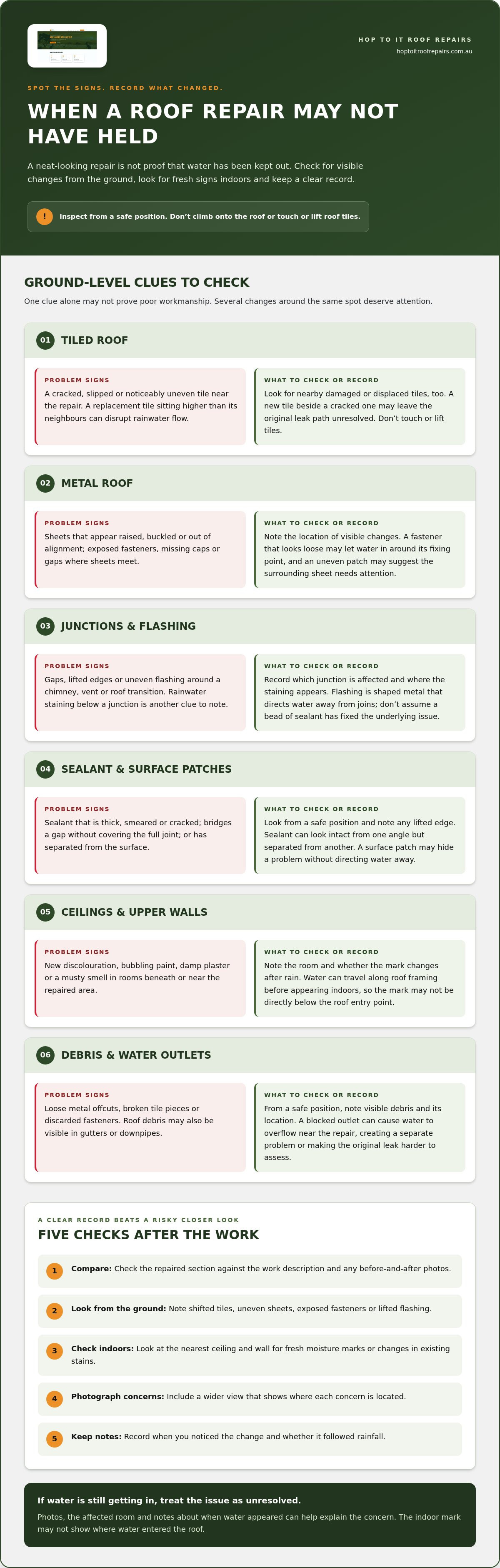
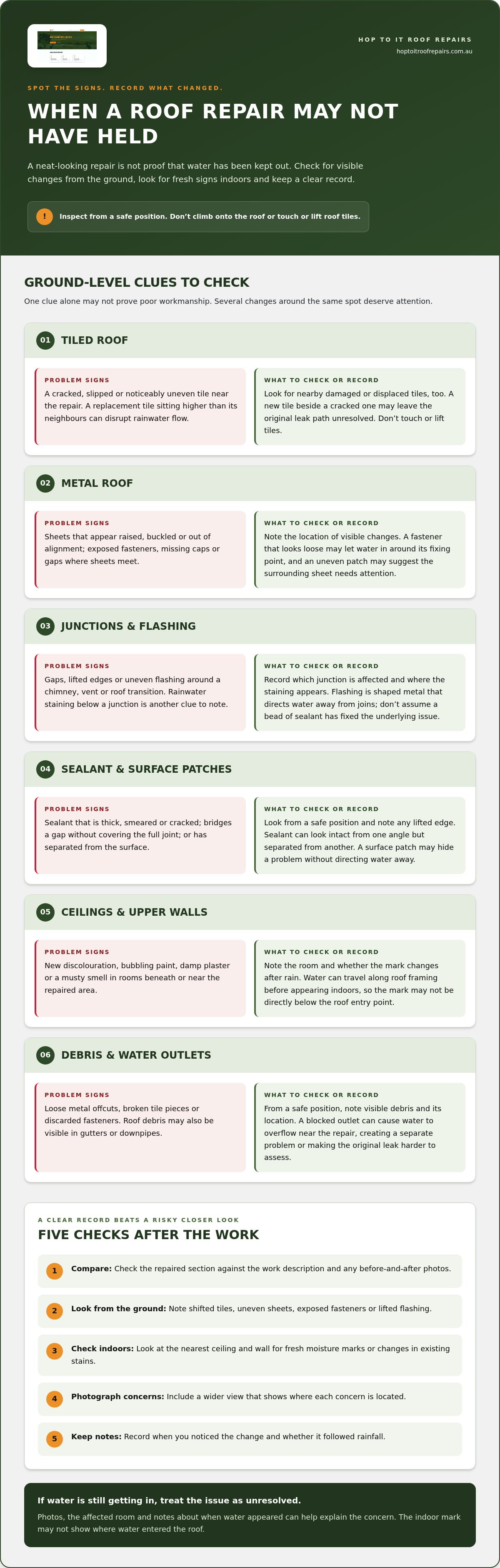
A repair can look neat from the driveway and still leave water a way in. Look for movement, gaps, mismatched materials and fresh water marks inside. One clue alone may not prove poor workmanship, but several changes around the same spot deserve attention. Compare what you see with the repair description or any before-and-after photos.
On a tiled roof, look from the ground for a cracked, slipped or noticeably uneven tile near the repaired section. A replacement tile sitting higher than its neighbours can disrupt rainwater flow. Check whether nearby tiles appear damaged or displaced, too. For example, a new tile beside a cracked one may leave the original leak path unresolved. Don’t touch or lift roof tiles yourself.
On a metal roof, look from the ground for sheets that appear raised, buckled or out of alignment. Watch for exposed fasteners, missing caps and gaps where sheets meet. A fastener that looks loose may let water in around its fixing point. An uneven patch may also suggest the surrounding sheet needs attention, not just the visible mark.
Roof junctions need attention because water can enter where materials meet. Look for gaps, lifted edges or uneven flashing around a chimney, vent or roof transition. Flashing is shaped metal that directs water away from these joins. If an edge appears separated or rainwater staining forms below the junction, record its location. Don’t assume a bead of sealant has fixed the underlying issue.
Sealant can be part of a repair, but a thick, smeared or cracked application is worth documenting. Check whether it bridges a gap without covering the full joint, or has separated from the surface. For example, sealant around a roof penetration may look intact from one angle but have a lifted edge from another. A surface patch can hide a problem without directing water away.
Inside, inspect the ceiling and upper walls beneath or near the repair. New discolouration, bubbling paint, damp plaster or a musty smell can indicate moisture. Water may travel along roof framing before appearing indoors, so a mark directly below the repair isn’t the only clue. Note the affected room and whether the mark changes after rain.
Check the surrounding area for signs the repair was left unfinished. Loose metal offcuts, broken tile pieces or discarded fasteners may indicate that materials were disturbed. From a safe position, look for roof debris in gutters or downpipes. A blocked outlet can cause water to overflow near the repair, creating a separate problem or making the original leak harder to assess.
Use this simple inspection sequence after the work:
- Compare the repaired section with the work description and any before-and-after photos.
- Look from the ground for shifted tiles, uneven sheets, exposed fasteners or lifted flashing.
- Inspect the nearest ceiling and wall for fresh moisture marks or changes in existing stains.
- Photograph each concern, including a wider view that shows its location.
- Record when you noticed the change and whether it followed rainfall.
Don’t climb onto a wet or sloping roof for a closer look. A photo taken from the ground, paired with the room and location of an indoor mark, gives you a clearer record than an unsafe inspection. If water is still entering or a tile or sheet appears loose, treat the issue as unresolved rather than judging the repair by appearance alone.
Hop To It Roof Repairs: Roof Leak Detection
Hop To It Roof Repairs provides Roof Leak Detection when water returns after a repair or the entry point is unclear. Finding where water gets in can help distinguish a roof leak from a problem around gutters or downpipes. The team also handles Metal Roof Repairs and Tile Roof Repairs, so the repair can address the affected roof material.
Keep photos and notes about where and when water appeared. They help explain the issue and focus the assessment. Hop To It Roof Repairs provides a fixed-price quote and detailed written report for every job, so you have clear information about the work.
If a leak persists or you’ve found a concern, contact Hop To It Roof Repairs to discuss Roof Leak Detection.
Take the next step with confidence
A roof concern is easier to address when you turn observations into a clear record. Keep your photos, note which rooms are affected and describe whether the issue changes after rain. This gives an assessment a practical starting point instead of relying on memory or a single indoor mark. If you’ve spotted signs of a bad roof repair job, focus on what has changed and where water appears, rather than trying to diagnose the roof yourself.
Hop To It Roof Repairs offers Roof Leak Detection, Metal Roof Repairs and Tile Roof Repairs. Share the details you’ve recorded and explain which roof material is involved. This helps frame the next conversation around the leak and the repair that may be needed.
For a practical next step, contact Hop To It Roof Repairs. Clear observations can help move the issue from uncertainty towards a plan.