Water Stain on Ceiling but No Leak: How to Find the Cause
23 October 2026 · 18 min read

A water stain on the ceiling but no leak you can see can still point to a serious moisture problem. Water may be travelling from a roof, pipe or wet area, while condensation can leave marks without an obvious leak. The stain’s appearance alone can’t confirm the cause.
It’s understandable to hope a dry-looking patch is only cosmetic. But painting over it too soon can hide a problem that’s still active, and the mark may return. Identify where the moisture is coming from before repairing the ceiling.
This guide explains how to distinguish condensation from roof and plumbing leaks, which warning signs to look for, and when to arrange an inspection. You’ll also learn why a stain can appear without dripping and what to do before repainting.
Key Takeaways
- A ceiling mark can come from condensation, a roof or pipe leak, or water from an air-conditioning drain, even when no drip is visible.
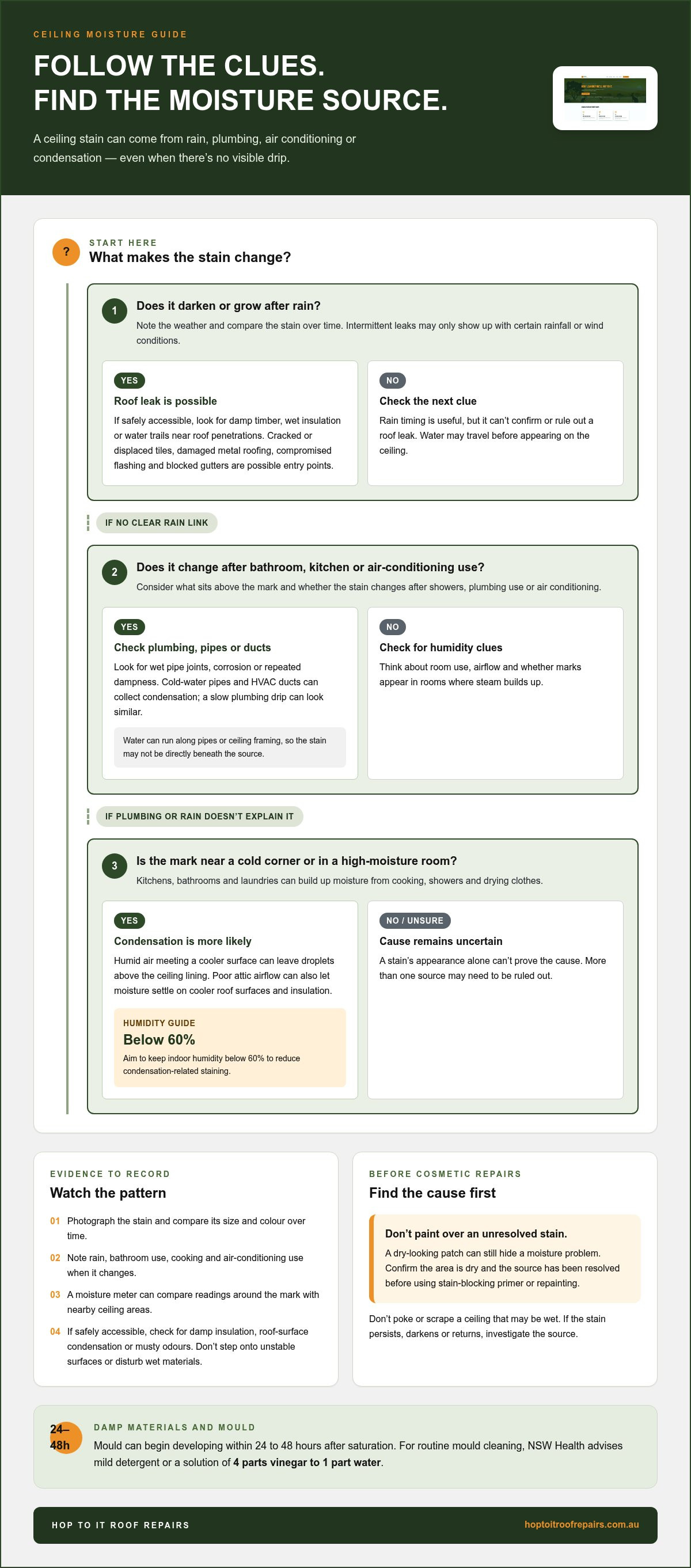
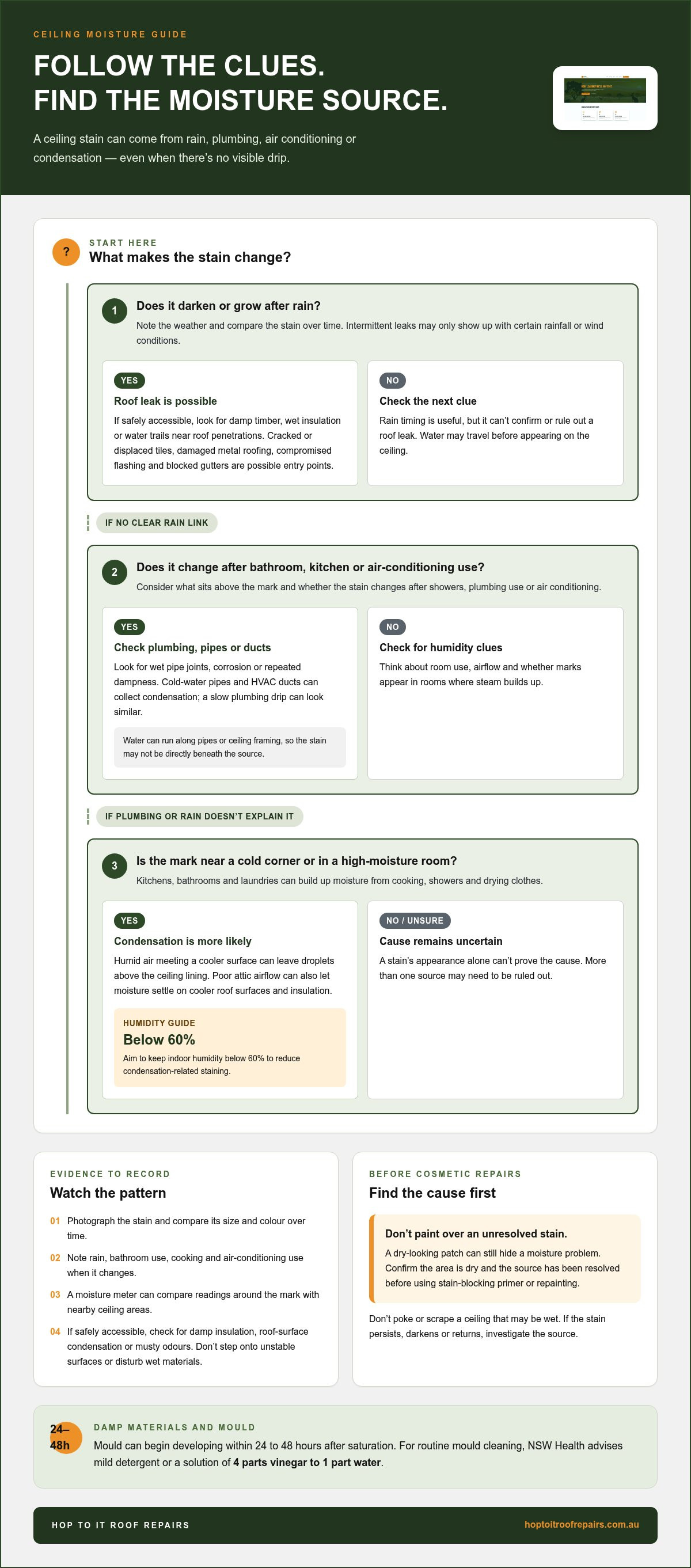
- Check whether the stain changes after rain or when plumbing and air conditioning are in use; water can travel along pipes or ceiling joists before appearing.
- Keep indoor humidity below 60% to help reduce condensation, especially in rooms where steam builds up.
- Act quickly if the ceiling is soft, sagging, or the stain is spreading, darkening or returning. Don’t poke or scrape a potentially wet ceiling.
- Find and fix the moisture source before repairing the ceiling. For routine mould cleaning, NSW Health recommends mild detergent or a solution of 4 parts vinegar to 1 part water.
Condensation from humidity and poor ventilation
Condensation can mark a ceiling without a roof leak or burst pipe. Consider room use, airflow and nearby pipes or ducts to narrow down the cause.
Indoor humidity and condensation
Condensation can occur when humid indoor air encounters a cooler surface. In a kitchen, bathroom or laundry, cooking, showers and drying clothes can add moisture to the air. If humidity stays high, droplets can collect above the ceiling lining and eventually leave a mark. Aim to keep indoor humidity below 60% to reduce condensation-related staining.
Notice whether marks appear in rooms where steam builds up, or after cooking and showers. Use exhaust fans during these activities and keep them running afterwards to move moist air outside. If the stain is limited to a cold corner or appears in more than one high-moisture room, condensation is more likely, though other sources still need to be ruled out.
Poor ventilation in the attic
Attic ventilation allows damp air to escape instead of lingering around the roof structure. When airflow is restricted, moisture can settle on cooler roof surfaces and insulation, then affect the ceiling below. This can happen without rain or a visible plumbing leak. Check attic ventilation seasonally, as changing weather and household heating or cooling can alter moisture conditions.
From a safe access point, look for damp insulation, visible condensation on roof surfaces or musty odours. Compare those signs with the ceiling stain’s location, but don’t step onto unstable surfaces or disturb wet materials. Moisture in several areas may point to poor airflow. A stain near one roof penetration or below a bathroom may have another cause.
Condensation around plumbing and ducts
Cold-water pipes can collect condensation when humid air meets their cool exterior. Droplets may gather around joints, run along a pipe or drip slowly onto the ceiling lining. HVAC ductwork can behave similarly when cold surfaces meet moist air, or when condensate doesn’t drain properly. Check whether marks sit beneath pipe runs, ductwork or an air-conditioning unit.
A slow plumbing drip can resemble condensation, so look for wet joints, corrosion, repeated dampness or a growing mark. Water may travel along a pipe or ceiling framing before appearing elsewhere. A dry-looking pipe doesn’t prove the ceiling is dry. A moisture detector can help compare readings around the affected area and nearby surfaces.
Condensation often causes broader, recurring dampness rather than a clear drip point, but appearance alone can’t prove the cause. Record when the mark changes, such as after showers, cooking or air-conditioning use, and check whether the area dries completely when ventilation improves. If the stain persists, darkens or returns, investigate the source before making cosmetic repairs.
Damp materials need prompt attention because mould can begin developing within 24 to 48 hours after saturation. For routine cleaning of mouldy surfaces, NSW Health advises using mild detergent or a solution of 4 parts vinegar to 1 part water. Don’t scrub or repaint a damp ceiling; first establish whether moisture remains and whether the underlying cause has been resolved.
How can I tell if a ceiling stain is a roof leak or a pipe leak?
Track when the stain appears and what’s happening above it. A mark that worsens after rain may point to a roof issue; one that changes after bathroom use can indicate plumbing. Neither pattern proves the source, because water can travel along pipes or ceiling joists before becoming visible.
Australian home insurance coverage depends on the policy wording, including the cause of damage, exclusions and maintenance history. Keep dated photos of the stain, notes about rain or plumbing use, and copies of inspection reports and repair records to document what happened.
If your home has an accessible roof space, look above the mark for damp timber, wet insulation or water trails near roof penetrations. Cracked or displaced tiles, damaged metal roofing, compromised flashing and blocked gutters can let rain in. Wind-driven rain can also enter through vulnerable roof details, even when the weather otherwise seems dry.
Timing is a useful clue. A stain that darkens after rain, then dries, may come from an intermittent roof leak. Water can enter only under certain wind or rainfall conditions, so the ceiling may look dry during an inspection. Record the weather and changes to the stain. A moisture meter can compare readings around the mark with nearby ceiling areas to show where moisture remains.
For plumbing, consider what sits directly above the stain. A bathroom, toilet or kitchen may contain pipes, taps, fixtures and overflows that leak intermittently. Failed waterproofing, deteriorating grout or an overflow can also send water through a floor. A cracked toilet bowl or leaking tap handle may leave a nearby stain. Check whether the mark changes after using that room, but remember water can run sideways before reaching the ceiling.
An old leak can leave a brown or yellow mark after the ceiling dries, even if the source has been fixed. A persistent stain doesn’t prove the leak is still active, but renewed dampness, a growing edge or bubbling paint needs investigation. Don’t use painting as a diagnosis. Confirm the area is dry and the cause resolved before using a stain-blocking primer or repainting.
Keep a simple record: photograph the mark, note rain and bathroom use, and compare the stain over time. Don’t poke or scrape a ceiling that may be wet. If rain-related changes or roof-space clues point to a roof leak, a roof leak assessment can help identify the entry point before cosmetic repairs begin.
Is a water stain on a ceiling serious?
It can be. A ceiling stain may signal moisture inside the roof or ceiling cavity, even when no water is dripping. Treat changes in the mark, ceiling surface and smell as clues to the cause and urgency.
Possible and hidden stain causes
Ceiling stains can come from roof leaks, plumbing leaks, overflows, condensation or air-conditioning drainage problems. A blocked drip tray or drain line can let water collect above the ceiling, while a bathroom leak may travel beyond its original source. These hidden causes matter because the visible mark may sit away from the damaged pipe, roof area or fitting.
Water can build up inside a ceiling before a stain appears. A small plumbing leak may take months to saturate the lining enough to show. A mark that stays the same size can still indicate a problem, so don’t judge it by appearance alone. Damp materials can support mould growth, and water accumulating above the ceiling can damage building materials.
Check the stain’s pattern and context. A mark that darkens after rain may point to a roof leak; one below a bathroom may suggest plumbing, an overflow or failed waterproofing. Bubbling paint, a musty smell or a soft patch adds concern. If water is near a ceiling light fitting, turn off the electricity and keep clear of the area.
A sagging or wet ceiling needs prompt attention because saturated material can become unstable. Don’t poke, press or scrape it. If water is actively dripping, place a bucket beneath the drip and keep the area clear. Mould can begin developing within 24 to 48 hours after materials become saturated, so don’t leave dampness unresolved.
Painting won’t fix water damage. The stain may bleed through fresh paint if the source remains active or the ceiling hasn’t dried completely. Identify and fix the cause first, then assess whether the ceiling is sound before arranging cosmetic repairs. A persistent mark may remain after the original leak has stopped, but renewed dampness calls for investigation.
When to call a building professional
Arrange an inspection if you can’t identify the source, or if the stain spreads, darkens or returns after rain. A roofer handles roof leaks; a plumber investigates pipes and bathroom issues. An air-conditioning technician can assess drainage or condensation problems, while a building inspector can help assess wider damage.
Act quickly if paint peels, the ceiling feels soft or sags, or a musty smell develops. These signs can point to continuing moisture or damage beyond the visible patch. Keep people clear of a sagging area and document changes with photos. Find and fix the water source before repairing or repainting the ceiling.
Ceiling water stains with no detectable leak
The phrase “water stain on ceiling but no leak” describes a mark with no visible drip, not proof that moisture is absent. A small plumbing leak can take months to saturate the ceiling enough to leave a visible stain, so the source may be concealed or intermittent.
Start by mapping the mark against what’s above it. Note whether it sits beneath a bathroom, pipe run, air-conditioning drain or roof feature. Water can travel along ceiling joists or pipes before appearing, so the stain may not sit directly below the entry point. A moisture detector can compare readings around the mark and nearby surfaces to show whether dampness remains.
Look for patterns rather than relying on one inspection. A stain that changes after rain makes roof areas, flashing and gutters worth investigating. If it changes after a shower or plumbing use, a pipe, overflow or wet-area leak may be involved. Moisture that appears during air-conditioning use can point to a drain or ducting issue. Record the weather and household activity when the mark changes.
Don’t poke, press or scrape the ceiling to test it. Wet plasterboard may be unstable, and opening the surface can expose damaged insulation or framing. If the ceiling is soft, sagging or actively dripping, keep clear and arrange prompt assessment. For a drip, place a bucket underneath without touching the affected ceiling.
Find and fix the water source before cleaning, repairing or repainting. Painting over a stain without preparation can let it bleed back through the new finish. The ceiling and insulation should dry completely, and the underlying cause must be resolved first. Allow at least 48 hours with good airflow for ceiling plasterboard and insulation to dry before priming or painting.
Use the suspected source to guide follow-up checks. After a roof issue is repaired, see whether the area stays dry through a full rain event. After a plumbing or appliance source is fixed, observe the ceiling through a week of normal household use. If air conditioning was suspected, check through an HVAC cycle. If you’re investigating a water stain on ceiling but no leak appears, returning moisture means the cause needs further investigation, not another coat of paint.
Only move to cosmetic repairs once the stain remains dry and the ceiling is sound. Apply one coat of stain-blocking primer, then one or two coats of ceiling paint after the primer is fully dry. If the mark grows during those checks, pause the repainting and document the change with dated photos. That record can help an inspector trace when moisture returned and which conditions may be connected.
When should I call a plumber, roofer, or building inspector in Australia?
Arrange an inspection when the stain’s source is unclear or moisture returns. A spreading or darkening mark, bubbling or peeling paint, a musty smell, or a stain that reappears after rain are signs to act quickly. A soft or sagging ceiling also needs prompt attention.
Choose the trade based on the strongest clue. A stain that changes after rain, or appears beneath roof tiles, metal roofing or flashing, points to a roofer. A mark below a bathroom, toilet or pipe run suggests plumbing. If water appears while the air conditioner runs, an air-conditioning technician can assess its drain or ducting.
Arrange a roofer’s inspection when stains recur after rain or moisture returns near the ceiling. Roof leaks can come from cracked or displaced tiles, damaged metal roofing, compromised flashing or blocked gutters. A roofer can inspect the roof and trace likely entry points. Don’t climb onto the roof yourself, especially when surfaces are wet.
Call a plumber for active dripping or a stain below plumbing, a bathroom or another wet area. Leaking pipes, overflows and failed waterproofing can send water through a ceiling. Tell the plumber whether the mark changes after using a shower, toilet or tap. That timing helps narrow the search, even if no pipe leak is visible.
A building inspector can help when the cause remains unclear, several areas show damage, or you need an assessment of affected building materials. They can examine the pattern and visible condition of the ceiling, then help identify where further investigation is needed. If the evidence points to a roof, pipe or air-conditioning issue, the relevant trade can investigate that system.
Don’t wait for a stain to become large before acting. A soft or sagging ceiling may be unstable, so keep people clear and don’t press or poke it. If water is dripping, place a bucket beneath it without touching the ceiling. If water is near a ceiling light fitting, turn off the electricity and stay clear of the area.
Before arranging an inspection, take dated photos and note when the mark changes. Record rain, bathroom use and air-conditioning operation, along with any musty smell or paint changes. Keep the affected area accessible, but don’t remove ceiling material yourself. These observations give the tradesperson a clearer starting point and help distinguish returning moisture from an old, dry stain.
If rain-related clues point to roof damage, arrange a roof assessment to help locate the source before ceiling repairs begin. Fixing the cause comes first; repainting a damp or damaged surface can conceal the evidence without stopping the moisture.
Hop To It Roof Repairs: Roof Leak Detection
Hop To It Roof Repairs can investigate a ceiling stain when roof damage is a possible source. Its Roof Leak Detection service uses systematic hose testing, water tracing, thermal checks and photo documentation to help identify roof entry points. Metal Roof Repairs and Tile Roof Repairs address damage to those roof types. Gutters & Downpipes are also relevant when blocked or damaged drainage may be contributing to water entering the roof.
For homeowners across Brisbane and the Gold Coast, a roof inspection is a practical next step when staining returns after rain or roof clues remain. Fixed-price quotes and detailed written reports provide clarity about the work and findings. If the evidence points to plumbing or condensation instead, a roofing inspection may not resolve that cause.
Contact Hop To It Roof Repairs to discuss a suspected roof leak.
Take the next step towards a dry, sound ceiling
A water stain on the ceiling but no leak in sight can leave you unsure where to focus. Use your observations to guide the next decision, rather than treating the mark itself. If it appears after rain or sits beneath a roof feature, a roof inspection can help narrow down the cause before you arrange ceiling repairs.
Hop To It Roof Repairs offers Roof Leak Detection, along with Metal Roof Repairs and Tile Roof Repairs when roof damage is identified. If the evidence points to plumbing or condensation instead, those need a different investigation. Sharing what you’ve noticed, such as changes after rain or the stain’s position, helps start the conversation with useful details.
Take a photo of the affected area and note what conditions make it change. Then contact Hop To It Roof Repairs if you suspect a roof leak. A clear next step can help you move from uncertainty towards a properly identified cause and a ceiling ready for repair.
Frequently Asked Questions
Mystery Ceiling Leak You Cannot Find?
A hidden ceiling leak is best traced beyond the visible mark, not by opening the ceiling at random. From a safe access point, inspect the roof space for damp insulation, timber marks or water trails along framing. Compare moisture readings around the stain with a moisture detector, then note the results on a room plan. If there’s no safe access, arrange a professional inspection rather than cutting into the ceiling lining.
What does a brown ring on my ceiling mean?
A brown ring usually means water carried residue into the ceiling surface as it dried. Its colour can’t tell you when the moisture arrived or whether the source is still active. Photograph the ring in consistent lighting and compare its edges over time. If a new outline forms beyond the original mark, or the centre becomes damp again, treat it as a change that needs investigation.
What is above the stain?
What’s above a stain depends on the ceiling’s position: there may be a roof space, another room or a service cavity. Check your home’s layout and note nearby features such as a ceiling vent, light fitting or roof opening. In a multi-storey home, the stain may sit below a room with plumbing. Remember that water can move sideways, so the nearest feature may not be the source.
What causes a water stain on a ceiling when there is no active leak?
A stain can remain after the original moisture has dried, or appear when a source operates only under particular conditions. Rain may reach a roof opening only with certain wind directions, while a small pipe leak may wet the ceiling slowly. Condensation can also leave moisture without a broken pipe. The absence of dripping when you look doesn’t establish that the source has stopped.
How can condensation or poor ventilation cause ceiling water stains?
Moist indoor air can leave water on cooler ceiling or roof surfaces, especially where steam is produced repeatedly. A kitchen used for boiling or a bathroom with limited airflow can create recurring moisture. Compare the stain’s timing with cooking, showers or laundry use. If similar marks appear near cold surfaces in the same room, investigate condensation alongside possible plumbing or roof entry.
How do roof leaks appear intermittently and where should I check?
A roof leak may only show during particular rain or wind conditions, so the ceiling can look dry between events. In Brisbane, the Gold Coast, Redland Bay, Moreton Bay and Ipswich, note the weather when the mark changes. From safe ground or an accessible roof space, look for clues around flashing, valleys, gutters and roof penetrations. Don’t climb onto a wet roof to inspect it.
How can I tell whether a ceiling stain is old or still getting wet?
Colour alone can’t date a stain. Take clear photos from the same position and compare the outline, surface texture and any fresh dampness over time. A moisture detector can help compare the marked area with nearby ceiling material. A stain that stays unchanged and dry differs from one that expands or develops a damp surface, but consider either pattern alongside the building’s history.
What steps should I take to investigate a ceiling water stain safely?
Start with observations from floor level: photograph the mark, note its position and record nearby rooms or fittings. Don’t poke, press or scrape the ceiling. Keep clear if it looks soft or bowed, and turn off electricity if water is near a light fitting. For active dripping, place a bucket underneath without touching the ceiling. Leave roof access and damaged ceiling materials to a professional.