Roof repair for insurance claims in Brisbane and booking an inspection
22 October 2026 · 17 min read
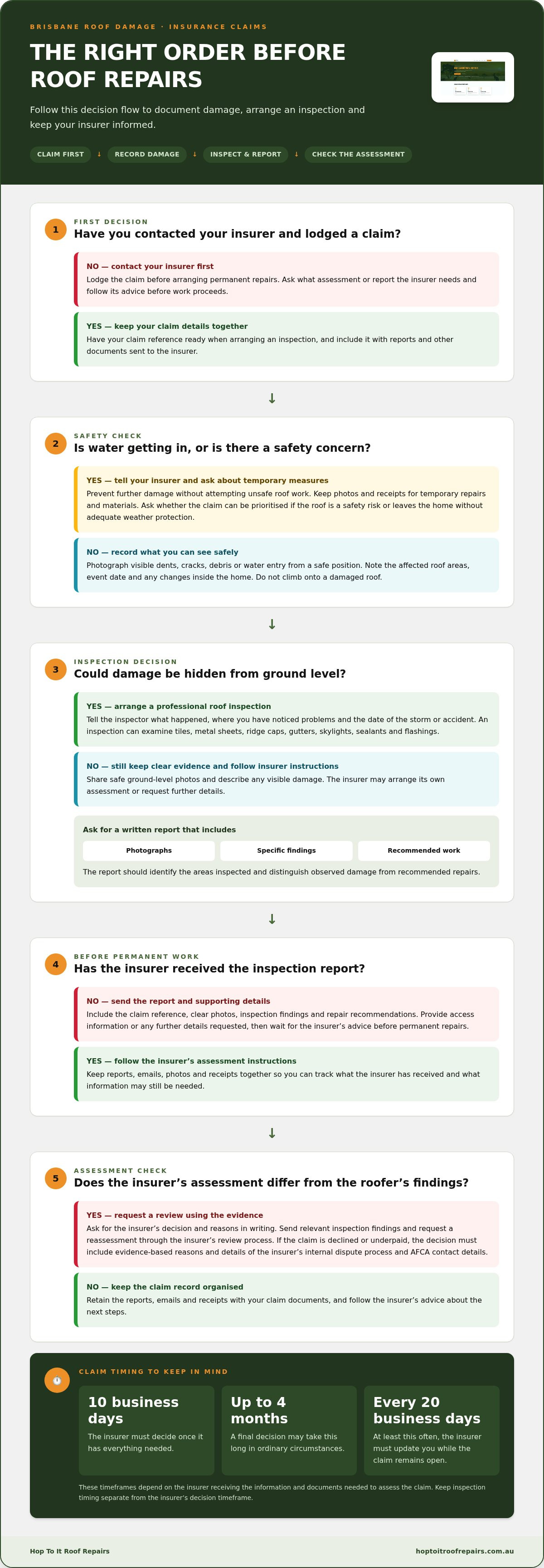
Start with your insurer, not the repair booking. If you need roof repair for an insurance claim in Brisbane, contact your insurer and lodge a claim before arranging permanent repairs. Photograph visible damage from a safe position, keep receipts for temporary measures, and follow your insurer’s advice before work proceeds.
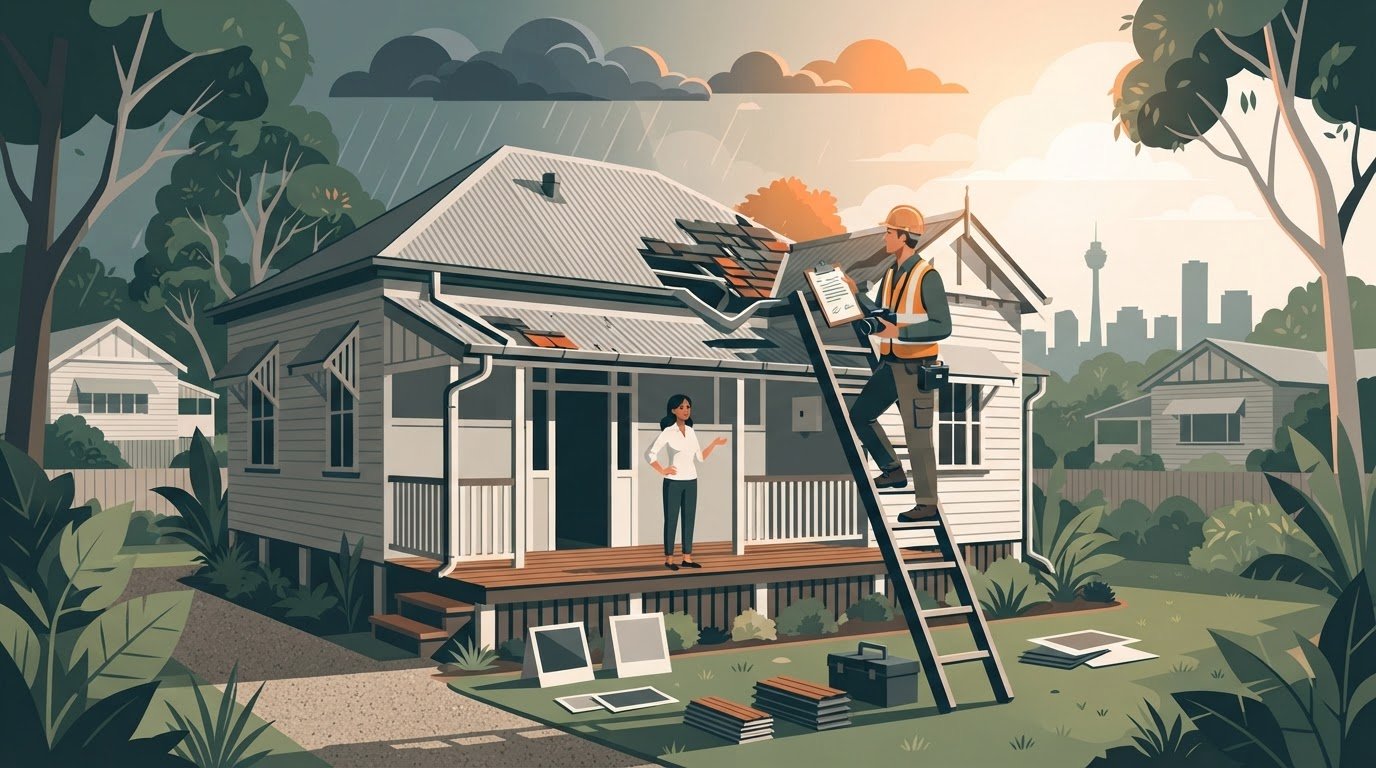
It’s understandable to want the roof inspected straight away, especially when water is getting inside. A professional inspection can identify storm damage that isn’t visible from the ground and document what needs attention. Clear evidence helps explain the damage and the repair work being recommended.
This guide explains how to arrange an inspection, record damage and submit a roof report to your insurer. You’ll also learn what home insurance may cover, how claim decisions work, and what to do if the insurer’s assessment differs from the inspection findings.
Key Takeaways
- An insurer must decide a claim within 10 business days once it has everything needed, and provide progress updates at least every 20 business days while the claim is open.
- Book an inspection to document damage that may not be visible from the ground, including issues with tiles, metal sheets, flashings and gutters.
- Include clear photos, inspection findings and repair recommendations in your report so the insurer can assess the damage and proposed work.
- Cover often depends on whether a leak followed a sudden event, such as a storm, or resulted from wear and tear or poor maintenance.
- Compare the roofer’s findings with the insurer’s assessment, and use the insurer’s review and dispute process if they differ.
How long does an insurer have to decide on a roof damage claim?
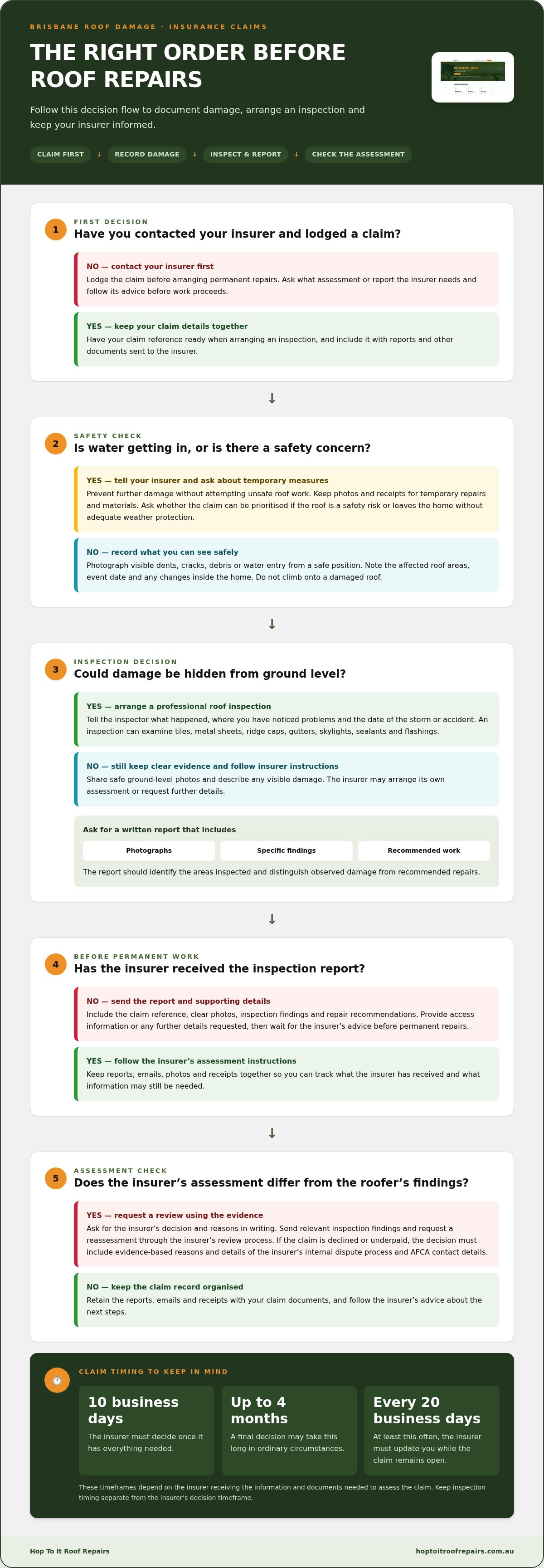
In Australia, an insurer must decide a roof damage claim within 10 business days once it has everything it needs. In ordinary circumstances, it may take up to 4 months to make a final decision. While the claim remains open, the insurer must update you at least every 20 business days.
Claim timeframes depend on the insurer receiving the documents and information needed to assess your claim. After hail, high winds, a falling tree or an accident, contact your insurer promptly and record the event date, damage and any immediate safety concerns. If the damaged roof creates a safety risk or leaves your home without adequate weather protection, ask whether the claim can be prioritised.
Hail damage can affect homes across South East Queensland, including Brisbane and the Gold Coast. On metal roofing, hail can leave dents that may weaken roof sheeting over time. It can also crack tiles, dislodge flashings and damage skylights. If solar panels are on the roof, photograph their visible surfaces from a safe position and include them in your claim information for assessment.
Request a professional roof inspection if damage may be hidden from ground level. The inspection can examine metal sheets, tiles, ridge caps, gutters, skylights, sealants and flashings. A small dent or cracked tile may be hard to see from the driveway, while displaced flashing can let water beneath the roof surface. Give the inspector your claim details and the date of the storm or accident.
Before anything is moved or repaired, record what you can safely see. Keep the evidence organised for your insurer and the inspection:
- Photograph visible dents, cracks, debris and water entry from safe locations.
- Note the affected roof areas, the event date and any changes inside the home.
- Keep receipts for temporary repairs and materials used to limit further damage.
Prevent further damage without attempting unsafe roof work. If water is entering, tell your insurer and ask what temporary measures it recommends before proceeding with repairs. Keep receipts and photos of those measures. This record helps distinguish urgent protection work from permanent roofing repairs and gives the assessor a clearer account of what happened.
If your insurer rejects or underpays your claim, request its decision and reasons in writing, then compare them with the inspection findings. ASIC says a full or partial decline must include evidence-based reasons and details of the insurer’s internal dispute process and AFCA contact details.
If the insurer’s assessment differs from the roofer’s report, send the relevant evidence and request a reassessment through the insurer’s review process. Keep reports, emails and receipts together so you can track what the insurer has received and what information may still be needed.
How do I book a roof inspection?
For roof repair for an insurance claim in Brisbane, contact your insurer first, then arrange an inspection that documents the roof condition. Have your claim reference, property details and a brief description of the damage ready when booking. If you’re waiting for instructions, ask what assessment or report the insurer needs before permanent repairs proceed.
Professional inspections and insurance reports
Tell the inspector what happened and where you’ve noticed problems, such as a ceiling stain below a roof valley or water entering near a skylight. A professional inspection can examine tiles, metal sheets, ridge caps, gutters, skylights, sealants and flashings. Request a written report with photographs, specific findings and recommended work to help the insurer assess the evidence.
An independent roofer’s report can help clarify the condition of the roof if the insurer’s assessment differs. Check that the report identifies which areas were inspected and distinguishes observed damage from recommended repairs. For example, a note about a loose flashing should identify its roof location and explain how it relates to the reported leak.
Inspection, approval and repair stages
Keep the steps in order: lodge the claim, follow the insurer’s assessment instructions, arrange the inspection, submit the report, then wait for advice before permanent work. The insurer may arrange its own assessment or request further details. Provide access information and include the claim reference with reports and other documents.
A recommendation to replace the roof should explain why localised repairs may not address the documented damage. If the inspection also finds storm damage to gutters, ask for those findings to be recorded separately. This gives the insurer a clearer picture of each affected component and the proposed work.
Inspection and quote turnaround times
Inspection and quote timing depends on roof access, the extent of damage, weather and the detail required. After severe weather in Queensland, demand may affect appointment availability. When booking, describe any active leak, damaged roof area or access restriction, and ask what information the inspector needs beforehand.
For roof repair for an insurance claim in Brisbane, keep inspection timing separate from the insurer’s decision timeframe. Share the claim reference, roof type and safe ground-level photographs when requesting an appointment. These details help focus the inspection on relevant areas, whether the roof has metal sheeting, tiles or gutters needing assessment.
Before the appointment, gather your photos, event details and insurer correspondence. Don’t climb onto a damaged roof; point out visible issues from a safe position. A detailed report can support the claim by connecting observed roof conditions to recommended work. If you need documented findings for the insurer, arrange a roof inspection and report.
Does insurance cover a leaking roof?
Home insurance in Brisbane generally covers sudden storm-related roof damage, subject to the policy terms and excess. Leaks caused by wear and tear or poor maintenance are generally not covered.
Roof repair and replacement options
The right repair depends on the cause and extent of the roof damage. A localised issue, such as a cracked tile or damaged flashing after a storm, may need a targeted repair. Widespread damage may require broader work, so a professional roof inspection should identify affected areas before replacement is recommended.
Ask the insurer to assess the proposed work against the inspection findings. The report should distinguish storm damage from pre-existing deterioration and explain why each repair is needed. This helps you understand whether the recommendation addresses the leak source, damaged roofing and affected gutters, rather than only the visible indoor water stain.
When replacement may be needed
One damaged tile does not automatically mean the whole roof needs replacing. However, multiple cracked, loose or smashed tiles may indicate widespread storm damage. Widespread denting or deformation across metal roofing can also mean replacement is needed.
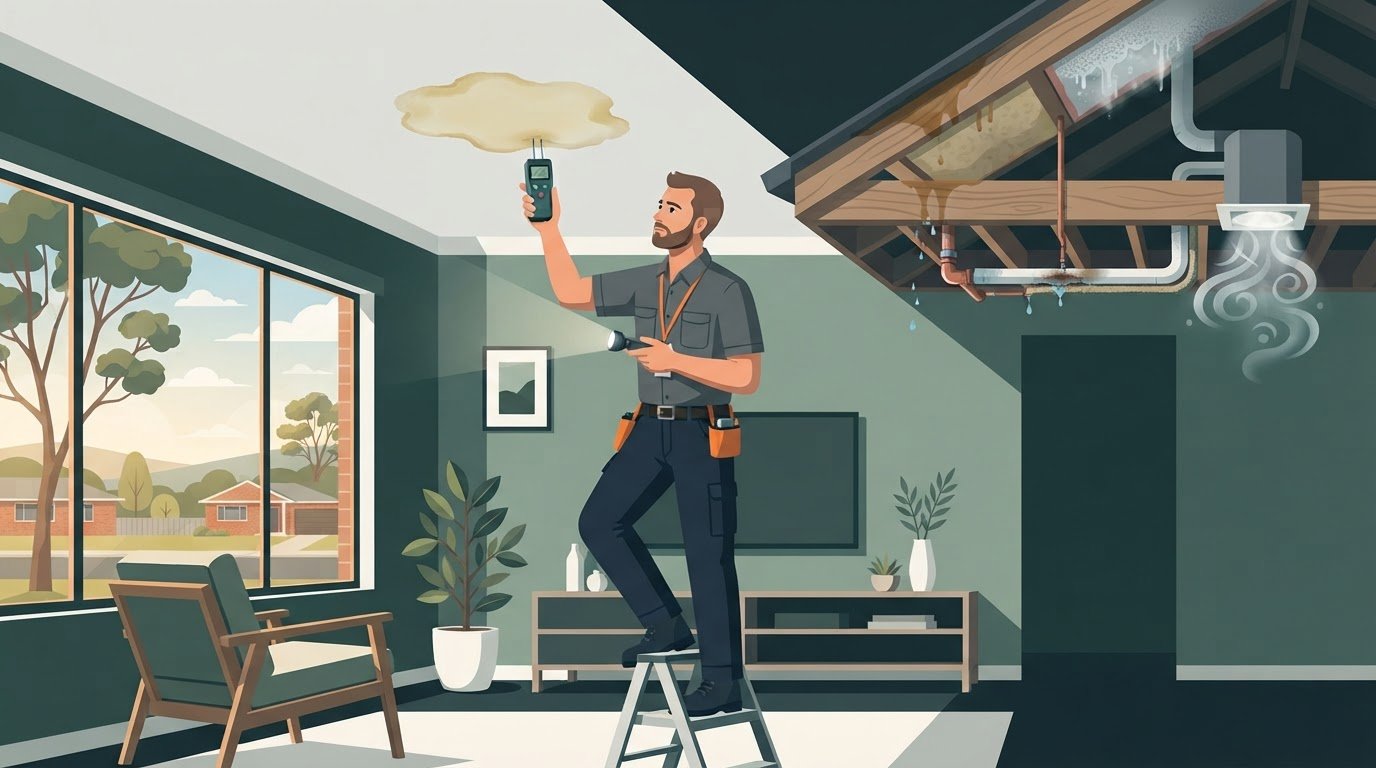
Look for signs beyond the roof surface. Interior stains or a sagging ceiling can signal substantial water entry, while leaks after light rainfall may point to broader roof problems. These signs need inspection and assessment; they don’t establish what an insurer will approve. Compare the recommended work with the documented damage.
Repair costs after storm or hail damage
What is the typical cost of roof repairs in Brisbane after storm or hail damage? The price depends on the damage, roof type, access, materials and extent of repair, and is given after a quote request. A few damaged tiles require different work from widespread metal-sheet damage or a roof replacement.
For a useful assessment, record the affected areas and provide clear photographs. Ask for a written quote that separates the recommended work and materials. Your policy excess also affects what you may pay towards an insured claim, so compare the insurer’s approved work with the repair quote before repairs proceed.
Damage typically excluded from claims
What roof damage is typically excluded from Australian home insurance claims? Leaks caused by wear and tear or poor maintenance are generally excluded, unlike sudden storm-related damage such as hail impact, wind-lifted tiles or a fallen branch, subject to policy terms.
A storm may expose an existing maintenance issue alongside new damage. An inspection report can describe the condition of tiles, ridge caps, pointing and flashings, then distinguish visible storm impacts from deterioration. Give the insurer this evidence and ask how the policy applies to each cause before agreeing to the repair work.
Whether to contact the insurer or roofer first
After storm or accidental roof damage, contact your insurer and lodge a claim before arranging permanent repairs. Then follow its advice about inspection, documentation and repair approval.
Contacting the insurer to start a claim
Tell the insurer what happened, when you noticed the damage and which roof areas appear affected. Describe visible problems, such as loose tiles, dents in metal sheeting, a fallen branch or water entering a room. Ask for a claim reference and record the next steps.
Provide photographs and notes from the property, but don’t climb onto a damaged roof to collect evidence. Ask whether the insurer needs its own assessment or a roofer’s written report before considering repairs. Its instructions clarify what information is needed to assess whether the damage is covered.
Contacting the insurer after a storm
Contact your insurer early after a Brisbane storm, particularly if widespread weather damage has affected nearby homes. Early notification helps start the assessment process while you document the roof condition. If damage is severe, creates a safety risk or leaves the home without adequate weather protection, ask whether the claim can be prioritised.
Before calling, note the storm date, visible damage and any water entry. Photograph roof dents, cracked tiles and debris from safe positions, and keep receipts for temporary measures. Tell the insurer if water is affecting ceilings or belongings, as these details explain the immediate impact.
Once you’ve lodged the claim, arrange an inspection in line with the insurer’s instructions. A roofer can document damage that isn’t visible from the ground, but inspection findings don’t replace the insurer’s claim decision. You can choose your own roofer and submit the written findings for consideration.
Keep the claim moving with a simple record of each step:
- Write down the claim reference, insurer contact and date of each conversation.
- Save emails, inspection reports, photographs and receipts together.
- Ask what evidence or approval is needed before permanent repair work proceeds.
Wait for the insurer’s advice before starting permanent repairs. If it recommends an assessment first, provide access and share the damage details. For example, if a storm has lifted tiles and water is entering, explain both issues rather than reporting only the indoor leak.
Temporary measures may be needed to limit further damage, but discuss them with the insurer and keep a record of the work and receipts. A roofer’s inspection does not mean repairs are approved. The insurer’s written guidance clarifies what it will assess and what can happen next.
Submitting a roof repair report to an insurer
A clear roof repair report helps your insurer compare observed damage with the recommended work. Send it with your claim reference, photographs and a concise description of what happened so the assessor can connect each finding to the storm or accident.
Start by following the insurer’s instructions. It may require its own assessment or supporting documents before considering the repair work. Submit the report through the insurer’s nominated channel, keep a copy and note the date sent. If you’re unsure whether an attachment arrived, follow up using the claim reference.
A useful report identifies the property and roof areas inspected. It should describe visible damage in plain terms, such as dents in a metal roof, cracked tiles, displaced flashing or distorted gutters. Photographs and notes can show damage observed during a roof replacement assessment, helping distinguish specific findings from general descriptions.
Use a simple checklist to organise the submission:
- Match each photograph to a roof area, such as the rear slope or ridge.
- Include the event date, claim reference and any visible internal water damage.
- Attach the inspection report and itemised repair recommendations.
- Keep receipts for temporary repairs with the claim records.
If hail has dented metal sheeting and loosened flashing, for example, the report should identify both areas and show them clearly in photographs. If the same inspection finds cracked tiles elsewhere, list those separately. This makes it easier to compare the insurer’s assessment with the roofer’s observations, without implying that every finding will be covered.
For a commercial property, identify the affected building area and explain any access limits that shaped the inspection. The report should state what was observed and what work is proposed, rather than treating an uninspected section as confirmed damage. If weather prevented a complete inspection, record the limitation and arrange a follow-up when access is practical.
When the insurer’s work scope differs from the report, respond in writing. Point to the specific photograph, roof area or repair recommendation that needs review. Ask the insurer to explain how its assessment addresses the evidence. Keep its response with the report so the decision trail stays clear if you request a reassessment or use the insurer’s dispute process.
Before any permanent work begins, make sure the insurer has the documents it requested and has advised you about next steps. A detailed written report provides a practical record of the inspection and recommendations. To document roof leaks and repair needs, arrange a roof inspection and written report.
Hop To It Roof Repairs: Roof Leak Detection
Hop To It Roof Repairs can help when a leak needs tracing or storm damage needs a closer assessment. Roof Leak Detection can help identify where water is entering, while a written report records the inspection findings and recommended work for your claim documents.
For damaged metal or tile roofing, Metal Roof Repairs and Tile Roof Repairs address the affected roof type. If storm damage has also affected drainage, Gutters & Downpipes can address those components. Share your insurer’s instructions and claim details so the inspection findings can support the next step in your assessment.
Contact Hop To It Roof Repairs to arrange an inspection and discuss the report for your roof.
Move from inspection findings to a clear next step
For roof repair for an insurance claim in Brisbane, use the inspection findings to identify what needs attention first. Keep the report, photographs and insurer correspondence together, then note any roof areas still needing assessment or repair. A clear record helps explain the work required and keep the next conversation focused.
Hop To It Roof Repairs provides Roof Leak Detection, Metal Roof Repairs and Tile Roof Repairs. Turn to the team when you need a leak traced or damage to metal or tile roofing assessed. Share the relevant inspection details so the roof issue and recommended work can be discussed clearly.
Contact Hop To It Roof Repairs to discuss your roof inspection or repair needs. Take the next step with the information you’ve gathered and move towards a properly documented roof repair.
Frequently Asked Questions
How do I know if I have hail damage?
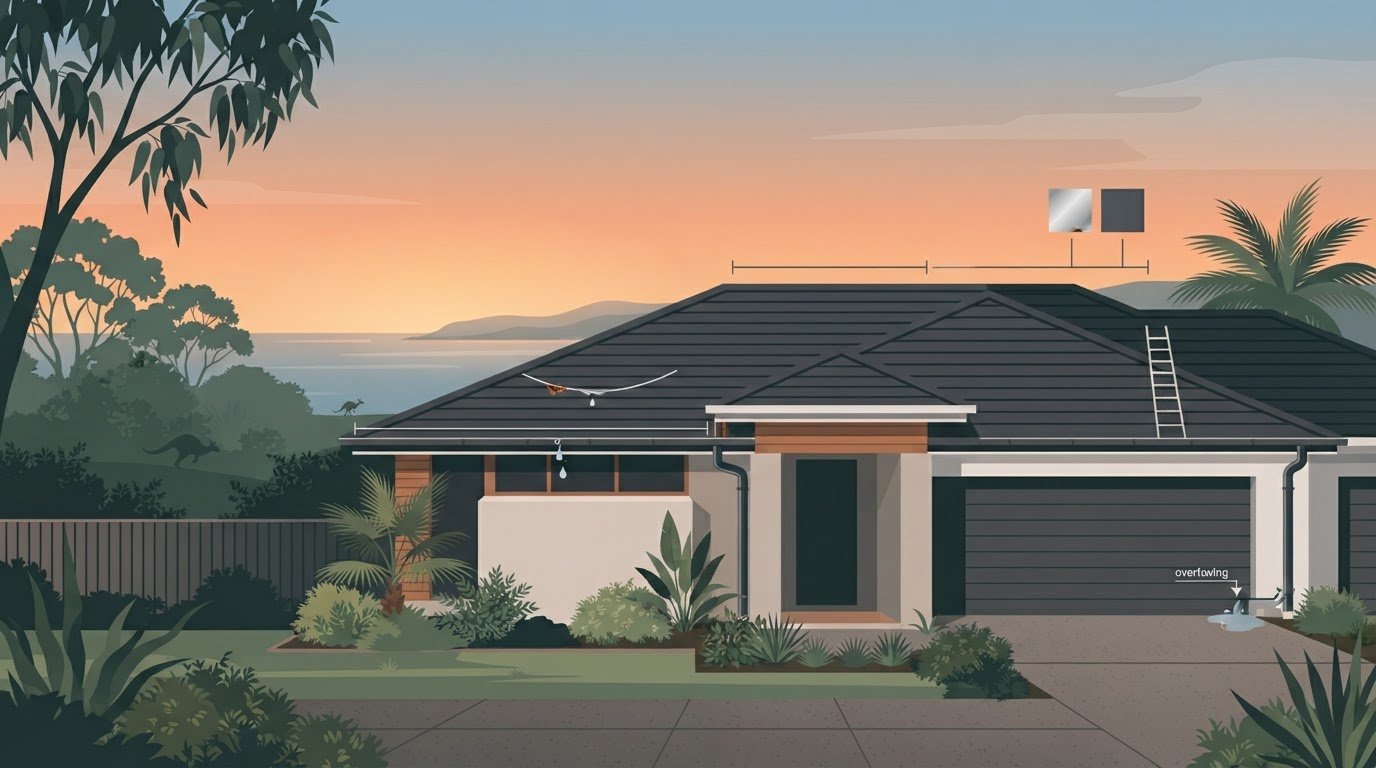
After hail, look for fresh dents in metal sheeting, cracked tiles, damaged skylights or debris. From the ground, check whether gutters appear bent or overflowing, but don’t climb up to inspect the roof. Hail damage can be difficult to see from below, so a professional inspection can identify issues you may miss. Compare visible marks with older photographs, if available, to help distinguish recent impacts from existing wear.
Are you licensed and insured?
Hop To It Roof Repairs is a QBCC-licensed roof plumbing company. Licensing and insurance are separate matters, so ask the business for its current insurance details before work starts. Check that the name on your quote matches the business you’ve contacted. Keep the quote and insurance information with your claim paperwork, particularly if your insurer asks who inspected or repaired the roof.
Insurer first, or roofer first?
Contact your insurer first to lodge the claim, then arrange a roofer’s inspection in line with its instructions. Before permanent work begins, get the insurer’s guidance on assessment and approval. If temporary measures are needed to protect the home, record what was done and keep receipts. For example, note whether temporary covering was placed over a specific leak area, then tell the insurer.
How do I document roof damage for a home insurance claim in Brisbane?
Build a clear record connecting each visible issue to its roof location. Take ground-level photographs from different angles and label them with details such as “front roof slope” or “garage gutter”. Note when you first noticed the damage, what changed indoors and any weather event you observed. Keep original images and receipts together to match photos with the inspection report and insurer correspondence.
What should I do immediately after storm or hail damage to a Brisbane roof?
Keep people away from areas affected by falling debris, ceiling sagging or active water entry. Don’t climb onto the roof or move heavy debris yourself. Photograph visible damage from a safe position, then contact your insurer and ask about next steps. If you use a temporary measure to limit water entry, keep a record and receipts. Tell the insurer if the damage affects rooms, belongings or safe access.
Does home insurance in Queensland cover roof repairs caused by storms, hail, or fallen trees?
Queensland home insurance generally covers sudden storm-related roof damage, including hail impact, wind-lifted tiles or a fallen branch, subject to policy terms and the excess. Wear and tear or poor maintenance is generally excluded. Check your policy wording for how it treats the event, resulting damage and any exclusions. A report can help distinguish a fresh impact from deterioration already present on the roof.
How do I find a licensed roof repairer in Brisbane for an insurance claim?
Look for a roofer whose stated work matches your roof, such as metal or tile repairs, and whose licence details can be checked. Hop To It Roof Repairs is a QBCC-licensed roof plumbing company serving Brisbane, the Gold Coast, Redland Bay, Moreton Bay and Ipswich. Its written reports include photographs of every fault found. Keep the report with your claim documents so the inspection findings can be considered alongside the insurer’s assessment.
Does a Brisbane roof repairer need a QBCC licence, and how can I check it?
Licence requirements depend on the work, so don’t assume every roof task has the same requirement. Use QBCC’s licence search to check a roofer’s current status, business name and licence class, then compare those details with the proposed work. Hop To It Roof Repairs is QBCC licensed for roof plumbing. Save the licence details alongside the quote and inspection report for your records.