
A recurring roof leak is a warning that its source may not have been fixed. Preventing future roof leaks starts with tracing where water enters and repairing the damaged roof component, rather than relying on a surface patch. Heavy rain can expose gaps in flashing, loose metal fixings, cracked tiles or blocked gutters.
It’s frustrating when a leak returns just as you thought it was sorted. Water can travel through the roof before appearing as a ceiling stain, so the visible damage may not be directly below the entry point. Damp areas can develop mould, and water near wiring can create further risks.
This guide explains why leaks recur, what heavy rain can reveal and how lasting repairs address the underlying cause. You’ll learn what signs to look for and when to get a roof leak professionally assessed, so you can act before the next storm makes the damage worse.
Key Takeaways
- Trace recurring leaks to their source, then repair the affected roof component rather than relying on a surface patch.
- After heavy rain, look for fresh water marks, overflowing gutters and damaged roof components from a safe position on the ground.
- Keep gutters and downpipes clear so water can drain away instead of backing up beneath roof edges.
- Act promptly on indoor signs of water entry, and keep clear of sagging ceilings or wet areas near electrical fittings.
Permanent repairs to shingles, flashing, vents, and underlayment
Urgent signs include active dripping, fresh ceiling stains or a visibly sagging ceiling. Coatings and sealants may limit water entry temporarily, but they won’t repair the underlying fault.
-
Check Flashing Around Roof Openings
Inspect flashing around chimneys, skylights and vents from the ground, using binoculars rather than climbing onto the roof. Look for lifted edges, gaps, rust, cracked seals or flashing pulled away from the roof. A skylight frame gap or damaged chimney angle flashing can let water into the roof cavity. Note affected openings and nearby tile or metal damage. This record helps direct a repair towards the source.
-
Repair Damaged Flashing and Seals
Arrange a permanent repair when flashing is loose, corroded or separated from a roof opening. The work should address damaged flashing and failed seals, not simply cover the visible gap. A 12×12 sheet metal flashing can temporarily cover a crack or hole, but it’s only a short-term measure. Rain can get behind the patch if the original entry point remains open. Properly repairing that opening is a practical step towards preventing future roof leaks.
- Match the repair to the roof material. A broken tile may need replacing, while failed underlay can require lifting and relaying tiles. On metal roofing, look for cracks, rust around fasteners and worn washers. Preventing future roof leaks means fixing the failed component, not just sealing the surface. Moisture may still enter if the underlay, fixing or adjacent roof section remains damaged.
- Check vents and nearby roof junctions as part of the repair. Address cracked or peeling waterproofing promptly rather than painting over it. A coating may protect a suitable roof surface, but it won’t fix a broken tile, failed flashing or leaking skylight seal. Choosing the repair based on the roof’s actual condition helps protect the roof investment and limits repeated water entry.
Risks of roof leaks, including mould and electrical damage
Yes. Roof repairs and waterproofing in Australia may be subject to applicable building requirements and state or territory rules. Requirements depend on the repair’s scope and location.
- Keep people away from wet ceilings, electrical fittings and sagging plaster. A bulge can hold water and may collapse, so don’t touch it or stand beneath it. If water is near lights, switches or wiring, keep clear and arrange an electrician’s assessment. A roof leak can damage wiring and create electric shock or fire risks.
- Limit water damage indoors while the source is addressed. Move furniture and belongings away from drips, then place a bucket beneath active leaks to protect floors. Dry accessible wet surfaces with towels and improve ventilation. Damp building materials can support mould growth within 24 to 48 hours, so act promptly rather than leaving soaked areas closed up.
- Stay off the roof during rain or high winds. Wet metal roofing and old tiles can be dangerous underfoot, while wind can make debris and loose components hazardous. Once the weather clears, inspect from the ground with binoculars for displaced tiles, cracks or debris. Don’t climb up to apply a temporary patch in unsafe conditions.
- Note where water appears and when it starts, such as a ceiling stain after heavy rain. Water can travel along rafters, sarking or insulation before showing indoors, so the stain may sit away from the entry point. Ageing materials, weather exposure and repeated water entry can also damage framing. For recurring leaks, professional roof repairs can address the underlying cause instead of just the indoor damage.
Why Does A Roof Leak During Heavy Rain?
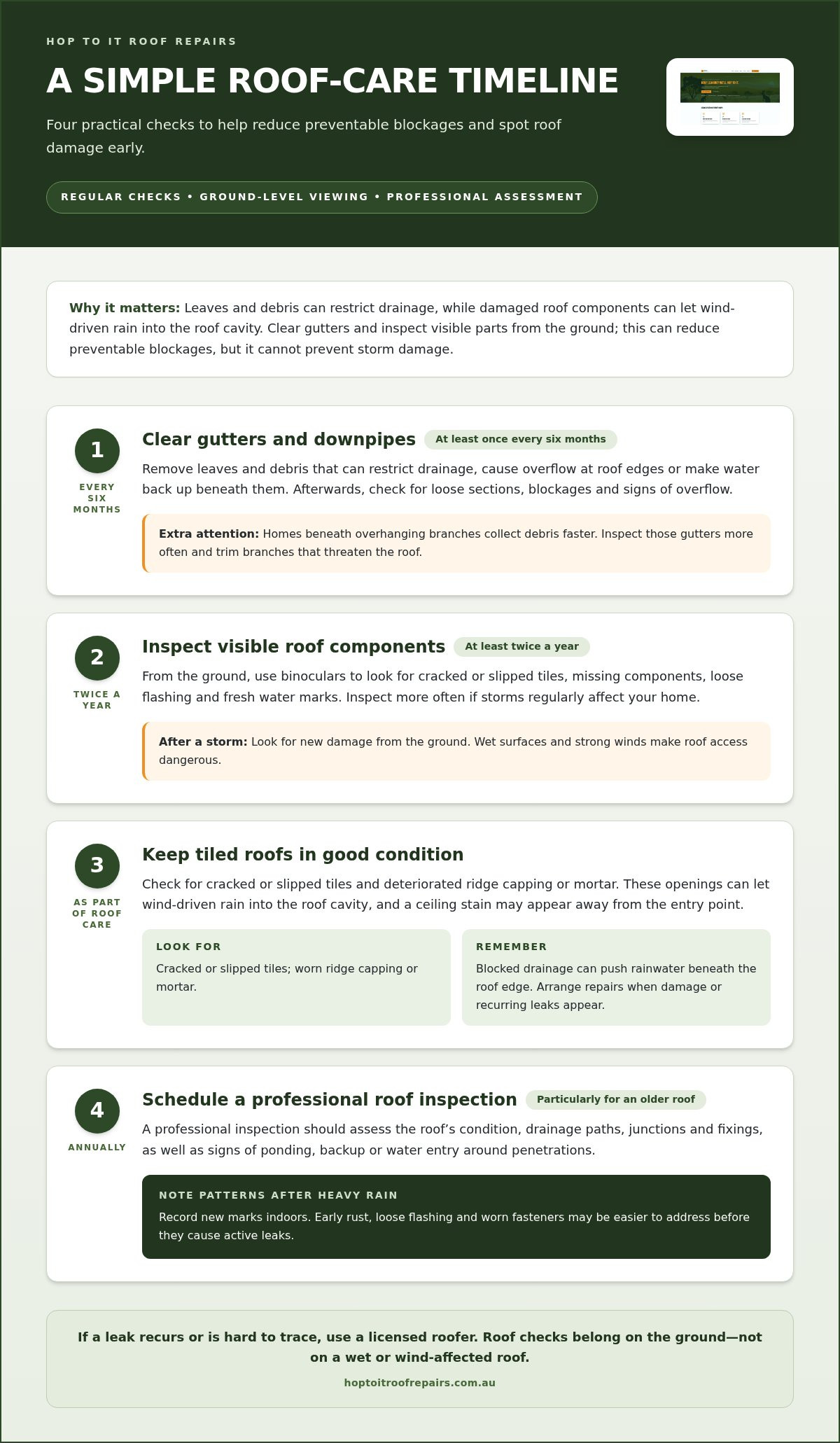
Use a licensed roofer for recurring or hard-to-trace leaks, or repairs involving roof junctions and drainage. Before storms, clear gutters and check visible roof components from the ground. This can reduce preventable blockages, but it can’t prevent storm damage.
- Clear gutters and downpipes at least once every six months. Leaves and debris can restrict drainage, causing water to overflow at roof edges or back up beneath them. After cleaning, look for loose sections, blockages and signs of overflow. Homes beneath overhanging branches collect debris faster, so inspect those gutters more often and trim branches that threaten the roof.
- Inspect the roof exterior at least twice a year, and more often if storms regularly affect your home. Use binoculars from the ground to spot cracked or slipped tiles, missing components, loose flashing and fresh water marks. After a storm, look for new damage without climbing onto the roof. Wet surfaces and strong winds make roof access dangerous.
- Maintain tiled roofs by checking for cracked or slipped tiles and deteriorated ridge capping or mortar. These openings can let wind-driven rain into the roof cavity, sometimes causing a ceiling stain away from the entry point. Keep gutters clear, too, because blocked drainage can push rainwater beneath the roof edge. Arrange repairs when damage or recurring leaks appear.
- Schedule a professional roof inspection annually, particularly for an older roof. An inspection should assess the roof’s condition, drainage paths, junctions and fixings, as well as signs of ponding, backup or water entry around penetrations. Early rust, loose flashing and worn fasteners may be easier to address before they cause active leaks. Record new marks indoors after heavy rain to help identify patterns.
Common causes of recurring roof leaks
- Match each recurring leak to the roof material and likely failure point. On metal roofing, temperature changes make sheets expand and contract, which can loosen fasteners. Older washers may perish, leaving gaps around screws. Look for rust near fasteners and cracks in the sheets. Surface sealant may conceal an opening without fixing loose fasteners or damaged metal. Preventing future roof leaks starts with repairing the source.
- Check tiled areas for cracked or slipped tiles, loose ridge capping and deteriorated mortar. A broken tile can let wind-driven rain into the roof cavity, and ceiling damage may return with each storm. Replacing the tile may be enough if the underlay remains sound. If the felt beneath has failed, tiles may need to be lifted and relaid to restore the roof properly.
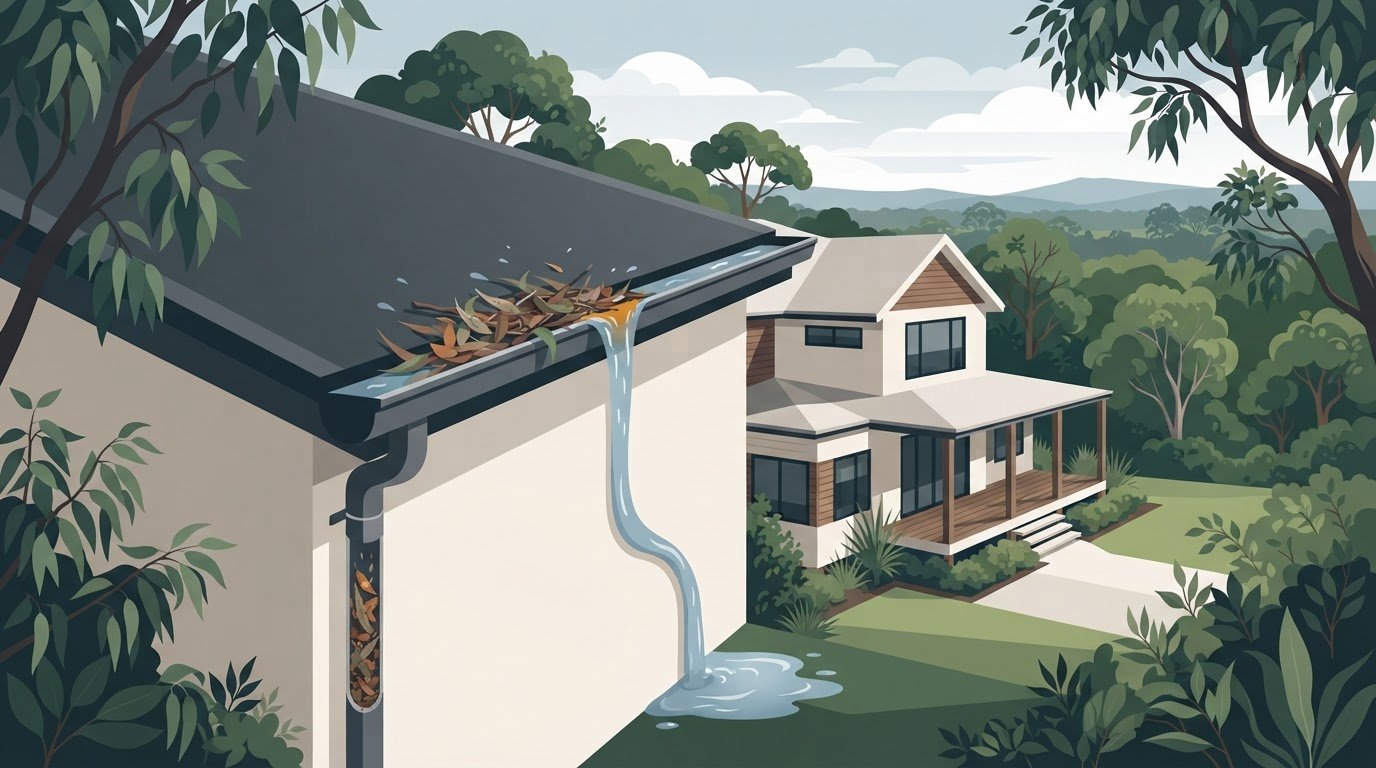
- Trace water around roof edges back to drainage problems. Blocked gutters can cause rainwater to overflow onto fascia boards or back up under the roof edge, even when the roof covering appears intact. Clear debris from gutters and check downpipes for obstructions. If water still backs up, inspect the drainage path and nearby roof junctions. Preventing future roof leaks also means keeping drainage routes clear.
- Look for storm damage beyond the obvious entry point. Hail, wind and debris can crack or dislodge roof coverings, while repeated exposure can worsen small openings. Inadequate attic ventilation can allow moisture and hot air to build up, contributing to dampness. Record where leaks recur and whether they follow particular weather, then use those patterns to guide a professional roofing assessment.
- Review the overall roof condition if leaks return after several repairs or corrosion is widespread. Repeating the same patch may not address broader deterioration, so assess whether comprehensive repairs or replacement better suit the roof’s condition. For recurring metal or tile roof faults, arrange a professional roof repair that targets the cause, not just the latest water mark.
Hop To It Roof Repairs: Roof Leak Detection
Hop To It Roof Repairs can help when a leak keeps returning or its entry point is difficult to trace. Roof Leak Detection uses systematic testing to find where water is getting in, so repairs can address the cause rather than just the indoor stain. The company also carries out Metal Roof Repairs, Tile Roof Repairs and work on Gutters & Downpipes across Brisbane, the Gold Coast, Redland Bay, Moreton Bay and Ipswich.
For every job, Hop To It Roof Repairs provides a fixed-price quote, a detailed written report and a photo report of every fault found. Repairs are backed by a workmanship warranty, giving you a clear record of findings and completed work. If recurring leaks, damaged roof materials or drainage problems affect your home, contact Hop To It Roof Repairs or visit hoptoitroofrepairs.com.au.
Protect your roof with a clear next step
Base your next repair decision on the roof’s condition, not just the latest sign of water indoors. Addressing the source can help protect your home and make ongoing maintenance more straightforward. That’s the practical value of preventing future roof leaks: dealing with the cause before it becomes another disruption.
Hop To It Roof Repairs provides Roof Leak Detection, Metal Roof Repairs and Tile Roof Repairs across Brisbane, the Gold Coast, Redland Bay, Moreton Bay and Ipswich. If water keeps entering or you’re unsure where it’s getting in, a focused assessment can identify the issue and the work required. Clear information makes it easier to decide how to move forward.
Take the next step when you’re ready. Contact Hop To It Roof Repairs to discuss your roof concerns and start planning a repair. A well-informed decision today can help you feel more prepared for the weather ahead.
Frequently Asked Questions
Why Does My Roof Keep Leaking?
A roof often keeps leaking because the previous repair didn’t address the fault letting water in. If the same room gets damp after similar weather, note where the stain appears and whether it grows or changes. A recurring leak may point to a missed defect or more than one damaged area. Recording these patterns gives an inspection a useful starting point.
What are the most common causes of roof leaks in Australian homes?
Common causes include cracked or slipped tiles, deteriorated ridge mortar, loose metal-roof fasteners, worn washers and blocked drainage. Storm damage can also open gaps in roof coverings. The likely cause depends on the roof material and where water enters, so note whether problems occur near roof edges, ridges or penetrations. That detail helps narrow down which parts need closer inspection.
How often should a roof be inspected in Australia to prevent leaks?
Inspect the roof from the ground at least twice a year, and more often if it’s exposed to storms. Arrange a professional inspection annually to identify developing issues. After severe weather, look for new signs such as debris, dislodged components or fresh marks indoors. Don’t walk on the roof to inspect it, especially when surfaces are wet or winds are strong.
What roof maintenance steps prevent leaks on metal roofs?
From the ground, check metal roofing for rust near fasteners, cracked sheets and visible movement around fixings. Temperature changes can loosen fasteners as metal expands and contracts, while older washers may perish. Keep a photo record of visible changes and note where water appears indoors after rain. If the same section shows repeated signs of damage, arrange a closer assessment rather than relying on sealant alone.
How should gutters, downpipes and roof valleys be cleaned and maintained?
Clear gutters at least once every six months and check downpipes for blockages so rainwater can drain freely. In Brisbane, the Gold Coast, Redland Bay, Moreton Bay and Ipswich, also watch for debris collecting in roof valleys. After rain, look from the ground for overflowing gutters or water marks near roof edges. Leave roof access and hard-to-reach cleaning to a professional.