Why Your Roof Leaks in Heavy Rain and How to Prevent It
1 November 2026 · 12 min read
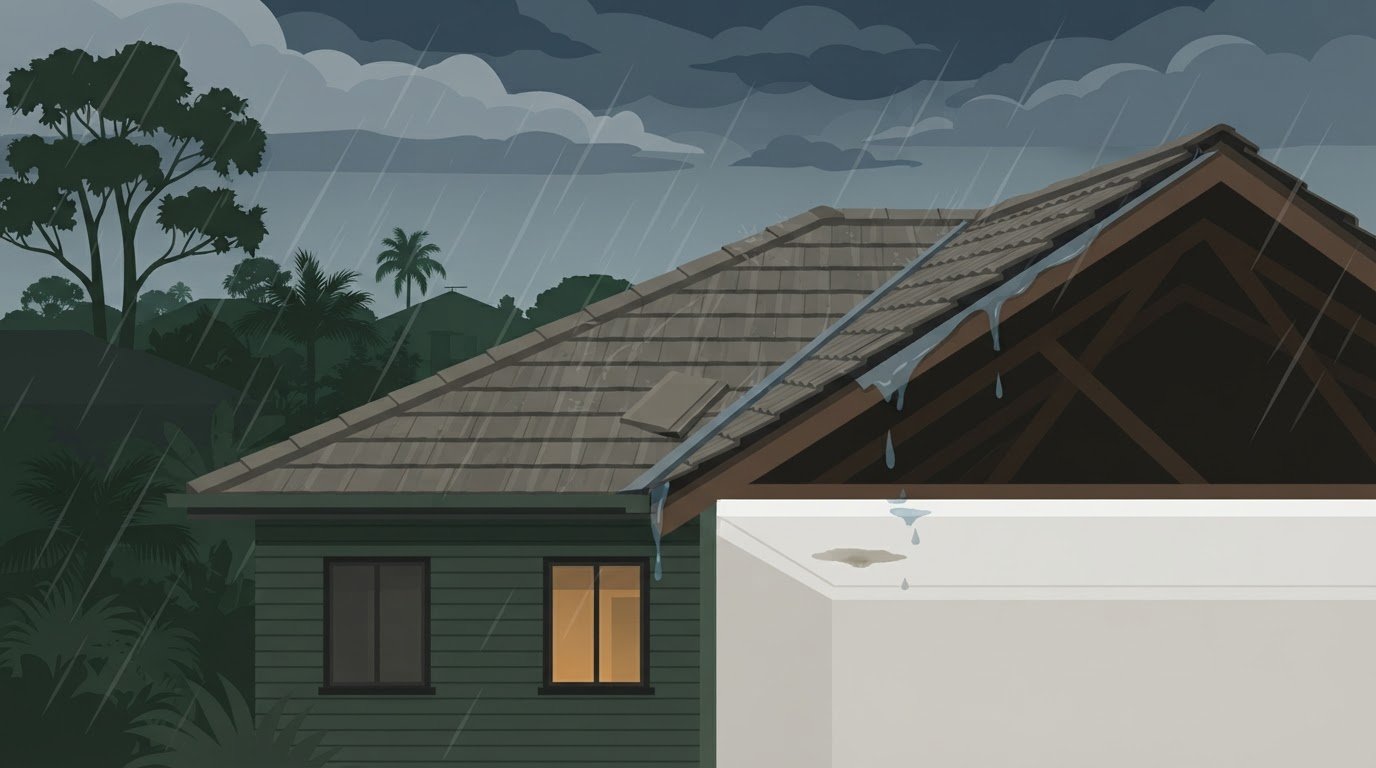
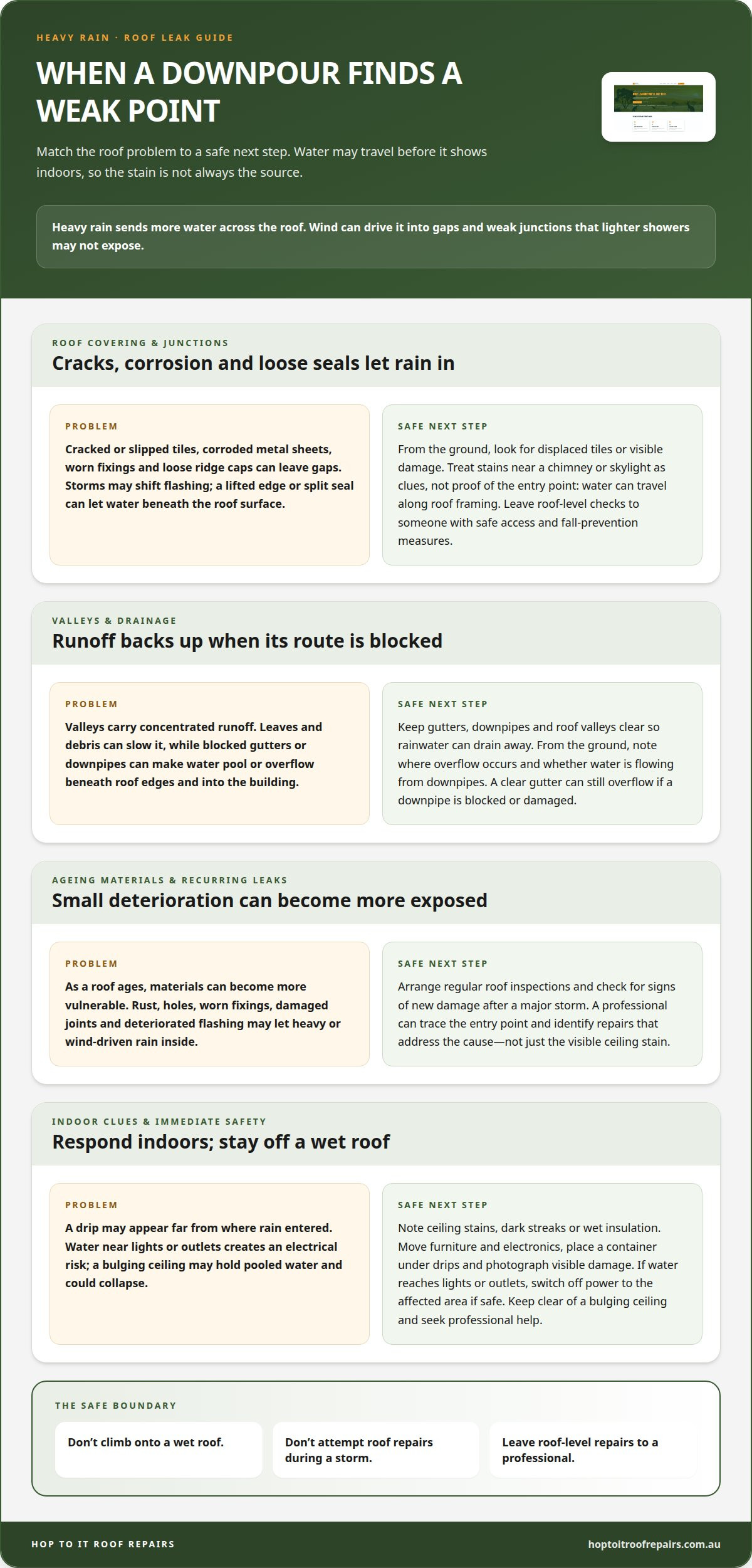
A roof that leaks only in heavy rain may be showing weaknesses that lighter showers don’t expose. The answer to why your roof is leaking in heavy rain is often a combination of ageing materials, damaged tiles or metal sheets, worn flashing, and blocked gutters or downpipes. Heavy rain sends more water across the roof, while wind can drive it into gaps and weak points.
It’s understandable to suspect the storm itself is the whole problem. But a leak that appears only in downpours can point to an issue that has been developing over time, particularly as a roof ages.
This article explains how roof damage, drainage problems and ageing can let water inside, and what can help reduce the risk before the next storm. You’ll also learn why water may appear far from where it entered and which warning signs need attention.
Key Takeaways
- Check for damaged tiles or metal sheets, worn flashing and compromised valleys, as these weak points can let wind-driven rain in.
- Keep gutters, downpipes and roof valleys clear so heavy rainfall can drain away instead of pooling or overflowing.
- Look for indoor clues such as ceiling stains or wet insulation to help trace a leak, but don’t climb onto a wet roof.
- Age can make roofing materials more vulnerable; regular inspections can help catch deterioration before the next storm.
Damaged tiles, metal roofing, flashings and valleys
Cracked tiles, corroded metal sheets and failed roof junctions can let wind-driven rain inside. During a downpour, water can reach these weak spots faster than the roof can drain it away.
Deteriorated or displaced flashing
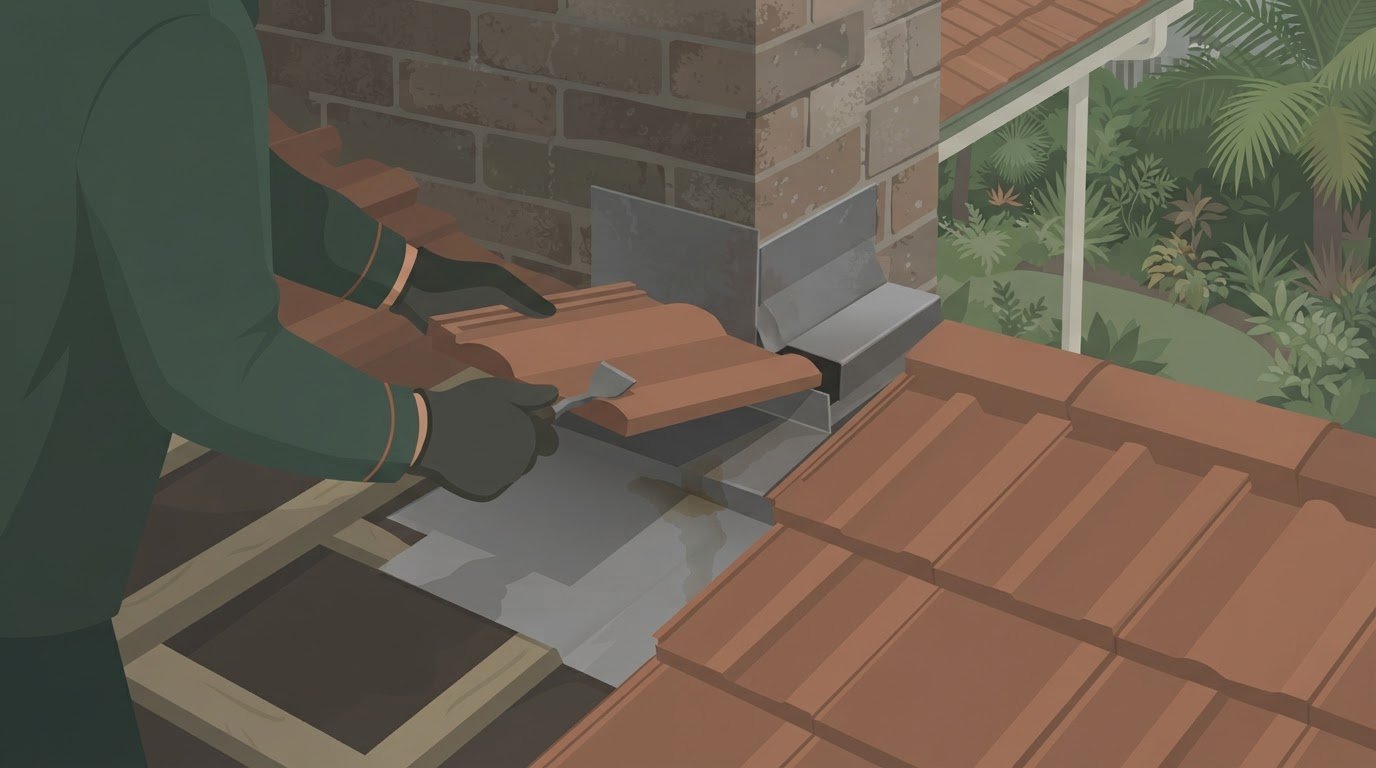
Flashing is the metal or sealed material that closes roof junctions around chimneys, vents, skylights and roof-to-wall connections. Temperature changes can wear it down, while storms may shift it out of position. A lifted edge or split seal can let water track beneath the roof surface.
Check for water stains near a chimney or skylight, but don’t assume the stain marks the source. Rain can travel along roof framing before dripping indoors. Damaged tiles and loose metal-sheet seams can also direct water towards flashing, causing a leak where materials meet.
On metal roofs, rust, holes and worn fixings can weaken the covering. On tile roofs, cracked or slipped tiles and loose ridge caps leave gaps for rain. Repairing only the visible ceiling stain may miss the faulty roof junction above it.
Faulty ridge capping and valleys
Ridge capping covers the meeting point at the roof’s peak, while valleys channel water down adjoining slopes. Cracked or loose ridge caps can expose gaps, and damaged valley lining can let water beneath nearby tiles or sheets.
Valleys carry concentrated runoff, so a compromised joint can be overwhelmed during heavy rain. Leaves and other debris can slow drainage, and blocked gutters may add to the build-up. From the ground, look for displaced tiles or visible debris. Leave roof-level checks to someone with safe access and suitable fall-prevention measures.
Does home insurance cover roof leaks and resulting water damage in Australia? It depends on the policy wording, the cause of the leak and any applicable exclusions. Review your policy documents and contact your insurer to understand how your circumstances are assessed.
How to Prevent Roof Leaks During Future Storms?
Trace a leak from indoors first. Water can travel along roof framing before appearing on a ceiling, so the drip may be far from where it entered.
Finding the leak source safely
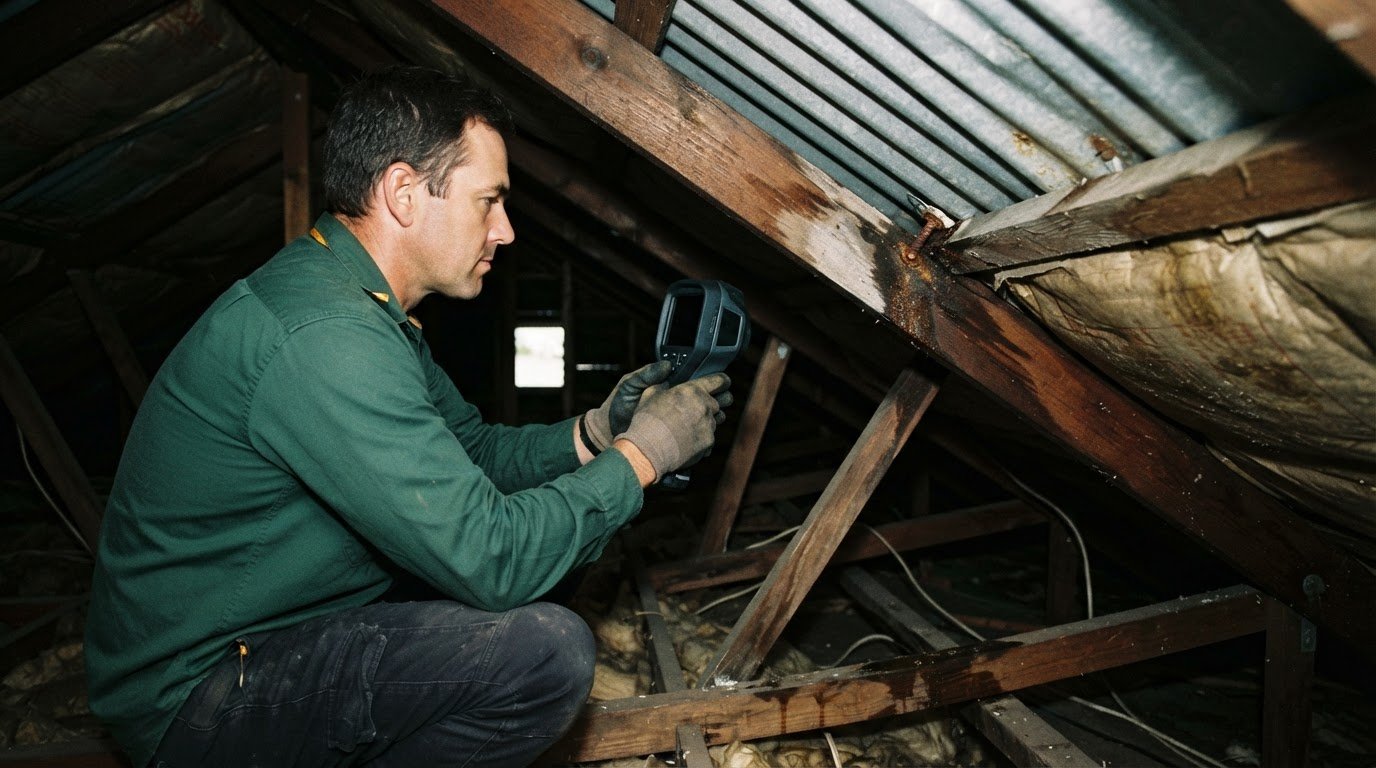
Look for ceiling stains, dark streaks or wet insulation, and note their location. If it’s safe, check the roof cavity for damp areas or active drips, but don’t climb onto the roof during rain.
Common causes include damaged tiles or sheets, worn flashing, loose or rusted screws, blocked drainage and poorly sealed vents. Wind-driven rain can enter at roof junctions and penetrations.
Immediate steps and temporary repairs
Move furniture and electronics away from the leak, place a container beneath drips, and photograph visible damage. If water reaches lights or outlets, switch off power to the affected area if it’s safe.
A bulging ceiling may hold pooled water and could collapse. Keep clear and seek professional help. Don’t attempt roof repairs during a storm. Use a tarp or temporary sealant only after rain eases and roof access is safe.
Professional leak tracing and permanent repairs
Should you repair a leaking roof yourself or call a licensed roofer? Protect belongings indoors, but leave roof-level repairs to a professional, especially during storms or if the damage is severe. A temporary patch may hide the leak without fixing its cause.
What Australian building rules or licensing requirements apply to roof repairs? Requirements vary by state and territory. Licensing requirements for roof repairs can vary by location, so check the local requirements before arranging work.
What are the most common causes of roof leaks during heavy rain in Australia? Damaged roofing, worn flashing, blocked drainage and poorly sealed roof openings can let heavy or wind-driven rain inside.
A professional can trace the entry point and identify repairs that address the cause, not just the ceiling stain. Arrange an inspection after storm damage and regular checks to find weak spots early. For help tracing a recurring leak, consider professional roof leak assessment.
A leak becomes an electrical risk if water reaches lights or outlets. Switch off power to the affected area if it’s safe. A sagging or bulging ceiling signals possible structural danger. Keep people clear and seek professional assistance.
Can Blocked Gutters and Downpipes Cause Roof Leaks?
Yes. During heavy rain, blocked gutters, downpipes or roof valleys can slow drainage, causing water to overflow or pool against roof edges and joints.
Overflow from box and eaves gutters
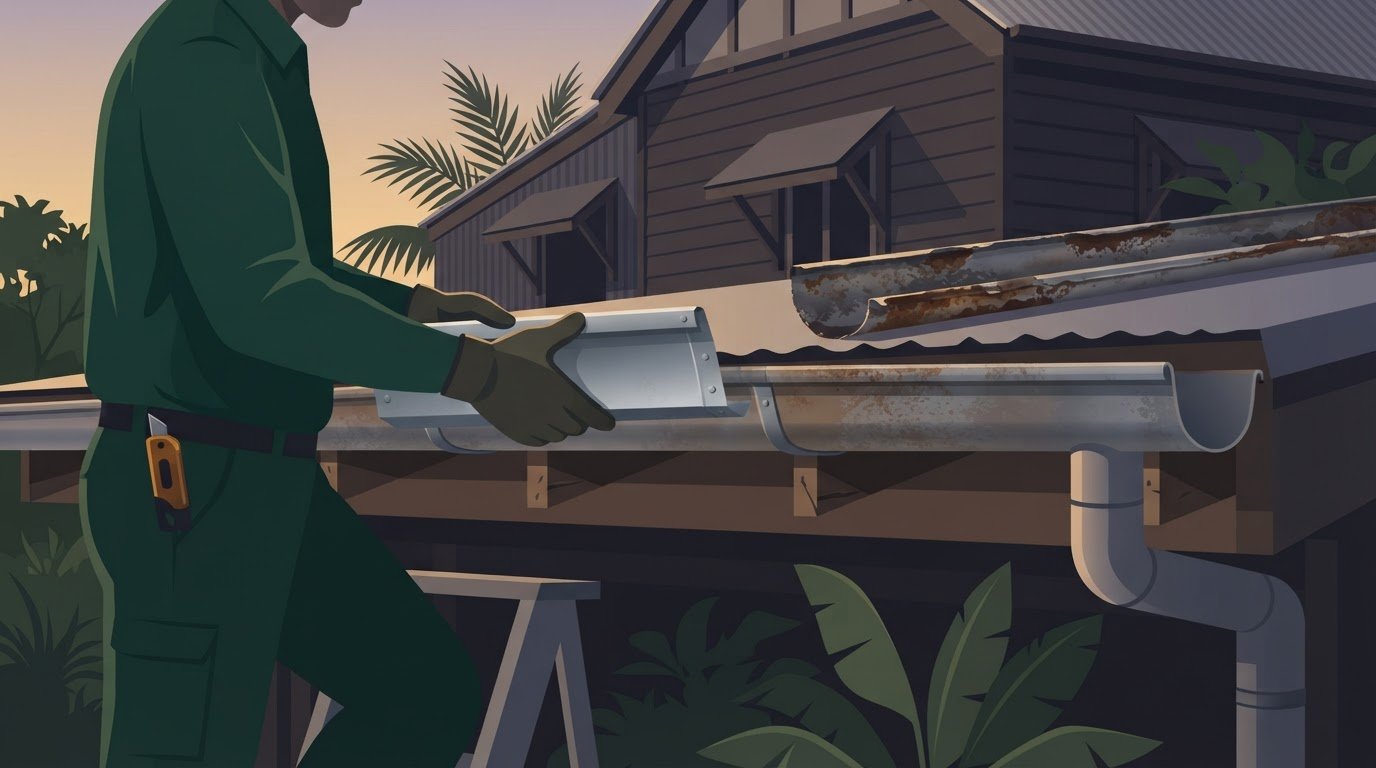
Box gutters sit within a roof structure, while eaves gutters run along its edge. Both collect rainwater and direct it to downpipes. If leaves or debris obstruct an outlet, water can back up and overflow beneath roof edges or into the building.
Overflow can saturate fascia boards, soffits and wall cladding. For example, water backing up in a box gutter may reach a roof junction, while an eaves gutter spilling over can wet the soffit below. Rust can create holes in a gutter, allowing water to escape even when the outlet is clear. Pooling can also put pressure on seams and joins.
Gutter clearing and roof inspections
Clear leaves and debris from gutters and downpipes so rainwater can drain away efficiently. Keep roof valleys clear too, as debris there can slow runoff before it reaches the gutter. From the ground, look for visible overflow during rain and check whether water is flowing from downpipes.
Arrange regular roof inspections to identify corrosion, damaged joints and drainage problems before they lead to leaks. Check the roof after a major storm for signs of new damage, but don’t climb onto a wet roof. Roof-level inspections require safe access equipment and fall-prevention measures.
A clear gutter can still overflow if a downpipe is blocked, damaged or unable to carry water away efficiently. Note where the overflow occurs: at one outlet, along a gutter section, or near a roof valley. This pattern can help pinpoint restricted drainage without requiring you to inspect the roof from above.
If rust or recurring overflow appears, clearing debris alone may not solve the problem. Corroded sections, obstructed outlets and damaged gutter joints can each interrupt drainage. A focused inspection of the gutter and downpipe system can identify where water is backing up and whether nearby roof edges are affected.
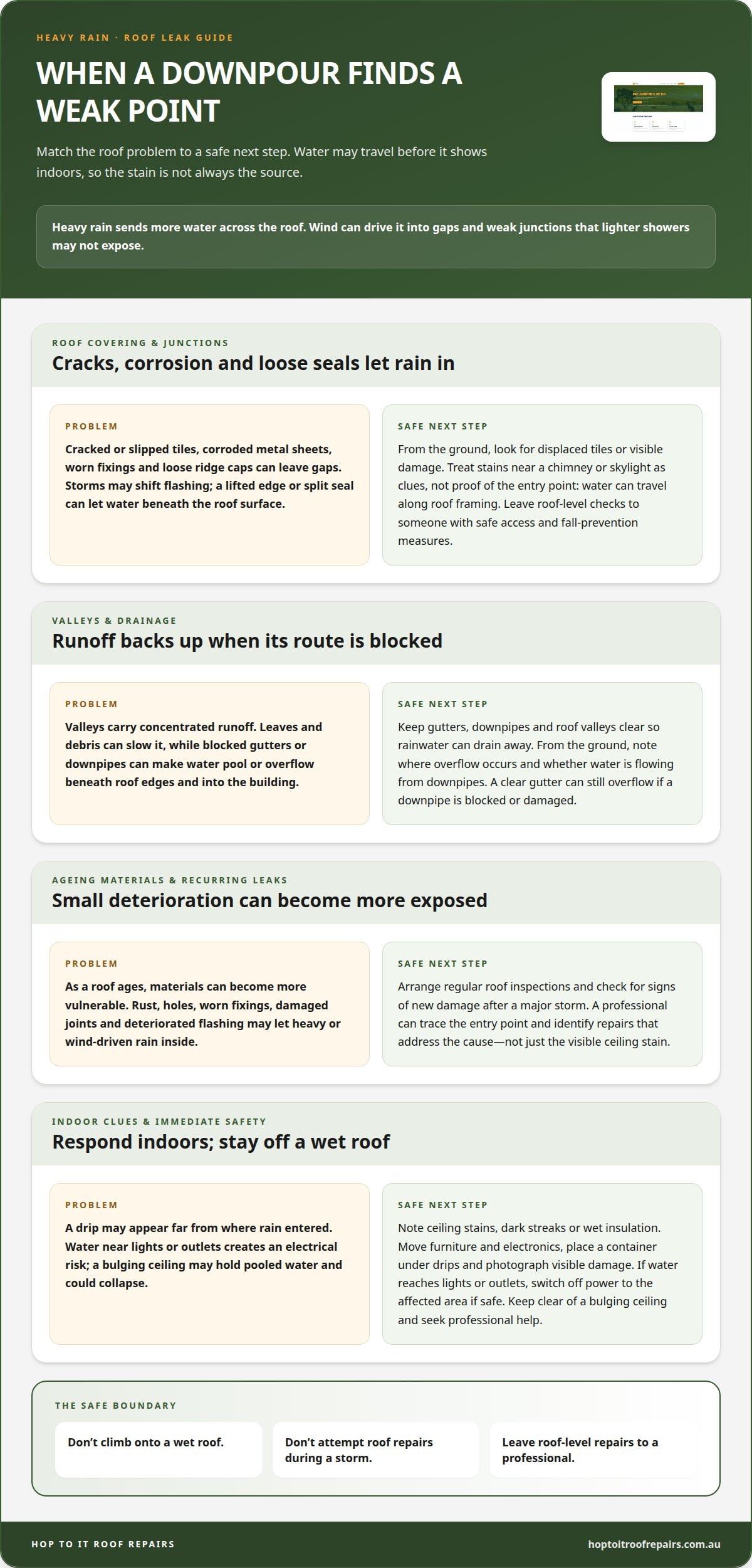
Roof age and vulnerability to heavy rain
An older roof can be more vulnerable when materials and fixings have worn, but age alone doesn’t identify the fault. Zincalume roofing typically has a lifespan of 25-40 years. Heavy rain may expose weaknesses that have stayed unnoticed during lighter showers.
As metal sheets age, they can corrode, develop holes or loosen at the seams. Roof screws and other fixings may also rust or come loose, allowing water beneath the sheets. On a tile roof, ageing terracotta or concrete tiles can crack or become porous. Several small weaknesses may combine to cause a leak during a storm.
Look beyond the main roof surface. Flashing around chimneys, vents and skylights can deteriorate as temperatures change, while storms may shift it out of position. Seals around plumbing vents or air-conditioning units can also wear. For example, a ceiling stain near a skylight may come from a roof junction rather than the skylight itself.
Installation and repair history matter too. Incorrectly fastened metal sheets or poorly installed underlay beneath tiles can contribute to leaks. Debris in a valley may slow drainage and add pressure at vulnerable joins. In the roof cavity, wet insulation or dark streaks can show where moisture has travelled, though not necessarily where it entered.
Use the roof’s age as a reason to look for patterns, not as proof that replacement is needed. Note recurring ceiling marks, cracked tiles, rust and leaks after storms. A clear record of where water appears and when it returns gives an inspector useful evidence about the roof’s condition.
If an older roof repeatedly leaks in heavy rain, arrange an inspection that considers its material, installation and previous repairs together. This can distinguish a local fault from broader deterioration and help identify the next step before more moisture reaches insulation or ceiling materials.
Hop To It Roof Repairs: Roof Leak Detection
Hop To It Roof Repairs can trace where water is entering and identify the roof fault behind recurring leaks. Turn to the team when a ceiling stain returns after storms, the entry point isn’t obvious, or a temporary patch hasn’t fixed the problem.
Roof Leak Detection helps pinpoint the source. Depending on the issue, Metal Roof Repairs, Tile Roof Repairs or work on Gutters & Downpipes can address damaged roofing or drainage. Each job includes a fixed-price quote and a detailed written report, so you can see what was found and what work is proposed.
Contact Hop To It Roof Repairs to discuss a roof leak or arrange an assessment.
Turn the next step into a clear plan
If you’re still asking why your roof is leaking in heavy rain, arrange an assessment focused on finding the source instead of relying on another temporary patch. A recurring leak needs attention at its source, not just where water appears indoors. This gives you a practical starting point for deciding what repair the roof needs.
Before arranging repairs, note whether the leak starts with wind-driven rain, follows prolonged rainfall, or continues after the weather clears. These details help guide the inspection. Also note whether the problem is new or recurring, so the assessment can account for the roof’s repair history and the pattern you’ve observed.
Hop To It Roof Repairs provides Roof Leak Detection, Metal Roof Repairs and Tile Roof Repairs. The team can trace a leak and identify the repair work relevant to your roof, helping you move from uncertainty to a considered next step.
Contact Hop To It Roof Repairs to discuss the leak and move towards a clear repair plan.
Frequently Asked Questions
So why do some roofs only leak in heavy rain?
A roof may have a small weakness that ordinary showers don’t expose. In a downpour, greater water flow can overwhelm a vulnerable joint, while wind can push rain beneath lifted edges or into gaps. That’s why your roof may leak in heavy rain but appear sound in calmer weather. Note whether leaks coincide with strong winds, prolonged rainfall, or both. This pattern can help narrow down the fault.
What should you do if your roof leaks during heavy rain?
Keep clear of wet electrical fittings and don’t climb onto the roof. Put a container beneath drips, move belongings from the affected area and photograph visible damage. If water is near a light or outlet, switch off power to the affected area if it’s safe. A sagging or bulging ceiling needs urgent attention: keep people away and don’t puncture it yourself.
Can a small roof leak become a bigger problem?
Yes. Repeated moisture can soften plasterboard, damage paint and reduce insulation performance. Continued dampness may also contribute to mould, timber deterioration and corrosion of metal fixings. For example, a small recurring drip above a ceiling can keep insulation wet even when the room looks dry. Track fresh stains and damp patches, and arrange an assessment before the same leak causes further damage.
How can I locate where rainwater is entering through a leaking roof?
Start indoors, not on the roof. Note where the ceiling stain or drip appears, then, if it’s safe, look for wet insulation or water marks in the roof cavity. Follow damp streaks along visible framing, as water can travel before dripping through. The indoor mark indicates a general direction, not necessarily the entry point. Don’t enter a wet or unsafe cavity.
Can blocked gutters or downpipes cause a roof to leak in heavy rain?
Yes. If leaves or other debris block a gutter outlet or downpipe, rainwater may back up, overflow or pool against roof edges. Overflow can also wet fascia boards, soffits and nearby wall cladding. After rain, look from the ground for debris, overflow marks or downpipes that aren’t discharging. Don’t reach above your safe height or climb a ladder in wet conditions to clear a blockage.
How do damaged roof tiles, flashing, valleys or ridge capping cause leaks?
Each protects a junction where rain needs a clear path off the roof. A cracked or slipped tile can expose the layer beneath, while loose ridge capping can open the roof peak. Gaps in flashing around a skylight or chimney can admit wind-driven rain, and damaged valley lining can leak under concentrated runoff. Indoor stains may appear away from these faults, so their position alone can be misleading.