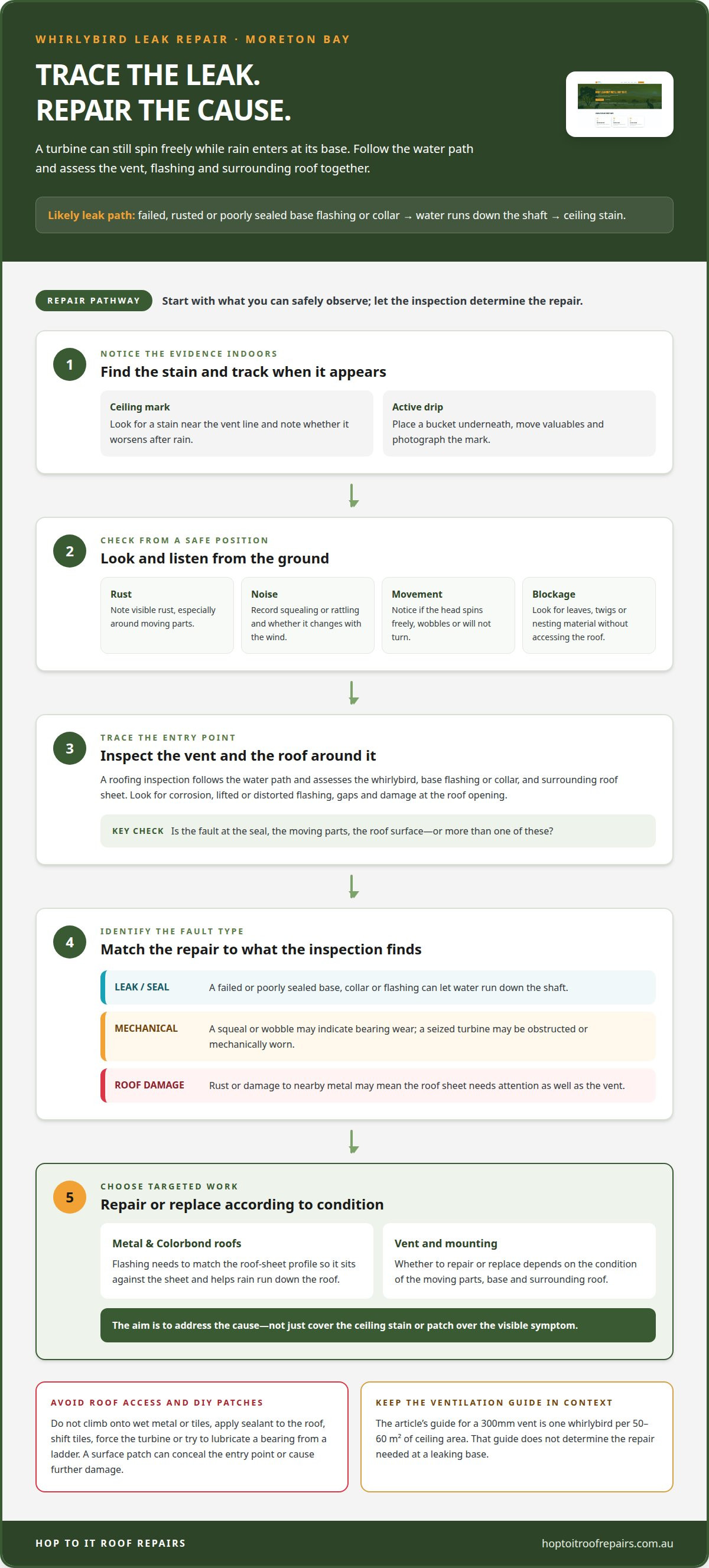
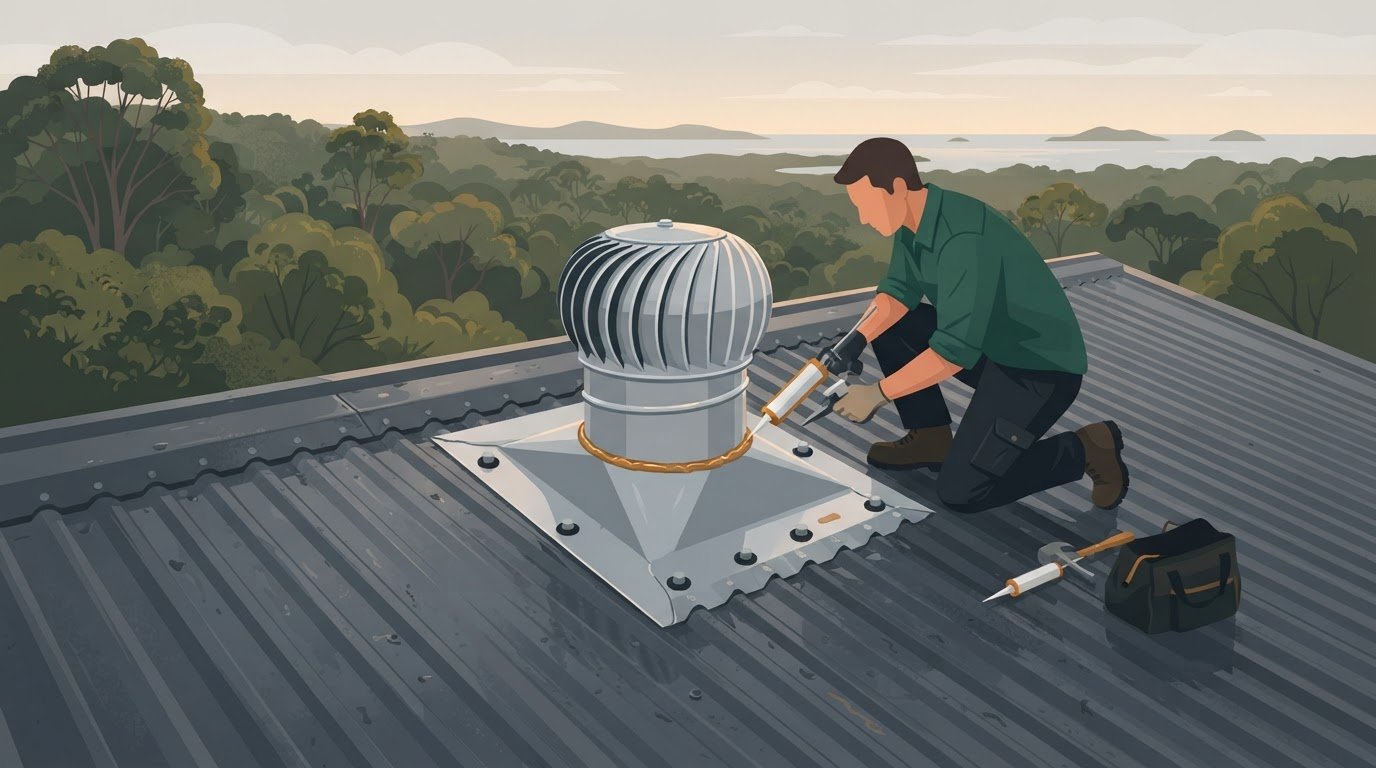
A whirlybird can spin freely and still let rain into your roof. For whirlybird leak repair in Moreton Bay, the fault is often at the base flashing or collar. If it is rusted, damaged or poorly sealed, water can run down the shaft and into the ceiling. On metal and Colorbond roofs, the flashing must suit the roof-sheet profile.
If you’ve spotted a ceiling stain or heard a new squeal from the roof, you may wonder whether the vent itself is faulty. The problem could be in the seal, flashing or moving parts. The right repair depends on what an inspection finds.
This guide explains how a whirlybird works, signs of a leak or mechanical fault, and how repairs differ on metal and Colorbond roofs. You’ll also learn what to expect from the repair process and when a roofing specialist can help trace the leak.
Key Takeaways
- Check for ceiling stains and water tracking around the vent base; the flashing or collar may be the leak path.
- Listen for squealing and watch for wobbling, rust or a turbine that no longer spins freely.
- On metal and Colorbond roofs, the flashing must follow the sheet profile; the repair depends on the condition of both the vent and roof sheet.
- Identify whether the fault is a leak, a mechanical issue or both so the repair can target the cause, not just the visible symptom.
Roof leak risks and sealing around whirlybird flashing
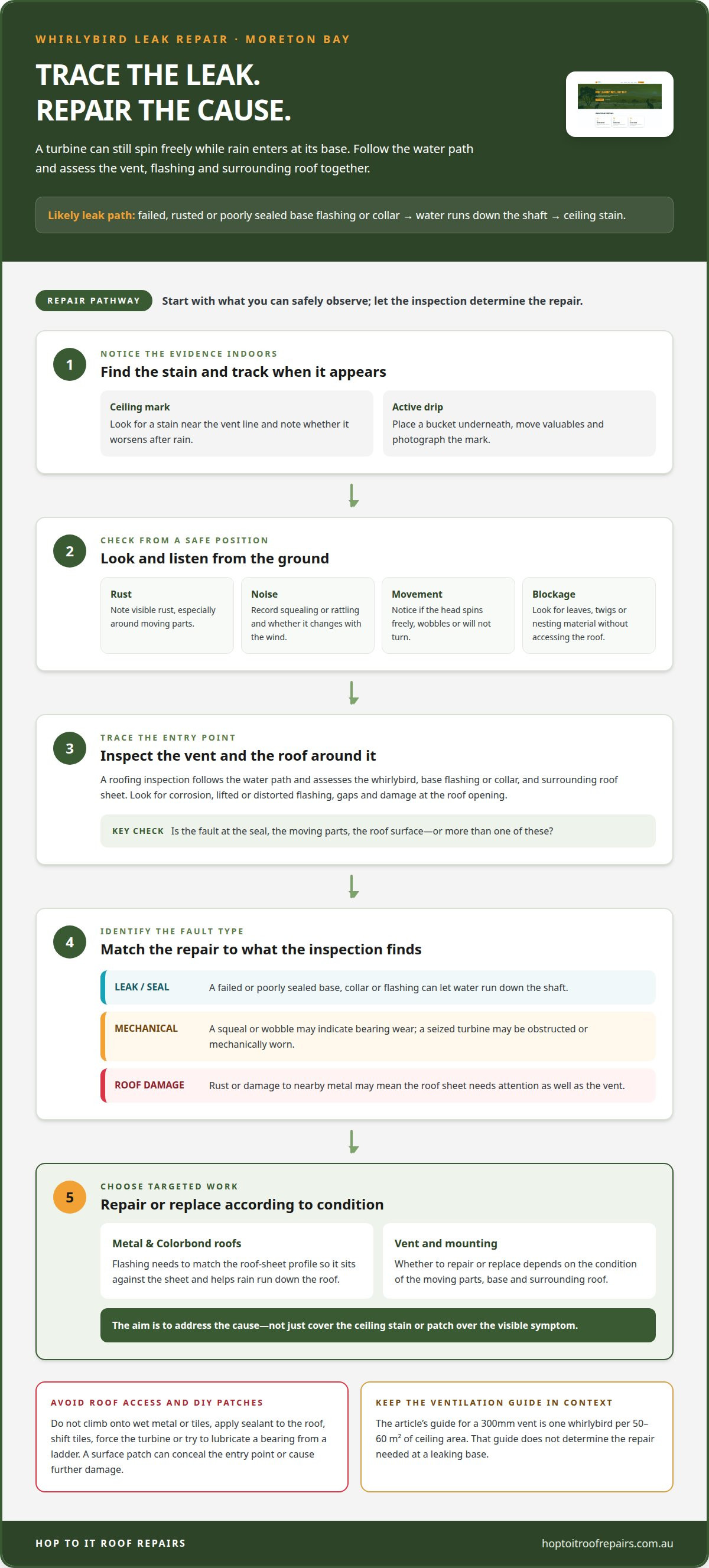
Whirlybird leak repair in Moreton Bay starts with tracing where water enters and checking the vent’s base. A wind-driven roof vent spins to help draw hot, damp air out of the roof space.
Common Causes of Whirlybird Leaks
A failed, rusted or poorly sealed base flashing or collar can let rain run down the shaft and leave a ceiling stain. Look indoors for marks near the vent line and note whether they worsen after rain. From a safe position, look for visible rust or gaps around the base. A squealing or wobbling turbine can also indicate wear near its mounting.
Flashing and Roof Penetration Sealing
Flashing should suit the roof surface and direct water away from the penetration. On metal sheets, profile-matched flashing supports that water-shedding path; on tiled roofs, surrounding tiles must remain positioned to shed water. A 300mm vent guide is one whirlybird per 50-60 m² of ceiling area. That ventilation guide doesn’t determine the repair needed at a leaking base.
Temporary Leak Stops and DIY Repair Risks
To limit indoor damage, place a bucket under the drip, move furniture and valuables, and photograph the ceiling mark. Don’t climb onto wet metal or tiles, apply sealant to the roof, or shift tiles yourself. A fall or disturbed roof surface can cause further damage, and a surface patch may conceal the entry point. Insurance cover for a whirlybird leak or storm damage depends on your policy and the cause, so keep photos and records for your insurer. For whirlybird leak repair in Moreton Bay, focus on finding where water enters rather than masking the indoor stain.
Signs of rust, noise, blockages and mechanical faults
Check the whirlybird from the ground before deciding what the roof needs. Rust on the turbine, an uneven head or irregular movement can signal wear. Listen during a breeze: a squeal or persistent rattle may point to a worn bearing, while a unit that won’t turn may be seized or obstructed. Note when the sound occurs and whether it changes with the wind.
Leaves, twigs and nesting material can restrict the turbine’s movement. A blockage may reduce roof ventilation, even if the unit looks intact from below. Don’t climb up to clear it. From a safe position, note any visible debris, rust or unusual movement. A roofing inspection can distinguish an obstruction from a mechanical fault or damage around the installation.
- Rust: note its visible location, especially around moving parts.
- Noise: record whether the squeal or rattle happens in light or stronger wind.
- Movement: check whether the head spins freely or wobbles.
- Blockage: look for leaves or twigs without accessing the roof.
A squealing or wobbling head can indicate a worn bearing. If left unattended, movement may loosen the base and create another repair issue. Don’t force the turbine or try to apply lubricant from a ladder. A seized unit may need more than debris removal, and replacing parts without identifying the cause may leave the fault unresolved.
In Brisbane’s summer, a working wind-driven vent helps move hot, damp air from the roof space. A powered vent works differently, so it isn’t a mechanical fix for a worn whirlybird. Don’t treat a product guarantee as proof that surrounding roofing is sound. If inspection reveals damaged roof sheets as well, metal roof repairs can address that separate issue.
Noisy, wobbling or seized whirlybirds
A squeal or wobble can indicate a worn bearing. As it deteriorates, the turbine may spin unevenly or vibrate against its base. A faulty unit may need repair before movement loosens the base or affects the roof penetration. A seized head also needs diagnosis: debris may block it, or internal wear may stop it turning. Sound and movement offer useful clues, but they don’t reveal every fault.
Start with a check from the ground. Note whether the head turns in a breeze, sits off-centre or makes noise as it moves. Leaves, twigs and nests can block rotation; a bearing problem may persist after debris is cleared. Don’t climb onto the roof to remove an obstruction or lubricate a bearing. Record what you can see, then have the vent and its mounting assessed together.
- Squealing: arrange inspection for bearing wear.
- Wobbling: check whether the base or head moves unevenly.
- Seized rotation: consider both obstruction and mechanical wear.
- Rust: note whether it affects the turbine or mounting.
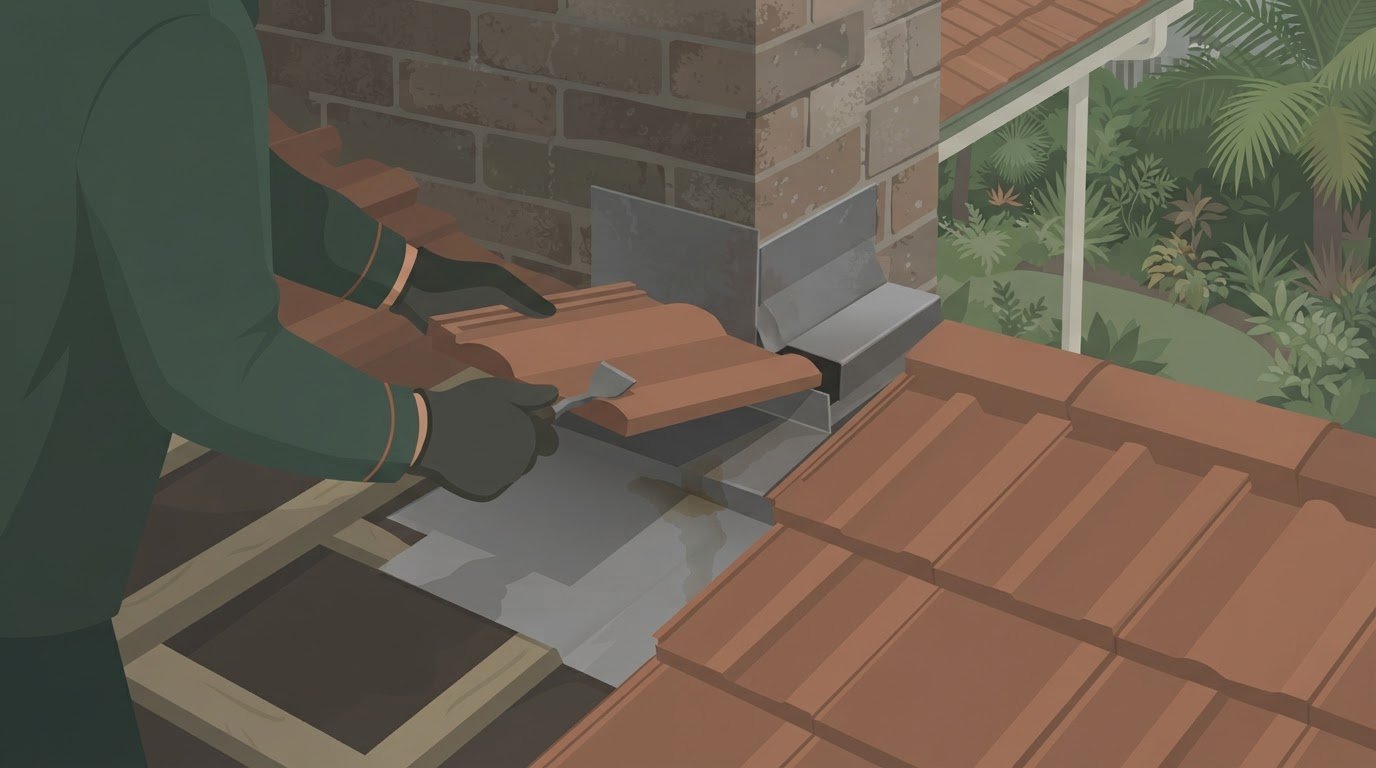
Whether to repair or replace the whirlybird depends on the condition of its moving parts, base and surrounding roof. On a terracotta roof, removing a damaged vent requires care around the tiles and the path rain follows off the roof. Roof restoration addresses broader roof condition, while a targeted repair deals with a specific fault. Neither replaces diagnosing why the whirlybird stopped turning.
Ask for the fault and proposed work to be documented clearly. A licensed roofing professional can explain whether repair or replacement suits the observed condition. A replacement component’s warranty alone doesn’t show that the roof penetration or surrounding tiles are sound. If damaged sheets or tiles also need attention, the repair should address those surfaces as well as the vent fault.
Whirlybird repair on metal and Colorbond roofs
A whirlybird leak can often be repaired without replacing the entire vent. The right approach depends on whether the fault is in the flashing, metal sheet or whirlybird itself.
On metal and Colorbond roofs, the vent sits in flashing shaped to match the roof-sheet profile. This allows the flashing to sit against the sheet and helps rain run down the roof. If the fit is poor, the flashing is damaged or nearby metal is rusted, moisture can enter around the roof opening and cause a ceiling stain.
A proper repair starts by tracing the water path and assessing the vent, flashing and surrounding sheet. Look for corrosion, lifted or distorted flashing, gaps and damage where the sheet meets the base. A smear of sealant may hide the entry point without correcting a poor fit or damaged metal. The repair should restore a watertight connection that follows the sheet profile.
If the whirlybird is sound, repairing its flashing or the affected section of metal may be suitable. If the vent is badly damaged, it can be removed and the roof made watertight with a patched and sealed metal sheet. The whole vent doesn’t automatically need replacement: the condition of its moving parts and the roof opening guides the decision. Across Moreton Bay, the same principle applies, though sheet profiles and the extent of rust vary from roof to roof.
Keep a record of ceiling marks and visible changes after rain. That helps distinguish a persistent roof leak from moisture left by an earlier leak. Don’t climb onto the roof to test the flashing or apply a patch yourself. For a leaking metal roof, arrange metal roof repairs so the affected sheet and vent connection can be assessed together.
Hop To It Roof Repairs: Roof Leak Detection
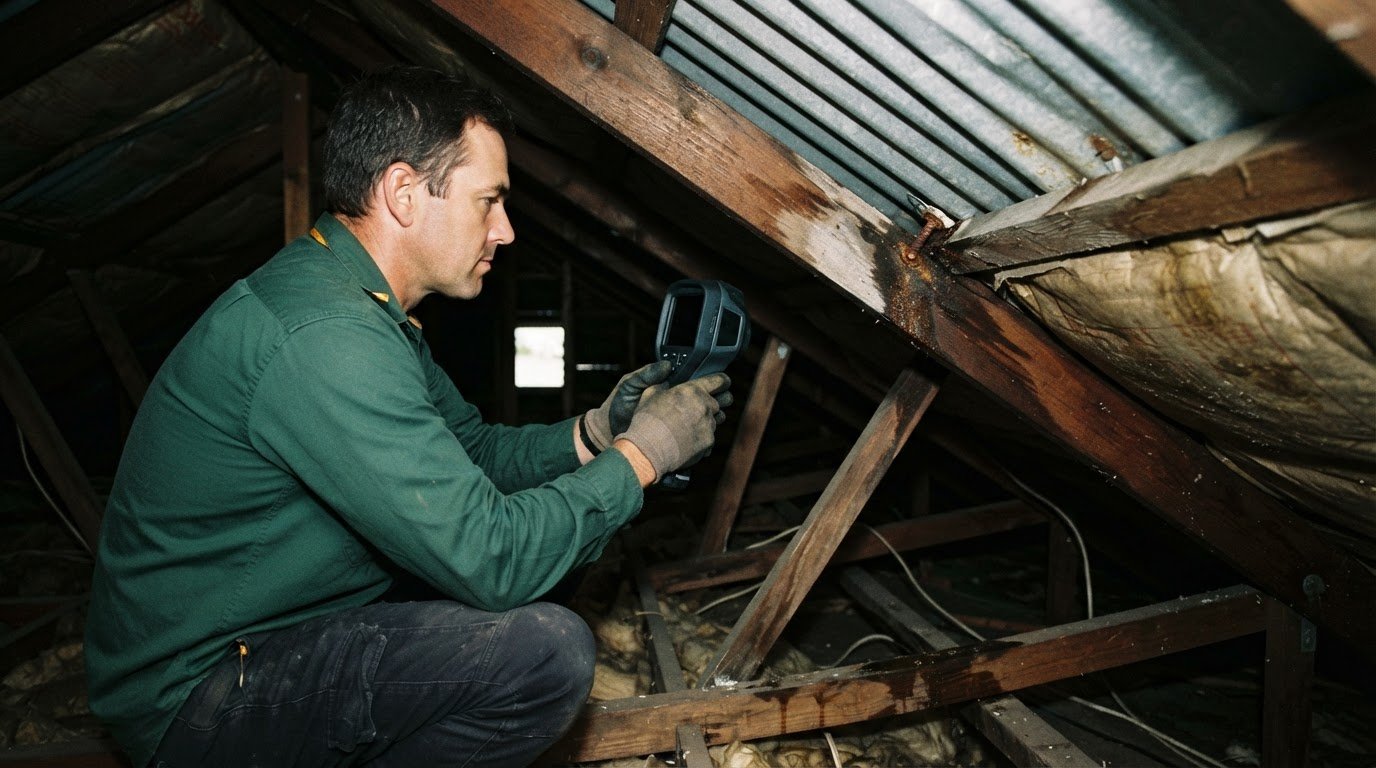
Hop To It Roof Repairs can trace water entry around a whirlybird and identify whether the fault is in the flashing, roof sheet or nearby drainage. Choose its Roof Leak Detection service when ceiling marks persist, a leak returns after rain, or the visible drip doesn’t match the suspected entry point.
Once the source is identified, the repair can be matched to the roof material. Hop To It Roof Repairs handles Metal Roof Repairs, Tile Roof Repairs, and Gutters & Downpipes. Fixed-price quotes and detailed written reports explain the findings and proposed work, so you know what needs attention before proceeding.
For a clear assessment of a suspected roof leak, contact Hop To It Roof Repairs.
Take the next step with confidence
For whirlybird leak repair in Moreton Bay, a clear record of what you’ve noticed can make the assessment more useful. Note when the ceiling mark appeared, whether it changes after rain and any sounds from the vent. A photo taken safely indoors can show how the problem develops.
Keep that information together rather than trying to diagnose the roof from a ladder. It gives the roofing specialist a useful starting point and helps focus attention on the right area. If the source isn’t obvious, Roof Leak Detection can help trace it; the repair can then be matched to the affected roof material.
Hop To It Roof Repairs can help you move from uncertainty to a clear next step. Contact Hop To It Roof Repairs to discuss your roof concern. With the right assessment, you can make an informed decision and get on with protecting your home.
Frequently Asked Questions
What is a whirly bird on a roof?
A whirlybird is a wind-driven roof vent that spins to help exhaust hot, damp air from the roof space. It has no motor, so its turbine turns with the breeze. From inside, you may notice less heat building in the roof cavity when ventilation is working. If the head stops rotating or becomes noisy, record what you notice and arrange an inspection rather than climbing onto the roof.
Cost Factors: What Should You Expect to Pay?
The work required depends on the repair, not just the vent. A roofer considers the roof material, safe access, the condition of the flashing and sheet, and whether the whirlybird can be repaired or needs replacement. Rust or damage around the opening can affect the work involved. Hop To It Roof Repairs provides a fixed-price quote after assessing the job, so the proposed scope is clear before work proceeds.
Looking for a roof repair service?
Hop To It Roof Repairs provides roof leak detection and metal and tile roof repairs across Brisbane, the Gold Coast, Redland Bay, Moreton Bay and Ipswich. Its QBCC-licensed roof plumbers investigate the source and provide a photo report of every fault found. Repairs are backed by a workmanship warranty. Share where water appears and what your roof is made from to explain the issue clearly.
What happens if something goes wrong with my whirlybird?
A faulty whirlybird may stop ventilating effectively, squeal or move unevenly. If the base becomes loose, rain can also enter around the roof opening. Note whether the noise changes with the wind and whether a ceiling mark appears after rain. Don’t force the turbine or try to reach it from a ladder, as this can worsen damage or create a fall risk.
Will whirlybirds leak when it rains?
A correctly fitted whirlybird should shed rain through its roof connection rather than let water into the home. A leak during rain may indicate a problem with the flashing, its fit or nearby roof material. The drip may appear away from the vent because water can travel beneath the roof surface before reaching the ceiling. Note when and where new marks appear indoors.
How do you diagnose a leaking whirlybird roof vent?
Diagnosis traces water from indoor signs back to the roof entry point. Hop To It Roof Repairs uses systematic hose testing, water tracing and thermal checks, then provides a photo report of every fault found. These methods help distinguish a vent connection leak from water entering elsewhere, such as through a roof valley. The findings guide the repair and give you a written record of what needs attention.