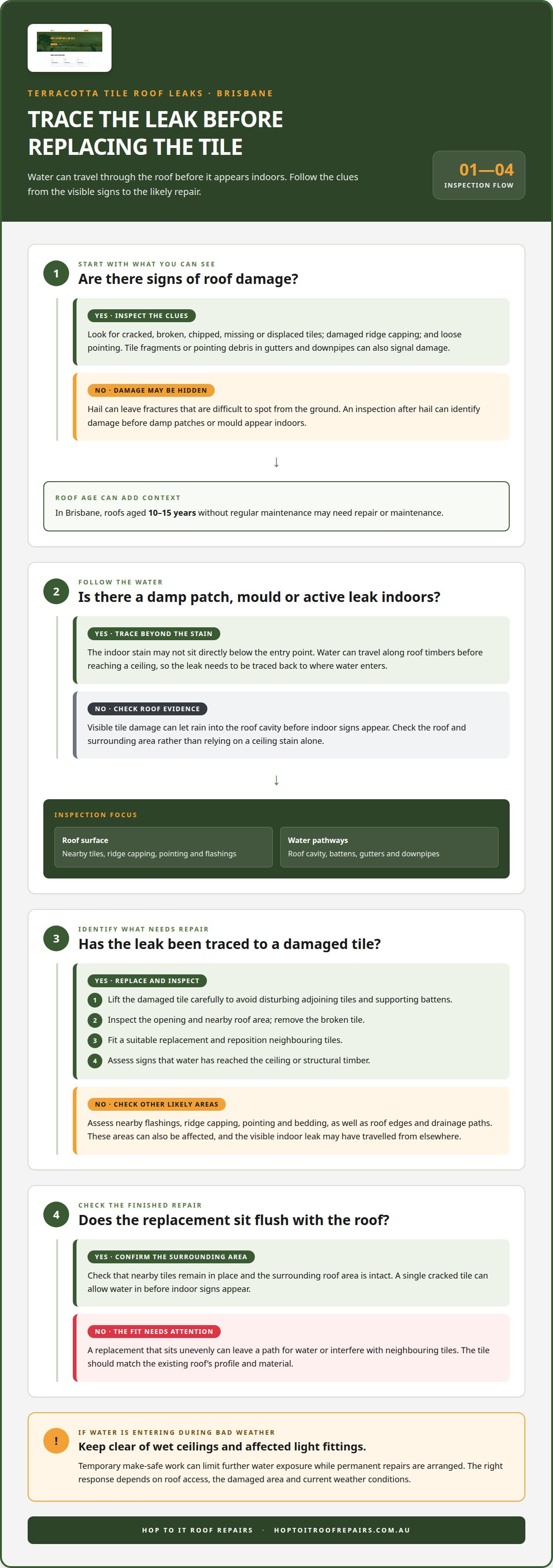
A roof leak can show up well away from the damaged tile. Cracked, broken or missing tiles, damaged ridge capping, and indoor damp patches or mould can signal trouble. A terracotta tile roof leak specialist in Brisbane traces water back to its entry point instead of relying on the ceiling stain alone.
It’s easy to assume a visible stain marks the exact point where water is entering. But water can travel through the roof before dripping inside, so locating the source is essential to getting the repair right.
This guide explains what to look for after storms, how roof leak diagnosis works, and what’s involved in replacing a broken terracotta tile. You’ll also learn what to check when reviewing a roofing company’s licence, insurance and warranty, so you can make a clear decision about the next step.
Key Takeaways
- Learn which visible signs can point to tile damage, and why the leak’s entry point may be elsewhere.
- See what matters when a broken terracotta tile needs replacing, including damage that may extend beyond the tile itself.
- Understand how a specialist traces a leak and assesses the roof before recommending repairs.
- Know which licensing, insurance and warranty details can help you understand a roofing company’s work and responsibilities.
Replacing broken roof tiles
Repairing a leaking terracotta roof starts with tracing the water and checking nearby tiles and flashings. The damaged tile can then be replaced, with the surrounding roof area assessed for further problems. Brisbane storms can affect safe access and repair timing, while building requirements may depend on the scope of work and the roof’s structure.
Cracked, Broken and Chipped Tiles
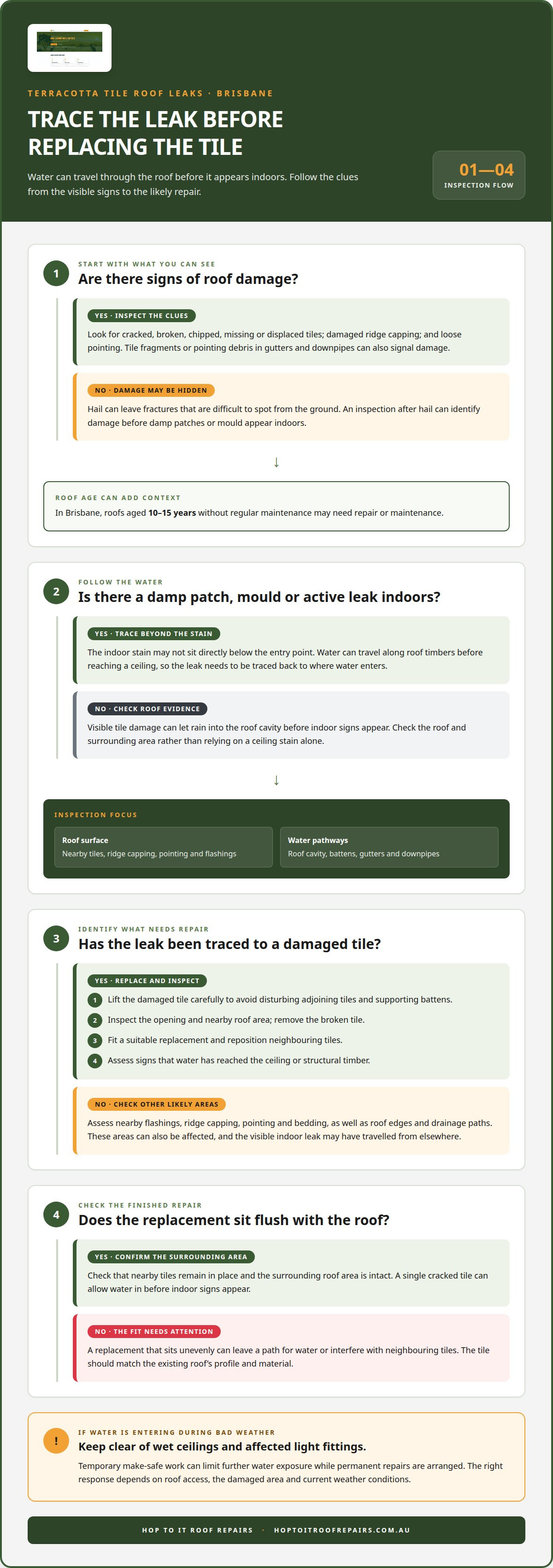
Cracks, chips and missing tile pieces can let rain into the roof cavity. Hail may leave fractures that are difficult to spot from the ground, so an inspection after hail can identify damage before indoor damp patches or mould appear. Mould can damage terracotta tile surfaces, and mould and its spores can harm health.
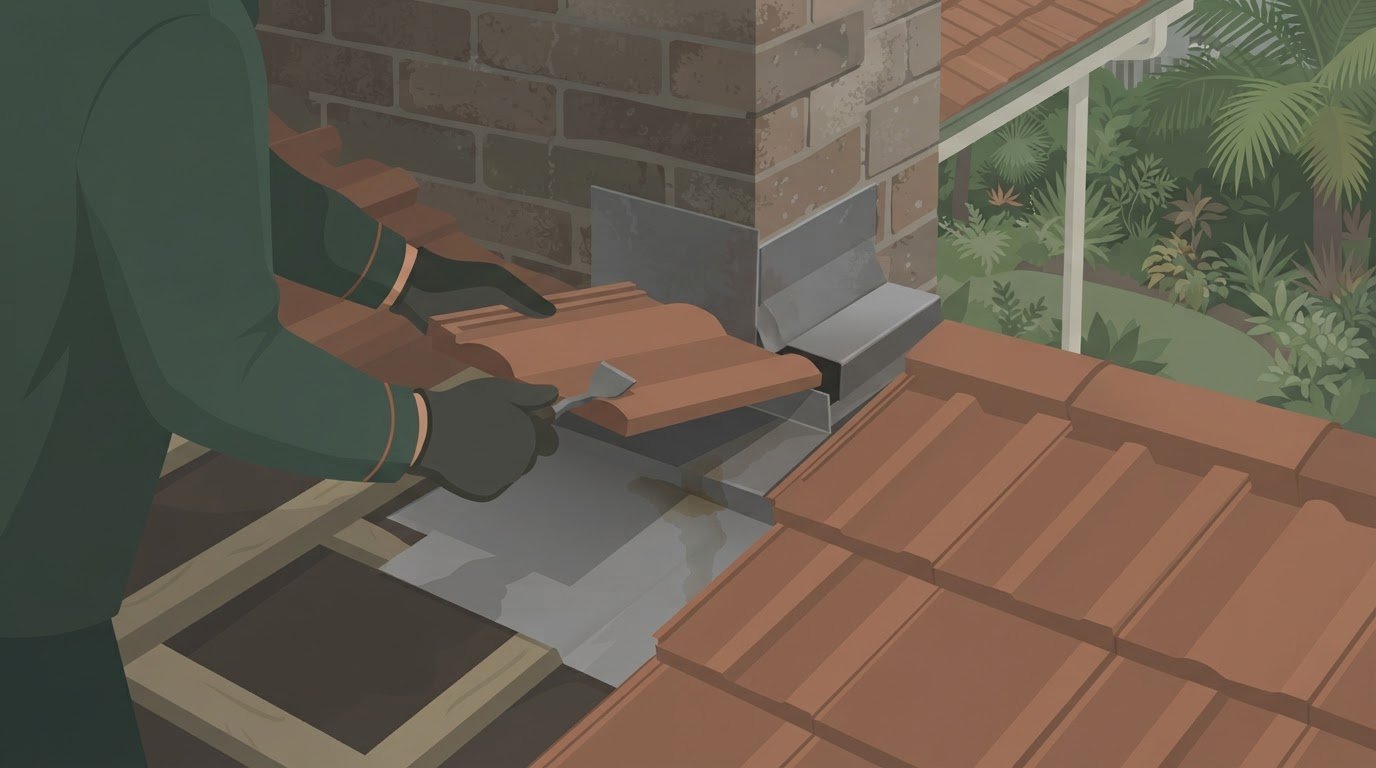
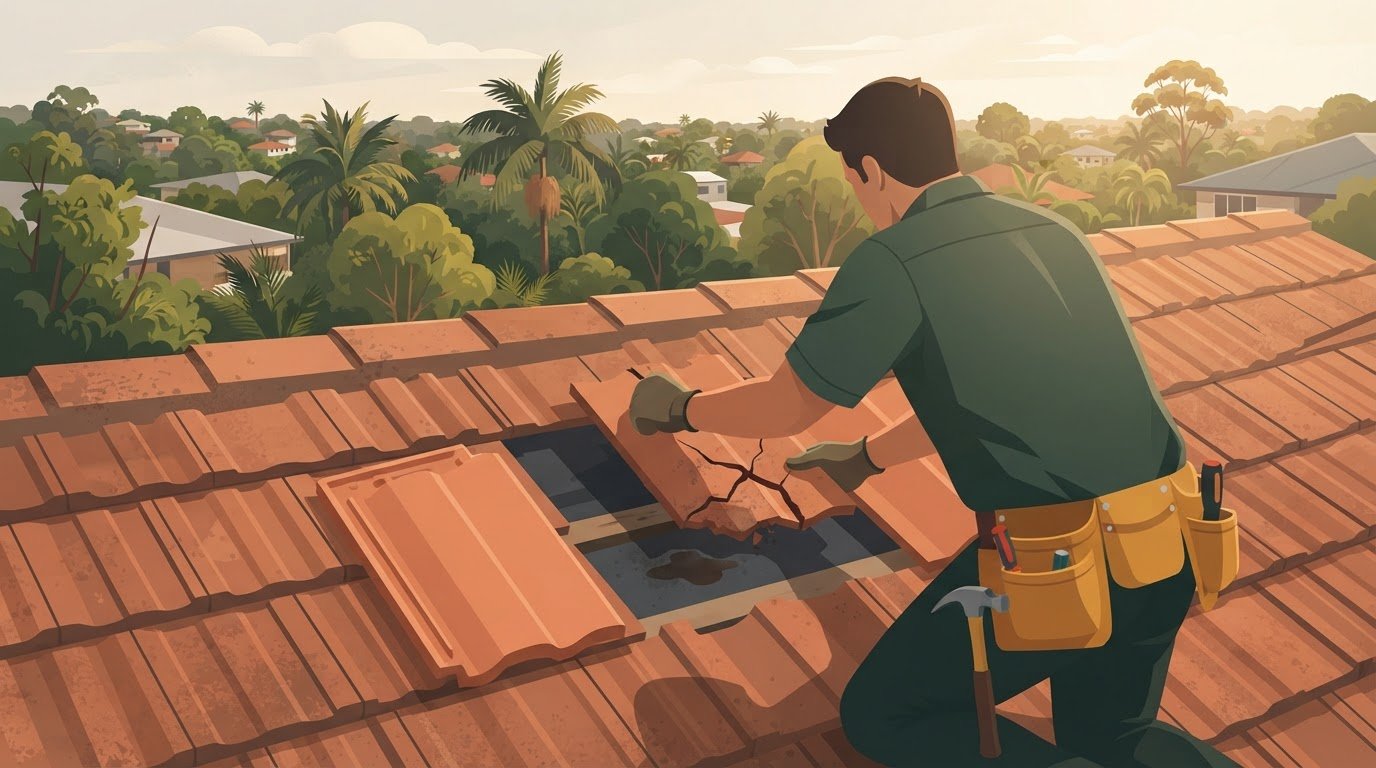
To replace a damaged tile, the repairer lifts it carefully to avoid disturbing adjoining tiles and supporting battens. They inspect the opening and nearby roof area, remove the broken tile, fit a suitable replacement and reposition the neighbouring tiles. Signs that water has reached the ceiling or structural timber also need assessment.
Terracotta and Concrete Tile Repairs
Terracotta and concrete tiles need to be matched to the existing roof profile and material. A replacement that sits unevenly can leave a path for water or interfere with neighbouring tiles. The repair should also account for nearby ridge capping, pointing and bedding, which help keep the tiled roof stable and weather-resistant.
Terracotta and concrete respond differently to wear and repair materials, so the tile type matters when planning repairs or restoration. Cement bedding may need attention around ridge caps, while a chipped field tile usually calls for replacement. The Bureau of Meteorology records an annual mean maximum temperature of 26.7 °C. Brisbane’s heat and storms make sound tile placement important.
A single cracked tile can let water in before any indoor signs appear. Water may travel along roof timbers before reaching a ceiling, so repairs should trace the leak rather than stop at the visible damage. Check the roof cavity, battens and nearby tiles for moisture, then make sure the replacement sits flush and the surrounding area is intact.
How do I know if my tile roof needs repairs?
Look for cracked, missing or displaced tiles, damaged ridge capping and loose pointing. Tile fragments or pointing debris in gutters and downpipes can also signal roof damage. An inspection can assess these areas alongside signs of leaks and storm or hail damage.
Roof age matters too. In Brisbane, roofs aged 10-15 years without regular maintenance may need repair or maintenance. After storms, check ceilings and walls for damp patches, but remember that the water’s entry point may be elsewhere on the roof.
Cost depends on the extent of damage, roof pitch, material and access. The price depends on the case and is given after a quote request; repairs involving multiple damaged areas or difficult access require different work.
Don’t leave an active leak unattended. Hail can cause small tile fractures that let moisture into the roof cavity, potentially damaging ceilings, walls and light fittings. A prompt inspection can locate the entry point and identify the repair needed.
Brisbane and South East Queensland service areas
Roofing and guttering services cover Brisbane, Ipswich, Redlands, Logan and Caboolture. These South East Queensland areas experience storms that can dislodge tiles, damage ridge capping or leave debris in gutters. A roof inspection can assess the visible damage and identify where water may be entering.
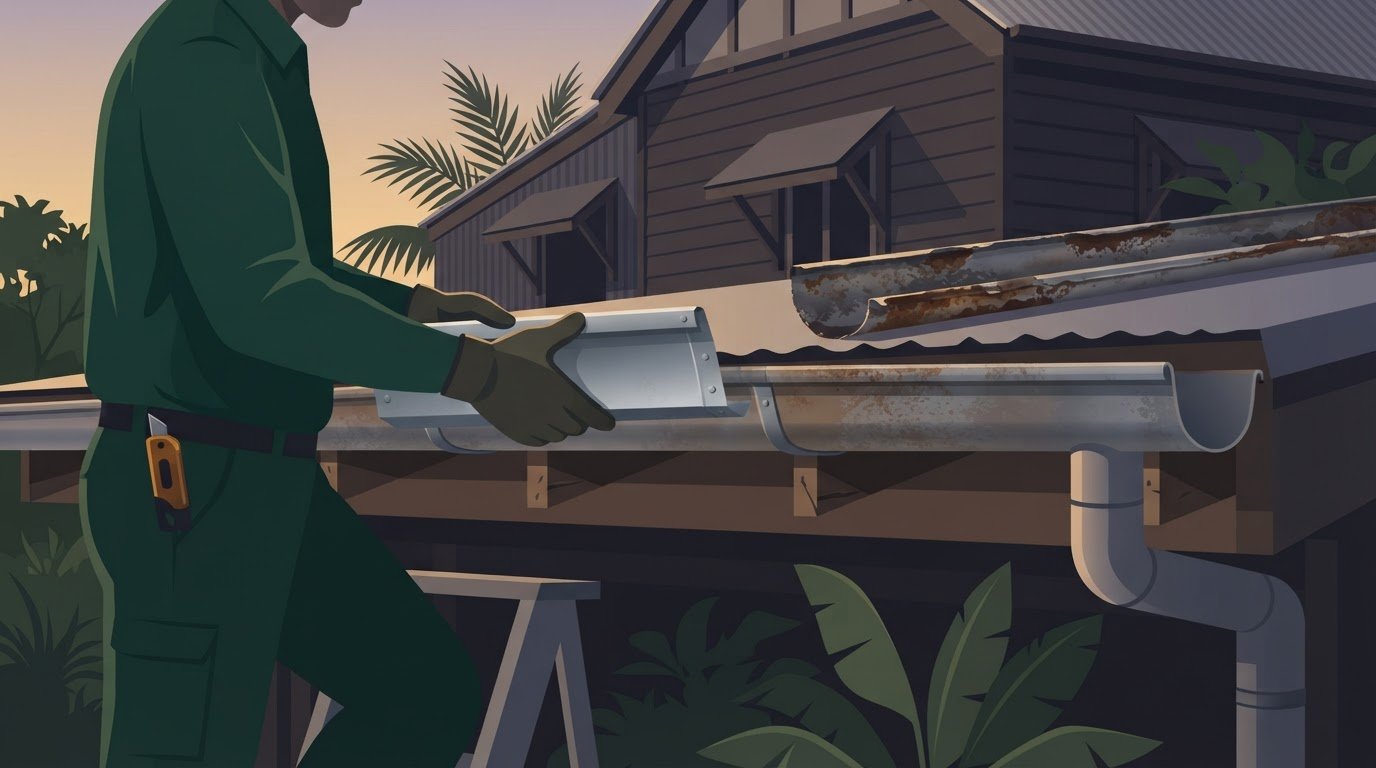
Gutters and downpipes matter because tile fragments and pointing debris can collect there after roof damage. If a leak starts after a storm, include roof edges and drainage paths in the inspection, not just the room with the water stain.
Make-safe service
If water is entering during bad weather, keep clear of wet ceilings and affected light fittings. Temporary make-safe work can limit further water exposure while permanent repairs are arranged. The right response depends on roof access, the damaged area and current weather conditions.
After a storm in Queensland, note where water appears indoors and when it gets worse. These details can help connect the leak to roof conditions and focus the repair on damaged tiles, pointing or drainage.
Company licensing, insurance and warranty
Before approving roof work, ask for the roofer’s licence details, insurance evidence, written scope and warranty terms. A licensed roof plumbing company should be able to explain who performs the work and what the quote covers, including tile replacement, pointing or any related roof repairs.
Ask: “Does your licence cover this roofing work, what insurance applies, and what workmanship warranty is provided?” A clear written answer helps you distinguish the repair itself from cleaning, coating or restoration work. It also gives homeowners a record of the agreed scope if questions arise later.
Licensing and insurance
Check that the licence details identify the business carrying out the work, and ask how its insurance relates to the job. Don’t treat a licence as proof that every type of roof work is included. Match the proposed work, such as terracotta tile repairs, to the scope described in the quote and report.
QBCC home warranty cover is a separate question. Ask whether it applies to the specific work and have the answer recorded in writing. Avoid assuming that a roof leak repair, coating or restoration receives the same cover. The work type and contract details matter.
Workmanship and coating warranties
Read the workmanship warranty to understand its coverage, exclusions and claim process. Check whether it applies to the repair itself, such as replacing a cracked tile, or to other work completed at the same time. A written report can link the diagnosis, repair scope and warranty terms.
A Dulux roof coating warranty should not be treated as a workmanship warranty. Ask which coating product is being used, what warranty documents apply, and whether preparation or cleaning conditions affect coverage. Get those details in writing before approving coating work.
Emergency temporary make-safe work can reduce exposure while a permanent repair is arranged, but it is not the same as a completed repair. Ask what the temporary work addresses, what remains to be repaired, and what warranty applies to each stage. Written answers make the next decision clearer.
Specialist roof leak diagnosis
A ceiling stain shows where water appeared, not necessarily where it entered. A terracotta tile roof leak specialist in Brisbane traces the path through tiles, flashings, valleys and the roof cavity before recommending repairs. Water can travel three metres along a timber rafter before dripping into another room, so a distant stain doesn’t rule out a roof leak.
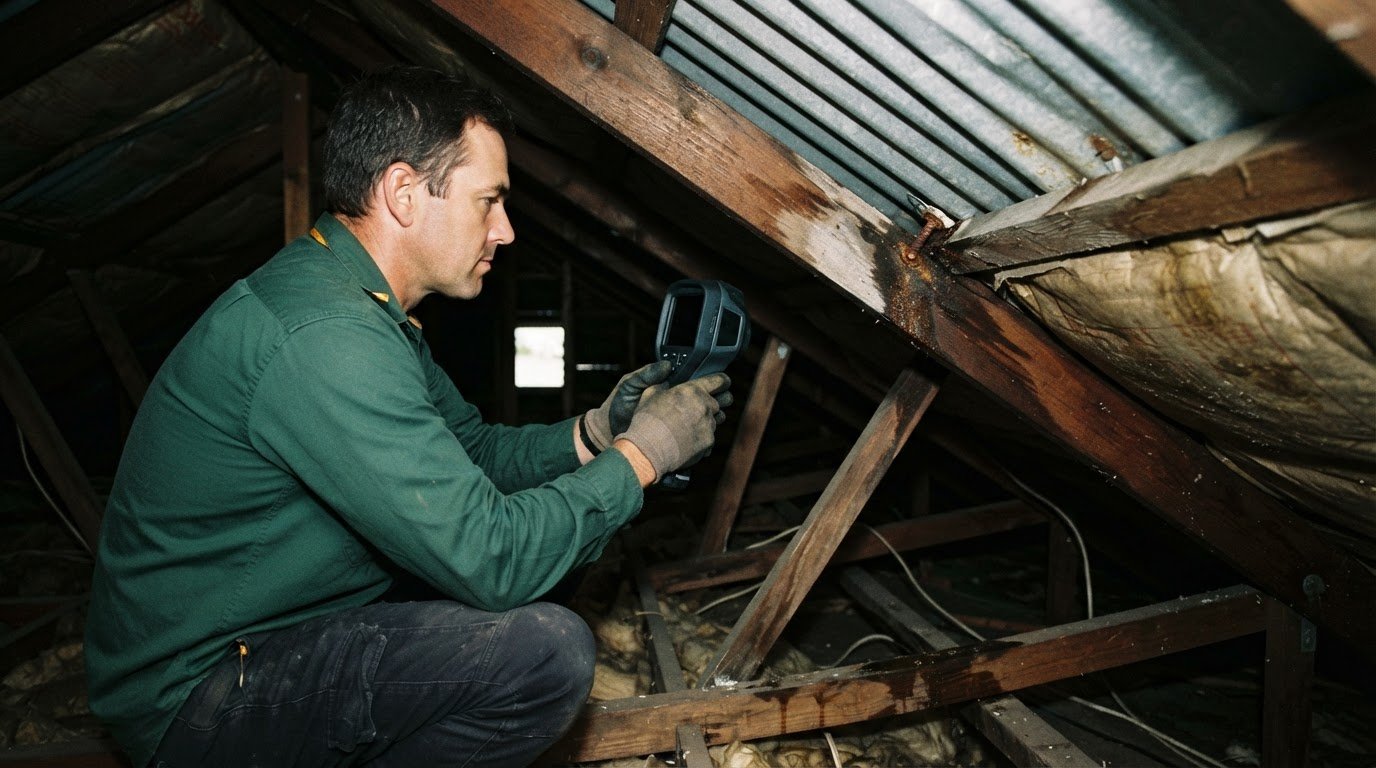
A diagnostic inspection can take 45 minutes. The roofer checks the roof surface and cavity, follows likely water paths, and looks for broken tiles, failed flashings and moisture around timber battens. A reading above 17% in a timber batten is evidence that water has been present recently. These findings help pinpoint the repair instead of treating only the indoor symptom.
Where visual checks don’t locate the entry point, controlled water testing can simulate a Brisbane storm with rainfall of 60 mm per hour. Water is applied methodically to suspect areas while the roof cavity is monitored. This helps distinguish a leak at a tile from one around a flashing or plumbing vent. Testing should narrow the diagnosis, not soak the whole roof without a clear plan.
The diagnosis should connect evidence to a practical scope. A report can identify the entry point, affected roof tiles or roof components, and whether the issue calls for localised tile roof repairs or broader work. If several areas show deterioration, roof restoration may be considered; restoration can add 10-15 years of protection to a concrete or terracotta tiled roof.
Ask for the findings and recommended work in writing. That record lets you see why a repair is proposed and whether it addresses the source, not just the stain. For a persistent leak or unclear source, a terracotta tile roof leak specialist in Brisbane can use the diagnosis to guide the next repair step. Arrange specialist roof leak detection.
Hop To It Roof Repairs: Roof Leak Detection
Hop To It Roof Repairs can trace a roof leak, identify its likely entry point and explain the repair needed. Its Roof Leak Detection service is useful when water keeps appearing, a ceiling stain doesn’t match visible tile damage, or the source is unclear.
Once the cause is identified, Tile Roof Repairs can address damaged terracotta tiles and related roof issues. Gutters and downpipes can also be assessed if blockages or damage may be affecting drainage. Each job includes a fixed-price quote and a detailed written report, with photos of every fault found.
That gives you clear information to decide what happens next, rather than guessing from an indoor stain. Contact Hop To It Roof Repairs to discuss your leaking terracotta tile roof.
Make your next roof decision with confidence
Don’t let a recurring ceiling mark dictate the repair. Connect what you can see indoors with a clear roof diagnosis, then choose work that addresses the actual source. A terracotta tile roof leak specialist in Brisbane can assess the roof, explain the findings and set out a practical repair scope.
Keep photos of the leak, notes about when it appears and details of previous repairs together. They can help clarify the problem and support a focused discussion about what to do next. The aim is to understand the cause and proposed solution before approving work.
If you’re ready to discuss a leak or damaged tiles, contact Hop To It Roof Repairs. A clear starting point can make the next decision simpler and help you move forward with confidence.
Frequently Asked Questions
Do I need a plumber or a roofer for a leaking tile roof?
For a leak through roof tiles, choose a roofer or roof plumber experienced with tiled roofs. A household plumber generally handles water supply and drainage pipework, while roof leak work involves tracing water through tiles, flashings, valleys and roof spaces. If the leak appears around a plumbing vent, a roof specialist can assess the roof junction and determine whether the source is roofing or pipework.
What Defines a Tile Roof Leak Specialist in Brisbane?
A tile roof leak specialist traces water entering through tiled roofing and identifies a repair that addresses the cause. The work may involve checking tile placement, ridge capping, valleys, flashings and roof penetrations. In Brisbane, storms can make accurate tracing especially important: a leak may appear indoors far from the roof defect. A useful report links observed damage to the proposed repair, rather than relying on the ceiling mark alone.
Who specialises in terracotta tile roof leak repairs in Brisbane?
Hop To It Roof Repairs specialises in metal and tile roof leak detection and repairs, including terracotta tile roofs. The QBCC-licensed roof plumbing company serves Brisbane, the Gold Coast, Redland Bay, Moreton Bay and Ipswich. Its roof leak service focuses on locating the water source and addressing the roofing issue.
How can I find a licensed and insured Brisbane roof leak specialist?
Look for a roofer whose licence covers the relevant roof plumbing work, and ask for written evidence of insurance applying to the job. Check that the business named in the quote matches the business doing the work. Hop To It Roof Repairs is QBCC licensed. Its written report and quote document the findings and agreed repair scope, helping keep the work clear from diagnosis through completion.
What are common causes of leaks in terracotta tile roofs?
Common causes include cracked or displaced tiles, deteriorated ridge pointing, damaged valley flashing and failed seals around roof penetrations. Wind can move a tile, while hail may leave a fracture that lets moisture through. Gutter debris can also disrupt drainage and contribute to water entering at roof edges. The cause depends on where water first gets past the roof’s weatherproofing.
How do roofers diagnose a leak under terracotta tiles?
Roofers trace leaks by examining likely entry points and comparing roof conditions with signs of moisture inside the roof space. Methods can include controlled hose testing, water tracing and thermal checks. Testing one suspect area at a time can help distinguish a tile leak from a valley or flashing issue. Photos of every fault found provide a record of the evidence and help explain the recommended repair.