Roof Leak Inspection in Brisbane: Costs and Assessment
21 October 2026 · 17 min read
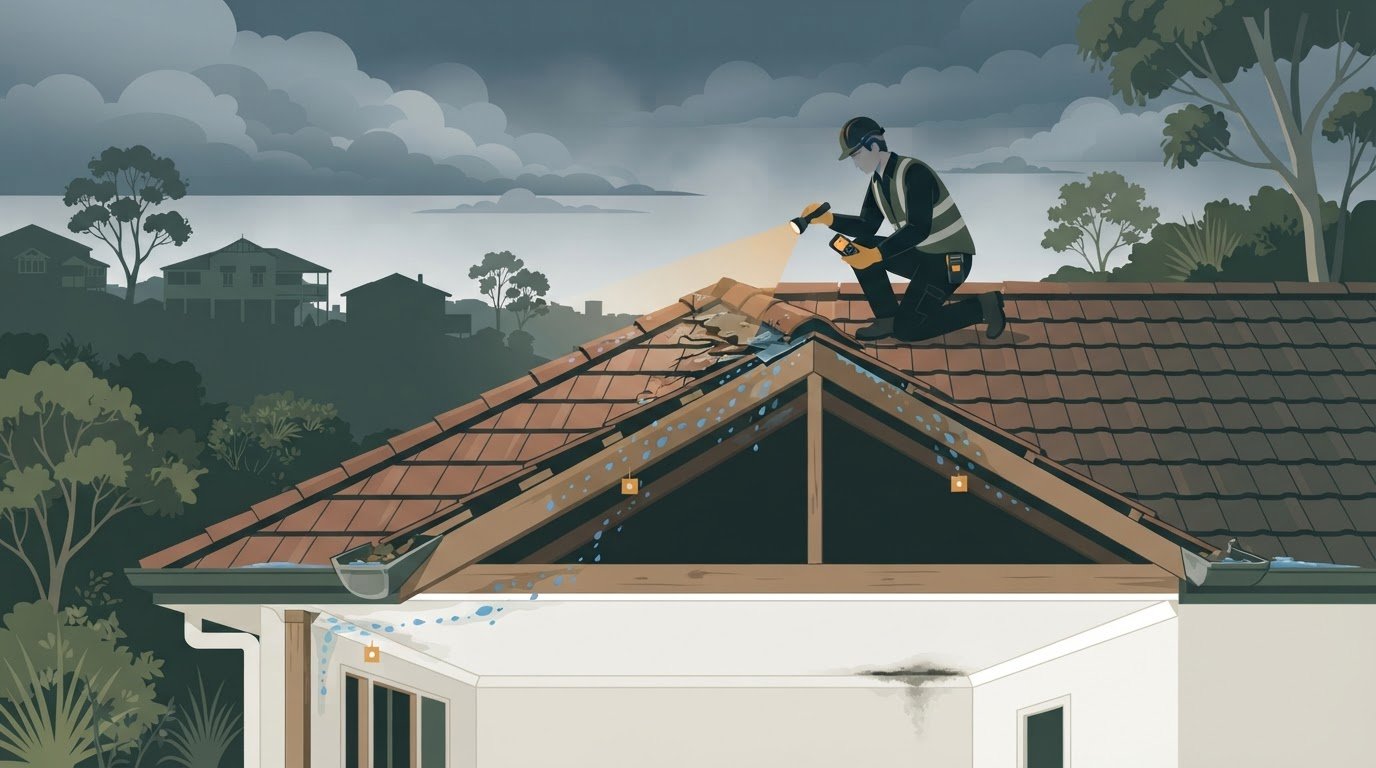
A ceiling drip doesn’t always mark the leak. A roof leak inspection in Brisbane traces signs such as water stains, mould or timber damage back to the entry point, because water can travel before it appears indoors. Common causes include damaged flashing, cracked or slipped tiles, worn ridge pointing and storm impact.
That’s why a clear assessment is more useful than guessing from a ceiling patch. You’ll learn which warning signs to watch for, how Brisbane conditions affect roofs, and how an inspection checks roof surfaces and the cavity, even when it isn’t raining.
You’ll also see what a written report can document and what influences the cost of a professional inspection. The price depends on the roof and inspection scope, and is provided after a quote request; factors include roof size, type, access and assessment methods. By the end, you’ll have a practical picture of what happens next and how to distinguish an early warning sign from a confirmed leak.
Key Takeaways
- Look beyond the ceiling drip: water can travel from the roof entry point, while mould stains and timber damage can signal hidden moisture.
- Learn how Brisbane weather, damaged flashing, slipped tiles and worn ridge capping can contribute to leaks.
- See what an inspection checks, from roof surfaces and flashings to gutters, downpipes and the roof cavity, even in dry weather.
- Understand what photographs and recommendations in a written report can help you decide about next steps.
- Find out which factors affect inspection costs and how roof age and severe weather can guide inspection timing.
What is the most common cause of roof leaks?
There isn’t one cause behind every Brisbane roof leak. Damaged flashing around skylights and vents, cracked or slipped tiles, worn ridge pointing and faults in previous repairs can all let water in. A leak may remain hidden for months before water reaches a ceiling, so the first stain can appear well after the problem begins.
Water doesn’t always drip straight down from where it enters. It can travel along roof framing or other surfaces before appearing indoors, making the visible mark an unreliable guide. Look for mould, damaged timber or bubbling paint around ceilings and walls. These signs suggest moisture has moved beyond the roof surface and needs proper investigation.
Brisbane’s summer heat adds another strain: roof temperatures can reach 70 degrees Celsius. Heat can stress roof materials and previous repairs, while storms can expose weak points. On tiled roofs, a cracked or displaced tile may leave a path for rain. On metal roofs, inspect flashing, fixings and joins for signs of damage or water entry.
Balconies, decks and skylights need close attention where they meet the building. A skylight leak may come from damaged flashing rather than the glazing. On a balcony or deck, check where the surface meets walls, doorways and drainage points. Water entering there can affect rooms below, even when the interior stain appears some distance away.
A professional assessment follows the evidence. The roofer checks the roof’s condition and likely entry points, then compares those findings with indoor stains and moisture damage. Thermal checks can help locate hidden leaks by identifying temperature differences. Thermal imaging is one method, not a substitute for checking roof details and matching results to visible evidence.
Does home insurance in Australia cover roof leak inspections and resulting repairs? Cover depends on your policy and the cause of the leak, and inspection costs may be treated differently from repair costs. Read your policy and contact your insurer before authorising work you intend to claim.
Are there Queensland or Brisbane rules for roof repairs and working at heights? Work needs to account for the roof, access and fall risks. Before work starts, ask how the inspection or repair will be carried out safely at your property.
What should I check before hiring a Brisbane roof leak inspection service? Check that the scope covers your roof type and suspected leak areas. Ask what the written report includes, such as photographs, findings and recommended repairs, and request a written fixed-price quote.
While waiting for assessment, catch ceiling drips in a container, move or cover furniture, and soak up water on the floor. Once the source is identified, repairs can address the affected roof detail, such as damaged flashing, tiles or previous repair work. Prompt detection helps pinpoint the repair area before moisture causes further timber damage.
Inspection reports with photographs and recommendations
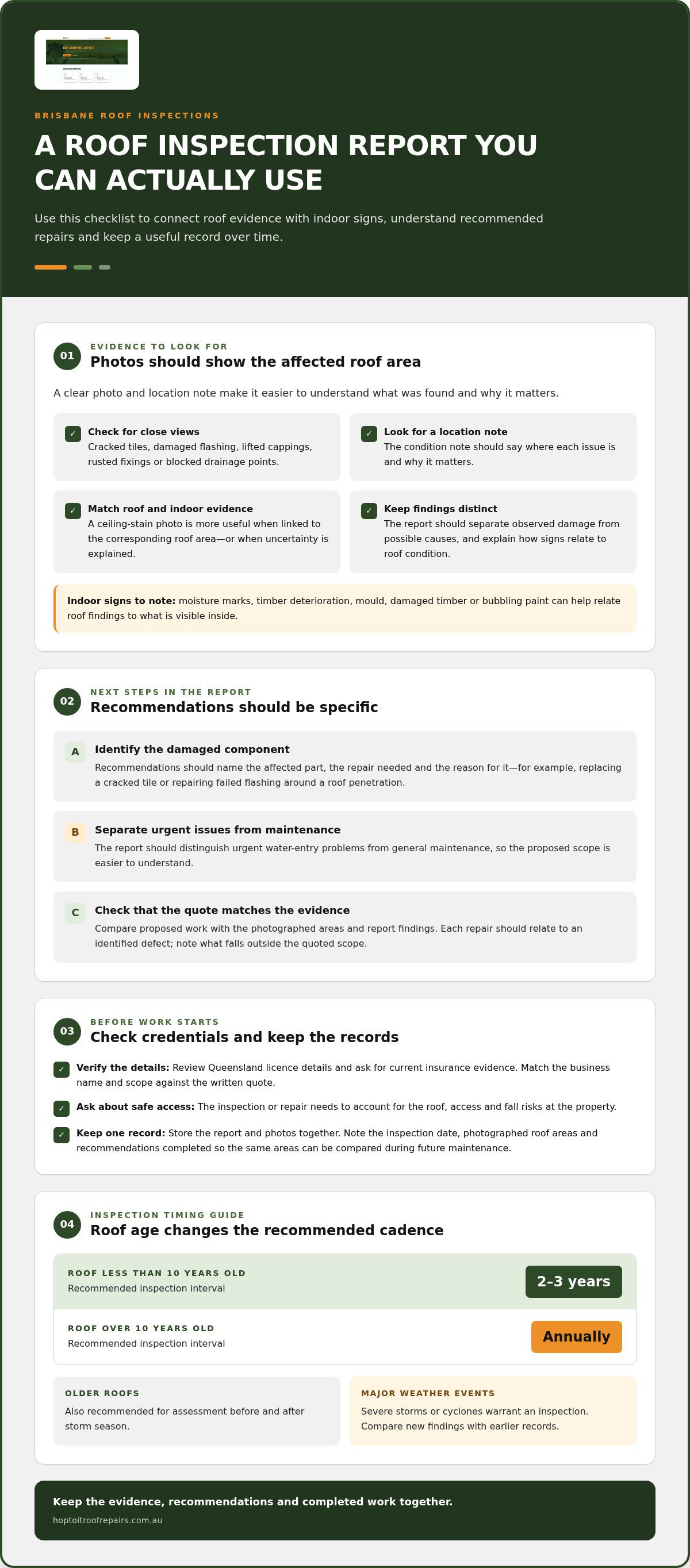
A useful report connects roof findings with visible signs inside your home. Review it alongside the photographs and recommended next steps.
Photographs and Roof Condition
Photographs should clearly show the affected roof area, not just a distant view. Look for images of cracked tiles, damaged flashing, lifted cappings, rusted fixings or blocked drainage points. A condition note should explain where each issue is and why it matters. A ceiling-stain photo is more useful when the report identifies the corresponding roof area or explains why the entry point remains uncertain.
Check that the written findings distinguish observed damage from possible causes. A report can record moisture marks, timber deterioration or storm impact, then explain how these signs relate to the roof’s condition. This helps you understand what the inspection established and what needs attention. Keep the report and photos together to compare the same roof area during future maintenance.
Repair Recommendations and Quotes
Recommendations should identify the damaged component, the repair needed and the reason for it. A cracked tile may need replacing, while failed flashing may need repair around a roof penetration. The report should distinguish urgent water-entry issues from general maintenance. Use those details to understand the proposed scope before considering a quote.
A quote should match the report’s findings, rather than describe a broad, unclear repair. Compare the proposed work with the photographed areas and recommendations. If the report identifies several defects, each proposed repair should relate to a finding. Clear documentation helps you see what the repair addresses and what falls outside its scope.
How can I find a licensed and insured roof inspector in Queensland? Review the inspector’s Queensland licence details and ask for current insurance evidence, then match the business name and scope against the written quote. Keep those records with the report and photographs.
Inspection timing also affects how quickly developing defects are found. Brisbane homes with roofs less than 10 years old are recommended to have an inspection every 2-3 years. Roofs over 10 years old are recommended to be inspected annually. Older roofs should also be assessed before and after storm season, while major weather events such as severe storms or cyclones warrant an inspection.
Use the report to plan follow-up, not just immediate repairs. Note the inspection date, roof areas photographed and recommendations completed. After severe storms, compare new findings with the earlier record. If the assessment identifies roof damage, a focused roof leak assessment can help clarify the next repair step.
Can you find a roof leak when it isn't raining?
Yes. A dry-weather inspection can trace visible evidence and assess roof details that commonly admit water. A thorough check covers the roof surface, valleys, flashing, cappings, gutters, downpipes, eaves and roof cavity.
Start with the ceiling marks and work outwards. A roofer can compare stains or damp timber in the roof cavity with defects above them. The drip may appear far from the entry point, so an inspection should assess more than the area directly above a ceiling stain. Thermal checks can help locate hidden leaks by identifying temperature differences across roof areas.
At roof penetrations, inspect the flashing around vents, skylights and pipes. Flashing seals the joins where a roof meets an opening or raised structure. Lifted edges, gaps, corrosion or rusted fixings can let water in. Cappings and valleys also need attention, because damaged joints or accumulated debris can divert water beneath roof coverings.
Gutters and downpipes are another part of a leak investigation. Check for leaves, sediment, rust, separated joints and water marks on nearby fascias or eaves. A blocked gutter can overflow during rain, while a leaking joint may leave damp patches below the roof edge. The roofer should assess how water moves from the roof into the gutter, through the downpipe and away from the building.
Box gutters need particular scrutiny because they sit within the roof structure and collect water from adjoining roof sections. Debris, damaged lining or a poor outlet connection can let water escape into the building. On a flat roof, check membrane seams, penetrations and drainage outlets. At a parapet, inspect where the roof membrane meets the raised wall, including the covering and drainage details.
A dry inspection can still identify cracked materials, failed seals and moisture staining. The roofer can document the exact location, take photographs and explain which defects could let water in. If visual checks don’t pinpoint the source, thermal checks may help identify concealed moisture patterns. Findings should connect roof details with indoor evidence, rather than assume the nearest defect caused the leak.
Before the visit, note where water appears, when you first noticed it and whether storms changed the pattern. Share those details with the inspector, then ask which roof areas were assessed and what the findings mean. This record helps distinguish an active leak path from unrelated wear and gives you a clearer basis for deciding on repairs.
Common causes of roof leaks in Brisbane
Brisbane roofs face intense summer heat and storm damage. Common causes include cracked or slipped concrete tiles, worn pointing, faulty flashing, rusted screws and roof plumbing problems. The roof material and the location of each defect shape how water enters. A detailed assessment should connect the likely cause with signs inside the home.
On a tiled roof, a cracked tile can expose the underlay, while a slipped tile leaves a gap between coverings. Worn pointing or ridge capping can also weaken the seal along the roof peak. Look for loose fragments in gutters and visible gaps along ridges. These clues help identify which roof areas need closer attention.
Metal roofs have different weak points. Rusted screws can compromise fixings, while faulty flashing around a vent or skylight can open a path at a join. Roof plumbing issues may affect how water drains across the surface. Checking fixings, seams and drainage details helps assess the roof’s condition without assuming every damp patch has the same cause.
Storm impact can damage tiles, flashing or other roof components. After severe weather, look for displaced materials, fresh ceiling stains or debris in gutters. A new stain doesn’t prove where water entered, but comparing it with roof damage gives an inspector useful evidence. Record when the mark appeared and whether it changed after storms.
Indoor signs can point to a developing problem. A ceiling stain, peeling paint or damp timber may mean water has reached the building, while mould can indicate persistent moisture. Consider these signs alongside roof findings. Water can travel from its entry point, so an effective inspection looks for a matching defect rather than assuming the nearest roof feature is the cause.
Use a simple inspection sequence: note the affected room, photograph visible staining, then record nearby roof features such as valleys, ridges and penetrations. Don’t climb onto the roof to investigate. A professional can assess cracked tiles, worn pointing, rusted screws and faulty flashing, then explain which findings align with the reported leak.
Repairs should match the identified fault. A damaged tile calls for attention to the tiled area; a metal-roof fixing or flashing issue needs a repair suited to that component. Roof plumbing problems may require attention to drainage details. Matching repairs to documented causes helps avoid treating only the visible symptom while the leak path remains.
Different defects can produce similar stains, so one clue rarely tells the whole story. A detailed assessment combines roof condition, indoor evidence and storm history to identify likely causes. This evidence-led approach helps you understand repair priorities and protect the roof before further water ingress affects ceilings or timber.
Professional roof inspection costs in Brisbane
A professional inspection’s scope depends on the property and the investigation needed, not on one standard Brisbane-wide rate. A quote and a roof inspection are different: a quote outlines proposed work, while an inspection assesses roof condition. Timing depends on urgency, roof access, weather and workload.
Inspection Costs
For a roof leak inspection, the property’s size and type affect the work involved. A straightforward roof assessment differs from an investigation across multiple roof sections or leak points. Access, roof complexity and available evidence can also shape the scope. Ask for a written fixed-price quote that explains what the inspection covers before work begins.
Focus on the deliverable, not just the quoted amount. A thorough assessment may include checks of roof surfaces, valleys, flashings, gutters, downpipes and the roof cavity. A written report with photos can record defects and recommendations. If water stains appear inside, ask how the inspection will assess the likely entry point and connect it to the visible damage.
Inspection and repair work are separate considerations. The assessment identifies problems; any repairs depend on the defects found and the work required. A fixed-price quote sets out the proposed scope and price before the job proceeds. Compare the written scope with the report to see which findings each proposed repair addresses.
Quotes and Inspections
A quote doesn’t necessarily mean the inspection itself is included. A quote can describe proposed work, while an inspection assesses the roof and records its condition. Read the wording carefully to establish whether the quoted scope covers assessment, reporting, repairs or a combination. That distinction helps you understand what the work involves.
There isn’t one standard offer for free inspections across Brisbane. For a leaking roof, request a written fixed-price quote that sets out the assessment scope and explains how the findings will be reported. Don’t treat a repair estimate as proof that a detailed roof inspection has been completed.
How quickly can a roofer inspect a leaking roof in Brisbane? Timing depends on the leak’s urgency, safe access, weather conditions and the roofer’s workload. Share where water is entering and whether the leak is active, so the inspection can be prioritised appropriately.
Before booking, note the affected rooms, visible water stains and any recent storm damage. Send those details with clear photos where possible. This gives the roofer useful context for planning the assessment, but the roof still needs to be examined to identify defects.
For a transparent next step, request a roof leak detection quote that sets out the assessment scope and proposed work.
Hop To It Roof Repairs: Roof Leak Detection
Hop To It Roof Repairs provides roof leak detection when stains, damp timber or recurring drips point to a roof problem. Systematic hose testing, water tracing, thermal checks and photographs help identify the likely entry point and clarify what needs attention. Each job includes a detailed written report, a fixed-price quote and a workmanship warranty, giving you documented findings and a clear scope before repairs proceed.
If the report identifies damaged metal roofing or tiles, the next step may be metal roof repairs or tile roof repairs. Hop To It Roof Repairs also handles gutter and downpipe issues that contribute to water entry or drainage problems. Share what you’ve observed, including affected rooms and visible roof damage, to help explain the issue.
Contact Hop To It Roof Repairs to discuss a roof leak inspection for your property.
Take the next step towards a sound roof
A persistent leak is easier to address once its source is understood. Arrange a roof leak inspection in Brisbane when fresh water marks appear, a repair hasn’t stopped the leak, or you’re unsure which roof area needs attention. Clear findings help you decide what to tackle first instead of relying on guesswork.
Hop To It Roof Repairs can assess the leak and provide a written report with photographs of faults, a fixed-price quote and a workmanship warranty. If repairs are needed, metal roof repairs and tile roof repairs can be matched to the roof and identified problem. You’ll have clear information before deciding how to proceed.
Share where you’ve seen water enter and any changes after rain. That gives the conversation a practical starting point. Contact Hop To It Roof Repairs to discuss an inspection and take a clear next step towards resolving the leak.
Frequently Asked Questions
How can I tell if my roof is leaking?
Look for fresh ceiling stains, peeling paint, mould or damp timber, especially after rain. A stain that grows or returns points to ongoing moisture, even if water isn’t dripping at the time. Note which rooms are affected and when the marks change. Those details help connect indoor signs with roof condition, since visible damage doesn’t always sit directly beneath the entry point.
What do I do if water leaks through the ceiling?
Place a container beneath the drip, move or cover nearby furniture, and soak up excess water from the floor. Note where water appears and whether the ceiling mark spreads. Keep these observations for the inspection. Don’t climb onto the roof to investigate: the entry point can be distant from the drip, and a ceiling leak doesn’t show which roof component needs attention.
How much does a roof inspection cost in Brisbane?
The inspection scope depends on the property’s size and type and the investigation needed. A focused assessment of a straightforward roof differs from an investigation across complex roof sections. Request a written fixed-price quote that explains what the inspection covers and what documentation it includes. Inspection and repair work are separate, so check that the quote clearly identifies the scope.
How does it work?
A leak investigation starts with the symptoms you’ve noticed, then uses suitable checks to trace water entry. Methods include systematic hose testing, water tracing and thermal checks, with photographs of every fault found. For homes in Brisbane, the Gold Coast, Redland Bay, Moreton Bay and Ipswich, the roof material and reported leak pattern guide the assessment. The findings inform the recommended next step.
Why does my roof only leak in some storms?
Rain direction, storm intensity and duration can change which roof details are exposed. Wind-driven rain can reach flashing or a roof joint that stays dry during lighter, vertical rainfall. A partly blocked drainage path may cope with some showers but overflow in heavier conditions. Record which storms trigger the leak and where water appears; that pattern helps narrow the investigation.
What does a roof leak inspection in Brisbane include?
A roof leak inspection in Brisbane assesses the roof and traces signs of water entry using methods suited to the problem. The process can include hose testing, water tracing, thermal checks and photographs of faults. For metal or tile roofs, the inspection records relevant findings so the repair scope can address the identified issue. The written report gives you evidence to consider before proceeding with repairs.
How much does a roof leak inspection cost in Brisbane?
The inspection scope depends on the property’s size and type and what’s needed to investigate the leak. A written fixed-price quote sets out the proposed assessment before work proceeds. Keep it separate from any repair quote: the inspection investigates the cause, while repair work depends on the faults found. Compare the scope of each quote before deciding.
What are common causes of roof leaks in Brisbane homes?
Common causes include cracked or slipped tiles, worn ridge pointing, damaged flashing, rusted screws and storm impact. The roof material helps determine where to look: tile roofs can develop gaps around displaced tiles, while metal roofs can leak around fixings or joins. Gutters and downpipes can also contribute when drainage problems divert water. An inspection links these defects to the leak evidence.