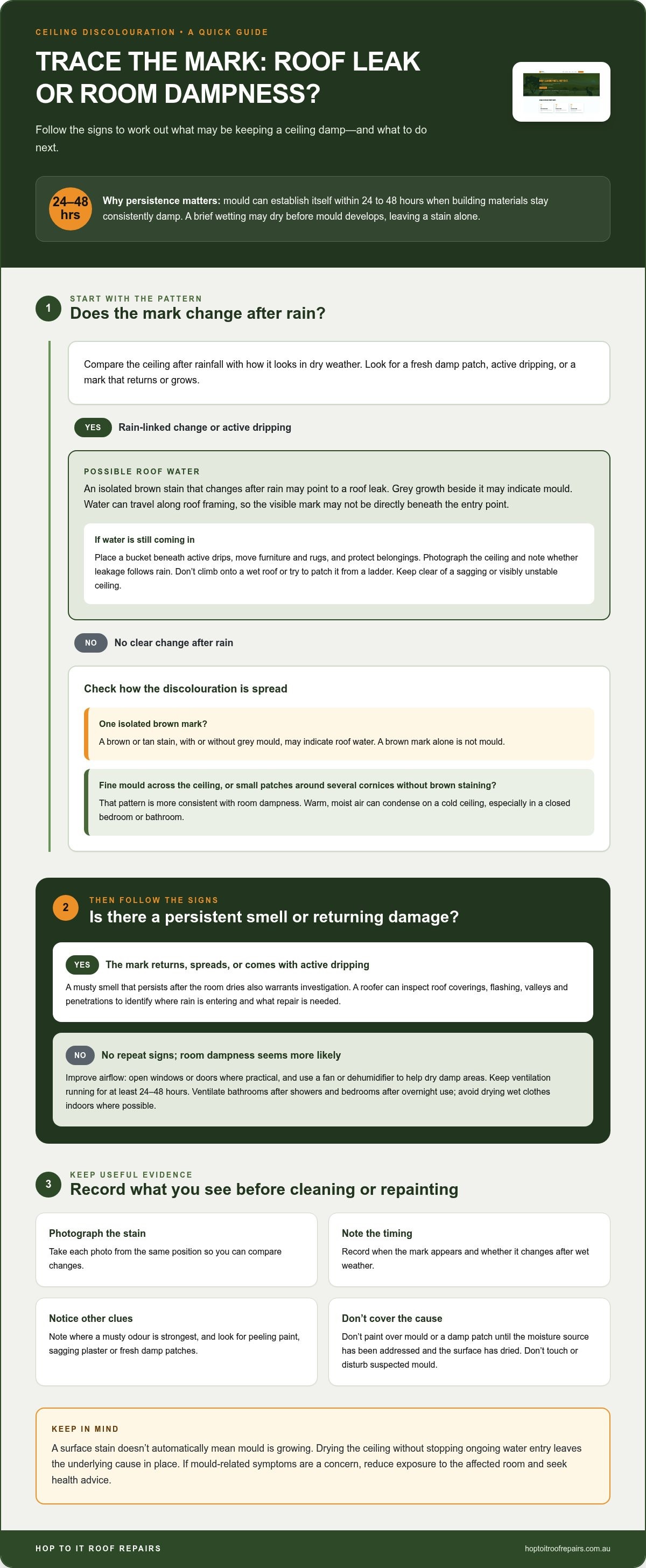
Mould on ceiling corner from roof leak: signs and repairs
30 October 2026 · 12 min read
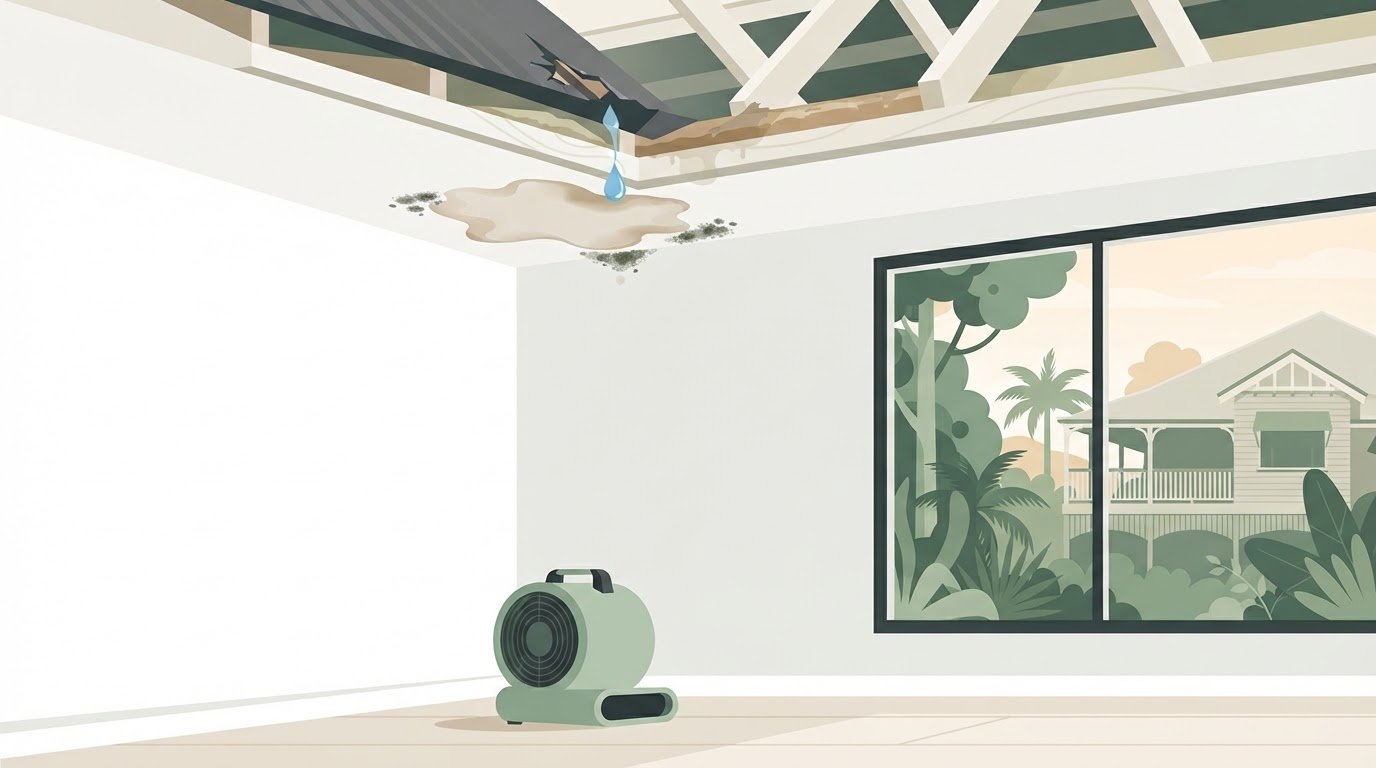
A roof leak can give mould a head start in 24 to 48 hours if the ceiling stays damp. Mould on a ceiling corner from a roof leak may appear as grey growth alongside a brown water stain. A brief wetting can dry before mould develops, leaving staining alone. The deciding factor is persistent moisture.
A ceiling stain can be alarming, but it doesn’t automatically mean mould is growing. The key is to distinguish a possible roof leak from general room dampness, then address the moisture rather than simply painting over the mark. The shape, colour and location of the discolouration can offer clues.
Here, you’ll learn how quickly mould can develop, which signs may point to roof water, and what you can do to limit further dampness. You’ll also learn when a roofer can trace the leak and arrange a lasting repair, so you can decide what to do next.
Key Takeaways
- Look for whether discolouration is isolated or spread around the room; the pattern can help distinguish a roof leak from general dampness.
- Ventilate the affected room and use fans or a dehumidifier to help dry damp areas before repainting.
- Don’t paint over mould or staining until the moisture source has been addressed and the surface has dried.
- Get a roofer to investigate recurring leaks or damage that may involve roof coverings, gutters or downpipes.
1. How fast can mould grow after a roof leak?
Mould can establish itself within 24 to 48 hours when building materials remain consistently damp. A roof leak can wet ceiling plaster, timber framing and insulation, creating a hidden damp area above the visible stain. If moisture stays trapped in that ceiling cavity, mould may develop out of sight before patches appear indoors.
The key factor is not simply whether rain entered, but how long materials stay wet. A brief leak may dry before mould grows, leaving a brown stain without visible mould. Repeated rain entering through a slipped roof tile or damaged metal flashing, however, can keep the same area damp and encourage mould growth.
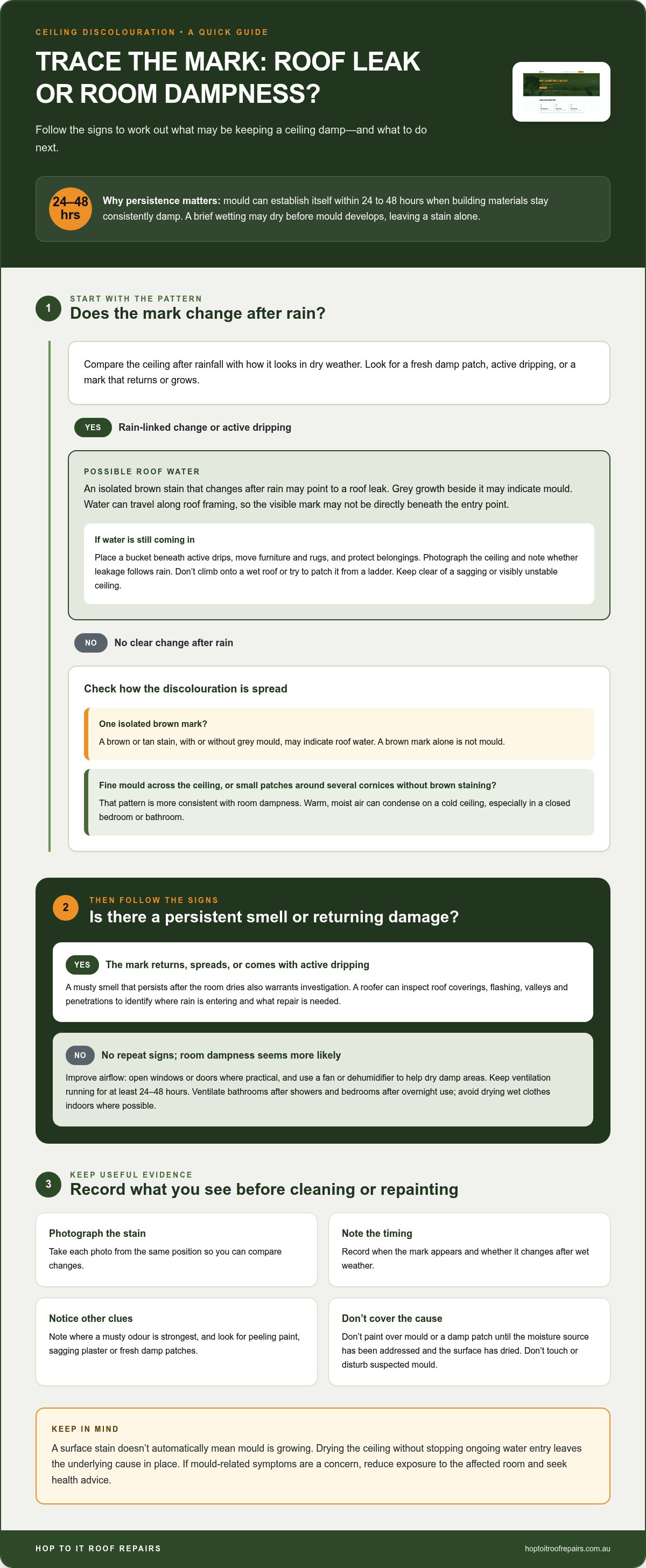
Look at the pattern. An isolated brown stain, with or without grey mould, may indicate a roof leak. A fine layer of mould across the ceiling, or small patches around several cornices without brown staining, is more consistent with room dampness. Warm, moist air can condense on a cold ceiling, especially in a closed bedroom or bathroom.
With mould on a ceiling corner from a roof leak, note whether the mark spreads after rain, feels damp or comes with a musty smell. Don’t touch or disturb suspected mould. Take a photo, record when it appears, and note whether it changes after wet weather. These details can help distinguish a one-off stain from an ongoing moisture problem.
Mould in a home can affect indoor air quality and may cause irritation or allergy-like symptoms, particularly for people sensitive to mould. If symptoms are a concern, reduce exposure to the affected room and seek health advice.
Does Australian home insurance cover mould and roof-leak damage? Coverage depends on the policy wording and the cause of the leak. Read your policy terms and contact your insurer to understand how it treats the damage.
Keep the room ventilated while the source is investigated, but don’t assume surface cleaning will solve mould inside the ceiling cavity. Drying the ceiling without stopping ongoing water entry leaves the underlying cause in place. First establish whether rain is still getting past the roof covering or flashing.
2. Musty smells and ceiling discolouration
A musty smell near one ceiling corner can point to trapped moisture, especially if it becomes stronger after rain. It doesn’t reveal the leak’s exact entry point. Water can travel along roof framing before reaching plaster, so the visible mark may be away from the damaged roof area. Note where the odour is strongest and whether it changes after wet weather.
Brown staining provides another clue. Rainwater can dissolve fine dust on the ceiling and carry it through the plaster, leaving a tan or brown mark as the surface dries. Grey growth beside the stain may indicate mould, but a brown mark alone is not mould. Note whether the mark is isolated, spreading, or accompanied by soft or bubbling paint.
Inspect the ceiling in daylight and compare the mark after rain with its appearance in dry weather. Make a few simple observations:
- Photograph the stain from the same position each time.
- Note any musty odour and the room where it is strongest.
- Look for peeling paint, sagging plaster or fresh damp patches.
- Check whether the mark reappears or grows after rainfall.
An isolated mark that changes after rain suggests a different cause from faint discolouration across a whole ceiling. Broad, fine mould patches around cornices without brown staining can point to room dampness instead. Bathrooms and bedrooms can become damp when closed and poorly ventilated. Warm, moist indoor air may condense on a cold ceiling, leaving damp edges or corners that need better ventilation.
Keep a clear record before cleaning or repainting. A fresh coat of ceiling paint can hide the stain temporarily, but it won’t stop water entering from above or indoor condensation. If the odour persists or the mark returns after rain, treat it as a moisture problem to investigate, not just a cosmetic defect.
3. Temporary leak control and permanent roof repairs
If rainwater is still entering, limit damage indoors first. Place a bucket beneath active drips, move furniture and rugs, and protect belongings. Photograph the ceiling and note whether leakage follows rain. Don’t climb onto a wet roof or try to patch it from a ladder. Keep clear of any ceiling that is sagging or visibly unstable.
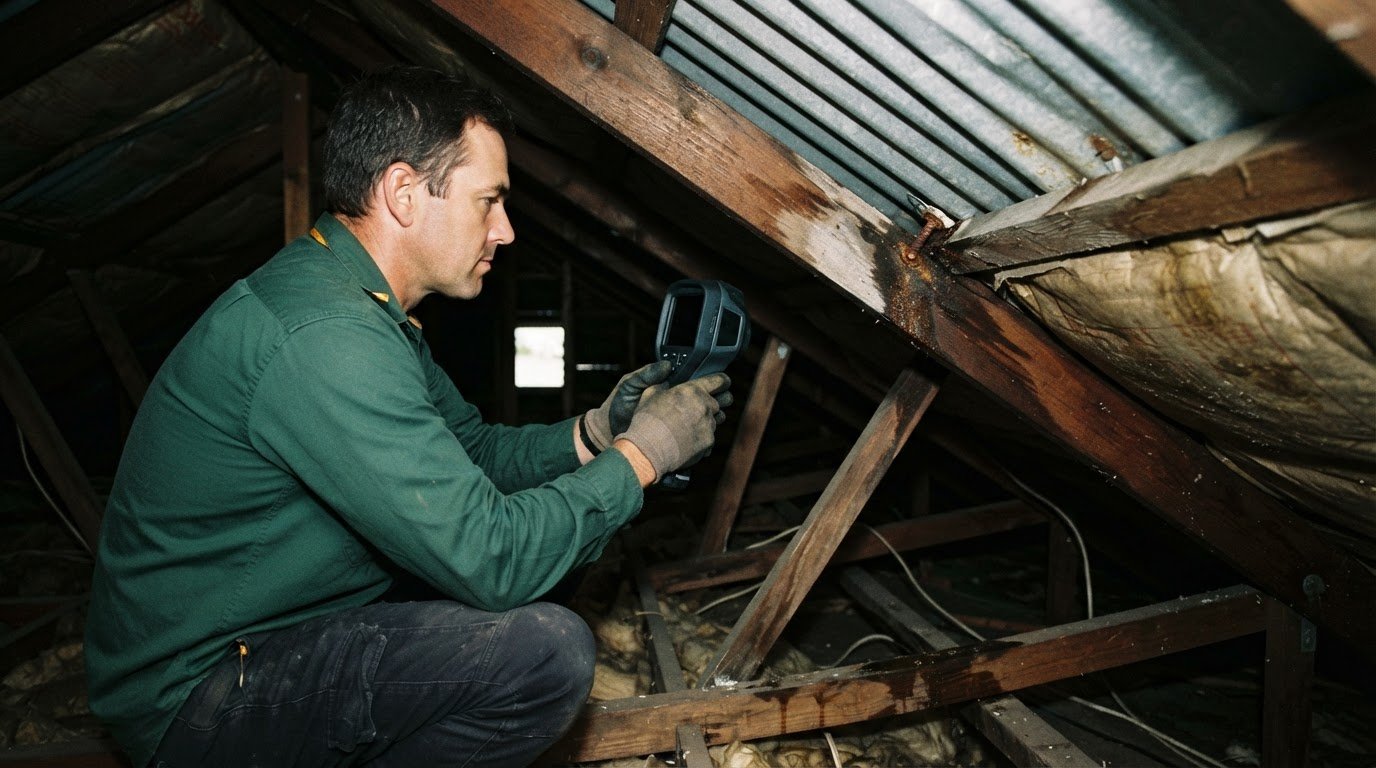
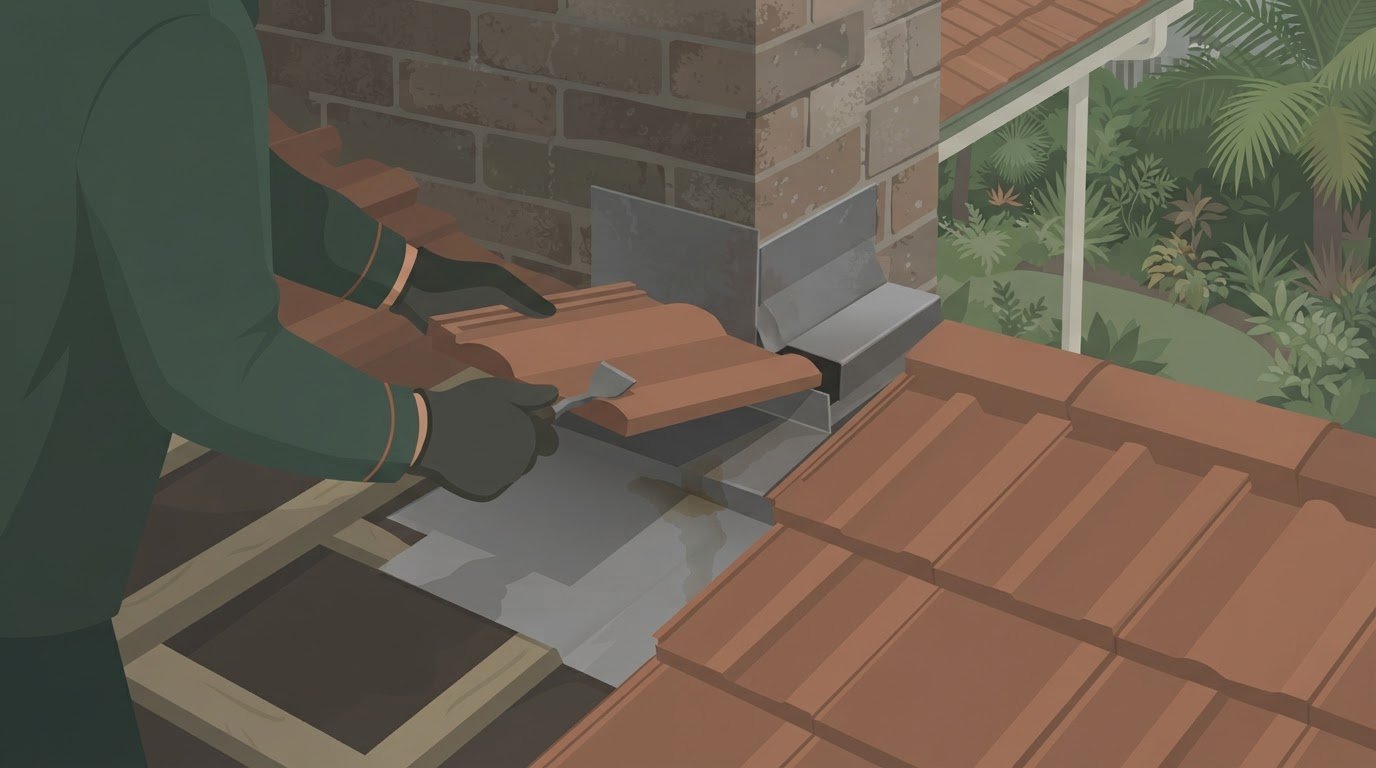
A bucket manages water inside, but it doesn’t stop the leak. A lasting repair starts with finding where rain enters, which may be some distance from the ceiling stain. A roofer can inspect the roof covering, flashing, valleys and penetrations, then identify the repair needed. The right repair depends on the roof material and damaged area.
Once water entry has stopped, focus on drying the room and affected surfaces:
- Open windows or doors where practical to improve airflow.
- Use a fan or dehumidifier to help dry damp areas.
- Keep ventilation running for at least 24–48 hours.
- Remove mould before applying ceiling paint.
Drying matters because warm, moist indoor air can condense on a cold ceiling and contribute to further mould growth. Bathrooms and bedrooms can be especially prone to dampness when they stay closed and poorly ventilated. Ventilate these rooms after showers or overnight use, and avoid drying wet clothes indoors where possible.
Don’t paint over a damp patch or cover a musty smell with air freshener. Paint can conceal staining without addressing moisture in plaster, timber or insulation. If the mark returns after rain, or dampness remains after ventilation and drying, the leak source may still need attention. Keep your photos and rainfall notes together: they show when the problem occurs and help guide a roof inspection.
4. When should I call a professional roofing service?
Call a roofer when a ceiling stain returns after rain, spreads or appears with active dripping. A musty smell that persists after the room dries also warrants investigation. These signs can mean water is still entering, even if the roof looks intact from ground level.
Get professional help if plaster is sagging, cracking or soft, or if water is near a light fitting. Keep clear of damaged areas and don’t climb onto the roof. A roofer can trace the entry point and assess whether the roof covering, flashing or drainage needs repair.
Does a water-damaged ceiling need replacement, or can it be dried and cleaned? Sound plaster may be dried and cleaned once the leak is repaired. Replace material that remains soft, distorted or damaged; the ceiling’s condition determines the approach.
For a small area of surface mould, avoid dry-brushing or sanding, which can spread particles. Ventilate the room, keep people away during cleaning, and follow the cleaner’s label. Don’t mix cleaning products. If mould covers a larger area, returns, or affects porous or damaged material, seek professional remediation advice.
What Australian rules or guidelines apply to indoor mould remediation? Guidance can vary between states and territories, so follow the relevant local health advice and the cleaning product’s directions. Address the moisture source as well as visible mould: cleaning alone won’t prevent regrowth if dampness continues.
Choose a roofer when evidence points to rain entering through the roof. A mould-remediation professional is more relevant when growth is extensive, keeps returning, or involves materials that need specialist handling. If both problems are present, address the leak and the mould rather than treating either as a standalone cosmetic issue.
Keep photos, dates and notes about rainfall ready for the assessment. This record helps connect indoor changes with weather and supports a focused inspection. Arrange a roof leak assessment when staining or dampness points to ongoing water entry.
Hop To It Roof Repairs: Roof Leak Detection
Hop To It Roof Repairs can help when a ceiling stain or musty corner points to water entering through the roof. Its Roof Leak Detection service traces the source, while Metal Roof Repairs and Tile Roof Repairs address damage to those roof types. Gutters & Downpipes can also help when drainage problems contribute to water entry.
A clear diagnosis matters because the ceiling stain may be some distance from the roof defect. Hop To It Roof Repairs provides a fixed-price quote and a detailed written report, including a photo report of every fault found, for each job. The report sets out the findings and proposed work, giving you clear information to decide on the next step.
For recurring staining or suspected roof leakage, contact Hop To It Roof Repairs to discuss the issue.
Take the next step towards a dry, sound ceiling
Once the immediate concern is under control, add the repair to your home-maintenance plan. Keep a simple record of the affected room, the stain’s location and any changes over time. This gives you a useful reference if the same area becomes damp again and helps you spot a recurring issue early.
If you’re dealing with mould on a ceiling corner from a roof leak, resolve the source of moisture before refreshing the ceiling. A clean finish matters, but confidence comes from knowing the roof has been assessed and the right repair considered. Clear information makes the next decision easier, whether you’re arranging an inspection or planning follow-up work.
For a practical next step, contact Hop To It Roof Repairs to discuss the roof concern and move towards a considered repair. You can take action calmly, with a clearer plan for keeping the problem from returning.
Frequently Asked Questions
How fast can mould grow after a roof leak?
Mould may establish within 24 to 48 hours if materials remain consistently damp. The risk depends on continuing moisture, not simply the first raindrop: a leak that stops and dries differs from recurring water entering the ceiling cavity. Check whether dampness persists after rain and note any changes. Those observations help show whether the leak is ongoing.
When should I call a professional roofing service?
Call a roofer when water keeps entering, a ceiling stain reappears after rain, or you can’t locate the roof defect. In Brisbane, the Gold Coast, Redland Bay, Moreton Bay and Ipswich, a roof assessment can help identify whether the issue involves roof coverings, flashings or drainage. Recurring leaks need more than a surface patch because water can travel before appearing indoors.
What causes mould in a ceiling corner after a roof leak?
Mould develops when moisture from a roof leak remains in ceiling materials such as plaster, timber or insulation. Water can follow framing and emerge at a corner, even if the roof opening is elsewhere. A damaged tile, flashing or roof sheet can let rain in; repeated wetting keeps the cavity damp and creates conditions for mould to grow.
When should mould on a ceiling be handled by a professional?
Seek professional help if mould covers a broad area, keeps returning after the moisture source is fixed, or affects materials that remain damp or damaged. A small surface patch differs from growth hidden inside a ceiling cavity. If the affected area is difficult to reach or cleaning would disturb the material, avoid disturbing it and arrange an assessment.
How do I find and repair the roof leak causing ceiling mould?
Start by recording where the ceiling mark appears and whether it changes after rain. Don’t assume the roof defect is directly above it, as water can travel along roof framing. A roofer can inspect the roof system, trace the entry point and determine the repair suited to the material. Repairing the source comes before restoring the ceiling finish.
How can I prevent mould returning after fixing a roof leak?
Prevent a return by ensuring the leak is repaired, then allowing damp materials to dry before repainting. Keep rooms ventilated, especially bathrooms and bedrooms that stay closed for long periods. Use a fan or dehumidifier if the space stays damp. Inspect the roof regularly and note any new ceiling marks, particularly after heavy rain.