Metal Roof Repair, Partial Replacement or a Full Re-Roof?
15 November 2026 · 12 min read
A metal roof doesn’t always need a full re-roof. To decide when to repair vs replace a metal roof section, consider how far the damage extends: an isolated leak or a few damaged sheets may be repairable, while widespread corrosion, thinning or recurring failures can point to replacement. The condition of the roof beyond the visible problem matters.
Knowing when to repair vs replace a metal roof section means distinguishing local corrosion from damage affecting surrounding sheets. A targeted repair may suit a sound roof with one isolated fault. If corrosion is widespread or repairs keep failing, partial replacement or a full re-roof may be more practical.
This guide explains what an inspection should check and how corrosion affects the decision. It also compares targeted repairs, partial replacement and full re-roofing, so you can understand the options and the evidence behind a recommendation.
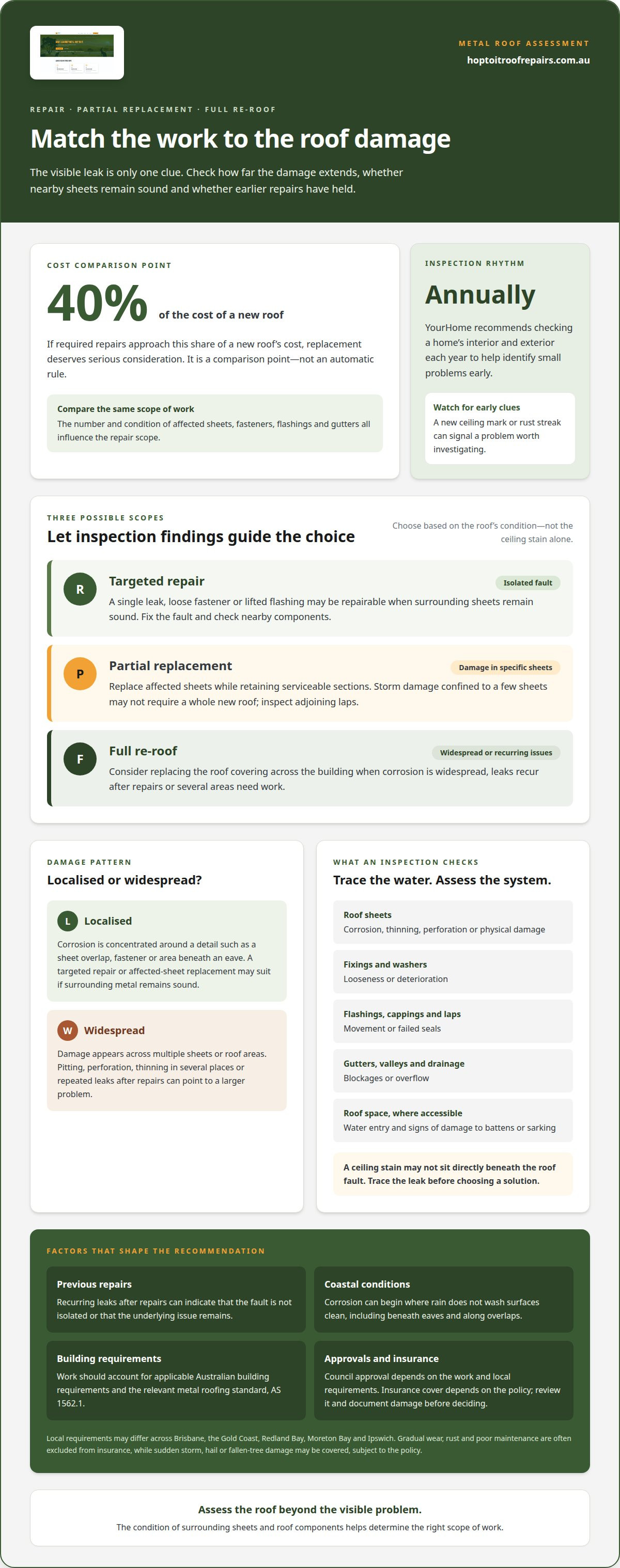
Key Takeaways
- Trace the leak before choosing a solution. The visible stain may not sit directly beneath the roof fault.
- Look at how far corrosion has spread: isolated surface damage may suit a targeted repair, while thinning or perforated sheets can signal a larger problem.
- Compare repair, partial replacement and a full re-roof against the roof’s overall condition and whether previous repairs have held.
- A clear assessment of sheets, fixings, flashings and the roof space helps support a practical recommendation.
Can a Metal Roof Be Repaired?
Yes. A metal roof can often be repaired when inspection finds an isolated fault and the surrounding sheets remain sound. A leak around one penetration, a loose fastener or lifted flashing may need targeted work, not removal of the entire roof. The visible ceiling mark may be some distance from the entry point, so tracing the leak is essential before choosing a repair. Knowing when to repair vs replace a metal roof section starts with locating the failure.
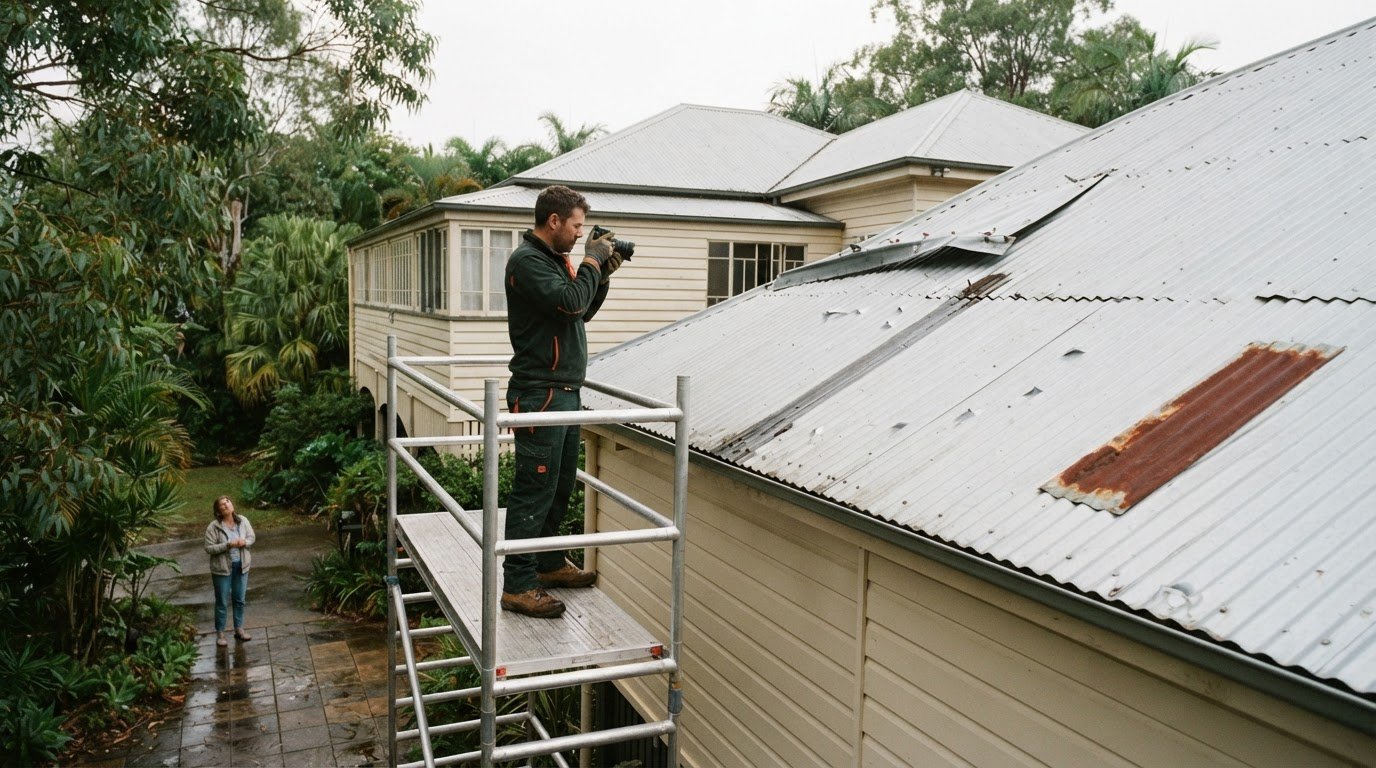
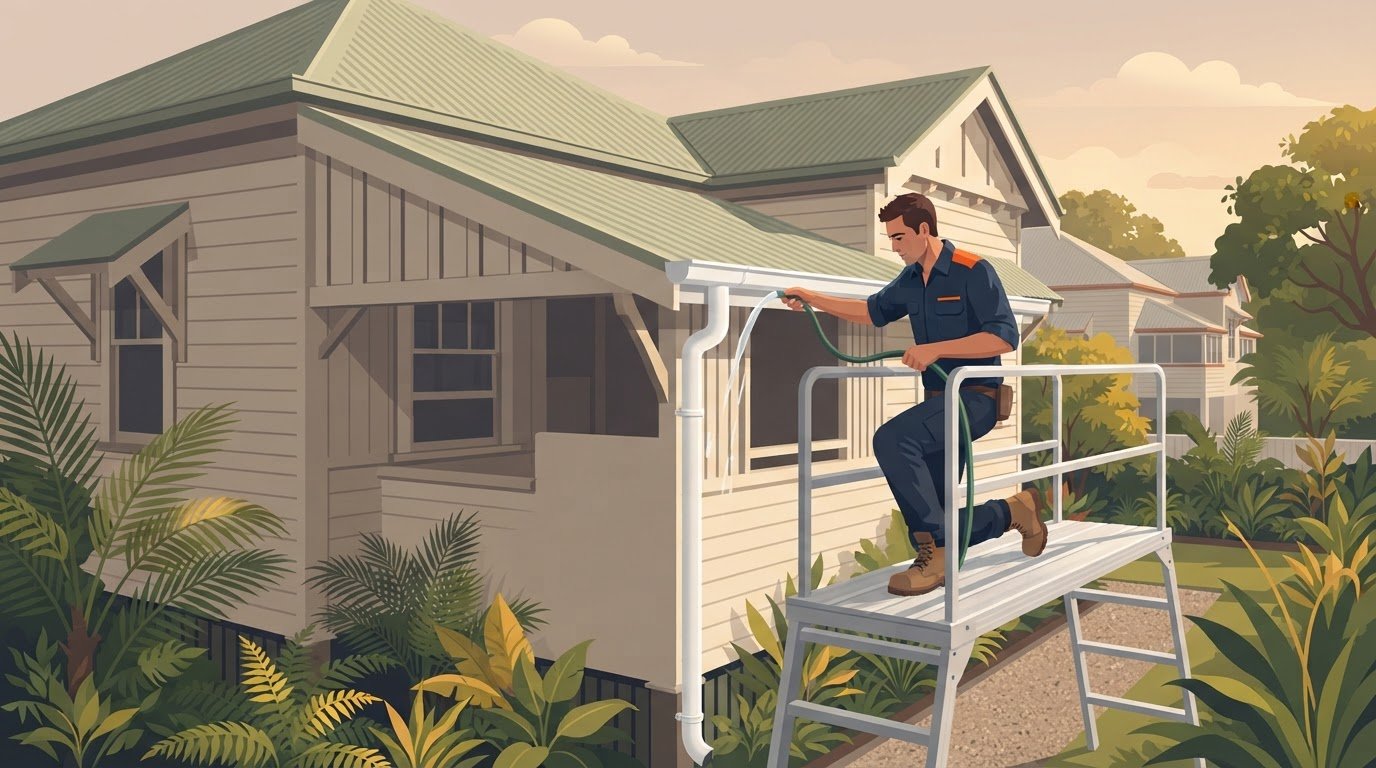
A professional inspection traces the water path and checks the roof as a system. It examines sheets for corrosion or physical damage, fixings and washers for looseness or deterioration, and flashings, cappings and laps for movement or failed seals. Gutters, valleys and drainage paths are checked for blockages or overflow. Where accessible, the roof space is examined for water entry and signs of damage to battens or sarking.
Damp patches after heavy Australian weather call for leak tracing, not simply covering the stain. A roofer can assess likely entry points and check whether the proposed repair will restore the seal. Sealant over a leaking lap or fastener may offer only temporary relief if the underlying fault remains. Inspection findings help determine when to repair vs replace a metal roof section, including whether some sheets need replacing.
Regular inspections matter too. YourHome recommends checking a home’s interior and exterior annually, which can help identify small problems before they grow. That schedule can reveal early signs, such as a new ceiling mark or rust streak, before repeated water entry causes further damage. A professional roof assessment can identify the cause and appropriate scope of work.
| Option | Inspection finding | Typical response |
|---|---|---|
| Repair | One isolated leak; surrounding sheets sound | Fix the fault and check nearby components |
| Partial replacement | Damage concentrated in specific sheets | Replace affected sheets and inspect adjoining laps |
| Full replacement | Widespread corrosion or repeated failures | Assess the roof as a whole |
Choose the option that fits the inspection findings, not the ceiling stain alone.
Signs that corrosion is localised or widespread
Corrosion patterns can show whether damage is confined to one area or affects more of the roof. In Brisbane, the Gold Coast, Redland Bay, Moreton Bay and Ipswich, compare the affected sheets with the surrounding roof before deciding on the scope.
Localised corrosion and repairable sections
Localised corrosion is concentrated around a particular detail, such as a sheet overlap, fastener or area beneath an eave. If surrounding metal remains sound and corrosion hasn’t thinned or perforated neighbouring sheets, a targeted repair or replacement of the affected sheet may be suitable. On coastal roofs, corrosion can begin where rain does not wash surfaces clean, including beneath eaves and along overlaps.
Widespread damage and replacement signs
Widespread corrosion appears across multiple sheets or roof areas, rather than at one isolated detail. Look for metal that is pitted, perforated or thinned in several places, recurring leaks after previous repairs, or a roof that no longer sheds water properly. When damage is extensive or repairs keep failing, replacing the roof may be more suitable than continuing to patch separate areas.
Internal signs of leaks and corrosion
Rust streaks on ceilings or walls can point to corroded roof sheets or penetrations. Damp patches, recurring water marks or stains in different rooms can also indicate water entry. These internal signs don’t show how far corrosion has spread. A roof assessment compares them with the condition of the sheets, flashings and other affected details to determine whether the problem is localised.
Metal roof repairs and replacement should account for applicable Australian building requirements and the relevant metal roofing standard, AS 1562.1. The work scope and location shape which requirements apply.
Council approval for repairs or replacement depends on the proposed work and local requirements. Requirements can differ between projects in Brisbane, the Gold Coast, Redland Bay, Moreton Bay and Ipswich, so include local approval requirements in your project plan.
Insurance can also affect the decision. Gradual wear, rust and poor maintenance are often excluded, while sudden storm, hail or fallen-tree damage may be covered, subject to the policy. Review your policy and document the damage before deciding whether to repair or replace.
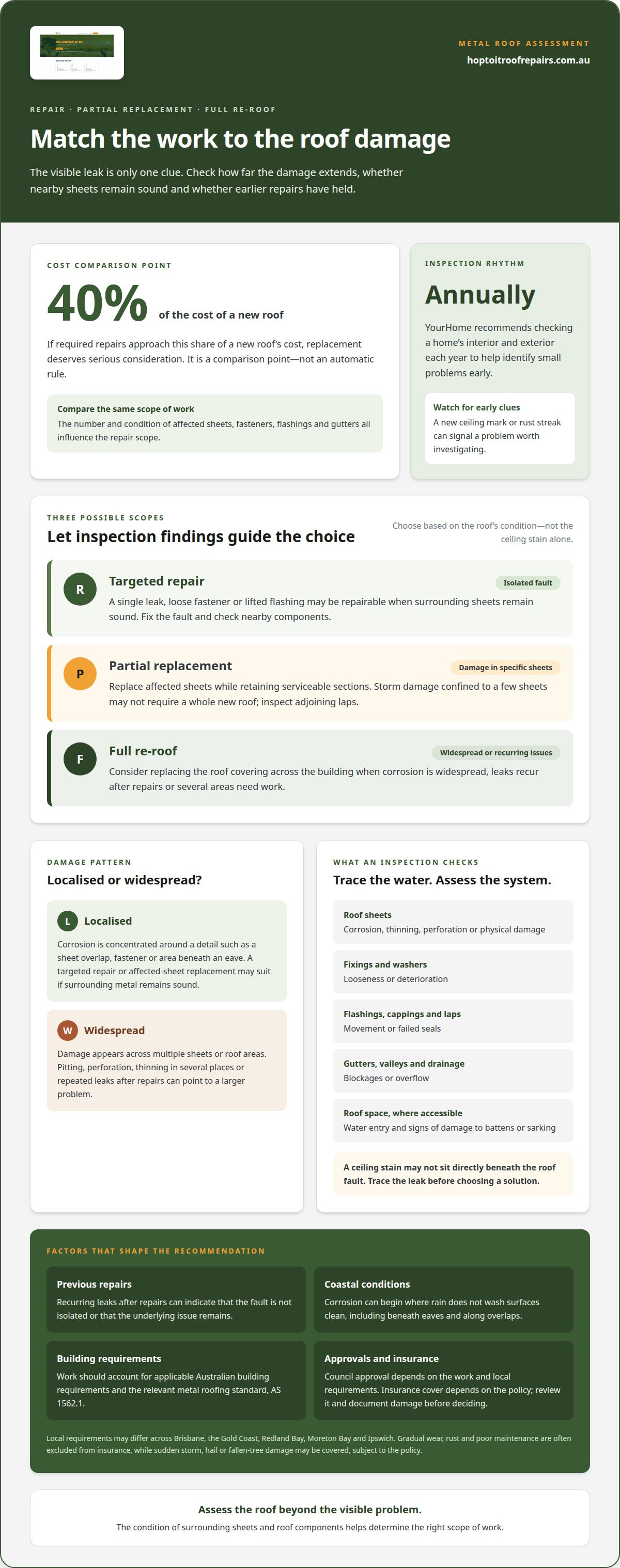
Comparing repair, partial replacement and full re-roofing
Match the work to the extent of the damage and the roof’s condition. A local fault may suit a repair, while widespread failure can make a larger scope more practical.
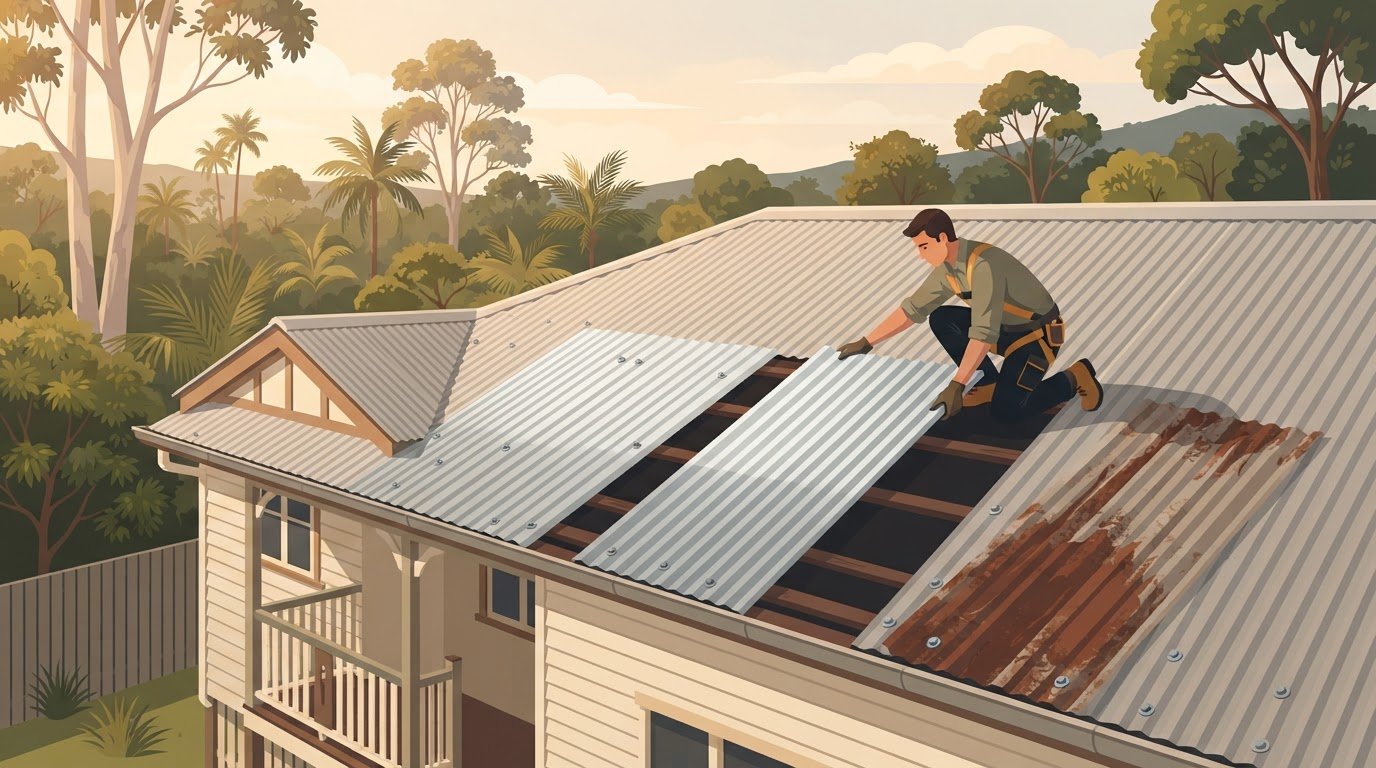
Repair addresses a specific defect, such as a failed fastener, washer or flashing. It suits a roof where nearby sheets remain sound and the fault can be isolated. Partial replacement removes and replaces damaged sheets while retaining serviceable sections. For example, storm damage confined to a few sheets may not require replacing the whole roof.
Full re-roofing replaces the roof covering across the building. Consider it when corrosion is widespread, leaks recur after repairs, or several areas need work. Continuing to repair widespread damage can cost more over time than planned replacement. Compare the roof’s overall condition, not just the latest leak.
Use the scope of work to compare cost, not a single headline figure. Roof replacement deserves serious consideration when required repairs approach about 40% of the cost of a new roof. This is a comparison point, not an automatic rule. The number and condition of affected sheets, fasteners, flashings and gutters all influence the repair scope.
Request written quotes that cover the same work. The NSW Government advises getting at least three quotes for roof repairs or replacement. Each quote should state which sheets and components are included, the proposed repair or replacement work, and any exclusions. Comparing the same details makes differences in scope easier to spot.
To choose a roofing contractor in Australia, look for relevant metal-roof experience and request a written inspection summary and itemised scope. Ask for evidence of any licence required in your state or territory. In NSW, roof plumbing should be carried out by a licensed roof plumber working to AS 1562.1 for metal roofing. Compare how each quote addresses the fault, surrounding components and the proposed outcome.
How targeted repairs differ from full roof replacement
Targeted work keeps sound roofing in place while addressing a defined fault. Full replacement removes the existing sheets and installs new sheeting and flashings across the roof.
Replacing a single sheet beside adjacent sheets
Yes, a single metal roof sheet can often be replaced without replacing adjacent sheets when damage is confined to that area. The roofer removes the failed sheet, checks the surrounding structure and adjoining laps, then fits a replacement. The existing profile may not be available in the same shape, and new metal can look different beside weathered sheets.
Risks of patching a damaged roof section
Patching can address a local fault, but it won’t fix corrosion or damage beneath the visible surface. Sealant over a leaking lap or fastener may provide only temporary relief. If the same leak returns, the inspection should reassess the cause, nearby fixings and condition of adjoining sheets.
For a targeted repair, the key is identifying the failure and addressing its cause. A loose fastener, failed washer or lifted flashing needs different work from a perforated sheet. Ask for the inspection findings to explain how the proposed repair relates to the visible damage. This gives you a clear basis for judging whether the work addresses the fault or merely covers it.
Full replacement is a different job. It involves removing the existing sheeting, assessing the underlying structure and installing new sheets and flashings. Sagging or signs of structural damage need careful assessment before the new roof is specified. Replacement may also be more practical when repeated patches leave multiple defects unresolved.
The key question is whether the surrounding roof remains sound and the repair can restore watertight performance. Choose targeted work for a contained fault; consider replacement when defects extend across the roof or repairs no longer hold. For a professional assessment of a metal roof fault, arrange metal roof repairs.
Hop To It Roof Repairs: Metal Roof Repairs
Hop To It Roof Repairs can help trace a metal roof leak or repair a damaged section. Roof Leak Detection identifies likely entry points, while Metal Roof Repairs address the fault and surrounding components. An assessment can clarify whether targeted repairs suit the roof’s condition.
For a leak that appears after heavy rain, or rust around a sheet lap or flashing, a written report can set out the findings and recommended work. Hop To It Roof Repairs provides fixed-price quotes and detailed written reports for every job, so the scope is clear before work proceeds. The company also repairs tile roofs and works on gutters and downpipes where these relate to roof drainage.
Contact Hop To It Roof Repairs to discuss a metal roof leak or damaged section.
Make the next roof decision with confidence
Knowing when to repair versus replace a metal roof section starts with understanding what the roof needs, not committing to the largest job. Use the inspection findings to judge whether the proposed scope addresses the underlying fault and leaves the remaining roof fit for purpose. Before approving the work, ask for any unclear recommendation to be explained in plain language.
A clear discussion can turn an uncertain repair decision into a practical plan and give you a useful reference if another issue develops. Take the next step based on the inspection evidence, keeping the scope focused on your roof’s condition.
Contact Hop To It Roof Repairs today to discuss the right next step for your roof. A clear assessment can help you move forward with confidence.
Frequently Asked Questions
When is a metal roof section repairable rather than needing replacement?
A section is generally repairable when the defect is confined to one component or a small area and the surrounding roof can still perform properly. For example, a roofer may repair failed flashing or replace one damaged sheet while retaining sound adjoining sheets. The key is whether the work can address the fault without leaving related defects unresolved. A written scope makes that boundary clear.
What signs indicate a metal roof section should be replaced?
Replacement is worth considering when a sheet is perforated, badly thinned or distorted, rather than simply marked or stained. Damage around sheet edges and joins can also make a local patch unreliable if it affects water drainage. An inspection should establish whether the sheet can be replaced on its own or whether adjoining components and the broader roof condition call for more extensive work.
How much does metal roof repair cost in Australia?
Metal roof repair pricing depends on the fault and the work needed, so the amount is given after a quote request. Cost factors include access to the roof, the location and extent of damage, the components involved, and whether several faults need attention. For homes in Brisbane, the Gold Coast, Redland Bay, Moreton Bay and Ipswich, a clear scope helps explain what the repair includes.
How much does replacing a section of metal roofing cost in Australia?
The price depends on the section, access and replacement work required, and is given after a quote request. Factors include how many sheets need replacing, whether the existing profile can be matched, and whether flashings or underlying components also need work. A quote should separate the damaged section from any additional work, so you can see what the recommended scope covers.
How do repair and replacement costs compare over the long term?
A repair may be more economical when it resolves a contained fault and the rest of the roof is serviceable. If new leaks keep appearing, repeated repairs can accumulate without addressing broader deterioration. Compare the scope and expected outcome of each option, not just the initial cost. Replacement becomes more compelling when the roof needs extensive work or previous repairs haven’t held.
How do roof age, corrosion and damage extent affect repair versus replacement?
Age provides context, but condition and extent of damage matter more. An older roof with sound sheets and a local fault may still suit a repair; a newer roof with widespread perforation may need broader work. Corrosion at overlaps, fixings or sheet edges can affect whether neighbouring material remains reliable. Ask for the assessment to distinguish surface wear from metal that has lost its integrity.