DIY Roof Repair Risks: When to Call a Professional
14 November 2026 · 12 min read
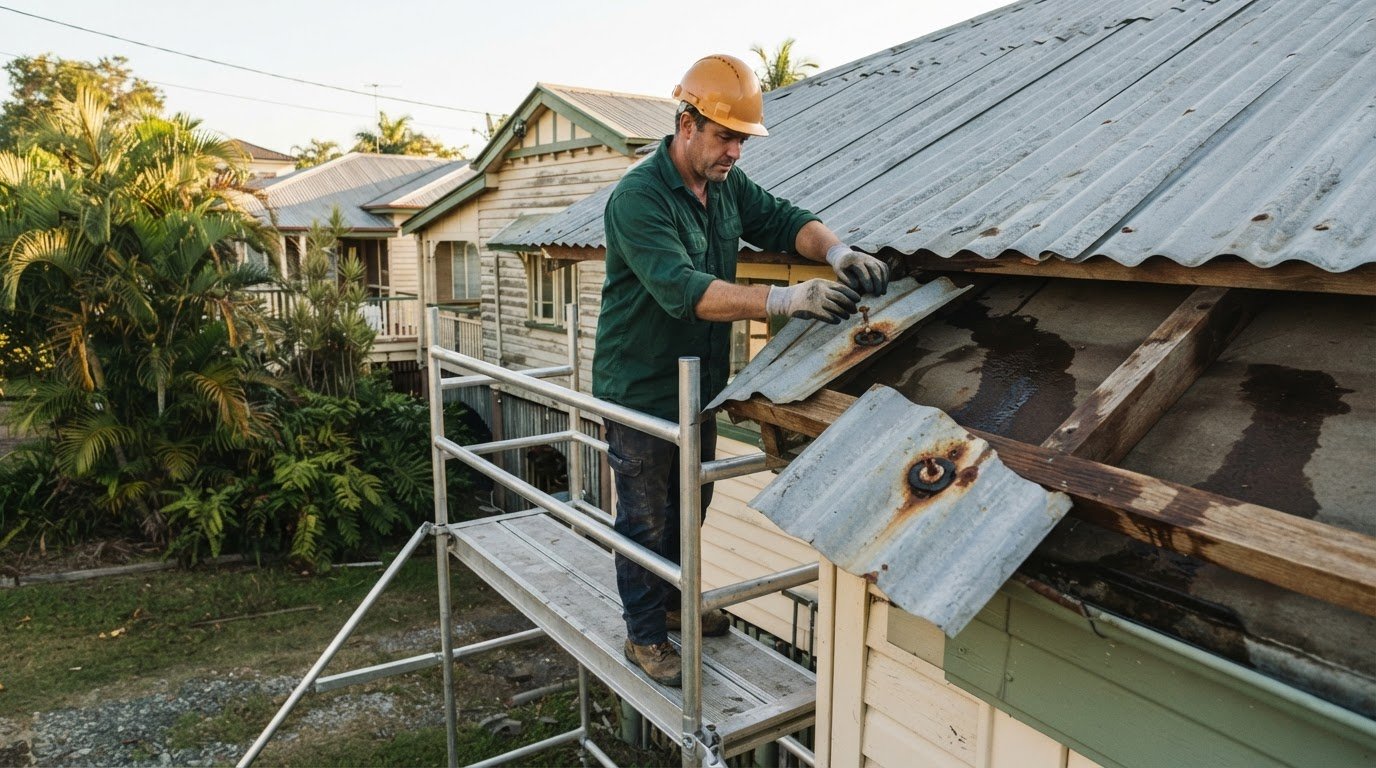
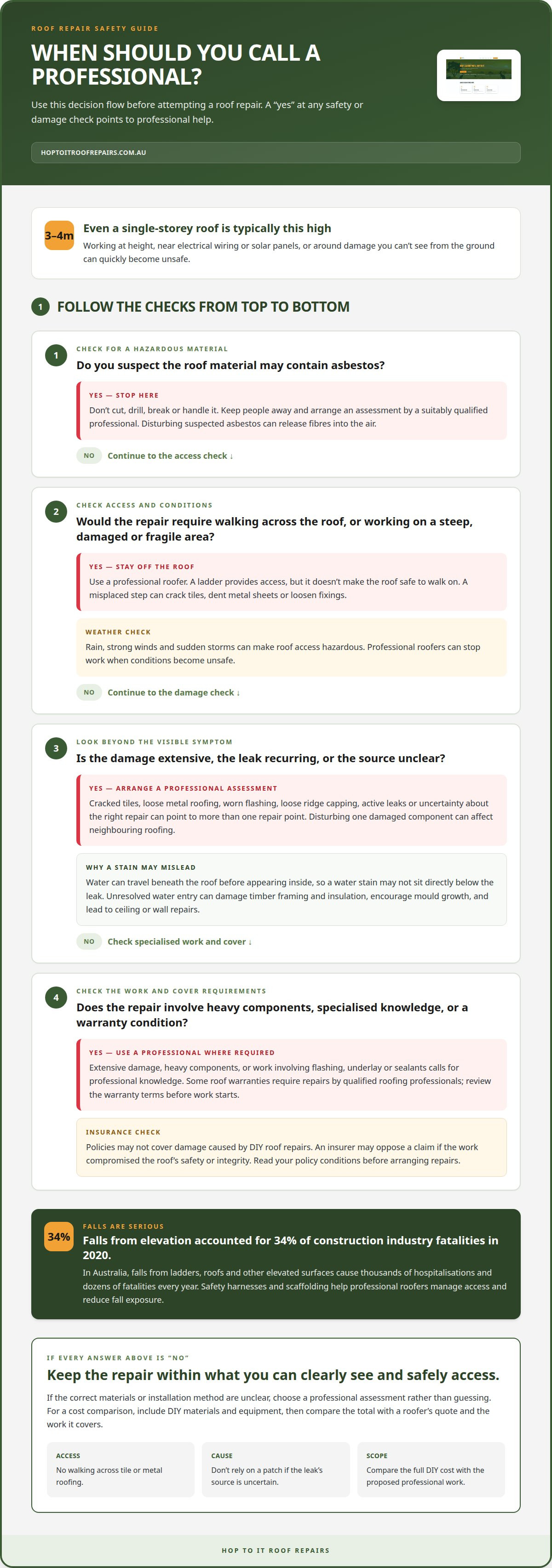
A roof repair can become unsafe as soon as it involves working at height, near electrical wiring or solar panels, or around damage you can’t see from the ground. The main DIY roof repair risks include falls, worsening the leak and creating problems with insurance or building-code requirements. Even a single-storey roof is typically 3 to 4 metres high.
It’s understandable to consider a quick fix when you spot a leak or loose roofing. But a patch can miss the cause, and water may travel beneath the roof before showing up inside. Knowing when to stay off the roof can help protect your safety and prevent a small problem from becoming more extensive.
This guide explains when to call a professional, how falls and hidden damage affect that decision, and what insurance and building requirements mean in Australia. You’ll also learn how a professional inspection and repair can address the source of a leak, not just its visible symptoms.
Key Takeaways
- Disturbing one damaged shingle can affect nearby roofing, so the visible problem may not be the full extent of the repair.
- A professional inspection can uncover hidden faults and assess whether a repair has been installed correctly.
- Roof pitch, surface condition and weather all affect the danger of working at height; leave the roof work to trained professionals when conditions are unsafe.
- Before roofing work begins, understand how the repair may affect your insurance cover and whether local building requirements apply.
When should I hire a professional instead of attempting DIY roof repairs?
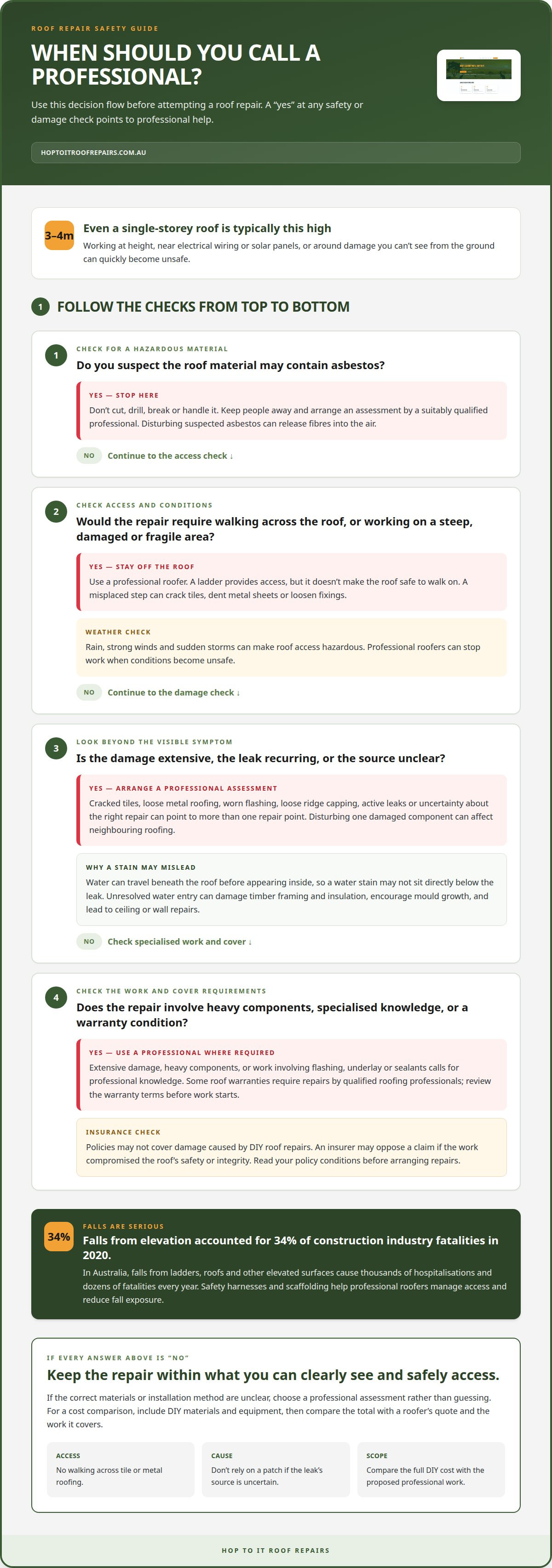
Choose a professional when damage goes beyond a clearly visible, accessible component or requires walking on the roof. Cracked tiles, loose metal roofing, active leaks and uncertainty about the repair all increase the risk of making the problem worse.
Accidental damage to roofing
DIY roof repairs can damage sound roofing when the work disturbs neighbouring components. Removing one cracked tile, for example, may damage adjacent tiles, while a poorly placed fixing can create another leak.
Look for bruised, cracked or loose shingles, worn flashing, and loose ridge capping or metal components. These signs can point to more than one repair point. If the correct materials or installation method are unclear, a professional can assess the affected area and perform the repair without relying on guesswork. A patch that misses the cause can end up costing more to correct.
Walking on the roof
Walking on a roof can crack tiles, dent metal sheets or loosen fixings. On hot roofing, foot traffic can also damage the surface and remove protective granules, leaving it more exposed.
A ladder provides access, but it doesn’t make the roof safe to walk on. The roof material, footing and location of the damage all affect the risk of causing further harm. For example, stepping across tiles to reach a leak can break sound tiles. Use a professional if the repair requires walking across tile or metal roofing.
Hidden damage from leaks
Hidden leak damage is deterioration beneath the roof or inside the home that may not be obvious at first. An indoor water stain may not be directly below the leak because water can travel under the roofing before showing through.
Unresolved water entry can rot timber framing, damage insulation, encourage mould growth and lead to ceiling or wall repairs. If stains return, water keeps appearing or the leak’s source is unclear, a professional assessment is the safer choice. DIY work can also affect home insurance: policies may not cover damage caused by DIY roof repairs, and an insurer may oppose a claim if the work compromised the roof’s safety or integrity. Read your policy conditions before arranging repairs.
Professional safety practices and inspections
A professional repair combines safe access with an inspection of the roof system, rather than focusing only on the visible fault. This matters when weather, concealed damage or warranty conditions could affect the repair required.
Professional safety practices
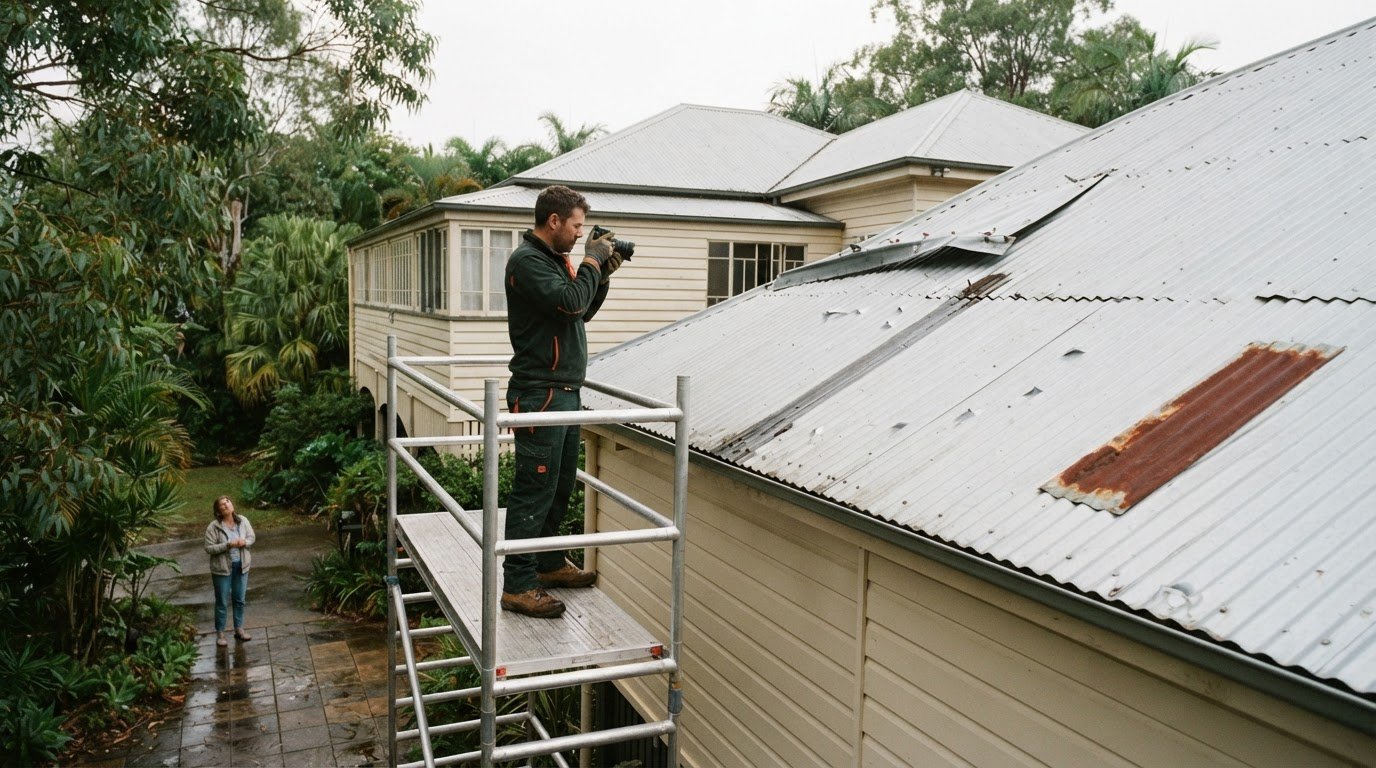
Professional roofers use safety harnesses and scaffolding to reduce the risk of serious injury while working at height. They can also stop work when strong winds or sudden storms make roof access hazardous.
An inspection looks beyond the obvious leak. A roofer can assess flashing, roof fixings and the condition of sarking or insulation, which may be inadequate but hidden from view. This broader assessment helps identify whether water entry has affected other parts of the roof system. If you’re preparing to sell, an inspection may also reveal problems with earlier DIY repairs.
Before deciding between DIY and a professional roof, compare the full scope of each option. Include materials and equipment in the DIY calculation, then compare that total with a roofer’s quote. Buying tools for a one-off repair can change the value of doing it yourself, while professional roofers may buy materials in bulk. A quote should make the proposed work clear, so you can understand what the repair covers.
When to hire a professional
Use a professional roofer when damage is extensive, involves heavy components or requires specialised knowledge of flashing, underlay or sealants. An inspection helps the roofer consider the cause and affected components together when planning the repair.
Roof warranties also matter. Some require repairs by qualified roofing professionals to remain valid, so DIY work could affect cover. Review the warranty terms before work starts, especially if the proposed repair changes roofing materials or fixings. For damaged metal or tile roofing, professional metal and tile roof repairs can address the affected roof components.
Falls and serious injuries while working at heights
Roof work combines height, changing weather and fragile surfaces. For homeowners, avoiding a fall matters more than finishing a repair quickly.
Falls while working at heights
A fall from a ladder or roof can cause serious injury, even during a brief repair. Falls from ladders, roofs and other elevated surfaces cause thousands of hospitalisations and dozens of fatalities in Australia every year.
Falls from elevation accounted for 34% of construction industry fatalities in 2020. That figure shows why professional roof work requires more than confidence and a ladder. Safety harnesses and scaffolding help roofers manage access and reduce fall exposure. Without suitable equipment and experience, a slip can have severe consequences.
Suspected asbestos in an older Australian roof presents a different hazard. Don’t cut, drill, break or handle material you think may contain asbestos. Keep people away and arrange an assessment by a suitably qualified professional. Disturbing it can release fibres into the air.
Roof-surface hazards
A roof surface can be unstable underfoot, and the material affects the risk. A misplaced step may crack a tile, dent metal roofing or loosen a fixing, creating damage that can let water in.
Weather adds risk: rain, strong winds and sudden storms can make roof access hazardous, particularly in Brisbane and the Gold Coast. Even on a clear day, steep pitches and fragile sections remain dangerous. Professional roofers use appropriate safety equipment and can keep homeowners away from roof-edge hazards.
Stay off the roof if the repair requires climbing across a steep or damaged area. A professional assessment can identify a safer repair approach and help prevent an injury or extra roof damage. That decision can also protect peace of mind, rather than leaving a small leak end up costing more after a fall or failed repair.
Insurance and building-code considerations
Before roofing work starts, consider how the repair affects insurance and local building requirements. Rules can depend on the project’s location, value and scope.
There isn’t one Australia-wide licensing rule for every roof repair. In the ACT, roofing work valued at over $12,000 requires a licensed builder, and roofing work within a building project must be done by or under a licensed practitioner’s supervision. Significant work, such as a roof replacement or tile-to-metal conversion, may also need building approval.
Insurance cover for injuries
Injury cover and cover for damage to your home are separate policy questions. A fall during a DIY repair may not be treated like storm damage to the building.
Read the relevant policy terms before starting roof work. Check what they say about injuries during home projects and work carried out by the homeowner. Don’t assume home insurance will cover every consequence of a dangerous repair. The policy’s definitions, exclusions and the circumstances of the injury all matter.
Liability and home insurance
Liability concerns can arise if someone is injured or property is damaged during roof work. A loose tile or tool falling from a roof, for example, could put people below at risk.
Home insurance conditions determine whether a particular event is covered. A roof inspection can document existing damage, such as failed flashing, before repairs change the roof. Keep records of the inspection and repair scope, especially when a contractor is involved. These details can help clarify what was damaged and when.
Risks to insurance claims
DIY work can complicate an insurance claim if it compromises the roof’s safety or integrity. An insurer may oppose a claim if homeowner repairs contributed to the damage.
For example, incorrectly repairing flashing could let water in, making it harder to separate the original storm damage from later repair problems. Review your policy and any warranty conditions before work begins. In the ACT, also establish whether significant roofing projects need approval. Clear records of the roof’s condition and repair work help explain the sequence of events if you make a claim.
For help addressing a roof leak, arrange professional roof leak repairs before an uncertain DIY fix creates further complications.
Hop To It Roof Repairs
Hop To It Roof Repairs can assess roof damage and help you choose a professional repair instead of an uncertain DIY fix. Turn to the team when a leak’s source is unclear, roofing components are damaged or you want the repair documented.
Roof Leak Detection helps identify where water is entering, while Metal Roof Repairs and Tile Roof Repairs address damage to those roof types. Every job includes a detailed written report, a photo report of faults found and a fixed-price quote, so you can understand the proposed work before it begins.
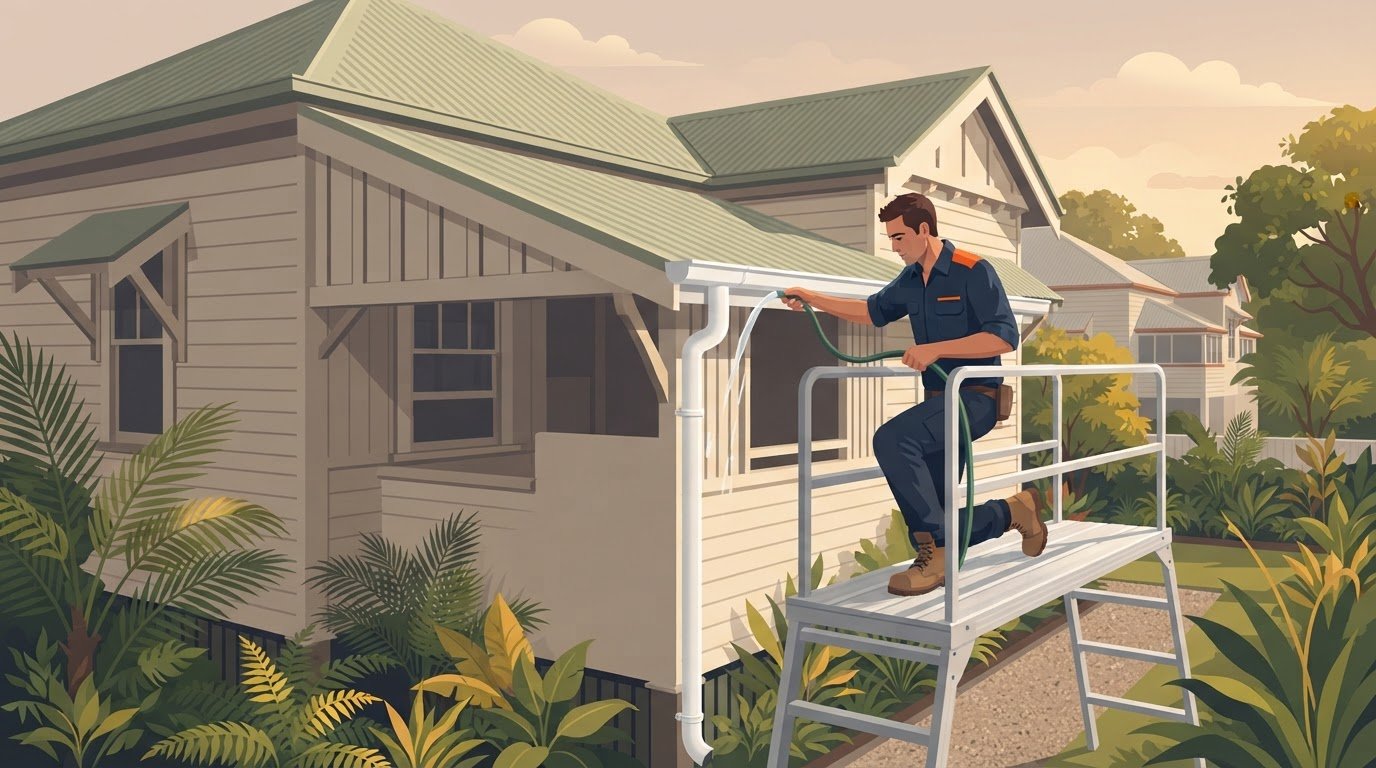
If the issue involves gutters or downpipes, Hop To It Roof Repairs can assess and repair those too. A professional assessment is a practical next step when working at height would be dangerous or a repair could affect your roof’s integrity.
Contact Hop To It Roof Repairs to discuss your roof repair needs.
Choose a safer next step for your roof
A good repair starts with a clear picture of the problem. Note when you first noticed it and where water or visible damage appears, then share those details when arranging an assessment. This gives the roofer useful context without requiring you to climb onto the roof or disturb damaged materials.
DIY roof repair risks can go beyond the immediate leak, so don’t let uncertainty lead to another repair attempt. A professional can assess the roof and explain the work needed, helping you make an informed decision before repairs begin.
If you’re ready to discuss the issue, contact Hop To It Roof Repairs. A clear conversation is a practical first step towards addressing the roof problem with confidence.
Frequently Asked Questions
Is it safe for a professional roofer to walk on my roof?
Roof work is safer when the roofer assesses the roof and uses suitable access and fall protection. The right approach depends on the roof’s material, pitch, condition and the weather. For example, a brittle tile section may need a different access plan from sound metal roofing. Safety harnesses and scaffolding help manage fall hazards, but they don’t make every surface safe to walk on.
What are the main risks of DIY roof repairs in Australia?
The main risks include falling, worsening the damage and creating new points for water to enter. Incorrectly fitted flashing, for example, can direct water beneath the roof, while removing a damaged tile may crack a neighbouring one. DIY roof repair risks also include missing problems that aren’t visible from inside, such as deteriorated roof components. The repair may then fail to address the leak’s source.
How common are falls and injuries during roof work in Australia?
Falls from ladders, roofs and other elevated surfaces cause thousands of hospitalisations and dozens of fatalities in Australia every year. These figures cover falls from several types of elevated surfaces, not roof work alone. The risk matters even for a small repair because a brief loss of balance can have serious consequences. Roof height, access, surface condition and weather all affect the risk.
What safety precautions and fall protection do professional roofers use for roof repairs?
Professional roofers use safety harnesses and scaffolding, with access suited to the roof and work involved. A roof ladder can provide handholds on steep sections, while a safety rope can reduce the consequences of a slip. Weather matters too: strong winds or rain can make roof access hazardous. A roofer’s assessment should account for site conditions before work begins.
Which roof repairs should homeowners leave to a professional roofer?
Leave repairs involving structural damage, heavy components or uncertain leak sources to a professional. This includes work where the cause may involve several roof details, such as a valley, flashing or roof penetrations. If water appears in multiple places or the roof surface is damaged, a patch may miss related faults. A professional can assess the roof system and identify the repair required.
When should roof repairs be handled by a licensed roofer in Australia?
Licensing requirements vary by state or territory and the work’s scope. In the ACT, roofing work valued at over $12,000 requires a licensed builder; roofing work within a building project must be done by or under a licensed practitioner’s supervision. Significant work, including roof replacements and tile-to-metal conversions, may require building approval. For Queensland projects, engage a QBCC-licensed roof plumbing specialist.