Cost of Ignoring a Small Roof Leak: What Can Happen Next?
16 October 2026 · 18 min read

What if a small ceiling stain is the first visible sign of a bigger problem? The cost of ignoring a small roof leak depends on how far water travels before the entry point is found. A drip can move along roof framing or beneath the roof covering, leaving damage out of sight while the mark indoors still looks minor.
It’s easy to hope a faint stain can wait. But water can affect roof decking, insulation and ceiling cavities, and climbing onto a wet roof to investigate isn’t a safe fix. Move valuables, catch dripping water and photograph any visible damage from a safe spot. Don’t step onto the roof.
This guide explains how a leak can spread, which warning signs to watch for and when monitoring or temporary protection may help. If you can’t locate the source, professional roof leak detection can help trace it across a metal or tile roof. Hop To It Roof Repairs provides a written report and fixed-price quote, so you can understand the findings and repair scope before deciding what to do next.
Key Takeaways
- The cost of ignoring a small roof leak can grow as water affects materials beyond the visible stain.
- Moisture can travel differently depending on the roof construction and leak entry point, so an indoor mark may not reveal the source.
- A bucket or indoor protection can limit mess, but it won’t repair the roof or stop water getting in.
- Keep clear of active drips, record what you can see from a safe spot and don’t climb onto a wet or damaged roof.
- A source-focused assessment can clarify the next step. A written report and fixed-price quote outline the findings and repair scope.
Why the cost of ignoring a small roof leak can grow beyond the visible mark
A faint ceiling stain or occasional drip can feel easy to put off, especially if it dries between showers. But the visible mark is only one part of the picture. The cost of ignoring a small roof leak depends on the repair scope, which materials are affected, disruption inside the home and, if damp conditions persist, potential health concerns. The size of the stain alone can’t show the full impact.
That doesn’t mean every minor leak will cause extensive damage. A brief leak affecting a limited area may remain relatively contained. The outcome depends on how long water enters, whether the area gets wet repeatedly and how the roof and ceiling are constructed. A sound assessment starts by locating the source and identifying affected materials, rather than drawing conclusions from one indoor mark.
Why a small ceiling stain may not show the full leak
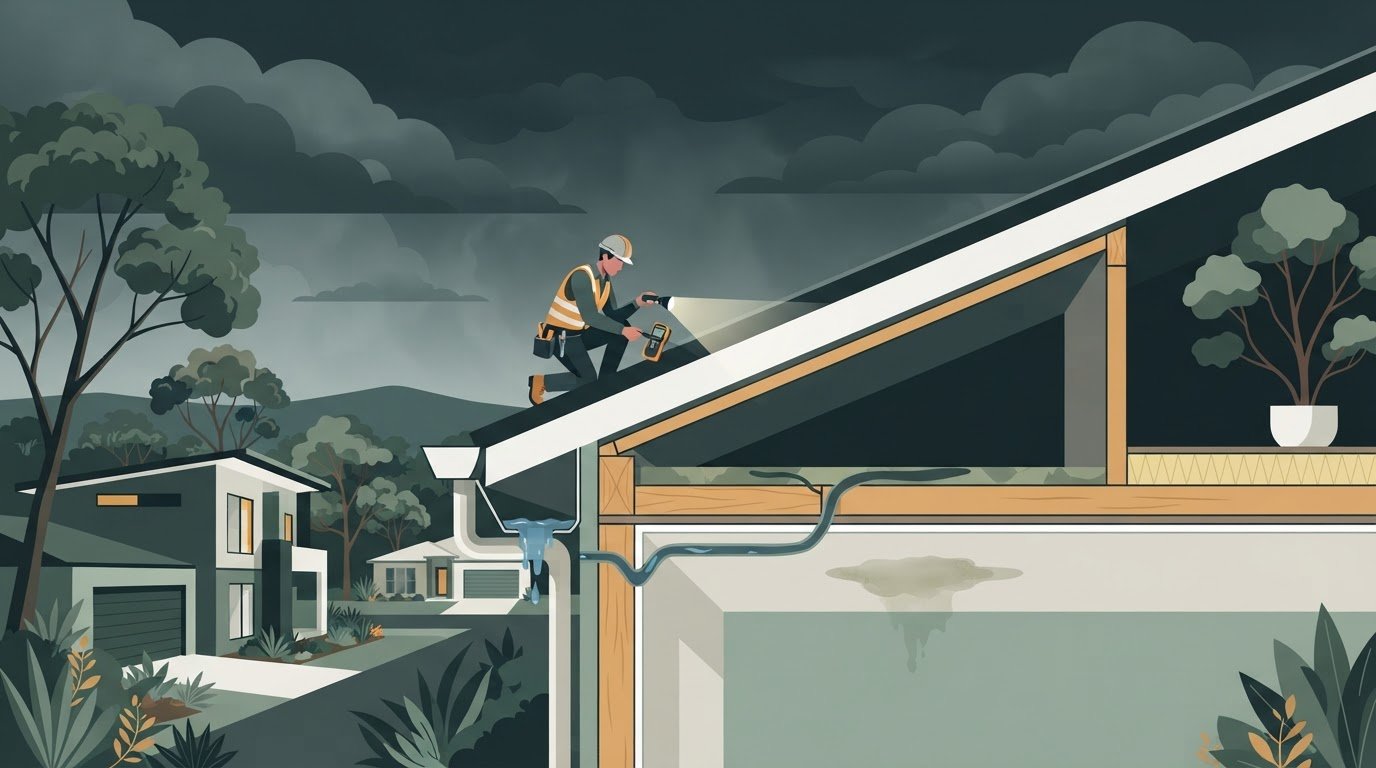
Water can pass through a gap in the roof covering, then move along roof sheeting, flashing, timber or other surfaces before reaching the ceiling lining. The point where it appears indoors may be some distance from where it entered. A small stain could sit below a wider damp area, while a large mark doesn’t automatically mean the roof damage is extensive. Hidden water damage is moisture affecting parts of a home that aren’t visible from the room. The broad effects of water damage can include deterioration of materials and damage to belongings.
What can make a minor leak more consequential
Time matters, but so does repetition. A leak that returns whenever the roof gets wet may keep exposing the same area to moisture. Timber, insulation and ceiling linings can respond differently, so repair work may range from fixing the roof entry point to addressing materials affected inside. Persistent dampness can also create conditions where mould may develop. These are possible outcomes, not inevitable results of every leak.
Look at the pattern, not just the stain’s size. Does it darken or spread after rain? Has paint started bubbling, or has a musty smell appeared nearby? These observations can indicate ongoing moisture, but they don’t confirm where it’s coming from or how much material is affected. A stain that looks unchanged can still warrant attention if dripping recurs, while an old, dry mark may have another cause. Neither appearance is a diagnosis.
Homes across Brisbane, the Gold Coast, Redland Bay, Moreton Bay and Ipswich vary in location, roof design and exposure. Rather than assuming a particular season or weather event explains the leak, focus on what you’ve observed: whether water returns, which indoor area is affected and whether the mark changes. The useful question isn’t simply, “How big is the stain?” It’s, “Is moisture still getting in, and what materials could it be reaching?”
That distinction helps keep decisions proportionate. Don’t assume the worst, but don’t treat a faint mark as proof that the problem is harmless. Finding the entry point and checking the affected area can clarify whether the issue is limited or needs a broader repair plan.
How roof water can affect insulation, framing and indoor spaces
Once water gets beneath the roof covering, it may pass through several parts of the roof before becoming visible inside. Depending on the roof design and leak location, moisture could reach the roof space, insulation, timber framing or the back of the ceiling lining. It won’t necessarily affect every layer, and the pathway can vary between metal and tile roofs.
That’s why an indoor sign is useful evidence, but not a complete picture. A mark on the ceiling tells you where moisture has shown up, not which materials it has contacted or whether the roof is still letting water in. Avoid trying to inspect a confined or unsafe roof space yourself. Keep your observations to accessible areas and note any changes over time.
What moisture can mean for roof-space materials
Insulation that gets repeatedly wet may become compressed or lose some of its effectiveness, depending on its type and condition. Timber roof components can also be affected by ongoing dampness. These outcomes aren’t automatic: a brief leak and a recurring one may have very different effects, and the materials involved matter.
From inside the home, look for changes such as a stain that grows, a musty odour or dampness that returns after the area appears to dry. These clues can point to a moisture issue, but they can’t confirm mould, timber decay or structural damage. A photo can help record what you’ve noticed, but it can’t show what’s happening behind a ceiling lining or within the roof space.
When water reaches ceilings and living areas
Moisture reaching the ceiling lining may leave discolouration, bubbling paint, peeling finishes or a soft-looking patch. A musty smell or recurring dampness can also be a reason to arrange an assessment, particularly if the signs return after rain. Keep people and belongings clear of any active drip, and don’t touch a sagging or damaged ceiling.
Indoor symptoms can remain after rainfall stops. A ceiling may take time to dry, and a mark may continue to change as moisture moves through or evaporates from materials. A ceiling stain is evidence of a symptom, not confirmation of the roof leak’s entry point or the full extent of affected materials.
For general information on property damage and recovery, the Federal Emergency Management Agency (FEMA) provides a US perspective; its material isn’t Australian guidance. The practical next step is to have the roof and affected areas assessed together. That can help establish whether the issue is limited to an indoor finish or involves roof-space materials too, without assuming damage that hasn’t been verified.
If dampness keeps returning or marks spread, professional roof leak detection can help identify the source rather than treating the indoor sign alone. A clear finding makes the possible repair scope easier to understand and helps you decide what needs attention.
Wait, patch or arrange a roof leak assessment? Compare the options
A leak that only appears during heavy rain can be easy to dismiss. But intermittent doesn’t mean resolved. If damp patches return, spread or affect more than one area, the cost of ignoring a small roof leak may increase as the problem continues unchecked. Choose a response based on what each option can actually achieve.
| Option | What it can do | What it can’t do |
|---|---|---|
| Wait and see | May be reasonable if there’s no active leak and no change in the visible signs. | Doesn’t establish whether water is still entering the roof. |
| Monitor indoors | Helps you record when marks or dampness appear or change. | Can’t identify or repair the roof entry point. |
| Temporary make-safe work | May reduce immediate water entry or protect an exposed area. | Isn’t necessarily a permanent repair or confirmation of the underlying cause. |
| Source-focused assessment and repair | Investigates the roof to locate the leak and determine an appropriate repair. | Requires assessing the roof and issue, rather than treating an indoor symptom alone. |
What monitoring and temporary protection can, and can’t, do
From a safe indoor position, move belongings away from drips and use a container to catch water. Record the date, whether it was raining and any change to the stain or dampness. This record can help show whether signs are recurring or worsening. A bucket manages water inside the room; it doesn’t seal the roof. Temporary protection may help limit immediate exposure, but it doesn’t confirm the source or guarantee a lasting fix. Don’t climb onto a wet or damaged roof to cover it yourself.
Temporary make-safe work can be useful while a longer-term repair is considered, especially if water is actively entering. Treat it as an interim measure unless the roof has been assessed and the required repair is clear. The University Risk Management and Insurance Association discusses the wider disruption water damage can cause in Water Damage Is Costly in Multiple Ways. The practical takeaway is to contain the immediate issue without mistaking containment for a permanent solution.
When a professional assessment is the clearer option
Arrange an assessment if a leak returns, a mark spreads, dampness persists or several areas show signs of moisture. A roof specialist can investigate metal and tile roofing systems and assess the roof, not just the room below it. Professional roof leak detection focuses on locating the source so the next step can match the issue identified.
Hop To It Roof Repairs provides the findings in a written report alongside a fixed-price quote, helping clarify the recommended repair scope before you decide. If the signs keep recurring, roof leak detection and repair can move the decision from guesswork to an informed next step.
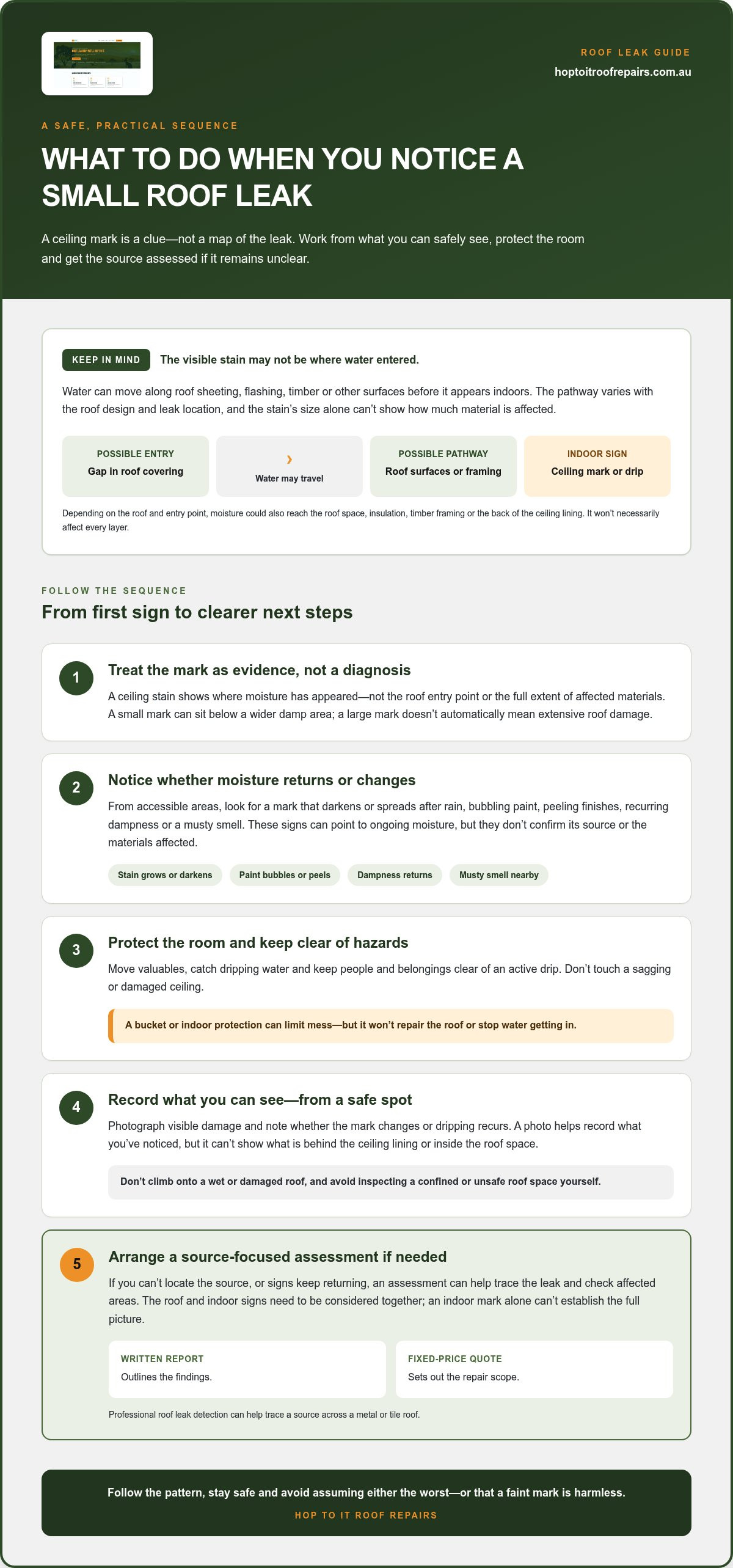
What to do when you notice a small roof leak
Act calmly and keep your response to safe, accessible areas. You don’t need to identify the roof fault yourself. First reduce the immediate risk inside, then record what you’ve noticed so an assessment can focus on useful details rather than guesswork.
- Keep people and belongings clear of active drips. Move furniture, electronics and valuables away from the affected area. If it’s safe, place a container beneath the leak.
- Take care around electrical fittings. If water is near a light, power point or wiring, don’t touch the fitting or wet area. Keep people clear and seek appropriate urgent assistance.
- Record what you can see indoors. Photograph the stain, drip or bubbling paint from a safe position. Note the date, whether it was raining and whether the mark changes. A photo documents a symptom; it can’t diagnose the roof source.
- Watch for a pattern. Record whether the leak returns, which rooms are affected and whether dampness or marks spread. This can help distinguish a one-off sign from a recurring issue that needs attention.
- Stay off the roof. Don’t climb onto a wet, damaged or slippery roof to inspect it or place a covering. If water is actively entering and temporary protection is needed, keep yourself safe and arrange appropriate make-safe assistance.
Safe steps to take inside the home
Keep the area below a leak clear, especially if the ceiling looks swollen, sagging or damaged. Don’t poke, press or cut into it. Protect belongings only where you can do so without standing in water or reaching near electrical fittings. A bucket can catch a drip, but it won’t stop water entering through the roof. These steps limit immediate indoor disruption; they don’t confirm or repair the source.
If the leak is active or worsening, temporary make-safe work may help reduce immediate water entry while the next repair step is organised. It’s a short-term measure, not necessarily a permanent fix. Don’t assume a leak has stopped for good just because the ceiling looks dry once the rain passes.
Prepare useful information for a roof assessment
Before an assessment, note the room and approximate location of the indoor sign, when it appears and whether it recurs. If you know whether the roof is metal or tile, include that too. Don’t climb up to check. Clear notes and photos can help describe the issue, but a specialist needs to assess the roof to determine the cause. A roof water ingress inspection report can document findings and clarify the repair scope.
If water is recurring, a source-focused roof assessment can replace guesswork with clear findings. Arrange roof leak detection and repair with Hop To It Roof Repairs, including a written report and fixed-price quote for the work.
How a professional roof leak repair can clarify the next step
A ceiling mark shows where water became visible, not necessarily where it entered. Covering or repainting the stain may improve its appearance, but it won’t identify a gap in the roof or confirm whether water is still getting in. Source-focused leak detection looks at the roof and reported symptoms together, so recommended work can address the cause rather than only the indoor sign.
For a homeowner, that means fewer decisions based on guesswork. The cost of ignoring a small roof leak can be difficult to judge until the entry point and affected area are understood. An assessment can help clarify what’s been found, what repair is recommended and what work is included in the quote.
What a clear assessment and quote help you understand
Hop To It Roof Repairs provides a written report and fixed-price quote for every job. The report records the findings and helps connect observed signs with the recommended repair. The quote sets out the price for the work described, so you can review the proposed scope before deciding how to proceed. It applies to the quoted work, not to unrelated issues that may be discovered separately.
This written detail can make it easier to understand why a repair is recommended and what it is intended to address. For more on how a fixed-price approach can clarify repair scope, see fixed-price roof repairs.
Choosing a repair path with confidence
The right repair depends on the roof material and the issue identified. Metal and tile roofs have different components, so the recommendation should reflect the system being assessed rather than rely on a one-size-fits-all patch. Hop To It’s roof leak detection and repair work covers both metal and tile roofs.
Repair work is backed by a workmanship warranty. That gives you documented information about the findings, a fixed price for the quoted work and warranty backing for the repair, without implying that separate or unrelated issues are covered.
Hop To It Roof Repairs is a QBCC-licensed roof plumbing specialist serving Brisbane, the Gold Coast, Redland Bay, Moreton Bay and Ipswich. If a leak has returned, the indoor mark is spreading or you’re unsure whether a previous patch addressed the source, an assessment can make the next step clearer. You’ll receive a written report and fixed-price quote for the work, so you can consider the findings and scope before proceeding.
Arrange a roof leak assessment with Hop To It to get a clearer view of what’s happening above the stain and what repair path makes sense.
Take the next step with confidence
A small roof leak doesn’t demand panic, but it does deserve a decision based on what’s happening above the ceiling. The cost of ignoring a small roof leak is difficult to judge from a mark alone. Focus on getting reliable information rather than guessing how serious the issue might be.
You don’t need to decide on extensive work before the problem has been assessed. A clear view of the roof issue helps you consider options in proportion to the findings. If you’re unsure whether to keep monitoring or arrange repairs, start by getting the source and proposed scope explained. You can then make a considered choice without treating every stain as a major failure or assuming a recurring drip will resolve itself.
Hop To It Roof Repairs provides roof leak assessments for homeowners seeking clarity on the next step. Arrange a clear, fixed-price roof leak assessment with Hop To It and move forward with a better understanding of the issue. A practical, informed decision starts with knowing what you’re dealing with.
Frequently Asked Questions
Can a small roof leak cause serious damage?
Yes, a small leak can lead to more extensive damage if water keeps entering or repeatedly wets the same area. The cost of ignoring a small roof leak depends on factors such as how long it has been active and which materials are affected. A brief, isolated leak won’t always cause major problems, but recurring drips or changes to nearby surfaces are good reasons to investigate rather than assume it’s harmless.
How long can I leave a small roof leak before repairing it?
There’s no reliable waiting period that suits every leak. A mark that looks unchanged may still sit beneath a recurring entry point, while a leak that worsens needs prompt attention. Don’t wait for the next sign of damage to decide. If the leak returns, the affected area grows or water is actively coming in, arrange an assessment and use safe indoor measures to protect the room in the meantime.
Can a roof leak cause mould or damage insulation?
It can. Repeated moisture may reduce insulation performance or create conditions where mould can develop, particularly if damp materials don’t dry out. A musty smell, recurring dampness or a change in the ceiling lining is worth recording and raising during an assessment. These signs don’t prove mould is present or show how much insulation is affected. Avoid opening the ceiling or entering a roof space to investigate without appropriate expertise.
What should I do first when I notice a roof leak?
First, move people and belongings away from the drip. Place a container underneath if you can do so safely, then check whether water is close to a light or power point. Don’t touch wet electrical fittings. If there’s a safety concern, keep clear and seek appropriate urgent assistance. Once the immediate area is safe, note when the leak appeared and whether it has happened before.
Will a ceiling stain show where the roof leak is?
No. A stain shows where moisture has become visible indoors, but water can travel along roof components before reaching the ceiling. For example, the entry point may be upslope or to one side of the mark. Ceiling stains can also have causes other than a roof leak. Treat the mark as a clue to report, not proof of the precise fault or the full area affected.
Does home insurance cover damage from an ignored roof leak?
It depends on your policy, the cause of the leak and the circumstances. Some policies may treat sudden damage differently from damage linked to gradual deterioration, wear or a lack of maintenance. Don’t assume a claim will be accepted or declined based on the stain alone. Check your policy wording and contact your insurer to understand what applies to your situation before arranging work you expect to claim.
Can I patch a small roof leak myself?
It’s safer not to climb onto a roof, especially if it’s wet, damaged or difficult to access. An indoor patch or sealant may cover a mark without fixing the roof fault, and unsuitable materials can complicate later repairs. You can protect belongings and record the symptoms from inside. For metal or tile roof leak detection and repairs in Brisbane, the Gold Coast, Redland Bay, Moreton Bay or Ipswich, arrange a professional assessment.