How to Stop a Roof Leaking: Safe Steps for Queensland Homeowners
14 October 2026 · 16 min read

If you’re searching for “how to stop roof leaking”, start inside, not on the roof. The safest first steps are to limit water damage and keep everyone away from electrical hazards and damaged ceilings.
Move furniture and valuables, and place a bucket under the leak if it’s safe to do so. Keep clear of wet electrical fittings. Don’t climb onto a roof, especially during rain or strong winds. A quick patch might slow water temporarily, but it won’t identify the cause or prove the leak is contained.
This guide explains what to do straight away, what to avoid and how to move from temporary protection to a lasting repair. Roof type and vulnerable areas such as flashings, valleys and ridge capping all matter when tracing a leak. Hop To It Roof Repairs provides leak detection and repairs for metal and tile roofs, with a written report and fixed-price quote for every job.
Key Takeaways
- Learn how to stop roof leaking from causing more indoor damage while keeping roof-level work off your immediate to-do list.
- Use ceiling stains and drips as clues, not proof of where water is entering, because leaks can travel before appearing indoors.
- See which temporary measures may help, why product-based patches depend on the roof and access, and when make-safe work is better left to a roofer.
- Follow a post-rain checklist to record damage and check visible gutters and downpipes safely from the ground.
- Find out when recurring leaks or visible roof damage call for professional leak detection and repairs matched to metal or tile roofing.
How to stop a roof leaking safely: protect the inside first
Start indoors. To work out how to stop roof leaking safely, contain water and move people and belongings away from danger before considering anything at roof level. Don’t climb onto a wet, steep or storm-damaged roof. Slippery surfaces, wind and damaged materials can make a temporary fix far more dangerous than the leak.
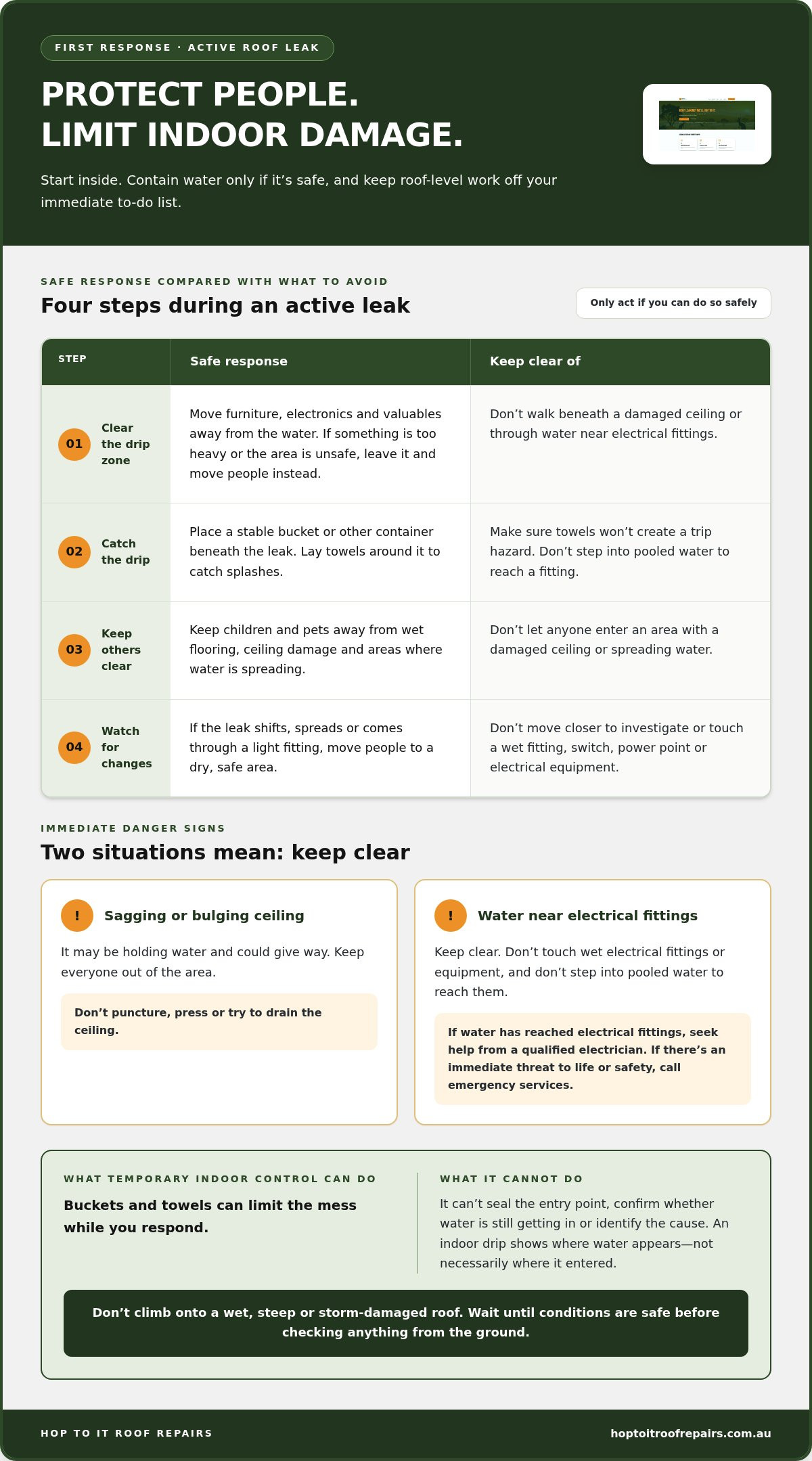
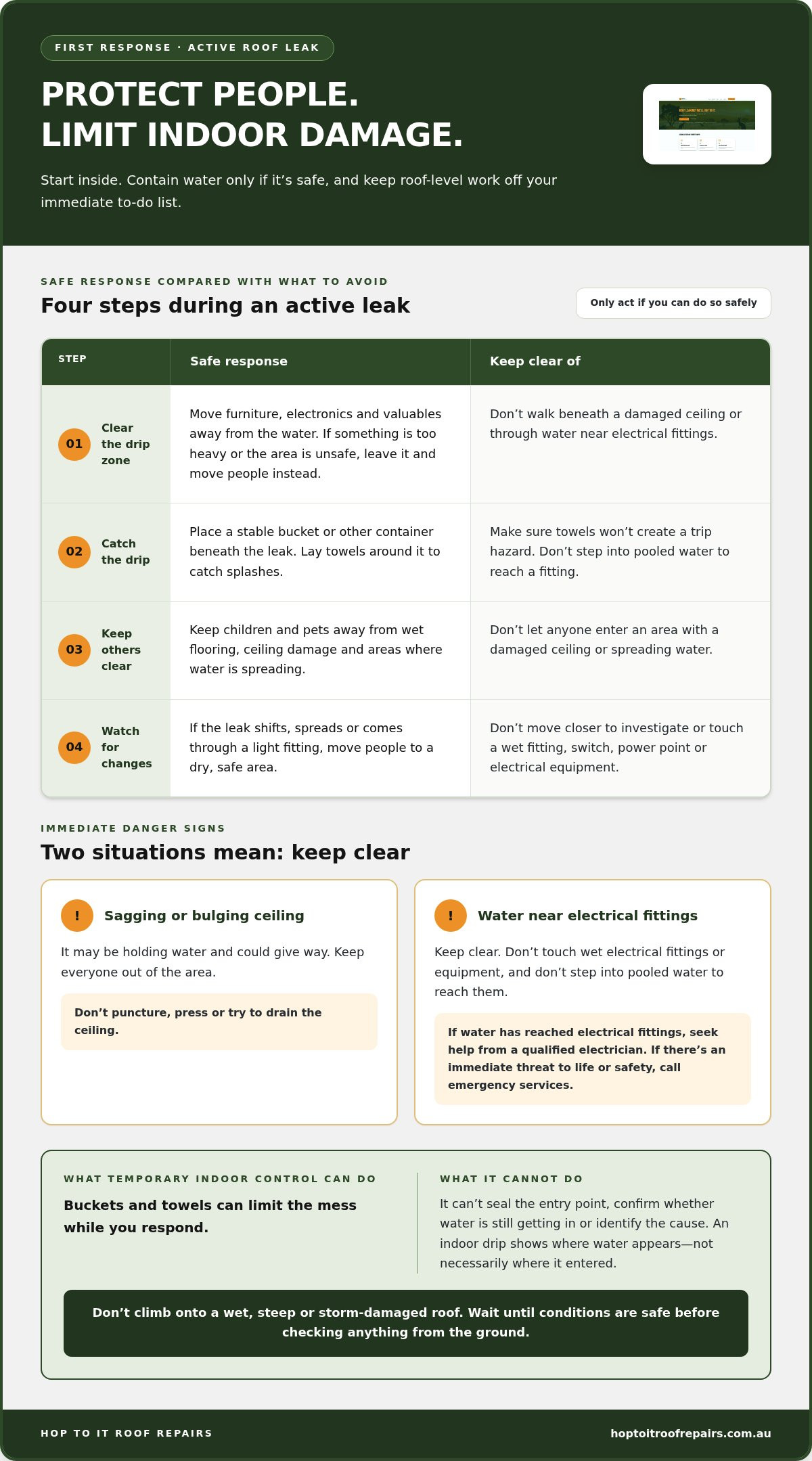
What to do during an active roof leak
Take these steps in order, but only if you can do so without walking beneath a damaged ceiling or through water near electrical fittings:
- Clear the drip zone. Move furniture, electronics and valuables away from the water. If an item is too heavy or the area is unsafe, leave it and move people instead.
- Catch the drip. Put a stable bucket or other container beneath it. Lay towels around the container to catch splashes, and make sure nobody can trip over them.
- Keep others clear. Keep children and pets away from wet flooring, ceiling damage and any area where water is spreading.
- Watch for changes. If the leak shifts, spreads or comes through a light fitting, don’t move closer to investigate. Get people to a dry, safe area.
Roof materials and the way sections meet can affect how water enters and travels. This overview of roof construction and common problems provides background, but an indoor drip alone can’t identify the exact source.
When water, ceilings or electricity create immediate danger
A sagging or bulging ceiling may be holding water and could give way. Keep everyone out of the area. Don’t puncture, press or try to drain it. Disturbing the ceiling can cause a sudden collapse and release water onto anyone underneath.
Water near electrical fittings raises the risk of electric shock. Don’t touch wet light fittings, switches, power points or electrical equipment, and don’t step into pooled water to reach them. If water has reached electrical fittings, keep clear and seek help from a qualified electrician. If there’s an immediate threat to life or safety, call emergency services.
If the weather is still rough, wait until conditions are safe before checking anything from the ground. Don’t use a ladder or climb onto the roof. A ceiling stain or drip shows where water appears inside, not necessarily where it entered the roof.
Indoor water control reduces immediate exposure but does not repair the roof. Buckets and towels can limit the mess while you respond, but they can’t seal the entry point or confirm whether water is still getting in. Once people are safe and the immediate spread is contained, arrange an assessment to identify the cause and determine the right repair.
How to narrow down where a roof leak may be coming from
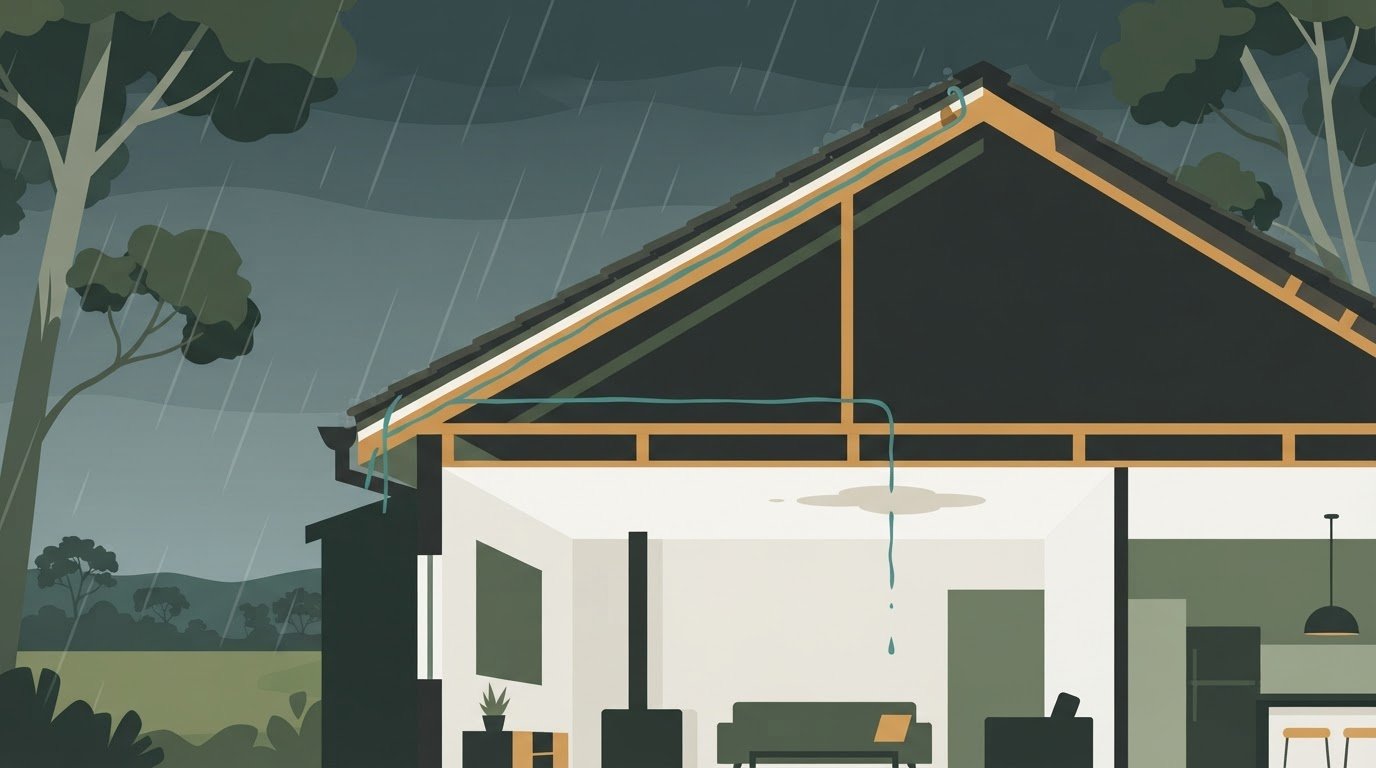
The drip is where water becomes visible, not necessarily where it entered. Water can run along roof framing, insulation or the underside of roofing before reaching a ceiling joint or light fitting. A stain in one room can point to an area worth investigating, but it can’t pinpoint the roof opening on its own.
A visible ceiling leak is evidence of water ingress, not an exact roof location. Treat indoor marks as clues to pass on, not a reason to climb up and search in unsafe conditions. Water can take a less direct route than it appears.
Clues inside the home that help describe the leak
Make a brief record while it’s safe. Note whether water starts during heavy rain, continues after rainfall eases or appears only in certain conditions. Write down the room and ceiling area, whether water drips steadily or forms a spreading stain, and any changes you notice. Take photos from a safe position, without standing beneath a sagging ceiling or touching wet fittings.
Roof areas that may need professional assessment
The roof type and nearby features help guide an inspection, but they don’t prove the cause. On a tiled roof, a cracked, shifted or missing tile may be relevant. On a metal roof, damaged sheets or fixings may need attention. Junctions and penetrations, including flashings around vents, skylights or chimneys, can also be investigated. Valleys and drainage paths may collect debris or direct water towards vulnerable points.
Gutters and downpipes are another clue if water overflows or backs up during rain. Record what you can see from a safe spot at ground level. Don’t use a ladder or walk on the roof to inspect tiles, metal sheets, fixings or flashings. These areas need a safe, close assessment to distinguish visible damage from the actual source.
- Tile roof: Note any visible tile displacement or breakage from the ground.
- Metal roof: Record visible damage or signs of water near roof edges and joins.
- Junctions and penetrations: Note whether the indoor mark is near a vent, skylight or chimney, without assuming it’s directly below the entry point.
- Drainage paths: Look for visible overflow at gutters or downpipes from a safe, accessible position.
These observations can help a roof plumber focus the assessment. Professional roof leak detection in Brisbane investigates the cause rather than relying on the ceiling stain alone. For broader information about household resilience in Queensland, see the Queensland Government Household Resilience Program.
Keep your notes and photos ready for the assessment. If the leak recurs or you can see roof damage, roof leak detection can help identify the source and plan a repair suited to your roof type.
Temporary roof leak fixes: what may help and what to avoid
Temporary measures can reduce further water damage, but they aren’t a substitute for finding and repairing the cause. The safest choice depends on where the leak is, the roof material and whether the area can be reached safely. Don’t apply sealant, tape or a tarp from a ladder or roof, especially in wet, windy or stormy conditions. A patch that seems simple can create a serious fall risk.
Temporary actions that don’t require climbing onto the roof
Keep your response indoors while the roof or weather is unsafe. Move belongings out of the affected area, catch drips in a stable container and keep the floor clear. Record where water appears and whether the pattern changes. These steps help manage the immediate mess and provide useful information for an assessment, but they won’t seal the roof.
| Measure | What it can do | Key limit |
|---|---|---|
| Indoor water control | Containers and towels can catch drips and splashes while you protect belongings. | They manage water inside, not the roof entry point. |
| Roof-access patch or covering | A product or covering may temporarily reduce water entry in some situations. | It depends on roof material, location and safe access. Don’t attempt it in wet or unsafe conditions. |
| Professional make-safe work | A roofer can apply a temporary measure to help limit further water ingress while repair plans are established. | It’s temporary protection, not confirmation that the permanent repair is complete. |
Why common quick patches can fail
Roofing systems aren’t all alike. A repair approach suitable for one surface may not work on another, and junctions, flashings and penetrations need methods suited to their location. Household silicone or improvised tape may not bond or seal as intended. An unanchored tarp can shift in wind, expose the area again or create another hazard. Don’t treat these as permanent fixes.
A patch can hide the visible symptom without addressing the entry point. Water may keep travelling beneath the roof surface or along a junction, even if the drip slows or stops for a while. A stopped drip doesn’t prove water ingress has stopped. The suitability of a product-based patch depends on the roof material, leak location and safe access. If any of those are uncertain, leave roof-level work to a qualified roofer.
Hop To It Roof Repairs provides emergency temporary make-safe work to help limit further water ingress while the cause and permanent repair are assessed. It’s interim protection, not a replacement for repairing the source.
After the rain: reduce further damage and prepare for roof repairs
Once conditions are safe, make a few careful checks from inside and ground level. Rain can reveal weaknesses in roof coverings, junctions or drainage that weren’t obvious in dry weather, but what you can see from below won’t confirm the source. Use your observations to explain what happened and guide the repair assessment.
Ground-level checks for gutters and drainage
Stay on the ground. From a safe, accessible position, look for visible gutter overflow, a downpipe that appears displaced or debris caught around an outlet. Don’t climb a ladder or reach over a balcony to get a closer look. If you can’t see the area safely, leave it for a professional inspection.
Blocked or damaged drainage can affect how rainwater moves off the roof and may contribute to water ingress. It’s a clue to report, not proof that the gutter is the cause. Hop To It Roof Repairs provides gutter and downpipe maintenance and repairs, including in Brisbane.
Keep a clear record of the leak
Build a simple record while details are fresh. Note when rain started and eased, when the leak appeared and whether it returned afterwards. Add the room and ceiling location, any change in the size of a stain, and visible clues outdoors. Dated photos taken from a safe position can show how the damage changes over time.
- Check indoors: Record new stains, damp patches or changes to the affected area.
- Look outside from the ground: Note visible overflow, debris or a displaced downpipe without approaching an unsafe area.
- Track the pattern: Write down whether the leak recurs during rain or continues after it eases.
- Gather records: Keep photos, notes and any relevant maintenance or previous repair documents together.
This record helps distinguish a one-off drip from a recurring problem and gives the roofer useful context. It can also help explain why water appeared in one part of the home while the roof clue was somewhere else. Don’t treat a dry ceiling after rain as proof that the issue has resolved. The leak may return with different rainfall or wind conditions.
If you’re unsure how to stop roof leaking permanently, use your notes to support a roof leak assessment rather than attempting a roof-level check. Hop To It Roof Repairs provides leak detection and repairs for metal and tile roofs, with a written report and fixed-price quote to clarify the findings and next steps. Learn about roof leak assessments.
When to call a roof plumber to stop the leak permanently
Arrange a professional assessment if water keeps entering, the leak returns after rain or you can see roof damage. A temporary patch may reduce water for a while, but it won’t establish whether the source has been found or whether the roof needs a lasting repair. The right next step in how to stop roof leaking is to identify the cause and match the repair to the roof material.
Don’t wait for a ceiling stain to grow before acting. Recurring water ingress can affect roof components and interior finishes, and visible damage such as a loose tile or damaged metal sheet needs a safe inspection. Avoid further DIY roof access. Give the roofer your notes and photos, including when the leak appeared and whether it has happened before.
What a professional roof leak repair process involves
Hop To It Roof Repairs assesses the leak and determines the repair approach based on the roof material and the identified source of water ingress. The business handles roof leak detection and repairs for metal and tile roofs. Every job includes a detailed written report and fixed-price quote, so you can review the findings and proposed work before moving ahead. Work is backed by a workmanship warranty.
A clear report separates the observed symptoms from the identified roof issue and sets out the repair plan. If water is still entering and a permanent repair needs to be planned, Hop To It Roof Repairs can carry out emergency temporary make-safe work to help limit further ingress in the meantime. It’s interim protection, not a replacement for repairing the cause.
Arrange help for a leaking metal or tile roof
Metal and tile roofs have different materials and details, so a repair needs to suit the roof being assessed. Hop To It Roof Repairs is a QBCC-licensed roof plumbing specialist serving Brisbane, the Gold Coast, Redland Bay, Moreton Bay and Ipswich. A written report and fixed-price quote provide a practical basis for deciding the next step, while the workmanship warranty backs the work.
If the leak is recurring, ongoing or linked to visible roof damage, move from temporary protection to a proper assessment. Explore roof leak detection and metal or tile roof repairs across Brisbane, the Gold Coast, Redland Bay, Moreton Bay and Ipswich.
Take the next step towards a dry, secure roof
A leak can feel urgent, but you don’t need to solve the roof from inside your home. Keep people safe, note what you’ve observed and let an assessment establish the cause. That’s the practical next step when working out how to stop roof leaking for good: move from temporary protection to a repair plan based on the roof’s actual condition.
Hop To It Roof Repairs is a QBCC-licensed roof plumbing specialist serving Brisbane, the Gold Coast, Redland Bay, Moreton Bay and Ipswich. Every job includes a detailed written report and fixed-price quote, and completed work is backed by a workmanship warranty. You’ll have clear information to consider before deciding how to proceed.
If water is still entering or the leak has returned, don’t rely on another patch to settle the problem. Arrange roof leak detection and repairs with Hop To It Roof Repairs for a practical path towards a lasting repair.
Frequently Asked Questions
Can I stop a roof leak from inside the house?
You can manage water inside, but you can’t repair the roof from indoors. If you’re wondering how to stop roof leaking, move belongings away from the affected area and catch drips in a stable container. Check whether water is spreading towards walls, doorways or electrical fittings, and keep people clear. These steps can limit the immediate mess while you arrange an assessment to find and fix the source.
Should I put a hole in a sagging ceiling to drain water?
No. Don’t puncture or press a sagging ceiling. Water may have collected above it, and disturbing the material can cause a sudden collapse. Keep everyone out of the room and don’t stand beneath the bulge to inspect it. If the ceiling is cracking, dropping debris or creating an immediate threat to safety, move away and contact emergency services.
How long can a temporary roof leak fix last?
There’s no reliable set timeframe. A temporary measure may only help until the next rain or wind, and its effectiveness depends on the roof, the leak location and how it was applied. Don’t assume it’s holding because the ceiling looks dry between showers. Keep monitoring for fresh damp patches and arrange a permanent repair, especially if water returns or the temporary covering shifts.
Can heavy rain cause a roof leak without a broken tile?
Yes. Water can get through a weakness at a roof junction, flashing, valley or penetration even when tiles appear intact. Rain may also overwhelm or expose problems in drainage, such as a blocked gutter or downpipe. A ceiling drip can show where water emerges inside, not where it entered. Note when the leak starts and share those details with the roofer assessing the roof.
Is a roof leak covered by home insurance in Australia?
It depends on your policy, the cause of the leak and the circumstances of the damage, so don’t assume every roof leak is covered. Check your policy wording and contact your insurer to understand the claim process. Keep dated photos, notes and relevant repair or maintenance records. Ask what evidence they need before arranging work, except where immediate action is needed to protect people or property.
What should I do if a roof leak is near a light fitting?
Keep well clear of the light fitting and any nearby switch, power point or wet electrical equipment. Don’t touch the fitting or try to catch water directly beneath it. Move people away and seek help from a qualified electrician about the electrical hazard. If there’s an immediate threat to life or safety, call emergency services. Don’t re-enter the affected area until it’s safe.
Can I use silicone or waterproof tape to stop a roof leak?
Don’t rely on household silicone or waterproof tape as a permanent roof repair. A product may be unsuitable for the roof material, surface condition or leak location, and applying it from a ladder or in wet weather can be dangerous. Even if the drip slows, water may still be entering elsewhere. Leave roof-level patching until the area is safe and the cause has been properly assessed.
When should I call a roof plumber about a leaking roof?
Arrange an assessment if the leak returns, water keeps entering or you can see damaged roofing, flashings or drainage components. These signs need more than repeated indoor water control. For homes in Brisbane, the Gold Coast, Redland Bay, Moreton Bay and Ipswich, Hop To It Roof Repairs provides roof leak detection and metal or tile roof repairs. A roof plumber can identify the cause and plan the appropriate repair.