Box Gutter Repair Brisbane: Specialist Solutions for Internal Leaks
15 October 2026 · 18 min read
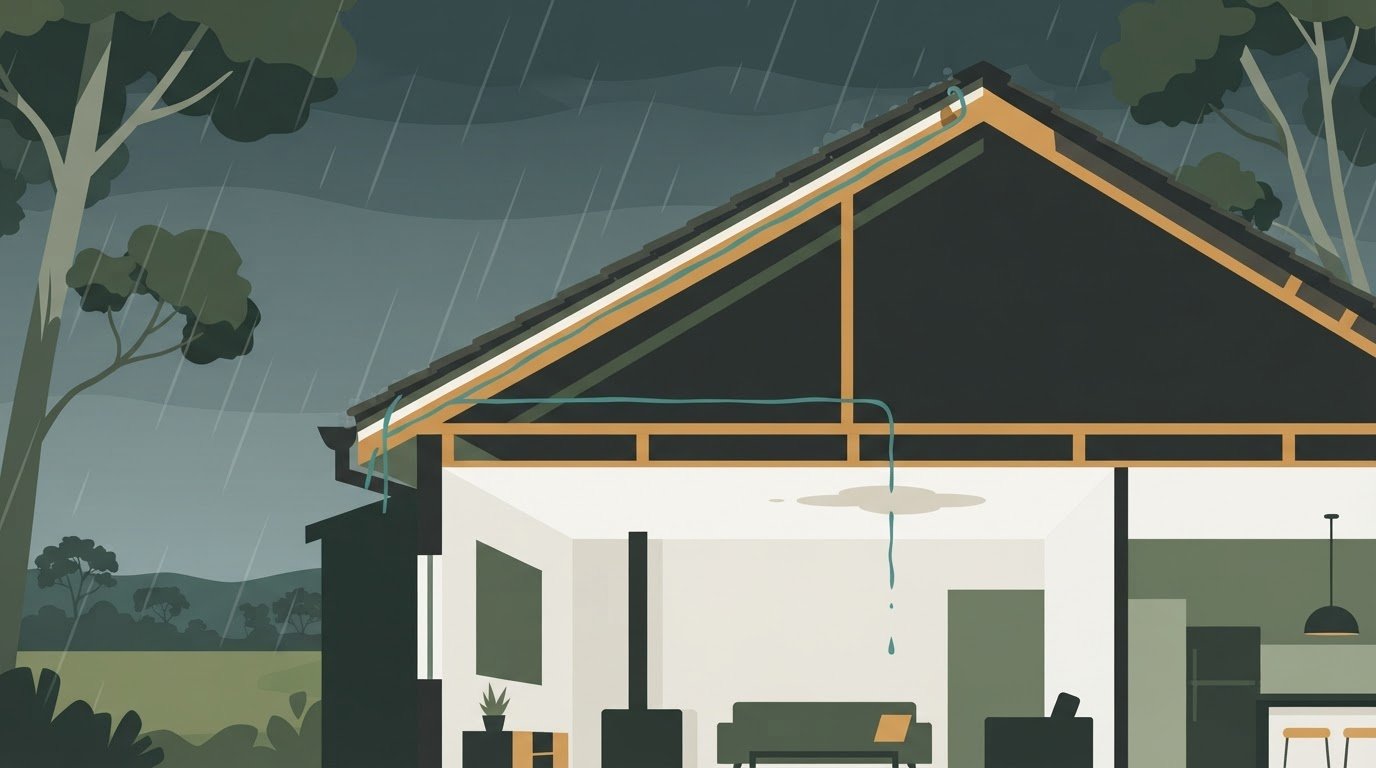
A ceiling leak doesn’t always mean you need a new roof. With box gutter repair Brisbane homeowners can address the source of internal leaks without rushing into an unnecessary replacement. Box gutters sit within the roof structure, so water can travel along building materials before appearing on a ceiling or wall. Repairing the visible stain alone may miss the actual fault.
If water damage is spreading, it’s understandable to worry about repair costs or another temporary fix that won’t last. The practical first step is to trace the leak and assess the gutter itself. Hop To It Roof Repairs is a QBCC-licensed roof plumbing company specialising in metal and tile roof leak detection and repairs. Every job includes a fixed-price quote and a detailed written report.
This guide explains common causes of box gutter leaks, warning signs to look for and how a specialist can assess whether repair or replacement is appropriate. You’ll also find maintenance advice to help protect your Brisbane home from internal water damage.
Key Takeaways
- Learn why concealed box gutter leaks can damage ceilings and walls, even when the visible stain is some distance from the fault.
- Recognise common failure points, including blocked drainage, corrosion, stressed joints and inadequate overflow provisions.
- Understand how a specialist assessment helps determine whether a local repair is suitable or the gutter needs more extensive work.
- See what to expect from box gutter repair Brisbane, from tracing the leak source to receiving a fixed-price quote and written report.
- Find out why a QBCC-licensed roof plumbing specialist brings relevant knowledge to box gutter repairs and internal leak investigations.
Understanding Box Gutters: Why Brisbane’s Storms Demand Specialist Care
A box gutter leak can appear inside your home, not neatly outside beneath the eaves. A box gutter is a concealed channel built into the roof, often between two roof sections or between a roof and a parapet wall. Because it sits within the building structure, a blockage, failed joint or overflow can send water into ceilings and walls before the cause is visible.
Unlike an exposed eaves gutter, a box gutter is part of the roof’s internal drainage system. Water can travel along framing and other building surfaces, so a ceiling stain may not be directly beneath the fault. This overview of what a box gutter is explains its typical placement and how it differs from a valley gutter, which channels water where roof slopes meet.
The Structural Role of a Box Gutter
Box gutters collect runoff from adjoining roof areas and direct it towards an outlet and downpipe. For water to drain instead of pooling, the gutter needs an appropriate fall, meaning a gradual slope towards the outlet. If the outlet or downpipe cannot carry water away effectively, the gutter may overflow into the roof structure.
The concealed design suits many modern homes and commercial buildings, where clean rooflines or parapet walls leave little room for external eaves gutters. But the drainage channel is less visible and harder to inspect casually. Its performance depends on the whole drainage path: roof catchments, gutter bed, fall, outlets and discharge.
Signs Your Box Gutter Is Failing
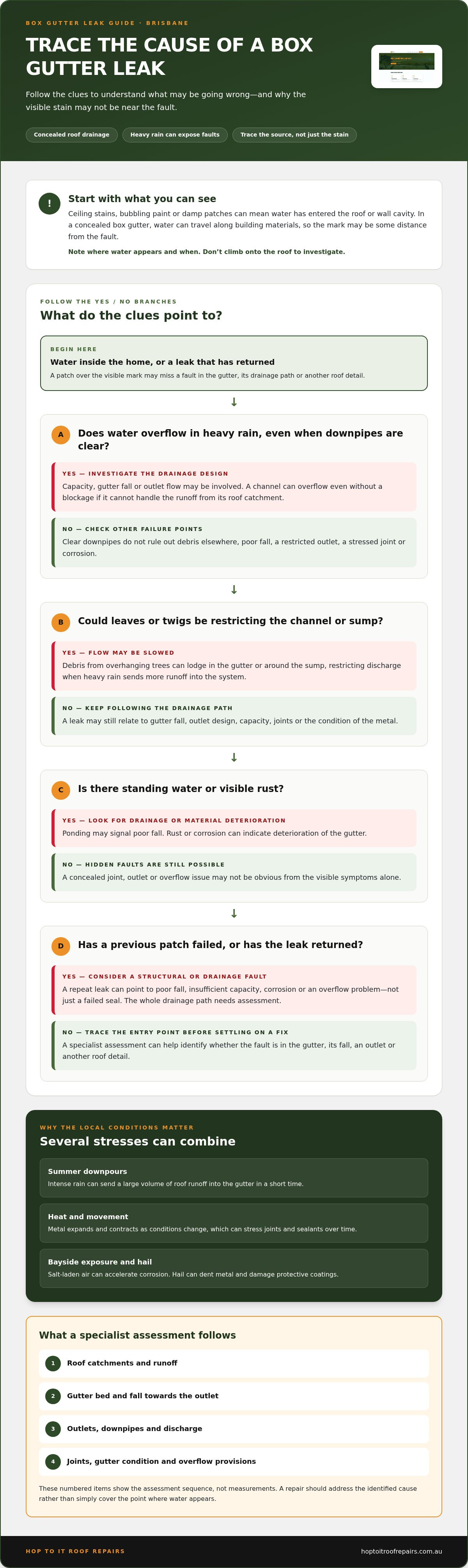
Look for clues inside and outside the roof. A ceiling mark may seem minor, but bubbling paint or damp patches near an internal wall can indicate water entering the roof or wall cavity. The source may be elsewhere, so repainting or sealing the visible spot may not solve the problem.
- Ceiling stains or bubbling paint: These can indicate water has entered the roof or wall cavity.
- Rust or standing water: Visible corrosion and ponding in the gutter bed may signal deterioration or poor drainage.
- Overflow during heavy rain: If water spills over despite clear downpipes, the cause may involve gutter capacity, fall or outlet flow, rather than a blockage alone.
Brisbane’s intense summer downpours can quickly expose weaknesses. A gutter that copes with light rain may struggle when runoff from several roof areas arrives at once, particularly if debris restricts flow or the system is undersized. Don’t climb onto the roof to investigate. Note where you see water and when it appears, then arrange professional leak detection to trace the entry point.
Effective box gutter repair Brisbane starts with understanding this internal drainage path, not treating the gutter like an ordinary external channel. A specialist assessment can identify whether the problem lies in the gutter, its fall, an outlet or another roof detail. That helps focus the repair on the source rather than the indoor symptom.
Common Causes of Box Gutter Failure in South East Queensland
Box gutters can fail because of one fault or a combination of design, drainage and weather-related stress. In South East Queensland, a system may be exposed to leaf litter, intense downpours and heat. In bayside locations, salt-laden air can also affect metal surfaces. Finding the cause matters: sealing one visible leak won’t fix an undersized channel, blocked sump or joint that keeps moving.
Design Flaws vs. Wear and Tear
Some problems begin with the original design. A gutter that cannot handle runoff from its roof catchment may overflow in heavy rain, even when clear. Poor fall can leave water sitting in the gutter bed, while a poorly designed sump or dead end can restrict flow to the outlet. Older systems may also lack adequate overflow provisions, leaving water fewer safe escape paths if the main drainage route is overwhelmed.
Wear adds another layer. Metal heats up and cools down, expanding and contracting as conditions change. Over time, this movement can stress joints and sealants. A quick patch over a joint or rust spot may hide corrosion and make the underlying fault harder to identify. A lasting repair begins with assessing the whole drainage path, not just covering the point where water appears.
Environmental Factors in Brisbane
Brisbane’s summer storms can send a large volume of roof runoff into a box gutter in a short time. Leaves and twigs from overhanging gum trees can lodge in the channel or around the sump, slowing discharge when the system is under pressure. In bayside areas, including parts of Redland Bay and Moreton Bay, salt in the air can accelerate corrosion on metal surfaces, particularly where protective coatings are worn or damaged.
Hail can dent metal and damage its coating. Once the protective layer is compromised, exposed areas may be more vulnerable to corrosion. Keep an eye out for debris after storms, but don’t climb onto the roof to inspect a concealed gutter. A roof leak specialist can assess the condition and trace whether water is entering through a damaged area, failed joint or drainage fault.
Why a Repeat Leak Needs a Proper Diagnosis
If a previous patch hasn’t stopped the leak, the issue may be structural rather than a failed seal alone. Repeated water entry can point to poor fall, insufficient capacity, corrosion or an overflow problem. The repair approach should match the cause. Timely gutter maintenance and repairs can help address developing faults before they lead to internal water damage.
For box gutter repair Brisbane, accurate leak detection helps distinguish a localised defect from a wider drainage problem. If storm damage has left a gutter vulnerable, temporary make-safe work can help protect the property while permanent repairs are planned. For a clear diagnosis of a recurring roof leak, arrange specialist roof leak detection instead of relying on another temporary patch.
Repair vs. Replacement: The Homeowner’s Decision Framework
A leaking box gutter doesn’t automatically mean the whole roof needs replacing. The decision depends on the gutter bed’s condition, the cause of the leak and whether the drainage system can carry water away correctly. A focused assessment helps distinguish a repairable fault from widespread deterioration, so you can weigh the work required without jumping straight to a major reconfiguration.
When Repair Is the Smart Choice
A local repair may suit a sound gutter with a specific failure, such as a leaking joint, damaged flashing or sump defect. Where the system’s design allows, a specialist can also assess whether an overflow can be retrofitted. The right scope depends on the gutter’s condition and drainage layout, not just where the ceiling stain appears.
Leak investigation helps define that scope. Roof leak detection focuses on tracing the entry point and identifying contributing faults. If the metal around the defect remains sound, repairing the cause may avoid replacing sections that are still serviceable.
A properly assessed repair is different from smearing sealant over a wet or corroded surface. It targets the failure and uses a method suited to the material and condition. That can provide a more durable solution than a temporary patch, although the expected service life depends on the gutter’s overall state and the repair required.
When Full Replacement Is Unavoidable
Replacement becomes more likely when deterioration is widespread. Pitting rust across much of the gutter can leave the metal too thin to hold a reliable repair. A patch may cover one weak spot while water continues to find another. Likewise, if the roof frame has sagged and prevents water from draining properly, repairing the metal alone won’t correct the underlying flow problem.
In these cases, the assessment should explain why a local repair is unsuitable and what broader work is needed. A roof reconfiguration is a substantial step, so any recommendation should be tied to evidence such as the extent of corrosion, the gutter’s condition and drainage performance. If replacement is considered, the choice of metal, including Colorbond or galvanised steel, should suit the project rather than be treated as a one-size-fits-all upgrade.
Compare the Scope, Not Just the Price
There’s no reliable cost comparison without knowing what each option includes. A fixed-price quote makes the proposed repair scope clear. A replacement proposal should also explain what is changing and why. Compare the work required to address the cause, not simply the headline figure. A cheaper patch may leave the wider fault untouched, while a full replacement may be unnecessary if the gutter is sound apart from one local defect.
Make-Safe Work After Storm Damage
If storm damage leaves a gutter exposed or vulnerable to further water entry, temporary make-safe work can help limit the risk while permanent repairs are planned. It isn’t a substitute for diagnosing the underlying issue. For box gutter repair Brisbane, a clear written report and scope can help you understand whether the next step is a local repair, further work or replacement.
For a storm-damaged gutter, arrange gutter repairs and temporary make-safe work so the immediate risk and longer-term repair needs are considered together.
The Professional Box Gutter Repair Process: Step-by-Step
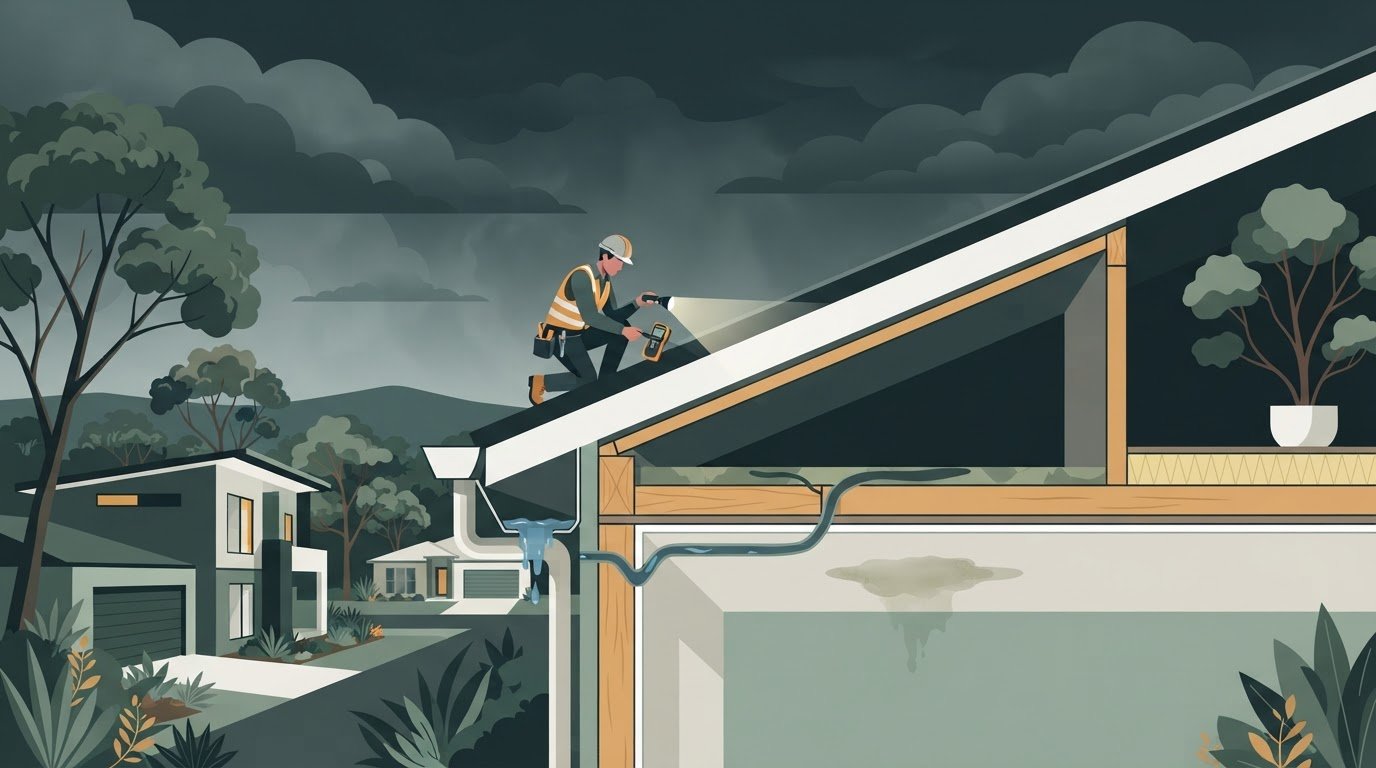
A reliable repair starts with diagnosis, not a bead of sealant over the first visible gap. Water can travel before it reaches an internal ceiling, so the repair needs to address the entry point and any contributing gutter or drainage fault. Here’s what a considered box gutter repair Brisbane process can involve.
- Investigate the leak. A roof leak specialist inspects the gutter, adjoining roof areas, joints, outlets and visible water damage. The aim is to trace the source rather than assume the stain marks the fault. Findings help determine whether the issue is localised or linked to a wider drainage problem.
- Prepare the repair area. Debris and loose or deteriorated material around the repair area need to be cleared. The surface is assessed and prepared for the repair method and materials. Applying new material over loose oxidation, dirt or moisture can undermine adhesion and leave the original problem unresolved.
- Repair the affected detail. Depending on the assessment, work may involve repairing a joint, flashing or sump, or replacing a damaged section. Sealants and folded metal flashings should suit the roof material and detail. The solution needs to manage water movement, not merely conceal a gap.
- Check the outcome. The repaired area and drainage path are reviewed to check that water can discharge as intended. Where conditions allow, controlled water testing can help assess the repair. A surface check cannot resolve a broader capacity or design issue, so any remaining concerns should be clearly recorded.
Reporting, Quotes and Accountability
Hop To It Roof Repairs provides a detailed written report for every job. It records the findings and repair work, giving you a clear account to keep with your property documents or share with your insurer. The report should explain the identified leak source and the work completed, rather than leave you with only a brief verbal update. Insurance decisions remain with your insurer.
A fixed-price quote sets out the agreed repair scope before work proceeds, helping you understand what is included. The business also provides a workmanship warranty. Its written terms explain what protection applies to the completed work.
Standards and Existing Roof Warranties
AS/NZS 3500.3 covers stormwater drainage systems, including design and performance considerations relevant to roof drainage. A repair should account for how the gutter collects and discharges water, not just the material at the leak. The standard is not a blanket promise that every repair will resolve an underlying sizing or layout problem.
Roof products can have their own warranty conditions. Before changing materials or details, consider how the proposed work may interact with those conditions. A specialist can explain the repair scope and document the work, while the applicable product warranty terms still matter.
For a clear diagnosis and documented repair scope, book specialist roof leak detection.
Why a QBCC Licensed Roof Plumber is Non-Negotiable
A box gutter is part of your roof’s drainage system, so its repair needs more than a general patching approach. The person assessing it should understand how the gutter, roof catchment, outlets and downpipes work together. That knowledge helps identify whether the visible leak is a local fault or a sign of a wider drainage issue.
Licensing and Specialist Knowledge
In Queensland, building work valued over $3,300, including GST, labour and materials, must be carried out by a QBCC-licensed contractor. A licensed roof plumbing company brings trade expertise relevant to roof drainage, metalwork and leak diagnosis. That matters for box gutter repair Brisbane, where a repair must address the cause of water entry, not just cover the spot where it appears indoors.
A generalist may spot obvious damage, but internal gutters involve connected parts and concealed pathways. A specialist can assess how water should move through the system and whether a joint, flashing, outlet or gutter condition is contributing to the leak. Hop To It Roof Repairs combines roof leak detection with fixed-price repairs, so the proposed work is based on identifying the source.
Insurance, Records and Property Protection
Using an unlicensed worker can create complications if a later claim relates to faulty work. It doesn’t mean an insurer will automatically deny a claim, as cover depends on the policy and circumstances. Keep the quote, written report and repair records, and speak with your insurer about the requirements that apply to your policy.
A detailed written report provides a clear record of the observed problem and work completed. That documentation can also be useful when maintaining your home or preparing records for a future sale. It won’t guarantee a higher resale price, but a transparent maintenance history can help demonstrate that roof issues have been assessed and addressed professionally.
A fixed-price quote sets out the agreed scope before work begins, helping you understand what’s included. Hop To It Roof Repairs also provides a workmanship warranty, adding accountability for the completed work. The written terms explain the warranty coverage.
Local Support and Storm Make-Safe Work
Homes in Brisbane, the Gold Coast, Redland Bay, Moreton Bay and Ipswich vary in roof layouts, building ages and weather exposure. A specialist can assess the particular gutter and roof details on your property rather than rely on a one-size-fits-all patch. If a storm damages a gutter, temporary make-safe work can help reduce exposure while permanent repairs are planned.
Choose a documented assessment and a clear repair scope. Contact Hop To It Roof Repairs for a fixed-price box gutter assessment and get specialist help tracing the leak source.
Take the Next Step Towards a Dry, Protected Home
A recurring ceiling leak is a reason to act before the next downpour, not to assume the whole roof needs replacing. Arrange an assessment that focuses on the source of the water and the box gutter’s condition. With an accurate diagnosis, you can make an informed decision about the repair and avoid paying for work that doesn’t address the fault.
For box gutter repair Brisbane homeowners can rely on Hop To It Roof Repairs’ QBCC-licensed roof plumbing service. Every job includes a detailed written report, and fixed-price quotes set out the agreed scope clearly. You’ll have a record of the findings and a transparent basis for deciding what happens next.
Don’t let a small sign of water damage become a bigger worry. Get a fixed-price box gutter repair quote from Hop To It Roof Repairs.
Frequently Asked Questions
What is the difference between a box gutter and a standard gutter?
A box gutter is built into the roof structure, while a standard eaves gutter is fixed along the lower outside edge of a roof. That difference affects access, inspection and where water can go if the system fails. An eaves gutter may spill outside, while water escaping a concealed box gutter can enter the roof space. Its position makes accurate diagnosis especially important.
How much does box gutter repair cost in Brisbane?
The cost of box gutter repair in Brisbane depends on what’s damaged and how much work is needed. A localised joint repair differs from work involving corrosion across a longer section or changes to drainage. Roof access and the gutter’s construction can also affect the scope. Hop To It Roof Repairs provides fixed-price quotes, so you can review the proposed work and price before deciding how to proceed.
Can I use a liquid sealant to patch my leaking box gutter?
A liquid sealant may not fix the cause of a leak, particularly if the surface is corroded, wet or moving at a joint. It can also conceal the area that needs proper assessment. Avoid applying a product before the gutter has been inspected, and don’t climb onto the roof to reach it. A specialist can determine whether sealing is suitable or if another repair is needed.
Does my home insurance cover box gutter repairs?
Cover depends on your policy, the cause of the damage and the circumstances of the leak. Gradual deterioration may be treated differently from sudden storm damage, but your insurer makes that decision under your policy terms. Take photos of visible damage from a safe position and keep the repair quote and written report. These records can help you explain the issue when speaking with your insurer.
How long does a professional box gutter repair typically last?
There isn’t one reliable lifespan for every repair. Durability depends on the gutter’s remaining condition, the repair method, the materials used and whether the underlying drainage issue is resolved. A repair to sound metal may perform differently from work on a gutter with widespread corrosion. Keep the written scope and workmanship warranty terms with your property maintenance records.
What are the signs that my box gutter needs immediate attention?
Act promptly if you notice active dripping indoors, a ceiling bulge, water running down an internal wall, or debris and water spilling into the roof space. Keep people clear of a sagging or wet ceiling, and move belongings away if it’s safe to do so. Don’t enter the roof cavity or climb onto the roof. Record what you can see from ground level and arrange a professional assessment.
Why do box gutters fail more often than other types of guttering?
They aren’t automatically more prone to failure, but their concealed position can make early problems harder to spot. A fault may remain unnoticed until water enters the building, while runoff from adjoining roof areas can place concentrated demand on the drainage path. Debris, worn joints or restricted outlets can add to the strain. Regular inspection helps catch developing issues before they cause indoor damage.
Do I need a council permit for box gutter repairs in Brisbane?
Whether approval is needed depends on the work’s scope. A like-for-like repair may be treated differently from a change to the roof structure or drainage design, so there isn’t a single answer for every property. Before work begins, describe the proposed repair to Brisbane City Council or your building certifier and ask what approvals apply. This is particularly important if the project changes the building’s existing arrangement.