What to Do if Your Roof Leaks: A Safe, Practical Guide
18 October 2026 · 17 min read
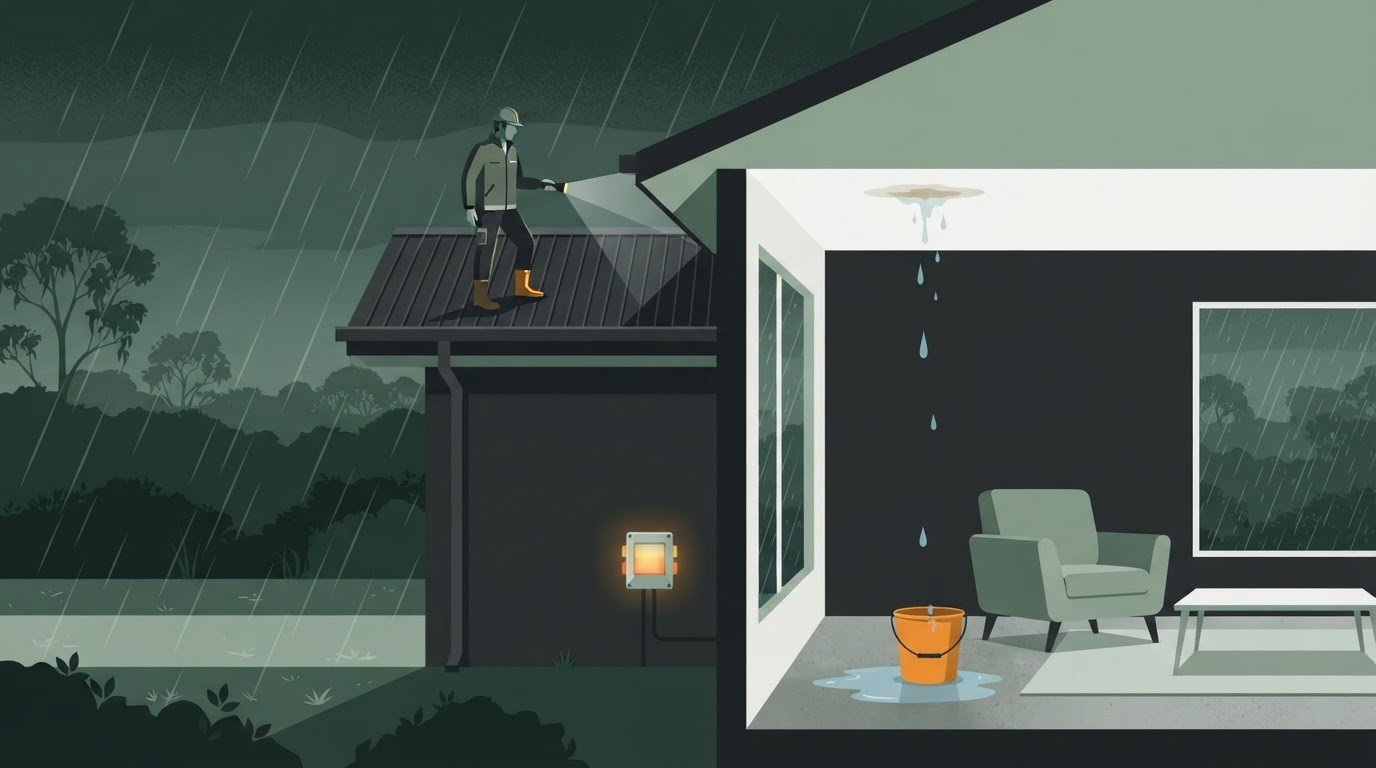
Water is dripping through the ceiling, but the leak may be somewhere else on the roof. In that moment, what to do when you have a roof leak matters: keep people clear of hazards, limit indoor damage and resist the urge to climb onto a wet or storm-damaged roof.
It’s natural to want to find the source and stop the water straight away. Start with what you can safely do indoors. Protect people and belongings, contain drips if it’s safe, document what you see and arrange a professional assessment. This guide also covers what to do if water is near electrical fittings and what information may help when you speak with your insurer.
A professional assessment can identify the cause, including issues that aren’t visible from inside. Hop To It Roof Repairs provides roof leak detection, metal and tile roof repairs, and temporary make-safe work across Brisbane, the Gold Coast, Redland Bay, Moreton Bay and Ipswich. Each job includes written findings and a fixed-price quote to clarify the repair scope.
Key Takeaways
- For what to do when you have a roof leak, follow a safe order: move people away from hazards, protect belongings and arrange professional help.
- Use safe indoor steps to catch drips and limit damage, but don’t treat them as a permanent fix.
- Record the date, weather, affected rooms and how the damage changes. Follow your insurer’s instructions before authorising permanent repairs.
- A ceiling stain may not show where water is entering the roof, so don’t climb up to investigate or attempt a repair.
- Persistent leaks, recurring water entry or visible roof damage call for a professional assessment. Hop To It Roof Repairs is a QBCC-licensed roof plumbing specialist serving Brisbane, the Gold Coast and nearby communities.
What to do if your roof leaks: make the area safe first
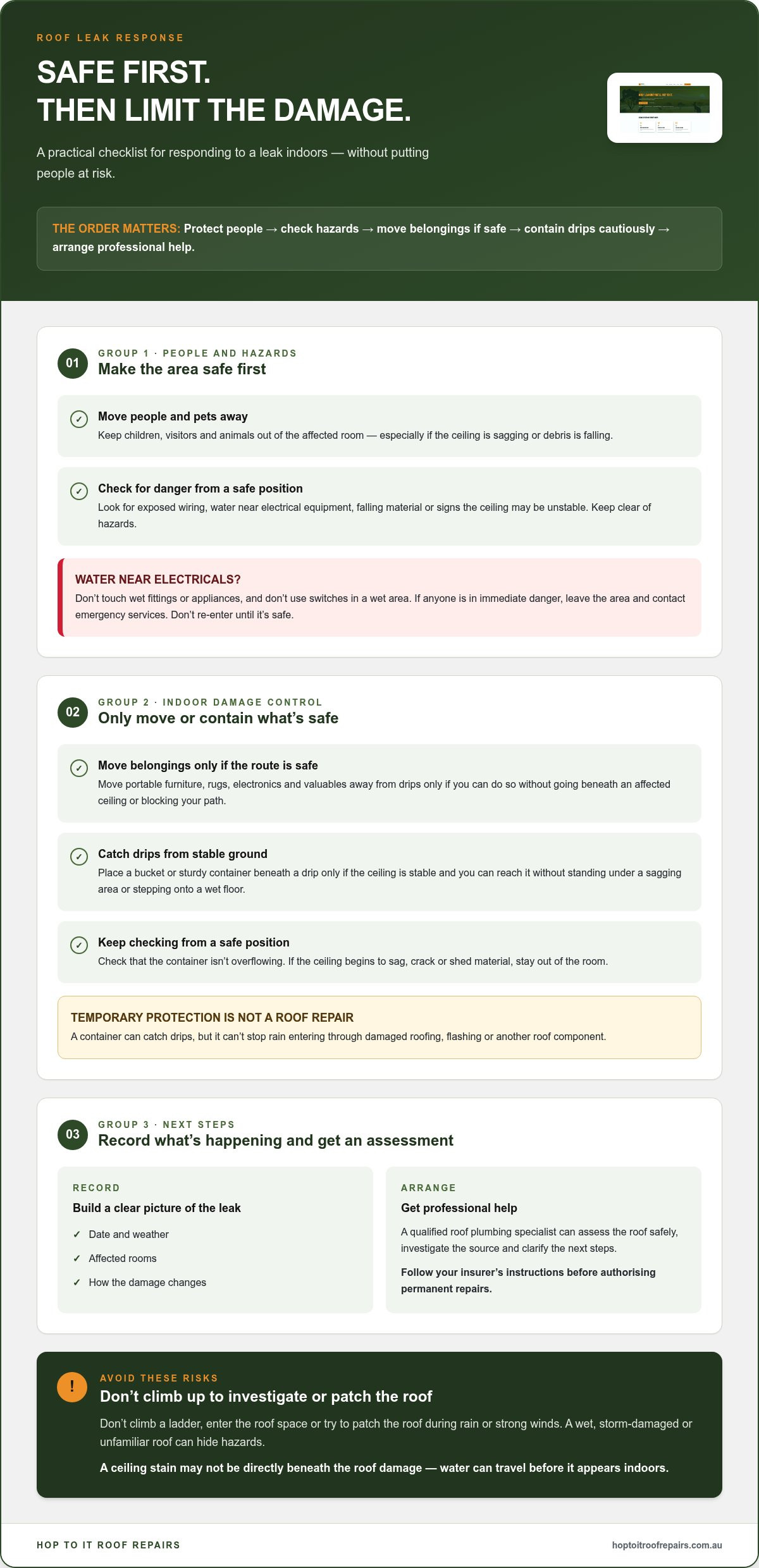
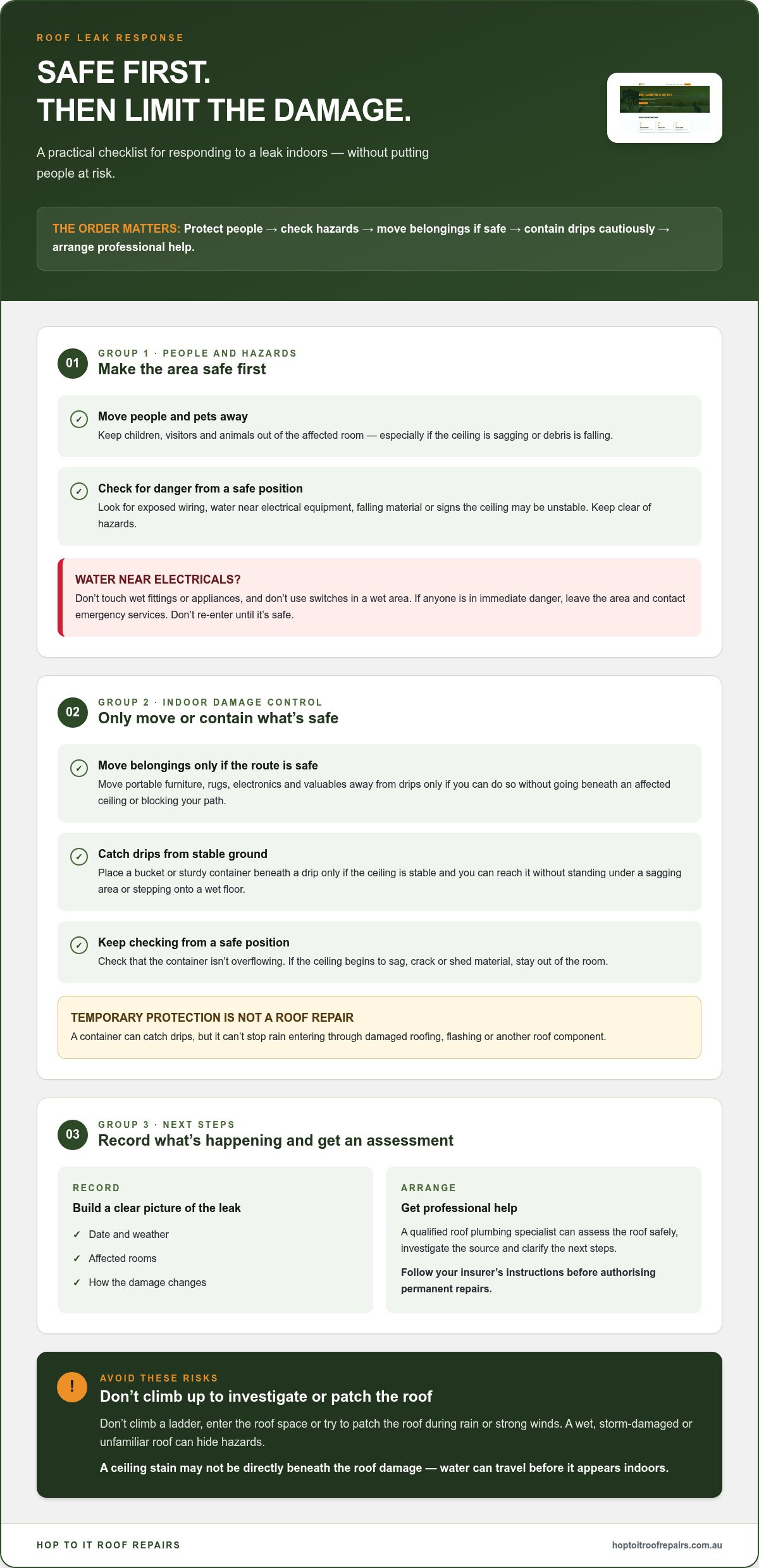
If you’re working out what to do when you have a roof leak, follow this order: protect people, avoid hazards, move belongings if it’s safe, contain drips from a stable position, then arrange professional help. Don’t rush to find the entry point. Water can travel before it appears indoors, so a ceiling stain may not sit directly beneath the roof damage.
- Move people and pets away. Keep children, visitors and animals out of the affected room, especially if the ceiling is sagging or debris is falling.
- Check for hazards from a safe position. Look for exposed wiring, water near electrical equipment, falling material or signs that the ceiling may be unstable. Don’t touch wet fittings or appliances, and don’t use switches in a wet area.
- Move belongings only if it’s safe. Take portable furniture and valuables out of the room only if you can do so without going beneath an affected ceiling or blocking your path.
- Control drips cautiously. Put a bucket or container beneath a leak only if you can place it without standing under a sagging ceiling or stepping onto a wet floor.
- Arrange professional help. Once people are safe and immediate indoor risks are managed, arrange a roof leak assessment to investigate the source and next steps.
Check for immediate danger before moving anything
Pause before entering the room. A bulging or sagging ceiling can indicate trapped water and may give way without warning. Stay clear rather than standing beneath it to move furniture or place a container. If you see exposed wiring, falling debris or water close to electrical equipment, keep everyone away. Don’t touch wet electrical fittings or try to operate switches in the wet area.
If there’s immediate danger to anyone, leave the affected area and contact emergency services. Don’t re-enter until it’s safe. Where water is near electrical equipment, keep your distance instead of trying to manage the electrical risk yourself.
Protect belongings without taking unnecessary risks
If the room and your route through it are safe, move portable items such as rugs, electronics and furniture away from drips. Use a container to catch water only when you can position it from stable ground and outside the area beneath an unstable ceiling. A wet floor can be slippery, so don’t carry bulky items if they block your view or affect your balance.
Don’t climb a ladder, enter the roof space or try to patch the roof during rain or strong winds. A wet, storm-damaged or unfamiliar roof can hide hazards, and a patch may expose you to a fall or worsen the damage. Roof coverings and components vary. This overview of types of roofs and their vulnerabilities provides background, but it can’t identify the cause of your leak.
Roof inspection belongs to a qualified professional. Don’t climb onto a wet, storm-damaged or unfamiliar roof to investigate or attempt a repair. A qualified roof plumbing specialist can assess the roof safely and determine what needs attention.
How to limit indoor water damage while the roof is leaking
Once the room is safe to enter, focus on reducing the impact of water inside. These are temporary damage-control steps, not a roof repair. A container can catch a drip, but it can’t stop rain entering through damaged roofing, flashing or another roof component. Check the area from a safe position, especially if the leak spreads or the ceiling changes.
Contain drips and protect the room safely
Place a bucket or sturdy container beneath a drip only if the ceiling is stable and you can reach the spot without standing under a sagging area. If water splashes, a towel around the container can help protect the floor. Use towels to manage small amounts of water only when they’re well away from electrical equipment, cords and power points.
- Move rugs, furniture and personal items out of the affected area if the floor and route are safe.
- Keep electronics and other valuables well clear of water. Don’t handle anything that’s wet or connected to a wet power point.
- Check that the container isn’t overflowing, but don’t enter a room if the ceiling begins to sag, crack or shed material.
Don’t puncture a ceiling to release trapped water. Even a small bulge may indicate a weakened ceiling, and water could be close to wiring. Don’t apply roof sealant or attempt a patch from indoors or outdoors. A patch may conceal the source without stopping water entry, and roof access brings risks that aren’t worth taking.
Know when temporary protection needs a professional
If water keeps entering, spreads to another room or returns when it rains, indoor containers can only manage the symptoms. Arrange a professional assessment to identify the entry point and determine whether temporary make-safe work is appropriate. This short-term protection can help reduce further water entry while permanent repairs are planned. It isn’t a substitute for repairing the underlying damage.
Hop To It Roof Repairs provides temporary make-safe work alongside roof leak detection and repairs. An assessment can clarify what’s happening and the next step, rather than relying on a patch that may not address the cause. For general background on roofing practice, the National Roofing Contractors Association guidelines offer broader industry information. An assessment of your roof needs to account for its actual condition and materials.
If water continues to come in, professional roof make-safe work can help limit further exposure while permanent repairs are planned. Hop To It Roof Repairs serves Brisbane, the Gold Coast, Redland Bay, Moreton Bay and Ipswich, with written findings and a fixed-price quote to explain the repair scope. Learn about roof leak detection and repair.
What to record after a roof leak in Queensland
A clear record helps you explain what happened to your insurer and gives a roofing specialist useful context for assessing the damage. Queensland rain and storms can bring changing conditions, but the weather alone doesn’t prove how or where water entered. Record what you observe without guessing at the cause.
Clear photos and dated notes help document visible damage. Take them only from safe positions. Don’t approach a sagging ceiling or enter an area with electrical hazards to get a better shot.
Take useful photos and keep a simple timeline
Start a brief log as soon as it’s safe. Include when you first noticed the leak, the weather at the time and any changes you observe. If water entry increases during rainfall or continues after it eases, note that without assuming what it means.
- Record the date and approximate time the leak appeared.
- Note the weather, including any rain or storm conditions you observed.
- List each affected room and visible damage to ceilings, walls, floors and belongings.
- Take clear photos of affected areas from safe positions, then photograph any changes over time.
- Keep copies of insurer messages, assessment findings, quotes and repair documents.
Take wider photos showing the room and closer images showing details such as a stain, peeling paint or damaged flooring. If you move items or use temporary protection, record that too. This helps distinguish the initial visible damage from later changes. Keep the original files where possible so dates and details remain available.
Speak with your insurer without assuming cover
Contact your insurer promptly and follow the instructions in your policy. Cover depends on the policy and circumstances, so don’t assume the leak is or isn’t covered before the insurer has considered the details.
Before authorising permanent repairs, ask your insurer what documentation or approval steps apply. Keep temporary make-safe work clearly separate from permanent repairs in your notes, photos and paperwork. Record what was done, when it happened and which documents relate to each stage. This makes it easier to explain the sequence if the insurer asks.
Written findings from a professional assessment can help clarify the observed damage and repair scope. Hop To It Roof Repairs provides a detailed written report and fixed-price quote for every job. Include these with your records, but follow your insurer’s process before approving permanent work. If you’re deciding what to do when you have a roof leak, a dated timeline and organised evidence are a practical starting point for the insurance conversation and repair assessment.
Should you try to fix a roof leak yourself?
There’s a clear difference between protecting your home indoors and trying to repair the roof. You can move belongings, note what you see and keep people clear of hazards when it’s safe. Roof access is different. Wet surfaces, storm conditions and damage you can’t see from the ground can make a quick inspection or patch risky.
A ceiling stain doesn’t necessarily show where water entered. Rainwater can travel along roof components or through the ceiling space before appearing indoors. Sealing the spot above the stain may miss the actual entry point, leaving the leak active or making the damage harder to assess.
What homeowners can do safely indoors
Keep your efforts to low-risk steps inside the home. From a safe position, protect movable belongings and record visible damage and when water appears. For example, noting that the leak began during rainfall gives a specialist useful context without assuming the cause.
- Keep people and pets away from affected areas and visible hazards.
- Move portable items only if the route and room are safe.
- Record changes to stains, drips or affected rooms from a safe position.
- Leave damaged ceiling materials and other building components in place.
Don’t cut into a ceiling, pull down wet plasterboard or disturb damaged components to look for the source. You could expose wiring, weaken an area further or remove details that help explain the leak. If the ceiling is sagging or material is falling, stay clear and arrange professional help.
Why roof access and quick patches can backfire
A wet roof can be slippery, and storm damage may leave roofing sheets, tiles or other components unstable. You may not see weakened areas, loose materials or the full extent of the damage from a ladder. Don’t climb up to inspect, apply sealant or place a temporary patch, particularly in rain or strong winds.
A patch can also give false confidence. If the visible ceiling mark is away from the roof entry point, sealing directly above it may not stop water getting in. A professional assessment helps trace the leak and clarify the repair scope without relying on guesswork. Hop To It Roof Repairs provides roof leak detection and a detailed written report with a fixed-price quote.
For more detail on why finding the entry point matters, the professional roof leak detection guide explains the difference between locating a stain and identifying its source. If you’re deciding what to do when you have a roof leak, leave roof access to a qualified specialist and focus on safe indoor protection. Professional roof leak detection can identify the source and clarify the next repair steps.
When to call a roof leak repair specialist in Brisbane or the Gold Coast
Arrange a professional assessment if water keeps entering, a leak returns after the rain or you can see roof damage from the ground. Indoor water control won’t fix these problems. The entry point may be difficult to locate, and leaving the cause unresolved can allow more water to enter.
- Water continues to come in or spreads to additional rooms.
- A leak returns during later rainfall, even if it seemed to stop.
- You can see displaced tiles, damaged roof sheets or other visible roof damage from a safe position.
- You need temporary make-safe work to reduce further water entry while permanent repairs are planned.
Don’t climb up to confirm what you can see. A QBCC-licensed roof plumbing specialist can assess the roof and investigate whether the issue relates to metal or tile roofing, gutters, downpipes or another roof component.
What a professional assessment helps establish
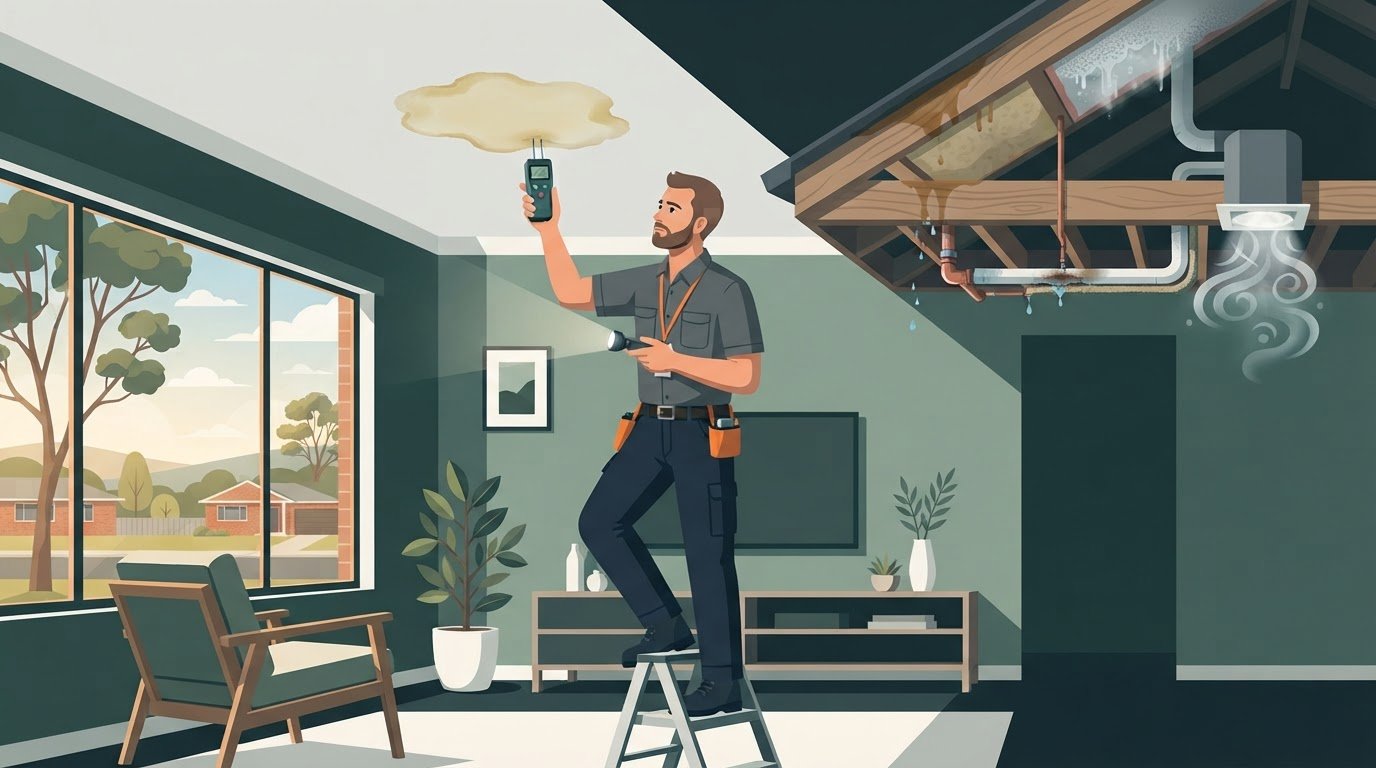
An assessment investigates the leak rather than relying on the indoor stain as a guide. It helps establish the visible findings, likely source and appropriate repair scope. This gives you a clearer basis for deciding what work is needed, especially if the leak is recurring or the roof damage isn’t obvious from ground level.
Hop To It Roof Repairs provides a detailed written report and fixed-price quote for every job. The report records the findings, while the quote sets out the proposed work so you can understand the scope before proceeding. Repairs are backed by a workmanship warranty. For more context on how this protection works, see the roof repair workmanship warranty guide.
Arrange the next step with clear expectations
Hop To It Roof Repairs is a QBCC-licensed roof plumbing specialist serving Brisbane, the Gold Coast, Redland Bay, Moreton Bay and Ipswich. The business provides roof leak detection and repairs for metal and tile roofs, as well as temporary make-safe work to help reduce further water entry while permanent repairs are planned.
If you’re unsure what to do when you have a roof leak, start with a professional assessment. You’ll receive written findings and a fixed-price quote for the job, making the proposed next steps clear.
Arrange a roof leak assessment with Hop To It Roof Repairs.
Take the next step towards a dry, secure home
A roof leak can feel overwhelming, but you don’t need to solve the whole problem at once. Once immediate risks are under control, a clear assessment gives you a practical way forward. Don’t wait for the next downpour to find out whether the leak has stopped. Even when dripping eases, the underlying entry point may still need attention.
If you’re weighing up what to do when you have a roof leak, focus on turning uncertainty into a defined repair plan. A specialist can investigate the cause and explain the work required, so you can make an informed decision rather than rely on guesswork or a temporary patch.
Arrange a professional roof leak assessment with Hop To It Roof Repairs. You’ll receive clear findings and a fixed-price quote, with repair work backed by a workmanship warranty.
Take it one step at a time. The right assessment can help you move forward with confidence.
Frequently Asked Questions
Is it safe to stay in a house with a roof leak?
It depends on the hazards, not just the size of the leak. If the ceiling is sagging, debris is falling or water is near electrical equipment, leave that area and keep others out. If there’s immediate danger, get outside and contact emergency services. If the leak is contained and there are no warning signs, you may be able to remain elsewhere in the home while arranging an assessment. Knowing what to do when you have a roof leak starts with judging safety.
Can a roof leak continue after the rain stops?
Yes. Water may have collected in roof or ceiling materials and can keep dripping after rainfall ends. The visible drip may also pause while moisture remains in the structure, then return with later rain. Note how the leak changes over time, but don’t assume a dry patch means the roof has stopped leaking. If dampness, staining or dripping persists, arrange an assessment to identify the source and check for damage.
What should renters do when they discover a roof leak?
Tell your property manager or landlord promptly, using the contact method set out in your tenancy information. Send a written description of where water is appearing and when you noticed it, with photos taken safely. Keep copies of messages and any instructions you receive. Don’t climb onto the roof or arrange permanent repairs without the owner’s approval. If there’s an immediate safety risk, leave the affected area and seek urgent help.
Does home insurance cover a roof leak in Queensland?
It depends on your policy wording and the circumstances that led to the leak, so cover can’t be assumed. Check your policy and contact your insurer to ask how to report the damage, what evidence they need and whether approval is required before permanent repairs begin. Keep records of the leak and any temporary work. Your insurer can explain how your specific policy applies; a roofer can document visible roof findings separately.
Can I put a tarp on the roof to stop a leak?
Don’t climb onto the roof to lay a tarp, particularly during rain, strong winds or after a storm. A roof may be slippery or damaged in ways that aren’t clear from the ground, and a tarp can shift or fail to address the entry point. Arrange professional temporary make-safe work if further water entry needs to be limited. Use indoor containers only where the room is safe.
What happens if I leave a roof leak untreated?
Ongoing moisture can damage ceiling linings, paint, insulation and other building materials. If damp conditions persist, mould may develop, and water near electrical components can create a separate hazard. The extent depends on how much water enters and for how long. A leak that seems minor can still worsen with further rain, so don’t rely on a stain drying out as proof that the cause has been resolved.
How do I know whether the leak is coming from the roof?
Water marks on ceilings or upper walls can point to a roof leak, especially if they appear or worsen during rainfall, but they don’t confirm the entry point. Moisture can travel before showing indoors, and plumbing or other sources may also need consideration. Note when and where the dampness appears, then arrange professional roof leak detection if roof entry is suspected. Avoid opening ceilings or accessing the roof to investigate.