Roof Leak Around Chimney Brisbane: Causes and Repair Steps
2 October 2026 · 15 min read
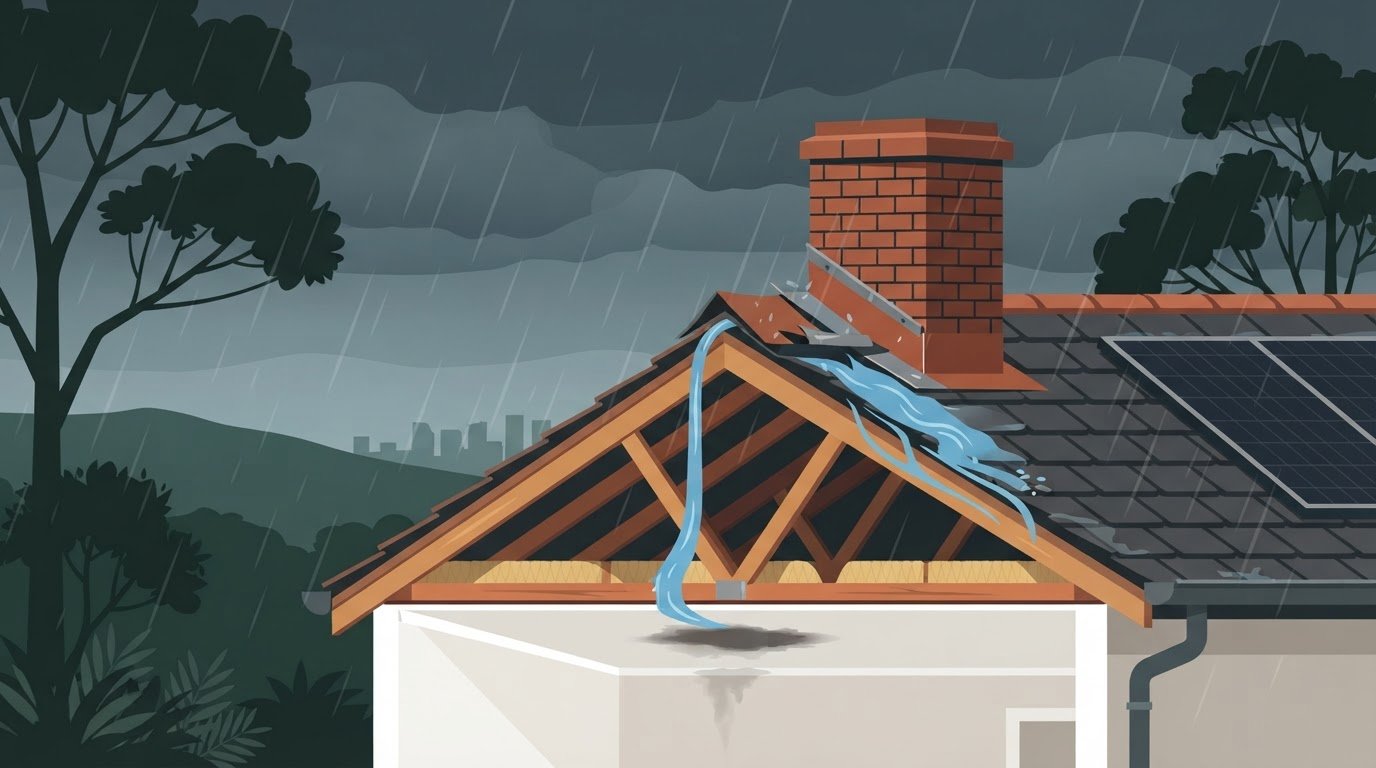
A stain beneath your chimney may be far from the point where rain is getting in. If you’re searching for “roof leak around chimney Brisbane”, start by considering the roof junction, not just the mark on the ceiling. Water can travel along roof framing before it appears indoors, so the visible drip may not show whether the cause is damaged flashing, nearby roofing or the chimney’s external condition.
Seeing water come in without knowing why can be unsettling. This guide explains common leak paths around chimneys, what you can safely do while arranging a repair, and how roof leak detection can help identify the source. You’ll also learn how repair options differ for metal and tile roofs, and what a written report and fixed-price quote can tell you about the proposed work.
Key Takeaways
- A roof leak around chimney Brisbane homes can show up as a stain or drip away from the entry point, so tracing the water path matters.
- Flashing directs rain away from the roof-to-chimney junction. The right repair depends on the roof design and what’s causing the leak.
- A bead of sealant won’t fix every leak. Depending on the cause, the repair may involve resealing, flashing work or repairs to nearby roofing.
- Protect belongings, note when the leak appears and keep clear of affected areas. Don’t climb onto a wet or steep roof or attempt flashing repairs yourself.
- Roof leak detection, written findings and a clearly scoped quote help you understand the repair and keep a record of the work.
Roof leak around chimney Brisbane: signs and likely causes
A ceiling mark near a chimney can be stressful, particularly when the entry point isn’t directly above it. Water may enter at the roof-to-chimney junction, then travel along roof framing before appearing inside. A stain is a clue, not a diagnosis. For a roof leak around chimney Brisbane homes, the roof-side water path needs to be traced before choosing a repair.
Which signs point to a chimney-area roof leak?
Look for a damp patch, fresh discolouration, peeling paint or drips near the chimney after rain. Note when the water appears, whether the mark grows during or after a shower, and whether it returns with later rain. Photograph the affected area from a safe position indoors. These observations can help explain how the leak behaves, though they can’t identify its exact entry point.
Common roof-side causes include flashing that has shifted or deteriorated, a failed seal at the junction, damaged tiles or metal roofing nearby, and debris that holds water against vulnerable edges. Flashing is formed material that helps direct water away from joins. Its shape and installation depend on the roof design. The Flashing overview explains its general weatherproofing role.
A leak beside a chimney doesn’t automatically mean the chimney masonry is damaged. Cracks or deteriorated mortar are visible masonry concerns, while a roof-junction leak can occur even when the chimney looks intact. An indoor stain alone can’t distinguish between them, so don’t assume surface sealant or masonry work is the answer.
Chimney junctions are vulnerable in heavy rain because water has to pass around a break in the roof surface, where flashing and adjoining roofing need to work together.
Why can Brisbane rain expose a weak roof junction?
Prolonged or intense rain can reveal gaps or defects that aren’t obvious in dry weather. Sun and ongoing exposure to the elements can also contribute to wear in flashing, seals and surrounding roofing. The timing of a leak is useful evidence, but it doesn’t prove the cause. For more on tracing entry points beyond the visible stain, see the Brisbane roof leak detection guide.
How roof flashing protects the chimney junction on Brisbane homes
Chimney flashing is formed material fitted where the roof meets the chimney. It bridges this vulnerable junction and guides rain back onto the roof surface, rather than letting water work beneath the roofing. Properly fitted flashing helps direct water away from the junction and into the roof’s normal drainage path.
What does chimney flashing do?
The exact arrangement depends on the roof shape and covering. Where the design calls for it, apron flashing protects the lower side of the chimney, while back flashing manages water at the uphill side, where rain runs towards the chimney. These pieces need to work with the surrounding roof, not simply cover a visible gap.
If flashing is loose, damaged or poorly integrated with the roofing, water can get underneath and enter the roof space. Sealant may have a role in some repairs, but a surface bead isn’t a universal substitute for correctly formed flashing. The International Code Council’s building code requirements provide a technical reference for roof flashing. They’re an international reference, not a substitute for assessing a Brisbane roof and applicable local requirements.
Can the repair differ on metal and tile roofs?
Yes. The roof profile affects how the junction is formed, so there isn’t one flashing detail that suits every chimney. On a metal roof, an assessment considers how sheet edges meet the flashing and whether that interface directs water away as intended. The right detail depends on the roof layout.
On a tile roof, the position and condition of the tiles matter alongside the adjoining flashing. A tile may be displaced or damaged, or the roof-to-chimney junction may be the weak point. Looking at the flashing alone could miss the route water is taking.
Diagnosis should come before choosing between flashing work and repairs to nearby roofing. A roof leak around chimney Brisbane homes can involve more than one part of the junction, and the repair depends on what’s found on the roof. Roof leak detection and repair can identify the source and guide the next step.
Chimney flashing repair or sealant: compare the right repair approach
A bead of sealant can look like a quick fix, but it won’t correct every leak. If flashing is damaged or poorly integrated, or water is entering through nearby roofing, covering the visible gap may leave the cause untouched. The Queensland Building and Construction Commission identifies defective roof flashing as one of the top ten causes of roof leaks found by its inspectors.
Repair scope should follow the identified failure point, not just the visible stain. The right option depends on the roof material, the observed damage and the verified path water is taking.
| Repair approach | When it may be suitable | What to consider |
|---|---|---|
| Limited surface resealing | Assessment finds a localised sealant failure and the surrounding flashing and roofing are sound. | Resealing may form part of the repair, but it won’t fix damaged or incorrectly integrated flashing. |
| Flashing repair or replacement | Inspection identifies a loose, damaged or defective flashing component at the chimney junction. | The repair needs to suit the roof design and the way the flashing meets the covering. |
| Roofing repair around the junction | Nearby metal sheets or tiles are damaged, displaced or contributing to water entry. | Repairing flashing alone may not address the leak if surrounding roofing is also involved. |
When might resealing be part of the repair?
Resealing may be appropriate if an assessment finds a failed seal and the underlying junction is otherwise correctly formed. It’s a targeted option, not a cure-all. Applying sealant over damaged flashing or a poor roof connection can hide the visible gap without resolving the underlying failure.
When might flashing or roof covering need repair?
If inspection finds damaged junction components, flashing repair or replacement may be considered. The surrounding roof covering also needs attention if a metal sheet or tile is contributing to the water path. Roof plumbing assessment focuses on the roof junction; visible structural masonry concerns are separate and shouldn’t be mistaken for a flashing defect.
Clear findings and a defined scope help explain what needs repair and why. For context on accountability after roof repair, read the roof repair workmanship warranty guide. If you’re dealing with a roof leak around chimney Brisbane homes, arrange roof leak detection and repair to establish the source before settling on an approach.

Dealing with a chimney roof leak in Brisbane
If water is coming in, focus first on keeping people and belongings safe. Don’t climb onto a wet or steep roof, and don’t attempt to repair chimney flashing yourself. Roof access and junction repairs can be hazardous, especially in wet conditions. Follow these steps while arranging an assessment:
- Protect belongings. Move furniture and valuables away from drips if it’s safe. Place a container under active leaks, but keep clear of affected electrical fittings. Don’t touch wet switches, lights or wiring.
- Record the symptoms. Note when the leak appears, where water shows indoors and whether it changes during or after rain. Take photos from a safe indoor position.
- Limit access. Keep people away from wet floors and areas where water is entering. From the ground, note any visible changes around the roof or chimney, but don’t use a ladder or go onto the roof to investigate.
- Arrange an assessment. Share your observations so the roof junction and relevant surrounding components can be checked. If water is still getting in, temporary make-safe work may help reduce further ingress while a permanent repair is planned.
What can you safely do inside the home?
Keep the response simple. Move items only if you can do so without crossing a wet or unsafe area, and use a container to catch dripping water. Keep clear of damp electrical fittings. Record the date, rainfall timing and leak location, then photograph any changes from a safe position indoors. These details can help guide the roof assessment.
What should you expect during professional assessment?
The assessment should focus on the roof-to-chimney junction and relevant nearby roofing. The aim is to find the source rather than assume the indoor stain marks the entry point. Hop To It Roof Repairs provides a detailed written report and fixed-price quote, making the findings and proposed work clear before repairs proceed.
If temporary protection is needed after storm damage, the Brisbane roof make-safe guide explains how make-safe work can help protect a roof while permanent repairs are planned. Safe observations and a roof assessment help turn a roof leak around chimney Brisbane homes into a defined repair pathway. Arrange roof leak detection and assessment to identify the source and understand the next step.
Get a lasting roof leak repair around your Brisbane chimney
A lasting repair starts with evidence. The indoor stain shows where water became visible, but roof leak detection focuses on the roof junction and traces the likely entry path. Once the source is identified, the repair can be matched to the issue, whether it involves flashing or nearby metal or tile roofing.
Hop To It Roof Repairs is a QBCC-licensed roof plumbing specialist providing leak detection and repairs for metal and tile roofs. The work focuses on roof plumbing at the chimney junction, not chimney rebuilding or masonry restoration. This distinction helps keep the repair scope relevant to the roof leak.
How does a clear repair process reduce uncertainty?
First, the findings connect the observed leak with the roof components that may be letting water in. A detailed written report records those findings and the recommended work, giving you a clear reference when deciding how to proceed.
Next, a fixed-price quote sets out the proposed repair scope before work proceeds. You can see what the roof repair is intended to address, rather than relying on a general promise to stop a leak. If the issue involves the flashing-to-roof interface or surrounding roofing, the scope should explain how the identified defect will be handled.
For a roof leak around chimney Brisbane homes, this sequence replaces guesswork with a practical path: identify the source, understand the proposed repair, then keep a record of the work. It also helps distinguish roof plumbing findings from separate concerns about visible chimney masonry.
What makes the repair accountable after the work?
Repair work is backed by a workmanship warranty. Keep the written report and quote with your property records, along with any repair documentation provided. These documents record the findings and agreed scope, making them useful references if you need to review what work was carried out later.
The process is straightforward: assess the roof junction, document the findings, agree on a defined repair and retain the records. Arrange a professional roof leak assessment for a chimney-area leak in Brisbane and get a clear view of the next step.
Take the next step towards a lasting roof repair
A ceiling stain near the chimney doesn’t always mark where rain entered. The leak may come from flashing or nearby roofing, and the right repair depends on tracing the water path rather than simply sealing the visible mark. If you’re dealing with a roof leak around chimney Brisbane homes, stay off the roof and note when the leak appears while arranging an assessment.
Hop To It Roof Repairs is a QBCC-licensed roof plumbing specialist serving Brisbane, the Gold Coast, Redland Bay, Moreton Bay and Ipswich. The team identifies leaks on metal and tile roofs, then provides a detailed written report and fixed-price quote so you can understand the findings and proposed repair scope. Repair work is backed by a workmanship warranty.
Arrange a professional roof leak assessment and get a clear path from diagnosis to repair. With the source identified and the scope documented, you can move forward with greater confidence.
Frequently Asked Questions
What causes a roof leak around a chimney?
Common causes include loose or damaged flashing, failed seals at the roof-to-chimney junction, and damaged or displaced roofing nearby. Debris can also hold water against vulnerable parts of the roof. The indoor drip may appear some distance from the entry point because water can travel along roof framing. An indoor stain alone can’t confirm whether the problem is roof flashing, roofing or visible chimney masonry.
Can a roof leak around a chimney be fixed with sealant?
Sometimes, but sealant isn’t a universal fix for a chimney-area leak. It may be suitable when an assessment identifies a localised seal failure and the underlying flashing and roofing are sound. If flashing is damaged or poorly integrated, covering the gap may leave the defect unresolved. Identify the cause before choosing a repair approach, since the right option depends on the observed damage, roof material and water path.
Is it safe to inspect chimney flashing myself?
No. Don’t climb onto a wet or steep roof or attempt to inspect or repair chimney flashing yourself. The risk of falling can increase in wet conditions, and the roof junction may be difficult to reach safely. You can photograph the leak indoors and note visible changes from the ground. A roof plumbing specialist can assess the flashing and surrounding roof components without relying on an unsafe DIY inspection.
How is a chimney-area roof leak repaired?
Repair starts by tracing the leak to the roof junction or nearby roofing, then matching the work to the identified defect. Depending on the findings, the scope may involve resealing, flashing repair or replacement, or repairs to surrounding metal sheets or tiles. Hop To It Roof Repairs provides metal and tile roof leak detection and repairs across Brisbane, the Gold Coast, Redland Bay, Moreton Bay and Ipswich, supported by a written report and fixed-price quote.
What should I do if water is coming in around my chimney?
Move belongings away from the leak if it’s safe, place a container under active drips and keep clear of affected electrical fittings. Note where water appears and when, especially in relation to rainfall, and take photos from a safe indoor position. Keep people away from wet areas. Don’t climb onto the roof. Arrange a roof assessment; temporary make-safe work may help reduce further water entry while permanent repairs are planned.
Can heavy Brisbane rain make a chimney roof leak worse?
Yes. Heavy or prolonged rain can expose a weak roof-to-chimney junction and increase water entry through existing gaps or defects. Rain may reveal a problem rather than create it. Sun and ongoing weather exposure can also contribute to wear in flashing, seals and nearby roofing. Record whether the leak starts during rain or appears afterwards. That timing can help guide assessment, but it can’t confirm the entry point on its own.
Does a roof leak near a chimney always mean the chimney is damaged?
No. The leak may come from roof flashing, a failed junction seal or damaged roofing beside the chimney, even if the chimney masonry looks intact. Conversely, visible cracks or deteriorated mortar are separate signs that may need attention. A ceiling stain can’t distinguish between these possibilities because water may travel before appearing indoors. Assessment of the roof junction helps identify whether the issue is roof plumbing or visible masonry damage.