Roof Leak After Heavy Rain Brisbane: Causes and Next Steps
9 October 2026 · 17 min read
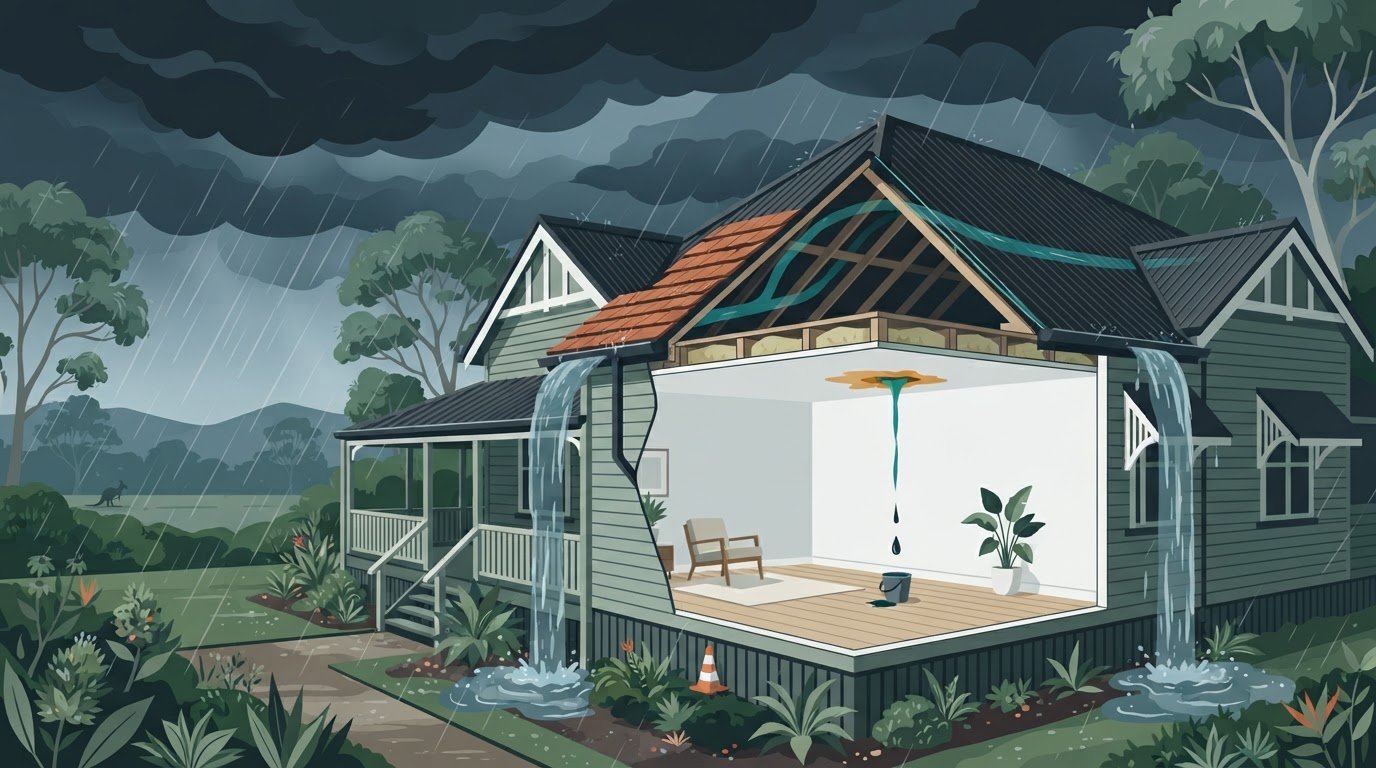
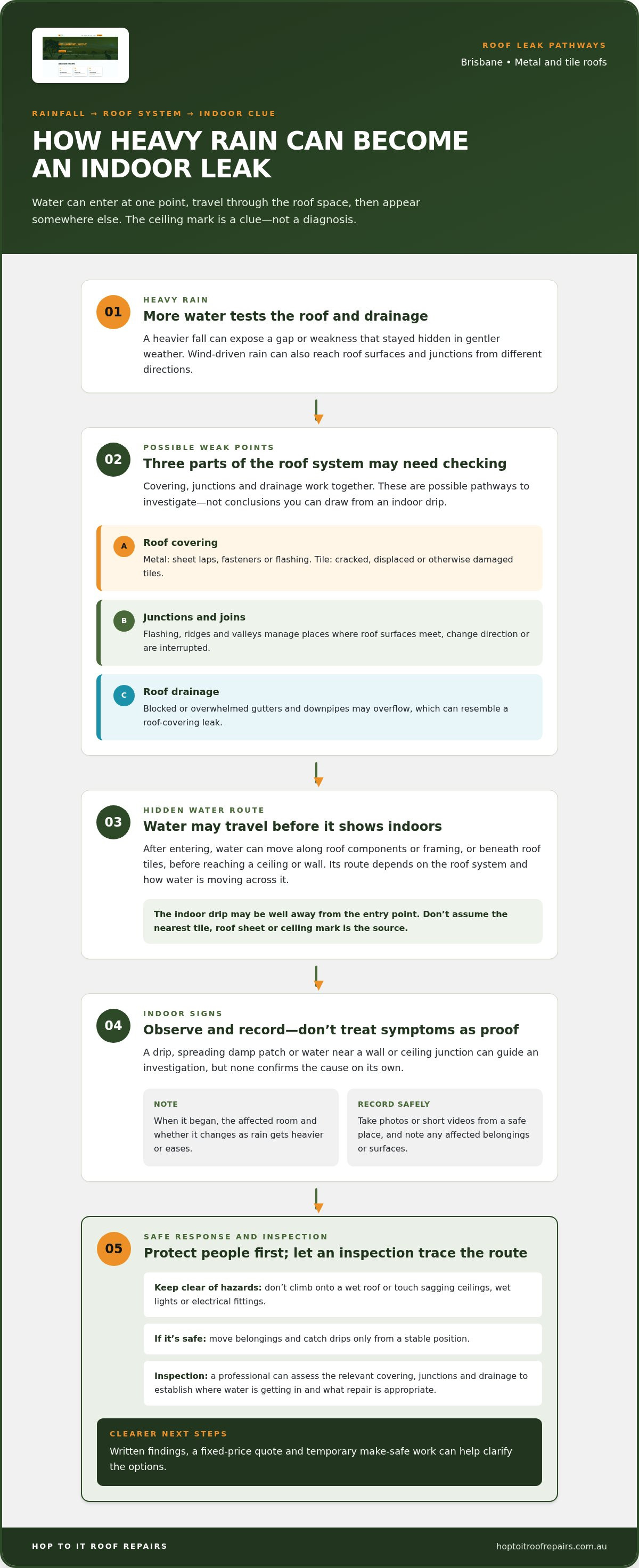
What if the drip on your ceiling is nowhere near the point where water is entering the roof? A roof leak after heavy rain Brisbane homeowners notice can follow a hidden path through the roof space before appearing indoors. Wind-driven rain, blocked gutters, damaged flashing or slipped tiles may all play a part, so the visible stain alone can’t confirm the cause.
It’s unsettling to find water near your ceiling, insulation or belongings, especially when you’re unsure what’s safe to inspect. Don’t climb onto a wet roof or touch sagging ceilings, wet lights or electrical fittings. Keep people clear, move belongings if it’s safe, and catch drips only from a stable position.
This guide explains how heavy rain can expose roof weaknesses, what to do first and why the leak’s entry point may differ from where water appears inside. You’ll also learn what a professional inspection can establish. Hop To It Roof Repairs provides leak detection and repairs for metal and tile roofs across Brisbane, the Gold Coast, Redland Bay, Moreton Bay and Ipswich, with written findings and a fixed-price quote to make the next step clear.
Key Takeaways
- A roof leak after heavy rain Brisbane residents notice can have several possible causes, and the indoor drip may not reveal where water entered.
- Active dripping, damp patches and overflowing roof drainage can all offer clues, but none confirms the cause on its own.
- Protect people and belongings, record what you see and avoid climbing onto a wet roof or attempting repairs yourself.
- A roof inspection can trace the water path across metal or tile roofing and clarify suitable repair options.
- Written findings, a fixed-price quote and temporary make-safe work can help make the next step clearer.
Why a Brisbane roof can leak after heavy rain
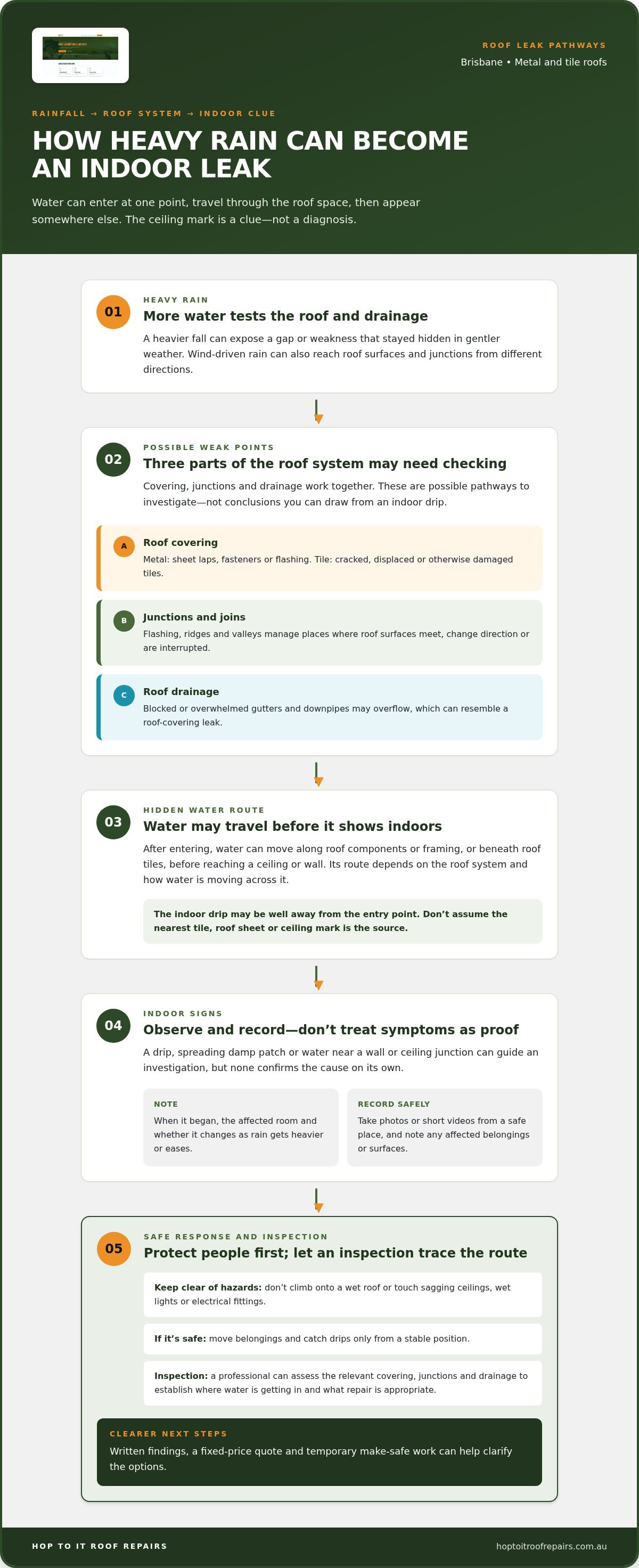
Heavy rain can expose a weak point in the roof and drainage system. The drip, stain or damp patch indoors doesn’t show exactly where water entered. Water can travel from its entry point before it becomes visible, so the ceiling location is a clue, not a diagnosis.
During a Brisbane downpour, roof coverings, junctions and drainage have to work together. The covering sheds water, while ridges, valleys and flashing manage areas where roof surfaces meet or are interrupted. Gutters and downpipes then carry water away from the building. A weakness in any of these areas may become apparent when the system is handling a large volume of rain. For a general overview of types of roofs and their components, see Wikipedia.
Use the symptom to guide an investigation, not to settle on a cause. A damp mark could have more than one explanation, and several connected components may lie along the water’s route. Inspection of the relevant roof system helps establish where water is getting in and what repair is appropriate.
Why a leak may only appear in a downpour
Light rain may not send enough water across a roof to reveal a small gap or weakness. A heavier fall increases the volume moving over the roof and through the drainage system, potentially exposing a problem that stayed hidden in gentler weather. Wind-driven rain can also approach roof surfaces and junctions from different directions, but that alone doesn’t show which area is at fault.
After entering, water may travel along roof components or through the roof space before reaching a ceiling or wall. This can make the indoor drip appear well away from the entry point. Don’t assume the nearest tile, roof sheet or ceiling mark identifies the source.
What to notice when water first appears
Record the details while they’re fresh, from a safe position indoors. Note when the leak began and whether it changes as rainfall gets heavier or eases. Record the affected room, where water is visible and whether belongings or surfaces have been affected. These observations describe the event clearly without requiring you to inspect the roof yourself.
- Note whether water is dripping, spreading as a damp patch or appearing near a wall or ceiling junction.
- Take photos or short videos from a safe place, if you can do so without going near hazards.
- Record visible changes as the rain continues, but don’t treat the drip location or ceiling mark as proof of the roof entry point.
These details give an inspection a useful starting point and can help narrow down what to examine. The roof still needs to be assessed before the cause can be established.
How heavy rain can find a path through Brisbane metal and tile roofs
A roof leak after heavy rain Brisbane homeowners notice can begin at a weak point, then follow a less obvious route before appearing on a ceiling or wall. Water may move along roof components or framing, so the indoor symptom doesn’t necessarily sit beneath the entry point. The route depends on the roof system and how water is moving across it.
An inspection may consider three areas: the roof covering, junctions where roof surfaces meet or are penetrated, and drainage that carries water away. These parts work together, but each can present a different possible pathway. General information from the National Roof Certification and Inspection Association also describes common causes and symptoms of a leaking roof.
Possible water paths on metal roofs
On a metal roof, an inspection may assess sheet laps, fasteners and flashing. Laps join sections of roof sheeting, while flashing helps manage junctions around roof features. Wind-driven rain reaching a junction from an exposed direction may find a way past a weak point and travel beneath the roof covering before showing indoors. That possibility doesn’t prove that any one component has failed.
The water pathway needs to be considered alongside the roof layout and reported symptoms. A mark inside the home can help guide where to investigate, but it can’t identify a faulty lap, fastener or flashing on its own.
Possible water paths on tile roofs and roof drainage
Cracked, displaced or otherwise damaged tiles can be possible entry routes on a tile roof. Ridge areas, valleys and flashing may also need assessment because they manage joins and changes in roof direction. In a downpour, water can pass a vulnerable area, then move beneath the tiles before reaching a ceiling or wall. These are possibilities to investigate, not conclusions to draw from an indoor drip.
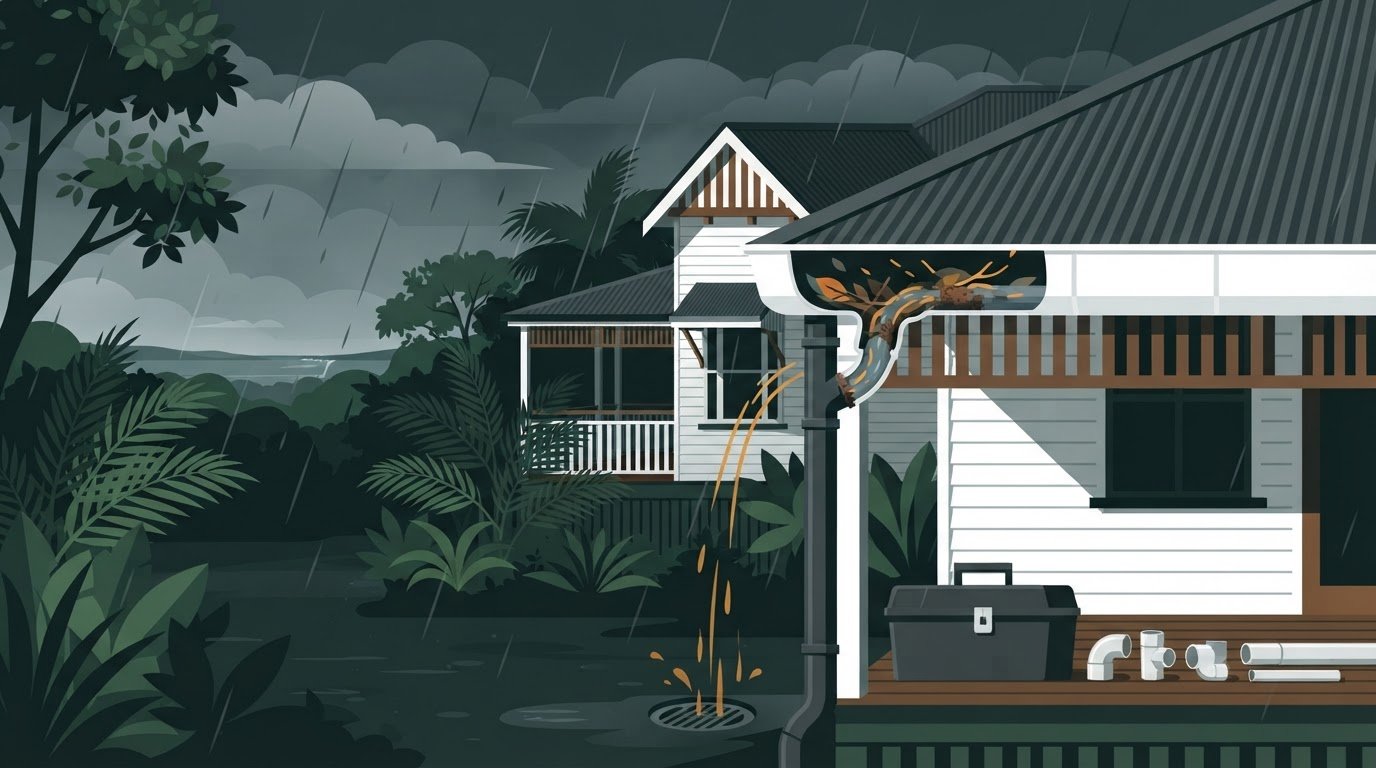
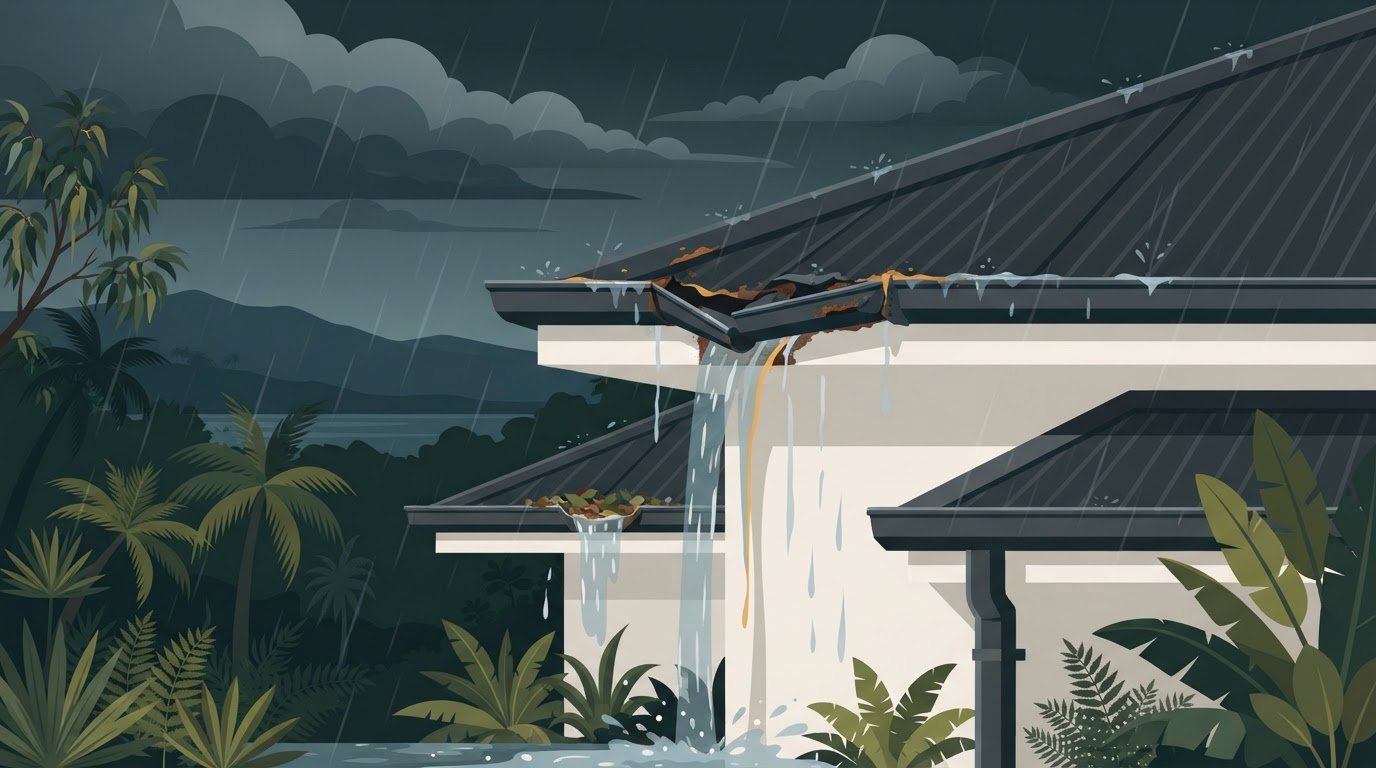
Drainage needs separate attention. Blocked or overwhelmed gutters and downpipes may allow water to overflow, which can look like a roof-covering leak from inside or outside. An inspection can distinguish possible overflow from water entering through the roof covering or a junction. The distinction matters because the right repair depends on the water’s route, not just where it appears.
Whether a roof is metal or tile, don’t try to follow the water path from above. Wet surfaces can be slippery, and you can’t safely confirm a fault by climbing up during or after a downpour. Leave on-roof inspection to a trained professional. A roof leak inspection can assess the relevant covering, junctions and drainage together. Hop To It Roof Repairs’ leak detection covers metal and tile roof systems across Brisbane, the Gold Coast, Redland Bay, Moreton Bay and Ipswich.
Roof leak symptoms after rain: what they suggest and what they cannot prove
A roof leak after heavy rain Brisbane homeowners notice may show up as a drip, a spreading damp patch or water overflowing near roof drainage. These signs help describe what’s happening, but none confirms where water entered or which component needs repair. The same indoor symptom can have several possible causes, so rainfall conditions and the location of visible water are useful context for an inspection.
Use this guide to record what you can safely observe. Don’t investigate on the roof or treat a symptom as a diagnosis.
| Symptom | What it may suggest | Safe next step |
|---|---|---|
| Active dripping indoors | Water may be entering the roof system and travelling before it reaches the ceiling. | Keep clear of electrical hazards, place a container beneath the drip only if safe, and note when it started. |
| Damp patch on a ceiling or wall | Moisture may be arriving from a roof covering, junction or nearby area. | Record its location and whether it changes as rain continues. Don’t touch a sagging or unstable surface. |
| Overflow near gutters or downpipes | Roof drainage may be blocked or struggling to carry away water, though overflow alone doesn’t establish an indoor leak’s cause. | Observe from the ground or indoors, if safe, and note where the overflow appears. Don’t climb up to clear it. |
One sign can have more than one explanation. Water appearing near a wall, for example, may have travelled from another part of the roof, while visible overflow may be separate from water entering indoors. Share what you observed, including whether the symptom appeared during intense rain or continued afterwards. This context helps guide a professional assessment without guessing at the fault.
When water indoors needs prompt attention
Water near lights, wiring or electrical equipment is a safety concern. Keep people away and don’t touch wet fittings or switches. If a ceiling is sagging or looks unstable, keep clear of the area rather than standing beneath it. From a safe position, document visible changes with notes or photos so the inspection can take account of what happened.
When an apparent leak still needs checking
A drip stopping as rain eases doesn’t prove the cause has been fixed. Water may only appear under certain conditions, and recurring dampness or repeated leaks warrant a professional assessment. A structured professional roof leak detection in Brisbane can help trace the source rather than relying on the visible stain alone.
Keep a brief record of the room affected, the symptom and any changes you notice. This gives the inspection a clearer starting point and helps separate urgent safety concerns from observations that need further investigation.
Safe steps if your Brisbane roof leaks after heavy rain
A roof leak after heavy rain Brisbane homeowners discover can be alarming. Work through these steps in order: make the area safe, limit damage where possible, record what’s happening and arrange a roof assessment. Don’t climb onto a wet roof, use a ladder in storm-affected conditions or attempt a temporary repair yourself. A slip or unstable roof surface can turn a leak into a serious injury.
Protect people and belongings first
Move people away from active leaks, sagging ceilings and water near electrical fittings. Don’t touch wet lights, wiring or electrical equipment. If water is close to electrics or there’s an immediate danger, keep clear and seek appropriate urgent help. Only move valuables if you can do so without entering a hazardous area.
If a drip can be caught safely, place a container beneath it from floor level. Don’t stand on furniture or reach towards a sagging ceiling to position one. If the ceiling looks unstable, leave the room and keep others out. Safety comes before protecting belongings.
Record useful details without accessing the roof
Once people are clear of danger, capture what you can see from indoors or ground level, provided conditions allow. Note when the leak started, how intense the rain was and where water appeared. If the leak returns or changes, record that too. These observations help a professional understand the reported symptoms without you trying to locate the entry point yourself.
Use this short checklist:
- Keep clear: Stay away from wet electrical fittings, unstable ceilings and the affected area if it’s unsafe.
- Limit damage: Move belongings only when safe, and use a container for drips only if you can place it securely from floor level.
- Document: Take photos from inside or from the ground, and note rainfall timing, the room affected and whether water returns.
- Arrange assessment: Share your observations and organise a professional inspection rather than trying to repair the roof yourself.
Don’t remove tiles, roof sheets or other components to investigate. Avoid ladders and roof access while surfaces may be wet or storm-affected. Even a brief look from above can expose you to slippery surfaces, hidden damage or electrical hazards.
If water is still getting in, temporary make-safe work may help limit further ingress while permanent repairs are planned. Learn about Brisbane roof make-safe services and how temporary protection fits into the response. The next step is a professional assessment to establish what needs attention. Arrange roof leak detection with Hop To It Roof Repairs across Brisbane, the Gold Coast, Redland Bay, Moreton Bay and Ipswich.
How Hop To It Roof Repairs resolves a post-storm roof leak
After a roof leak following heavy rain in Brisbane, the priority is to establish the water’s route before deciding on a repair. Hop To It Roof Repairs works on metal and tile roof leaks across Brisbane, the Gold Coast, Redland Bay, Moreton Bay and Ipswich. The process moves from your reported symptoms to an inspection, clear written findings, a fixed-price quote and repair work based on the agreed scope.
Your observations help direct the assessment. Details such as when water appeared, which room is affected and whether the leak changes with rainfall give the inspection a useful starting point. They don’t replace checking the roof system. A ceiling stain or active drip alone can’t show which roof component needs attention.
From roof assessment to a clear repair scope
The inspection considers the relevant roof covering, junctions and drainage to identify where water is entering and what work is needed. Hop To It Roof Repairs assesses both metal and tile roofing systems. The repair scope depends on the inspection findings, not simply on the position of the indoor symptom.
Each job includes a detailed written report recording the findings and recommended work. This gives you a clear account of what was observed and why a particular repair is proposed. If temporary make-safe work is appropriate, it can help limit further water ingress while permanent repairs are planned.
A documented next step for Brisbane homeowners
Once the findings establish the repair scope, you receive a fixed-price quote for the agreed work before proceeding. You can see what the proposed repair covers rather than relying on a guess based on the visible leak. Repair work is backed by a workmanship warranty.
This documented pathway keeps diagnosis and repair connected. The report explains the inspection findings, the quote sets out the agreed repair work, and the workmanship warranty provides protection for completed repairs. For more context on how this protection works, read the guide to roof repair workmanship warranties.
In practical terms, the process is:
- Assess: Review the reported symptoms and inspect the relevant roof system.
- Explain: Document the findings and recommended work in a written report.
- Quote: Provide a fixed-price quote for the agreed repair scope.
- Repair: Complete the agreed work, with temporary make-safe work considered where appropriate to limit further water ingress while permanent repairs are planned.
You’re left with evidence of what was found and a defined repair scope, not just a temporary response to the indoor drip. That clarity helps you understand the issue and make an informed decision about the repair.
Get a clear next step for your roof
A leak can leave you wondering whether the next downpour will bring more water inside. You don’t need to identify the fault yourself. Keep a record of what you’ve noticed and let a roof assessment establish what needs attention. For a roof leak after heavy rain Brisbane homeowners can take the next step with information, not guesswork.
Hop To It Roof Repairs is a QBCC-licensed roof plumbing specialist serving Brisbane, the Gold Coast, Redland Bay, Moreton Bay and Ipswich. Each job includes a detailed written report and fixed-price quote, and repair work is backed by a workmanship warranty. You can understand the findings and proposed scope before deciding how to proceed.
If water is still getting in, temporary make-safe work may help limit further ingress while a permanent repair is planned. Take the next step towards a clear assessment and repair path: Arrange a roof leak assessment with Hop To It Roof Repairs.
With the right inspection, you can move from uncertainty to a practical plan for protecting your home.
Frequently Asked Questions
Why does my roof only leak during heavy rain?
Heavy rain can drive more water across roof surfaces and into junctions than light showers do. A small weakness may let water through only when rainfall is intense or wind pushes it from a particular direction. For a roof leak after heavy rain Brisbane residents report, note whether it starts during a downpour or only with wind from a certain direction. That timing gives an inspector useful context, but doesn’t identify the fault.
Can a roof leak stop when the rain stops and still need repair?
Yes. Water may only enter under particular conditions, so a dry ceiling after the shower doesn’t confirm the roof is sound. Moisture can also remain hidden and reappear as a mark or musty smell later. Keep a note of when the leak occurred and check the affected room for changes once it’s safe. If the same area becomes damp again, arrange an assessment rather than waiting for another major downpour.
Can blocked gutters cause a roof leak after heavy rain?
Yes. Debris can slow water moving through gutters or downpipes, allowing it to overflow near the roof edge. That overflow may contribute to water entering the home, but it doesn’t prove the roof covering is intact or explain every indoor leak. From the ground, note where water spills and whether it happens during heavy rain. Don’t climb up to clear a blockage; include the observation when arranging a roof assessment.
Should I climb onto my roof to find a leak after a storm?
No. A roof can remain slippery after rain, and storm conditions may leave surfaces or materials unstable. A ladder can also shift on wet or uneven ground. Stay on the ground and record what you can see from a safe position, such as displaced material or overflow at an eave. Leave roof access and closer inspection to a trained professional, even if the suspected problem looks small or easy to reach.
Does a ceiling stain show exactly where the roof is leaking?
No. A stain shows where moisture has reached the ceiling, not necessarily where it entered the roof. Water can travel along framing or other roof components before becoming visible indoors. A mark near an external wall, for instance, could relate to a water path from elsewhere. Note whether the stain is changing, spreading or returning, but don’t remove ceiling material to investigate. Those details help an inspector assess the symptom safely.
What should I do if water is coming through a light fitting?
Keep everyone away from the fitting and don’t touch it, the switch or nearby wet surfaces. Water and electricity create an immediate hazard. If you can reach the switchboard without entering a wet or affected area, isolate the relevant circuit; otherwise, stay clear and seek urgent help from a qualified electrician. If there’s smoke, a burning smell or immediate danger, call emergency services. Don’t place a container beneath the fitting.
How do roofers find the source of a leak after heavy rain?
A roofer uses your observations as a starting point, then assesses the relevant roof covering, junctions and drainage to follow possible water paths. They consider the roof type and reported conditions, rather than assuming the ceiling mark points straight up to the fault. Hop To It Roof Repairs provides roof leak detection for homes across Brisbane, the Gold Coast, Redland Bay, Moreton Bay and Ipswich, helping establish what needs attention.