Metal Roof Screw Replacement Guide for SE QLD Homeowners
22 August 2026 · 17 min read

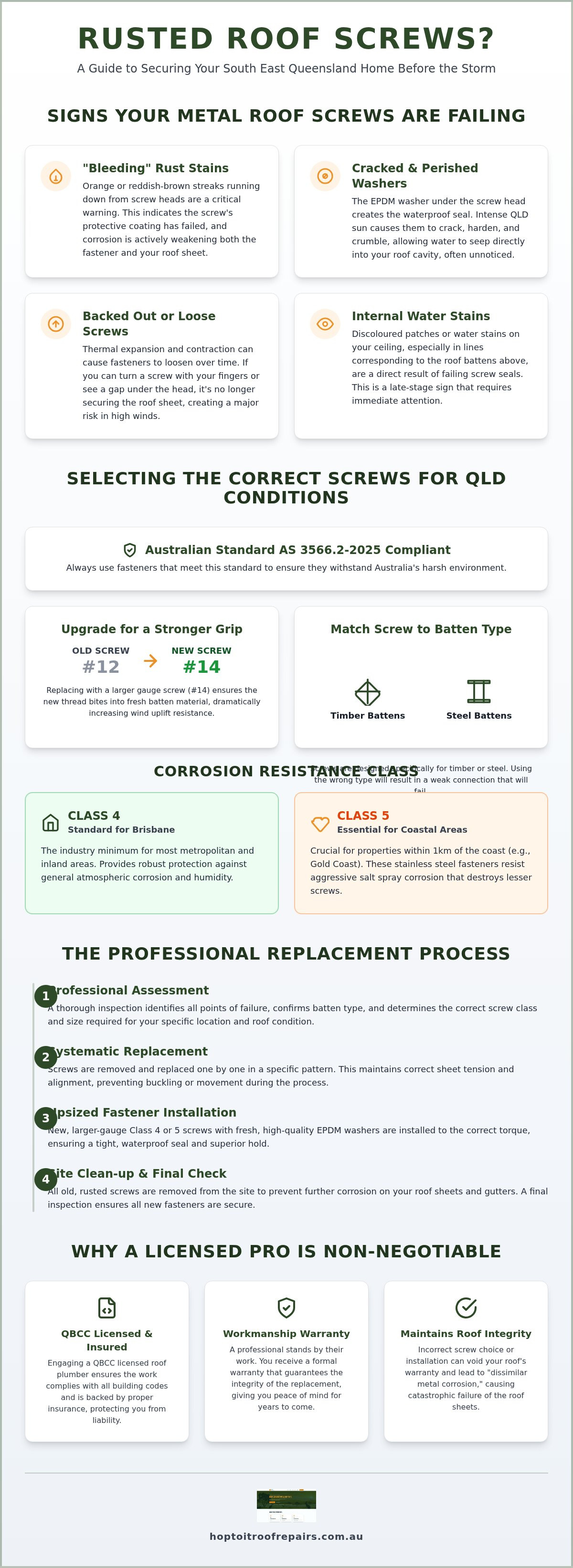
A single rusted fastener is more than a cosmetic blemish; it is a structural vulnerability that invites the next South East Queensland supercell into your ceiling space. You've likely looked up at your roof and wondered if those orange spots mean you're facing a total roof replacement or if a targeted metal roof screw replacement will suffice. It's stressful to approach the storm season with that uncertainty, especially when the difference between a dry home and a major leak comes down to a few millimetres of steel.
This guide provides the immediate clarity you need to secure your property. You'll learn how to identify failing fasteners, select the correct AS 3566.2-2025 compliant materials, and understand why this is a specialised roof plumbing task rather than a simple handyman fix. We'll break down the technical requirements for Class 3 and Class 4 screws, explain why EPDM washers are non-negotiable for longevity, and outline the QBCC licensing standards that ensure your roof remains watertight for years to come. Get the facts now so you can stop worrying about the forecast and start trusting your roof again.
Key Takeaways
- Identify the tell-tale signs of fastener failure, including surface rust "bleeding" and perished EPDM washers, to prevent major leaks before storm season arrives.
- Select the right materials for your local environment by understanding the technical differences between Class 3 and Class 4 screws under Australian Standard AS3566.
- Master the professional process for metal roof screw replacement, ensuring every fastener is swapped systematically to maintain correct sheet tension and seal integrity.
- Factor in South East Queensland's unique environmental challenges, such as coastal salt corrosion and specific wind classifications, to secure your roof against high-wind events.
- Ensure your repairs are legally compliant and fully insured by engaging a QBCC licensed roof plumber who provides a comprehensive workmanship warranty.
Signs You Need Metal Roof Screw Replacement
Your roof doesn't fail all at once. It gives clear warnings well before the first major leak appears. Identifying these signs early prevents expensive structural damage and ensures your home remains secure during the South East Queensland storm season. If you notice any of these issues, it's time to consider a professional metal roof screw replacement to restore your roof's integrity. Don't wait for a ceiling collapse to take action.
- Visible "bleeding" or orange streaks running down from the screw heads.
- Screws that have backed out or feel loose when touched.
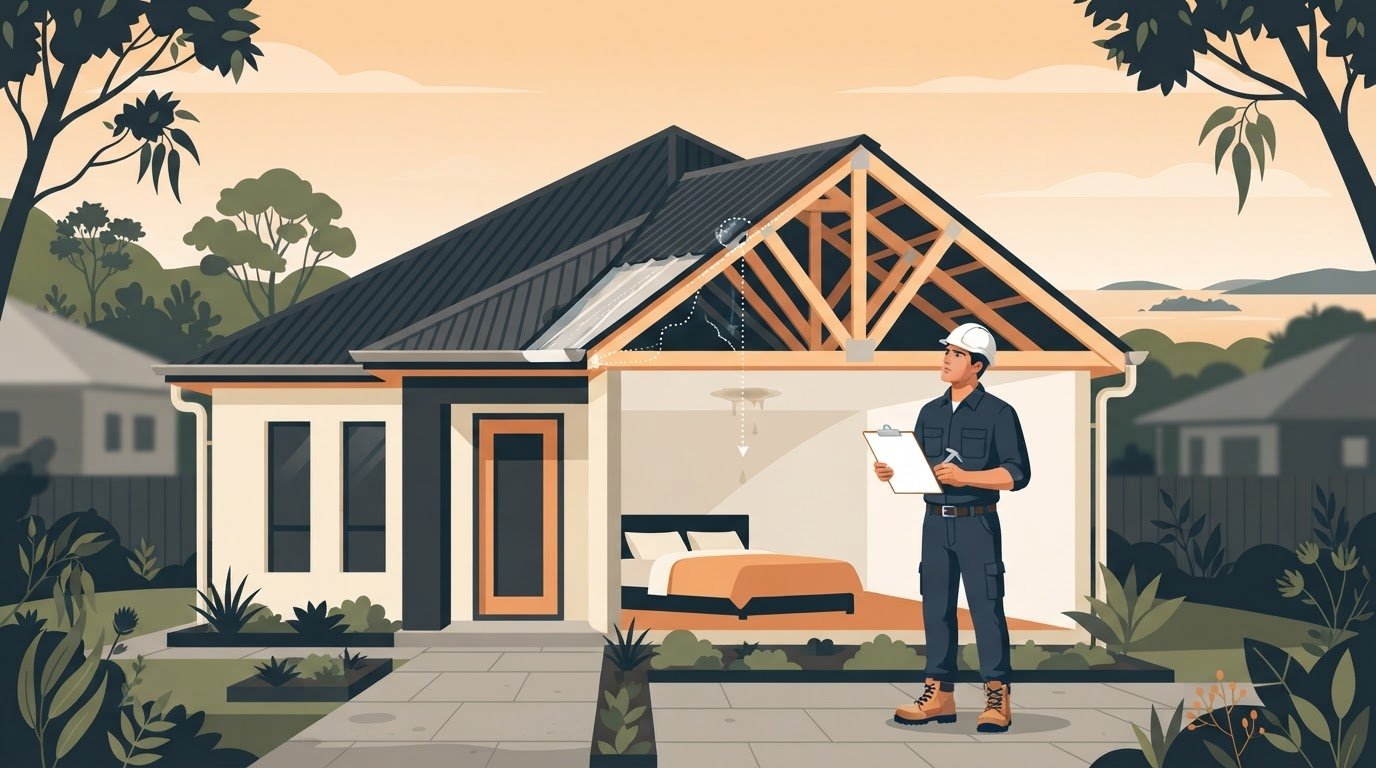
- Water stains on the ceiling that appear directly under the line of your roof battens.
- Gaps between the screw head and the metal sheet.
The "Red Dust" Warning Sign
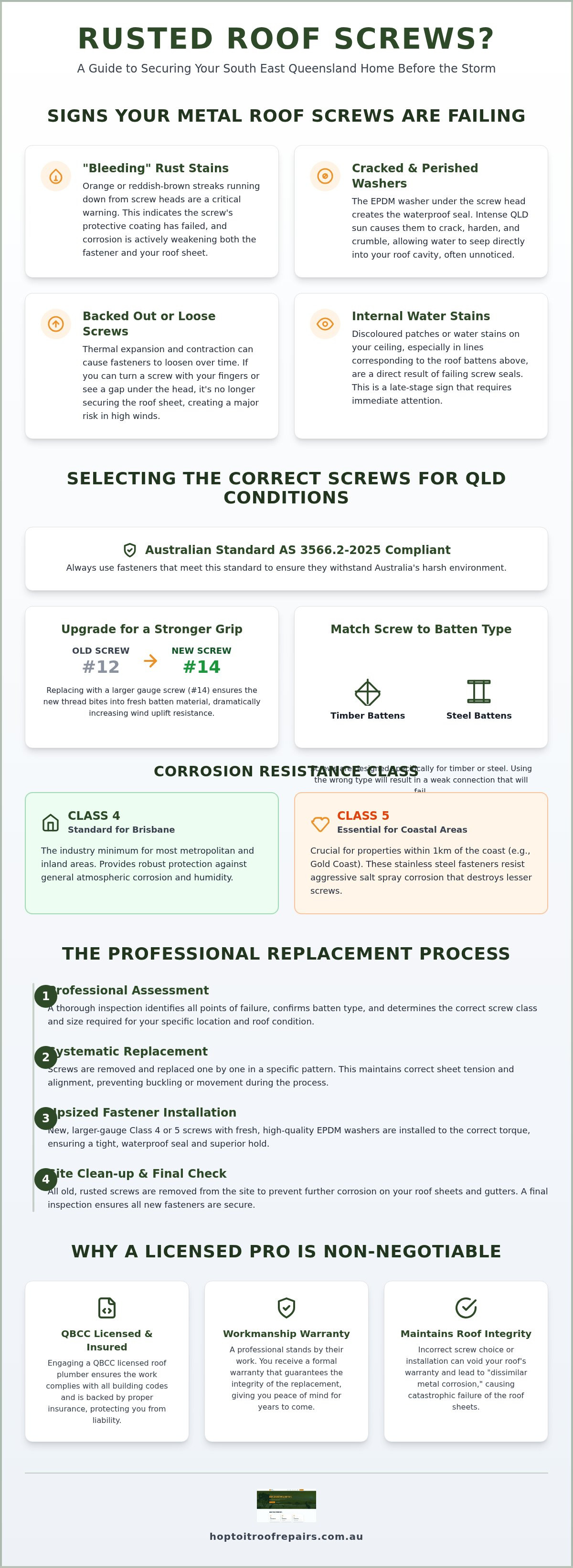
Red oxide dust around a fastener is a critical red flag. This dust is a byproduct of the process of corrosion, indicating that the screw's protective sacrificial coating has completely failed. Once the core steel is exposed, the rust doesn't just stay on the screw. It spreads. This "bleeding" can cause the protective coatings on your Colorbond or Zincalume sheets to fail prematurely. Don't ignore these orange spots. They signal that the fastener is losing its structural strength and could snap during high winds. Replacing these screws now prevents the rust from eating into your expensive roof sheets.
Washer Degradation: The Silent Leaker
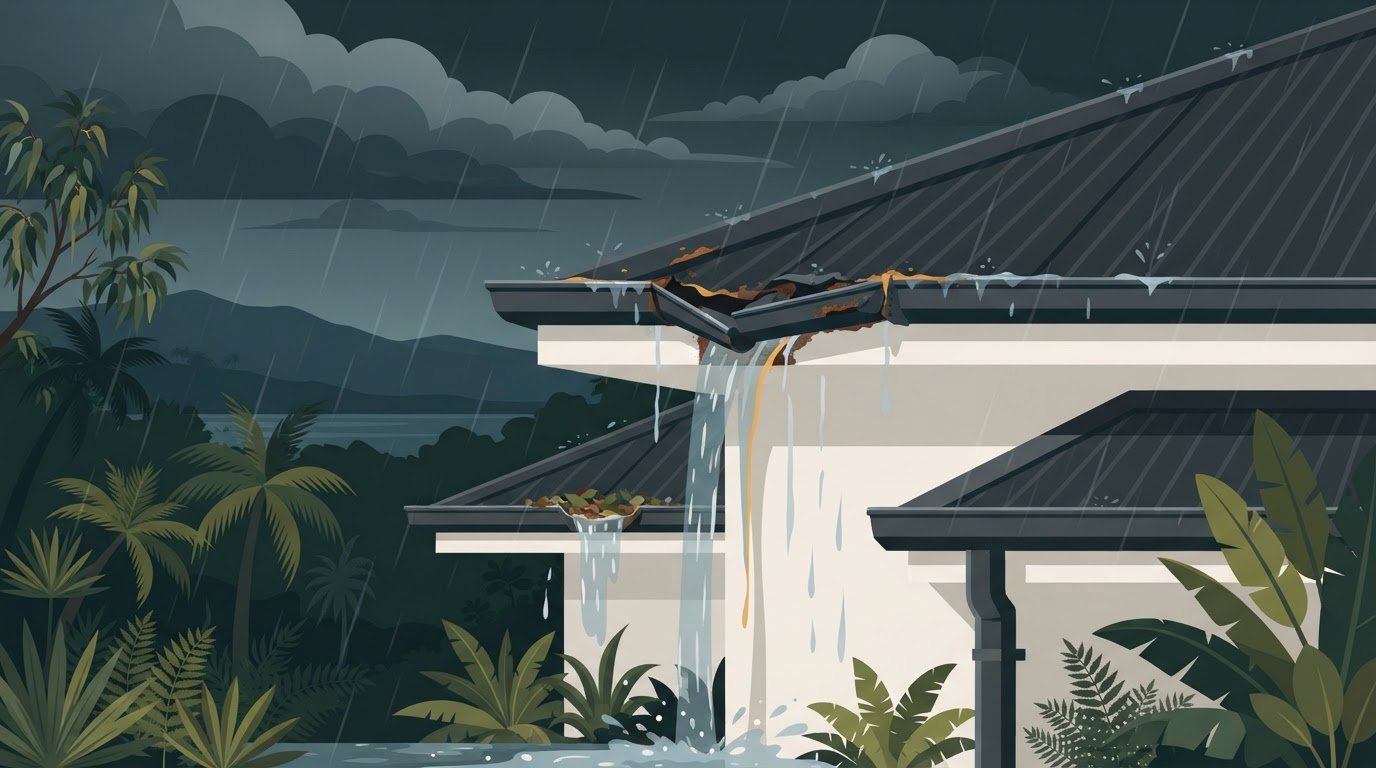
A screw head might look silver and sturdy, but the seal underneath tells the real story. Quality roof screws use EPDM (Ethylene Propylene Diene Monomer) washers to create a watertight barrier. South East Queensland's intense UV radiation eventually bakes these washers, causing them to crack, perish, or turn to powder. When the washer fails, the waterproof seal is broken. Water can then travel down the thread of the screw directly into your roof space. This is a "silent" failure because it often goes unnoticed until you see damp patches on your plasterboard. A comprehensive metal roof screw replacement ensures every seal is fresh and functional.
Regular inspections are vital. If you can turn a screw with your fingers, it is no longer securing your roof. Thermal expansion and contraction often cause old fixings to "back out" over time, leaving your home vulnerable to lifting during a storm. For safety and compliance, always engage a QBCC licensed roof plumber to assess these signs. They provide the professional authority needed to ensure your roof remains watertight and structurally sound.
Selecting the Correct Replacement Screws for Australian Conditions
Choosing the right hardware is the difference between a roof that lasts decades and one that fails in five years. In South East Queensland, our unique mix of high humidity and coastal salt spray makes material selection critical. Every screw used must comply with Australian Standard AS 3566.2-2025. This standard ensures the fastener can withstand our harsh environment without snapping or rusting through prematurely. Relying on generic fasteners is a risk your home can't afford.
Don't simply buy the same size screw you are removing. During a metal roof screw replacement, we typically upgrade the screw gauge. If you remove a #12 screw, replacing it with a #14 ensures the new thread bites into fresh material in the batten. This creates a secure, wind-resistant grip that a standard replacement might lack. It's a simple adjustment that significantly increases the roof's pull-out strength during a storm.
Corrosion Classifications (Class 4 vs Class 5)
Distance from the ocean dictates your screw class. For most Brisbane metropolitan areas, Class 4 fasteners are the industry minimum. However, if you live within 1km of the Gold Coast surf, you must consider Class 5 stainless steel. Using the wrong metal can trigger "dissimilar metal corrosion". This chemical reaction happens when incompatible metals touch, causing the roof sheet to rot around the screw. Understanding coastal and wind load requirements is essential for long-term protection. If you're unsure which fasteners your specific roof requires, a professional assessment by Hop To It Roof Repairs can clarify exactly what's needed for your location.
Batten Types: Timber vs Steel Fixings
Your roof's "skeleton" determines the screw point you need. Older Brisbane homes often feature hardwood or softwood battens. These require "Type 17" screws, which have a sharp point and a flute to clear away timber debris. This prevents the batten from splitting. Modern homes frequently use steel battens. These require "Teks" or self-drilling points that pierce metal without pre-drilling. Getting this wrong means the screw won't seat properly, leading to immediate leaks. Choosing the correct length is equally vital; the screw must penetrate the batten deeply enough to resist the upward lift of high winds without protruding so far that it creates a safety hazard in the roof cavity.
A successful metal roof screw replacement relies on matching these technical specifications to your home's specific build. We focus on these details to ensure your roof remains a solid, watertight barrier. By selecting high-quality EPDM washers and the correct corrosion class, you effectively reset the clock on your roof's lifespan.
The Professional Process for Replacing Rusted Roof Screws
A successful metal roof screw replacement is a systematic operation. We never strip a whole section of screws at once. Doing so allows the roof sheets to shift, losing the original tension and alignment. Instead, we work in a "one-out, one-in" pattern. This method maintains the structural integrity of the roof while we swap old fixings for new ones. Before the new screw goes in, we clean the area around the hole to remove old washer residue and grit. This ensures the new EPDM seal sits flush against a clean surface.
If the original hole has enlarged due to rust or movement, we don't just hope for the best. We use a larger diameter screw. Industry standards suggest that replacing a standard #10 or #12 screw with a #14 gauge provides the necessary "bite" into the batten. In cases where the batten itself is slightly compromised, a dab of neutral-cure silicone acts as a secondary waterproof barrier. This attention to detail is why professional metal roof screw replacement is a task for specialists, not a general handyman.
Handling Snapped or Rusted-In Screws
Brittle, advanced corrosion often leads to the nightmare scenario: the screw head snapping off during removal. This leaves a "blind" rusted shank embedded in your batten. We use specialised extraction tools to remove these without gouging your Colorbond sheets. If the shank cannot be removed safely, we seal the old hole and install a "stitch screw" or secondary fixing nearby. This ensures the structural hold remains within Australian Standards for wind uplift and prevents the rusted remnant from causing further damage.
Achieving the Perfect Torque
Precision is everything. Over-tightening crushes the EPDM washer, causing it to split and fail within months. Under-tightening leaves a gap for water to enter. We use depth-sensing drivers rather than standard impact drills. This allows us to set the exact torque required for a perfect seal. A correctly installed washer should look like a slightly compressed "donut" underneath the metal cap. It shouldn't be flattened or bulging out the sides. This visual verification is part of every inspection we conduct.
Every step of this process is designed to eliminate leaks and secure your home. As QBCC licensed specialists, we provide a detailed written report for every job we undertake. This transparency gives you peace of mind that the work meets professional standards and will withstand the next Brisbane storm season. We focus on getting the job done right the first time, removing the anxiety of future roof failures.
Coastal Corrosion and Wind Loads in Brisbane and the Gold Coast
Living in South East Queensland requires a roof that can handle more than just a bit of rain. The proximity of the Pacific Ocean is a dominant factor in how long your fasteners will last. Salt spray travels significantly further than most homeowners realise, settling on metal surfaces and initiating rust. This isn't just about aesthetics; it's about structural survival. When salt accumulates on a screw head, it accelerates the degradation of the protective coating, leading to a premature metal roof screw replacement.
Brisbane and the Gold Coast are mapped with specific wind classifications like N2, N3, or even C1 (cyclonic) in exposed coastal pockets. These ratings aren't just technical jargon. They dictate the required screw spacing and pull-out strength. If your screws are rusted, they become brittle and lose their grip. This leads to "sheet peel," where high winds get under the metal sheet and rip it from the battens. During a summer supercell, those tiny fasteners are the only things keeping your roof attached to your home.
Salt Spray Zones in SE QLD
The "Severe Marine" zone typically covers properties within 200m to 400m of the coast. However, the high humidity in South East Queensland acts as a vehicle, carrying salt particles kilometres inland. Homes in Redland Bay or Moreton Bay require more frequent maintenance because of this constant exposure. If you see white salt deposits or early orange rust "bleeding" from the fixings, you're already in the danger zone. A targeted metal roof screw replacement using Class 4 or Class 5 fasteners is the only way to reset your roof's defensive clock.
Storm Readiness and Hold-Down Strength
In a Brisbane hailstorm or a severe wind event, the pressure on your roof fixings is immense. Rusted fixings can snap under the pressure of fluctuating air loads. This structural failure often complicates insurance claims, as insurers may deny coverage by citing a "lack of maintenance" if the fasteners were visibly corroded before the storm. If you suspect your seals have already failed or you see damp spots, start with Professional Roof Leak Detection Brisbane to pinpoint the damage before the next storm hits.
In certain exposed or high-wind areas, standard washers aren't enough to prevent sheet lift. We often recommend "cyclonic washers" or "cyclone caps." These larger, reinforced washers distribute the load over a wider area of the metal sheet, preventing the screw from pulling through the hole during extreme gusts. It's a specialised upgrade that provides ultimate peace of mind. Don't leave your home's safety to chance this storm season. Book a comprehensive roof inspection with Hop To It Roof Repairs to verify your fastener integrity today.
Why Licensed Roof Plumbers Are Essential for Screw Replacement
Roofing isn't a weekend hobby. In Queensland, it's a strictly regulated trade. Engaging a QBCC licensed roof plumber for your metal roof screw replacement is a legal requirement for structural repairs. This ensures the person on your roof has the verified skills to maintain your home's waterproof envelope. Without this licence, you're not just risking a leak; you're risking your insurance coverage. Most Australian insurers require that maintenance and repairs meet professional standards to remain valid. If a storm hits and your repairs were unlicensed, your claim could be rejected instantly.
Safety is a non-negotiable priority. Working at heights involves significant risk, especially when navigating around solar arrays or mains power entries. Professional roof plumbers use specialised harnesses and height-safety systems that the average homeowner simply doesn't possess. We know exactly where to step to avoid buckling your Colorbond sheets. Stepping in the wrong spot creates permanent kinks that trap water and cause future rust. We get the job done without creating new problems.
The Risk of DIY and Unlicensed Work
DIY attempts often lead to more damage. Walking in the "pans" rather than over the battens can kink the metal, creating permanent water traps. Many homeowners also make the mistake of using "cheap" screws from a local hardware store. These fasteners often lack the proper coating to survive the SE QLD climate, leading to failure in as little as two years. Professional-grade hardware that meets the latest Australian Standards is the only way to ensure longevity. Using the wrong tools or torque settings can also strip the batten or crush the washer, rendering the repair useless.
Fixed-Price Transparency with Hop To It
At Hop To It Roof Repairs, we remove the anxiety from the process. We provide fixed-price quotes so you aren't left guessing about the final cost. Every inspection comes with a detailed written report, providing photographic evidence of your roof's condition. This transparency builds trust and ensures you have a clear record of the work performed. Our focus is on providing immediate relief and a clear path to a leak-free home. Our workmanship warranty provides the final layer of peace of mind, guaranteeing that your home is ready for the next Brisbane or Gold Coast storm.
Get a fixed-price quote for your roof screw replacement and secure your property today. We are specialised problem solvers who value your time and your home's integrity. Don't wait for the next supercell to test your roof's strength. Let our QBCC licensed experts verify your roof's health and provide the professional results you deserve.
Secure Your Home Against the Next Storm
A proactive metal roof screw replacement is the most cost-effective way to extend your roof's lifespan and prevent internal damage. You now understand that visible rust and perished washers are urgent signals to act before the South East Queensland storm season arrives. By choosing the correct corrosion-resistant fasteners and ensuring they are installed to Australian Standards, you protect your property from the risks of coastal salt spray and high-wind events. Don't leave your roof's integrity to chance or unlicensed handymen.
Hop To It Roof Repairs provides the expertise and transparency you need for immediate relief. Our QBCC licensed roof plumbers serve homeowners from Brisbane to the Gold Coast, delivering detailed written reports with every inspection to ensure you have a clear record of your roof's health. We eliminate the guesswork with upfront clarity and professional results that stand up to the elements. Secure your roof today with a fixed-price screw replacement quote and rest easy knowing your home is watertight and structurally sound.
Frequently Asked Questions
How much does metal roof screw replacement cost in Brisbane?
Professional costs vary based on the number of screws and roof accessibility. Research indicates a professional replacement can range from A$150 for minor fixes to over A$4,000 for a full house. Factors include the screw class and batten type. Always get a fixed-price quote from a QBCC licensed specialist to ensure transparency. This removes the anxiety of hidden extras and ensures the job meets current Australian Standards for wind uplift and corrosion resistance.
Can I just paint over rusty roof screws to stop them leaking?
No, painting over rust is a cosmetic fix that fails to address structural decay. Rust is an electrochemical process that continues beneath the paint. Painting doesn't restore the perished EPDM washer or the thread's grip in the batten. To properly stop leaks and prevent sheet peel during a storm, you must perform a complete metal roof screw replacement using hardware that meets current AS 3566.2-2025 requirements for Australian conditions.
How long do Colorbond roof screws usually last in Australia?
Standard metal roof screws typically have a service life of 10 to 15 years. While Colorbond sheets can last 40 to 70 years, the fasteners are the weakest link and usually require replacement once or twice during the roof's life. Factors like coastal salt spray or high humidity can accelerate this. Regular inspections help catch degradation before it leads to expensive internal water damage or structural failure during the storm season.
Do I need to replace all the screws if only a few are rusty?
You don't always need a full replacement, but widespread rust suggests the entire batch is failing. If rust is isolated, targeted replacement is possible. However, if fasteners show orange bleeding or perished washers across multiple sections, a full metal roof screw replacement is more efficient. This ensures uniform hold-down strength across the entire structure, which is vital for storm readiness and maintaining your home's insurance compliance in South East Queensland.
Is it safe to walk on my metal roof to check the screws?
Walking on a metal roof is dangerous for you and the structure. Incorrect foot placement kinks the metal pans, creating permanent water traps and future rust zones. There are also risks involving falls and proximity to mains power or solar panels. It's safer to engage a QBCC licensed roof plumber who uses professional safety harnesses and knows exactly where to step to maintain the roof's integrity while providing a detailed report.
What is the best type of screw for a roof near the Gold Coast beach?
Class 4 or Class 5 stainless steel fasteners are essential for coastal properties. For homes within 1km of the ocean, Australian Standard AS 3566.2-2025 requires high-level corrosion resistance. Class 4 is the minimum, but Class 5 is often recommended for severe marine environments. These screws must be paired with high-quality EPDM washers to ensure a watertight seal that withstands constant salt spray and the high humidity levels typical of the region.
Will replacing my roof screws stop my ceiling from leaking?
Replacing failed screws stops leaks caused by perished washers or rusted shanks, but it won't fix other issues. If leaks originate from the fastener holes, professional replacement provides an immediate solution. However, leaks can also stem from blocked gutters or cracked flashings. We recommend a comprehensive inspection and a detailed written report to verify the exact source of the moisture before starting any repair work to ensure a dry home.
Does my roof warranty cover rusted screws?
Most manufacturer warranties for roof sheets do not cover the fasteners. Warranties often exclude consumable components like rubber washers or damage from salt spray. If you haven't maintained the roof according to guidelines, the sheet warranty itself could be voided. Engaging a licensed specialist ensures repairs meet the standards required to keep your broader structural insurance and product warranties in good standing for years to come.