Insurance Roof Inspection: 2026 Home Owner's Guide
5 September 2026 · 16 min read
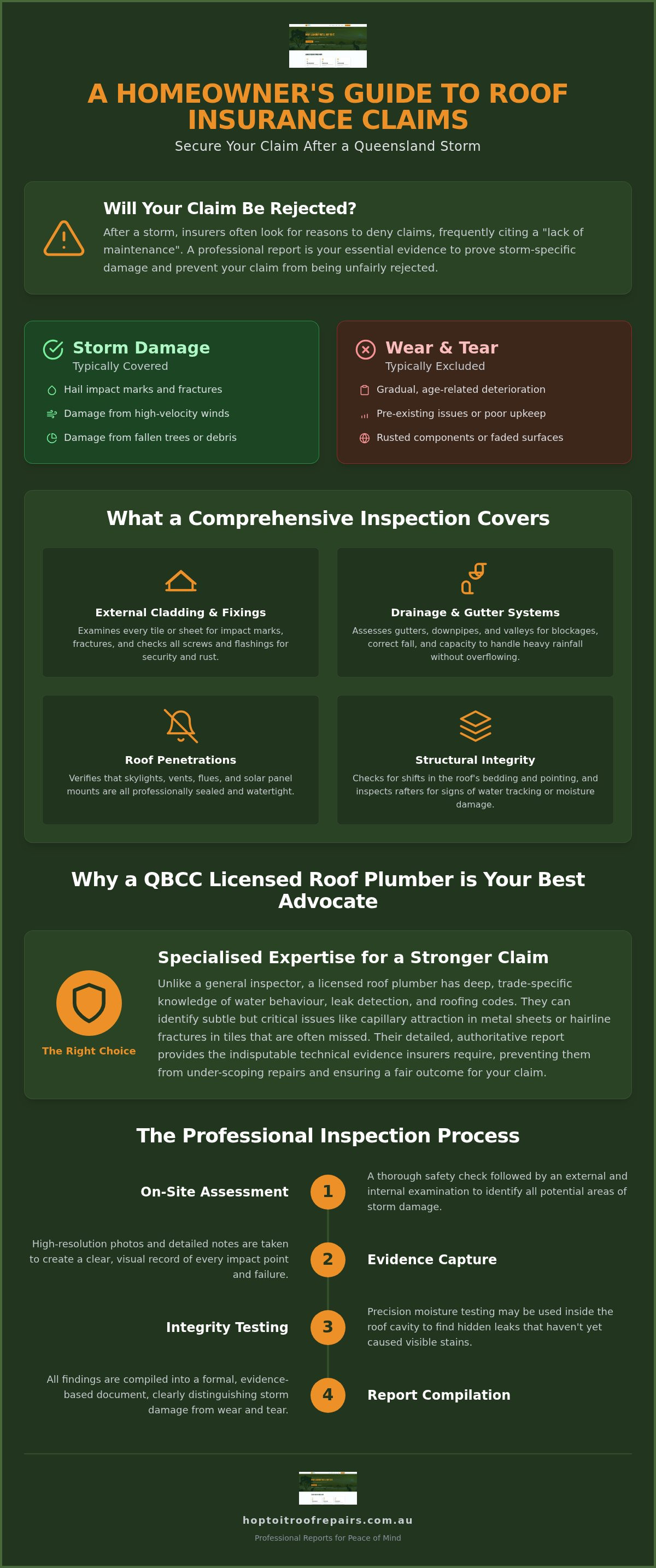
What if the only thing standing between your storm damage claim and a flat-out rejection is a single piece of paper? After a severe Queensland storm, the anxiety of hidden structural damage is enough to keep any homeowner awake at night. You've seen the clouds clear, but now you're facing the daunting task of proving to your insurer that the leaks aren't just old age. It's a common fear that a claim will be knocked back due to a supposed lack of maintenance. To avoid this, you need a comprehensive insurance roof inspection report that provides clear, photographic evidence of the event-related damage.
We understand that you want more than just a quick glance; you need certainty that your roof is watertight and safe. This guide explains exactly what goes into a professional assessment and how it streamlines your path to a successful claim in 2026. You'll learn the vital differences between a general building inspector and a specialist roof plumber, ensuring you get the right expert on your tiles or metal sheets. We'll outline the exact steps to take after the storm passes, giving you total peace of mind and a clear plan for your repairs.
Key Takeaways
- A professional insurance roof inspection report provides the definitive evidence needed to distinguish between sudden storm damage and gradual wear, helping you avoid claim rejections.
- Understand how the "Maintenance Clause" affects your coverage and what specific evidence is required to prove a sudden impact from wind or hail.
- Learn why a QBCC licensed roof plumber is better equipped than a general building inspector to find difficult leaks and assess structural integrity.
- Discover the critical areas covered in a comprehensive assessment, including roof cladding, gutters, downpipes, and all external penetrations.
- Gain peace of mind by knowing exactly what to expect during the inspection process, from high-level photography to precision moisture testing.
What is an Insurance Roof Inspection Report?
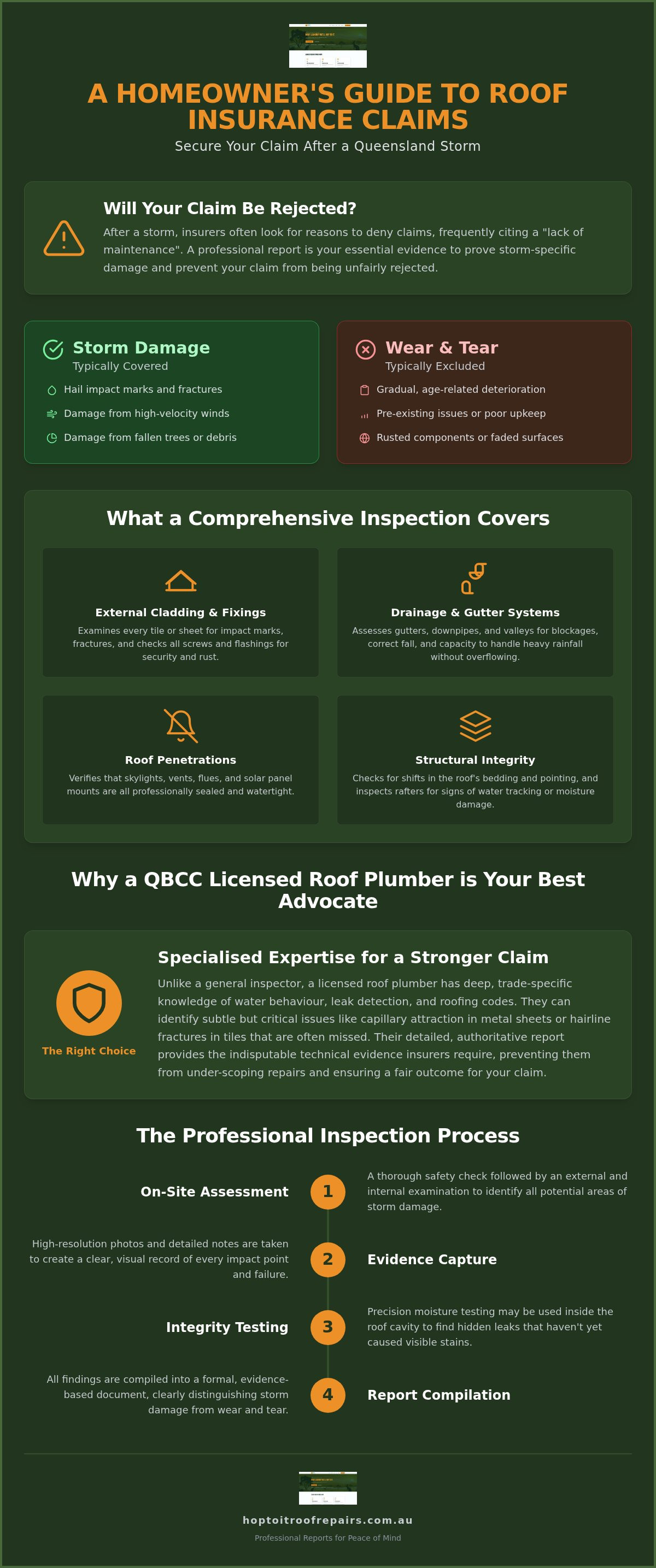
An insurance roof inspection report is a formal, evidence-based document that details the current state of your roof's cladding, drainage systems, and structural integrity. Unlike a standard repair quote, this report is specifically engineered to identify damage caused by "insurable events" such as hail impact, high-velocity winds, or fallen debris. It serves as the primary evidence your insurance assessor uses to determine if you're eligible for a claim. By having a licensed professional document these findings, you ensure the assessment meets the strict regulatory standards required in 2026.
A comprehensive report typically includes:
- High-resolution photographic evidence of specific impact points.
- An analysis of the roof's perimeter, including gutters and downpipes.
- Verification of structural components and bedding.
- A clear distinction between storm-related damage and general age-related deterioration.
The Purpose of Professional Documentation
Insurers won't approve major repair work based on a verbal description. They require written proof that meets their internal criteria. A detailed report acts as a shield against the common "maintenance clause" rejection. It clearly separates fresh storm damage from pre-existing wear and tear, which is a vital distinction for claim approval. Without this level of detail, insurance assessors might "under-scope" the job. They may offer a minor patch-up when the structural integrity of the roof actually requires more significant intervention. A professional report forces accountability by providing technical analysis that is difficult to dispute.
Who is Qualified to Write the Report?
Not all inspectors are created equal. While many people ask What is a Home Inspection? to understand general property checks, an insurance claim requires more specific trade knowledge. In Queensland, your reporter should be a QBCC licensed roof plumber. General building inspectors often miss the subtle signs of capillary attraction or hairline fractures in tiles that lead to internal disasters later on.
Specialised expertise is particularly vital for metal roof leak detection. A licensed plumber understands how water moves across different profiles, ensuring every penetration, from skylights to flues, is verified for watertightness. You should always check that your inspector holds the correct credentials for South East Queensland. This ensures your insurance roof inspection report carries the necessary legal weight and professional authority to move your claim forward without unnecessary delays.
What Does a Comprehensive Roof Inspection Cover?
A professional assessment is far more than a simple walk across your roof. It is a forensic examination of every component that keeps your home watertight. When we compile an insurance roof inspection report, we scrutinise the entire system, from the primary cladding to the smallest fixing. Our goal is to map out exactly how your roof performed during a storm and identify any vulnerabilities that could lead to a claim rejection if left undocumented.
We look for specific indicators of failure, including:
- Surface damage to Colorbond sheets or concrete tiles.
- Integrity of all "penetrations" such as skylights, solar vents, and chimney flues.
- Signs of "water tracking" where moisture travels along internal rafters before staining your ceiling.
- Structural shifts in the roof bedding or pointing.
External Cladding and Fixings
Your roof's first line of defence is its cladding. We check every square metre for hail impact marks on metal or impact fractures on tiles. Fixings are equally critical. Rusted roof screws or loose flashings are often the silent culprits behind major leaks. We also assess the security of eaves and overhangs, as these are the most vulnerable points during high-wind events. Insurers often look for compliance with FORTIFIED Roof standards when evaluating the resilience of a structure, so documenting these details is essential for a robust claim.
Drainage and Gutter Systems
Water must leave your roof as quickly as it arrives. We evaluate your entire drainage network, including gutters, downpipes, and valley trays. In South East Queensland, box gutters are a common failure point during heavy deluges. If these aren't sized correctly or have inadequate fall, they will overflow internally. We test downpipes for hidden blockages and determine if your current system requires gutter repairs Brisbane homeowners can rely on to prevent future flooding. Identifying these drainage issues early ensures your report proves the damage was caused by an extraordinary weather event rather than poor design.
If you have noticed damp spots or heard strange dripping sounds during the last storm, don't wait for the next downpour to act. You can book a professional assessment today to ensure your home remains safe and your insurance evidence is secured.
Storm Damage vs. Wear and Tear: The Insurance Gap
Insurers often rely on a "Maintenance Clause" to limit their liability. This clause states that if a roof fails due to gradual deterioration rather than a specific event, the claim is invalid. This is where a professional insurance roof inspection report becomes your most valuable tool. It provides the forensic evidence needed to prove that your current issues aren't the result of neglect, but the direct consequence of a sudden, insurable event like a severe hailstorm or high-wind gust.
The distinction is often subtle. For instance, a leaking tile roof caused by porous, 40-year-old concrete tiles is usually considered a maintenance issue. Conversely, tiles dislodged or cracked by a fallen branch during a gale are an insurable event. A specialist assessment identifies these nuances with precision, ensuring that "sudden impact" damage is clearly highlighted. Proactive documentation in an insurance roof inspection report is what turns a potential rejection into an approved repair.
Common Reasons for Claim Rejection
Insurance companies look for any sign of pre-existing neglect to avoid a payout. If your valley trays are rusted through or your gutters are overflowing because they're packed with debris, the insurer may argue that the resulting internal damage was preventable. They also look for "poor workmanship" from previous unlicenced repairs. If a "handyman" used the wrong sealant or installed flashings incorrectly, the insurer will likely void your claim for any subsequent leaks in that area. Keeping your roof in good condition through regular professional check-ups protects your future eligibility for storm cover.
Proving an Insurable Event
Proving a claim requires more than just a photo of a damp ceiling. We use local weather data and high-resolution site photography to link specific damage to a verified storm date. This evidence connects the dots between a physical impact on the roof and the secondary damage, such as internal water ingress or sagging plasterboard. We document the exact entry point of the water to show it was caused by the storm event. To protect your home during this process, our Emergency Temporary Make-Safe service provides immediate, short-term repairs to prevent further internal damage while your insurance provider reviews the final claim documentation. This swift action shows the insurer you've taken reasonable steps to mitigate further loss, which is a standard requirement in most policies.
The Inspection Process: What to Expect
Efficiency is the cornerstone of our process. We understand that a leaking roof is a high-stress event, so we move quickly from your initial booking to the final assessment. To prepare your site, ensure our team has clear access to the roof perimeter and any internal manholes. We arrive equipped to perform a forensic investigation, using high-level photography and moisture testing to map out the exact extent of the damage. This data-driven approach removes the guesswork and provides a clear, evidence-based foundation for your claim.
If your property is currently at risk of further internal flooding, we don't wait for the paperwork to be finalised. We can implement immediate roof make safe services Brisbane homeowners rely on for urgent protection. Once the site is secure, we compile your insurance roof inspection report. This document is delivered alongside a fixed-price quote for permanent repairs, giving you a transparent path forward without any hidden costs or unexpected budget blowouts.
On-Site Investigation Techniques
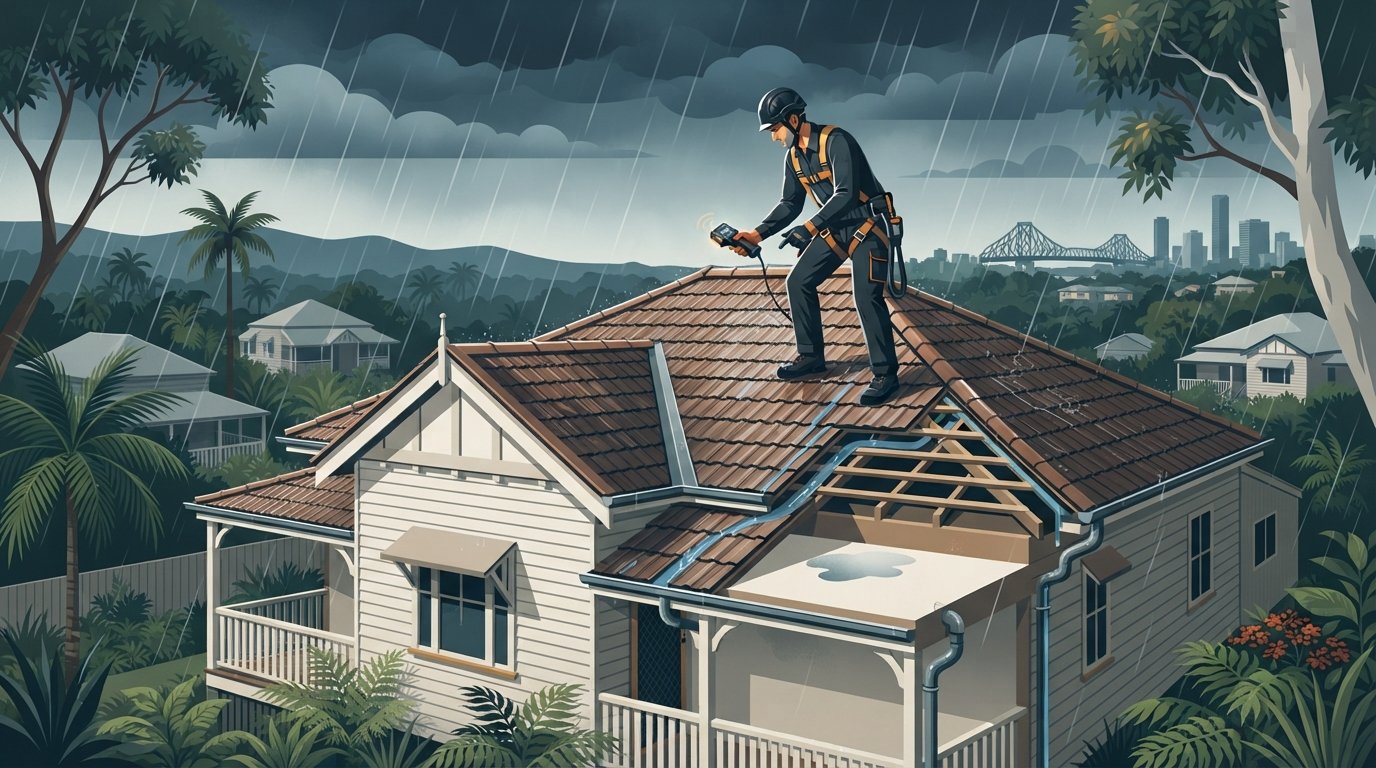
We perform a rigorous visual inspection of the roof perimeter and all critical junctions. This isn't just about looking at the surface. We enter the internal roof space to track water ingress sources back to their origin. Often, a leak starts metres away from where the ceiling stain appears. By using specialised leak detection tools, we find "invisible" entry points that general inspectors frequently overlook. This level of detail ensures your insurance roof inspection report is indisputable and covers every structural vulnerability.
From Report to Resolution
Reading your report is straightforward. Focus on the "Required Works" section, which outlines the exact steps needed to return your roof to its pre-storm condition. Submit this document directly to your insurer to streamline their assessment process. When their assessor arrives, you'll have a professional document to support your case and prevent under-scoping. Once your claim is approved, we manage the transition from the emergency "Make Safe" to a permanent, warrantied repair. This ensures your home is not just patched up, but fully restored to professional standards.
Don't leave your home's safety to chance after a storm. Book your professional assessment today to secure the evidence you need for a successful insurance claim.
Why a Licensed Roof Plumber is Your Best Advocate
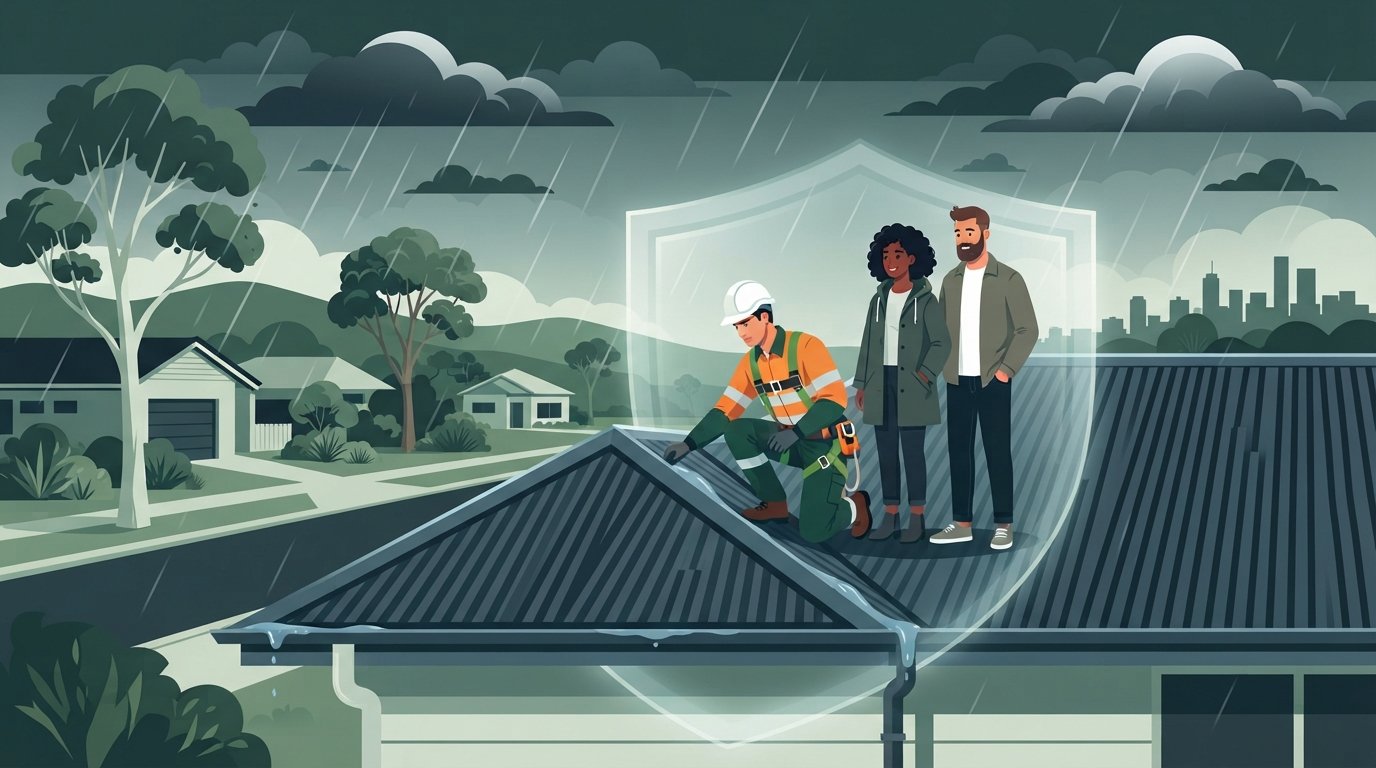
In Queensland, legal compliance isn't optional. A QBCC licence is a mandatory requirement for anyone performing roof plumbing work, yet many homeowners mistakenly hire general builders for roof assessments. While a general inspector can identify visible damage, they often lack the deep technical training required to understand complex water hydraulics. A licensed roof plumber specialises in how water interacts with your home's unique geometry. This trade-specific expertise ensures your insurance roof inspection report is technically accurate and legally sound. When you present a report signed by a licensed specialist, it carries significantly more weight with insurance adjusters than a generic assessment.
Efficiency matters during a claim. We provide fixed-price quotes with every assessment, removing the risk of "bill shock" later in the project. Our workmanship warranties ensure that once the repair is finished, it stays finished. This level of professional integrity is what separates a career specialist from a "cowboy" operator who appears only after a major storm event. We stand by our evidence and our repairs long after the claim is closed.
Expertise in Metal and Tile Systems
Brisbane’s climate is brutal on roofing materials. Metal roofs, particularly Colorbond profiles, face significant thermal expansion and contraction due to our high temperatures. A licensed plumber understands how to install and repair these systems to allow for this movement without compromising the watertight seal. Similarly, tile roofs require precise knowledge of ridge capping and bedding compounds to survive the next summer deluge. By choosing a specialist who understands both systems, you ensure your report addresses the root cause of the failure, not just the obvious symptoms. This forensic approach is vital if you find yourself in a dispute with an insurer over the scope of repairs.
Transparency and Peace of Mind
We believe in clear communication. You won't find vague trade jargon in our documents. Instead, we provide a transparent, evidence-based explanation of your roof’s condition. This clarity removes the anxiety of the unknown. It gives you the confidence to talk to your insurer about your insurance roof inspection report with total authority. Protecting your home shouldn't be a gamble. By engaging a specialist, you avoid the risks associated with unlicenced workers who lack the insurance or credentials to back up their claims.
Ready for a professional assessment? Contact Hop To It Roof Repairs for an expert inspection report today.
Secure Your Home and Your Claim Today
Protecting your property after a severe Queensland storm requires more than just a quick patch. You need a rock-solid argument for your insurer that clearly distinguishes between sudden "insurable events" and general maintenance. By documenting every fracture, rusted screw, and blocked gutter, you remove the ambiguity that often leads to claim rejections. A professional insurance roof inspection report is the only way to ensure your evidence is indisputable and your home’s structural integrity is verified.
We provide the expertise of a QBCC licensed roof plumber, combined with fixed-price transparent quotes and detailed evidence-based reports for every assessment. Don't leave your structural safety to chance or settle for an under-scoped repair from a generalist. Book Your Insurance Roof Inspection with Hop To It Today and let our specialists handle the technical heavy lifting. You've worked hard for your home; we'll work hard to make sure it's watertight and safe for the years ahead.
Frequently Asked Questions
How much does a professional roof inspection report cost in Brisbane?
Costs for a professional report vary based on the size and complexity of your roofing system. While industry averages exist across Queensland, we provide fixed-price quotes for our inspection services to ensure total transparency. This approach prevents any hidden fees or budget surprises for homeowners. Factors like the roof pitch, material type, and the level of detail required for a claim will influence the final cost. Always choose a licensed specialist to ensure the report holds up under insurer scrutiny.
Will my insurance company pay for the roof inspection report?
Most insurance companies will reimburse the cost of the report if your storm damage claim is approved. However, policies differ significantly, so you should check your specific Product Disclosure Statement (PDS) first. Even if they don't cover the initial fee, having a professional insurance roof inspection report is vital. It provides the forensic evidence needed to prove the damage was caused by a sudden event, which is often the difference between a successful claim and a flat rejection.
How long does it take to receive the written report after the inspection?
We aim to deliver your detailed written report within 24 to 48 hours of completing the on-site assessment. We understand that time is critical when you're dealing with water ingress or structural risks in South East Queensland. Our team processes the photographic evidence and technical findings quickly to ensure you can lodge your claim without delay. This efficient turnaround helps you move from the initial damage discovery to a permanent, professional repair as fast as possible.
Can a roof inspection report guarantee that my claim will be approved?
No professional can guarantee a claim approval, as the final decision rests with your insurance provider's assessor. However, a comprehensive insurance roof inspection report significantly increases your chances of success. It provides the forensic evidence and trade-specific documentation that insurers require to verify a claim. By clearly distinguishing between storm damage and general wear, the report removes the common "lack of maintenance" excuse that many insurers use to deny coverage for Brisbane homeowners.
What is the difference between a roof inspection and a roof assessment for insurance?
A standard inspection checks for general condition, while an insurance-specific assessment focuses on identifying damage from a particular "insurable event". The resulting insurance roof inspection report is a forensic document designed specifically for assessors. It maps out impact points from hail or wind and links them to specific weather dates. This level of detail is much higher than a general maintenance check, as it must meet strict regulatory and industry standards to be accepted as evidence.
Do I need to be home when the roof plumber performs the inspection?
You don't necessarily need to be home if we have clear external access, but it's highly recommended. Being present allows us to discuss any internal damage, such as ceiling stains or damp spots, and access the roof space via internal manholes. This internal check is crucial for tracking the exact path of water tracking. If you can't be there, we'll focus on the external cladding and drainage, providing a full digital report of our findings for your records.
What happens if the report finds damage that isn’t covered by insurance?
If we identify pre-existing issues like rusted valley trays or unpointed ridge capping, we'll list them separately in your report. These items fall under the "Maintenance Clause" and usually aren't covered by storm claims. We provide a fixed-price quote for these repairs so you can address them before they cause further issues. Fixing these vulnerabilities now is the best way to protect your home and ensure your future insurance eligibility remains intact across the Gold Coast.
Is a "Make Safe" report different from a full insurance inspection report?
Yes, these documents serve different purposes. A "Make Safe" report documents the immediate, temporary actions taken to secure your home and prevent further water ingress during an emergency. It's often required by insurers to show you've mitigated further loss. In contrast, a full insurance roof inspection report is a comprehensive forensic analysis of all damage. This document is used to secure approval for permanent, long-term repairs to your metal or tile roofing system after the storm passes.