Expert Roof Flashing Repair Brisbane: Stop Leaks Before the Next Big Storm
16 August 2026 · 17 min read

That small damp patch on your ceiling isn't just an eyesore; it's a warning that your home's primary defence is failing. With Brisbane's 2025-2026 summer rainfall predicted to hit well above average levels, even a tiny gap in your roof joints can lead to internal damage costing thousands in plaster and insulation repairs. Many homeowners find themselves stuck between confusing quotes and dodgy tradies who use temporary silicone patches that fail during the first heavy downpour. You deserve a permanent solution that actually holds up when the sky turns black. Professional roof flashing repair Brisbane is about more than just "fixing a leak"; it's about ensuring your metal or tile roof is structurally sound before the storm season peaks.
We know how frustrating it is to deal with unpredictable damage and vague pricing. This guide will teach you exactly how to identify, repair, and prevent roof flashing failures to keep your Brisbane home bone-dry. We'll walk through the precision of leak detection, explain why mechanical fixes beat temporary sealants, and show you how transparent, fixed pricing can finally remove the anxiety from your home maintenance. It's time to stop the drips and secure your peace of mind with a workmanship warranty that actually means something.
Key Takeaways
- Understand how flashing acts as the critical joint in your roof plumbing to redirect water away from vulnerable entry points.
- Identify common failures like rusted apron or loose step flashing before booking a professional roof flashing repair Brisbane service.
- Learn why hardware-store sealants fail under intense Queensland UV radiation and why mechanical fixes are the only permanent solution.
- Discover the professional repair process, starting with precision leak detection to ensure the right problem is solved the first time.
- Ensure total peace of mind by hiring QBCC licensed specialists who provide fixed-price quotes and a workmanship warranty.
What is Roof Flashing and Why is it Critical for Brisbane Homes?
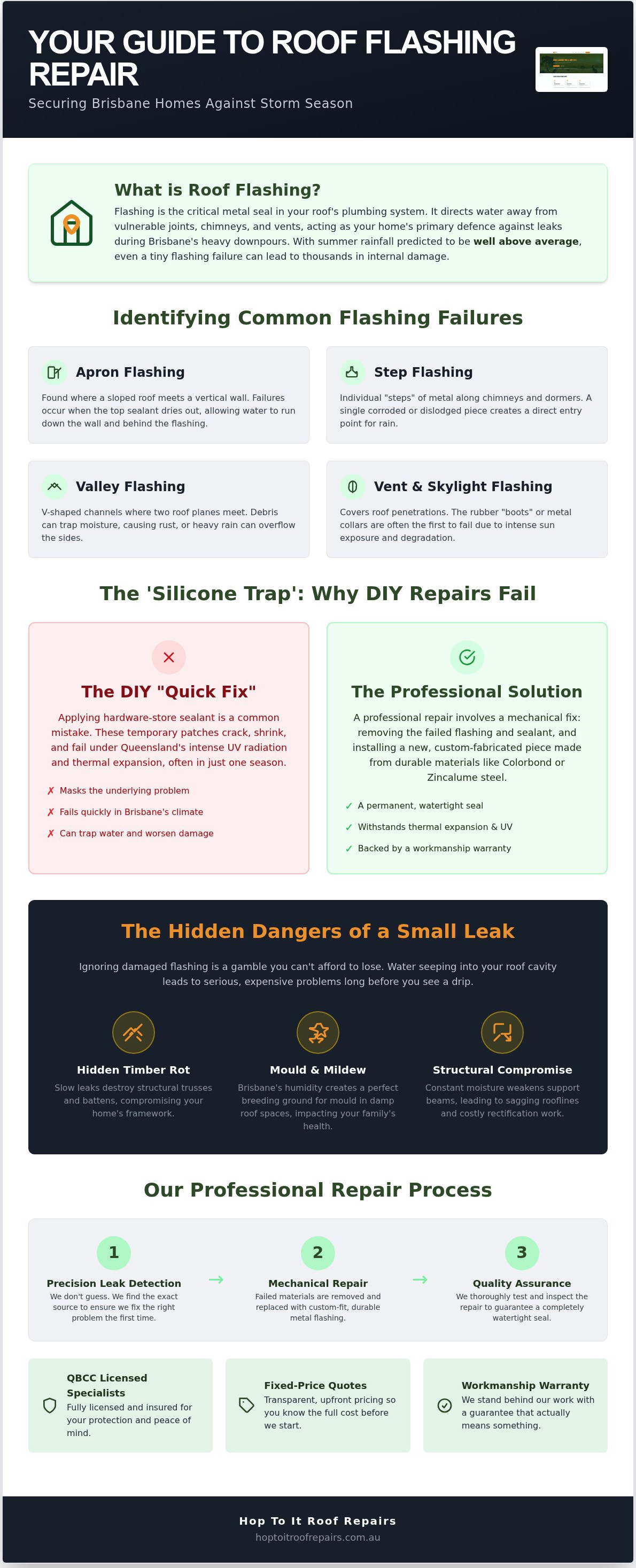
Roof flashing is the unsung hero of your home's waterproofing system. It is a thin layer of impervious material, usually metal, installed to prevent water from entering the structure at joints or penetrations. Think of your roof tiles or metal sheets as the primary shield, and Flashing (weatherproofing) as the specialized seal that protects the gaps where those shields meet. Without it, every chimney, vent pipe, or valley becomes an open invitation for water to pour directly into your ceiling cavity.
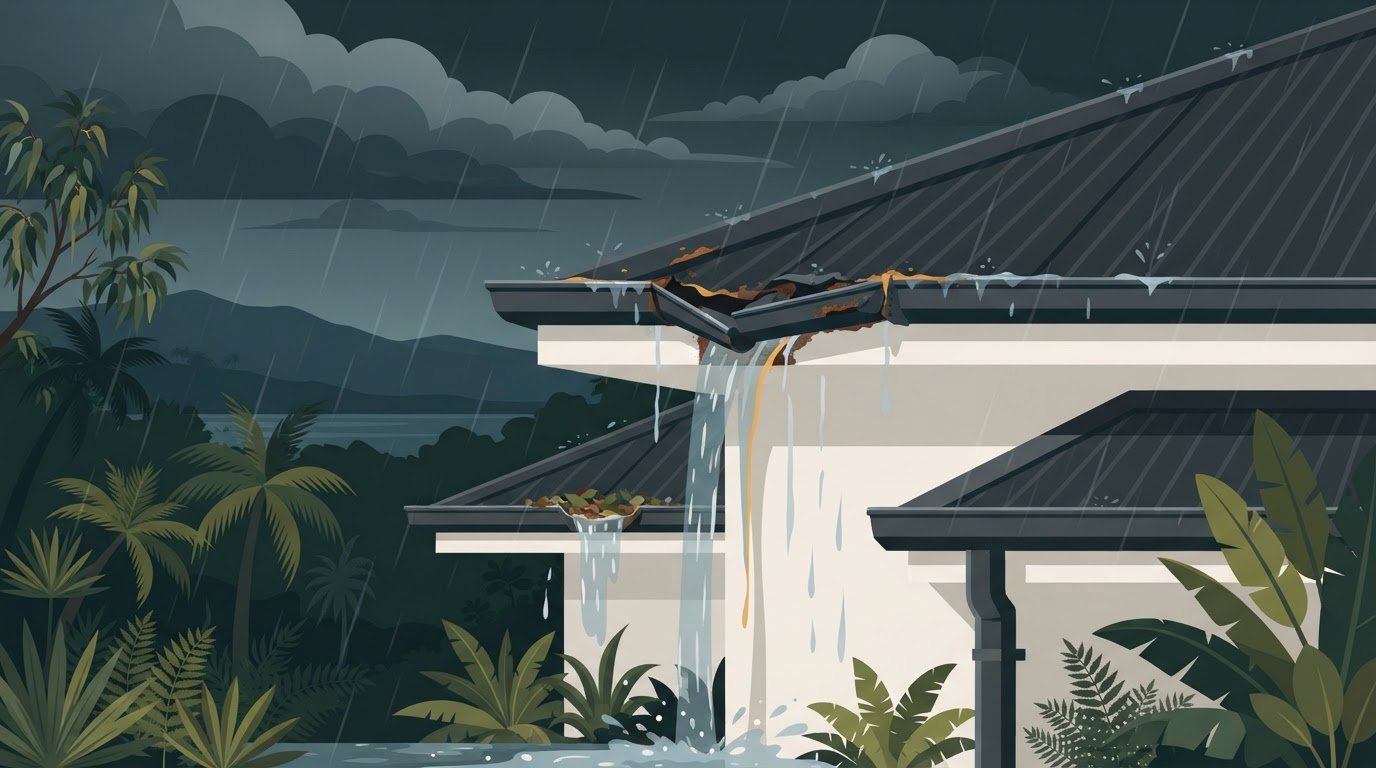
In the context of a broader roof plumbing system, flashing works alongside your gutters and downpipes to manage stormwater. While gutters collect water from the edges, flashing redirects it away from the most vulnerable transition points. In South East Queensland, these joints are the primary "weak link" during our notorious summer downpours. When hundreds of millimetres of rain dump in a single hour, even a minor gap in your roof flashing repair Brisbane needs can lead to a catastrophic failure.
Brisbane's climate adds another layer of stress through thermal expansion. On a typical 35 degree day, your metal roof can reach temperatures exceeding 70 degrees. This heat causes the metal to expand and then contract rapidly as the afternoon storm rolls in. Over time, this constant movement stresses the joints, causing old sealants to crack and metal sections to pull apart. This cycle is why a "quick fix" with hardware store silicone rarely lasts more than a single season.
Common Flashing Materials Used in Queensland
Selecting the right material is essential for a lasting repair. We typically work with three main types based on your roof's profile:
- Lead flashing: The traditional choice for tile roofs. It is highly malleable, allowing it to be dressed into the profile of the tiles for a snug fit. While effective, it requires specialized handling and installation.
- Galvanised and Zincalume steel: These are incredibly durable options for modern Brisbane homes, offering high resistance to the corrosive effects of our coastal air.
- Colorbond flashing: This allows us to match your roof's specific aesthetic while ensuring a completely watertight seal that lasts for decades.
The Consequences of Ignoring Flashing Damage
If you suspect a leak, waiting for the next storm is a gamble you won't win. Ignoring damaged flashing leads to serious internal issues:
- Hidden timber rot: Water seeping into the roof cavity slowly destroys the structural trusses and battens before you ever see a drip on the ceiling.
- Mould and mildew: Brisbane's humidity provides the perfect breeding ground for mould in damp roof spaces, which can quickly impact your family's health.
- Structural compromise: Constant moisture weakens support beams, potentially leading to sagging rooflines and expensive structural rectification work.
Identifying the Different Types of Roof Flashing Failures
Identifying exactly where your roof plumbing has failed requires more than a quick glance from the ground. Different areas of your roof rely on specific flashing profiles, and each has its own unique failure points. When you book a roof flashing repair Brisbane specialist, the first task is to determine which component has reached the end of its service life. Most flashing issues fall into these four categories:
- Apron flashing: This is a flat metal piece used where a sloped roof meets a vertical wall. It's common on two-storey homes or extensions. If the sealant at the top edge dries out, water runs straight down the wall and behind the flashing.
- Step flashing: Used along chimneys and dormer windows, these are small, individual "steps" of metal overlapped to follow the roofline. If one step slips or corrodes, it creates a direct entry point for rain.
- Valley flashing: These V-shaped channels sit where two roof planes meet. They carry a high volume of water. Debris often gets trapped here, causing the metal to rust prematurely or allowing water to "overtop" the side during heavy downpours.
- Vent pipe and skylight flashing: These cover penetrations where pipes or windows exit the roof. The rubber "boots" or metal collars around these points are often the first things to fail due to intense sun exposure.
Signs Your Flashing is Failing
How do you know it's time to act? The Queensland Building and Construction Commission identifies inadequate flashing as a recurring top-ten building defect. Check for visible rusting or white "pitting" on metal strips. Look for gaps or lifting where the metal should be flush against a wall. On older tile roofs, look for cracked or crumbling mortar (pointing) around the lead sections. If the mortar is gone, the flashing is no longer secure. If you notice these signs, a professional roof assessment can prevent a minor gap from becoming a major internal disaster.
Why Brisbane's Storm Season is the Ultimate Test
Brisbane's weather is notoriously aggressive. During a severe cell, wind-driven rain doesn't just fall; it moves horizontally. This pressure forces water upward and under old or poorly installed flashing that might hold up during a light shower. Hail is another factor. Large stones can dent thin metal or tear older, brittle lead flashing, creating instant leaks.
The biggest challenge is "tracking" leaks. Water often enters through a failed valley or chimney flashing and then travels along a timber beam for several metres before dripping onto your ceiling. This makes it incredibly difficult to find the true source without specialized equipment. This is why roof leak detection Brisbane is so critical. We don't just patch where the stain is; we find the failed joint and fix the root cause.
The 'Silicone Trap': Why DIY Flashing Repairs Often Fail
It's a common Sunday morning scene across the suburbs. You spot a damp patch on the ceiling, head to the local hardware store, and grab a tube of "all-purpose" roof sealant. It feels like a quick, cost-effective win, but in the trade, we call this the 'Silicone Trap'. While a bead of caulk might stop a drip during a light shower, it's rarely a permanent solution for roof flashing repair Brisbane. In fact, slapping sealant over a structural gap often does more harm than good by masking a growing problem.
The primary enemy here is Queensland's relentless UV radiation. Most hardware-store sealants aren't designed to withstand the extreme 2025-2026 temperatures forecast for our region. When a roof surface hits 70 degrees, standard silicone loses its elasticity, cracks, and peels away within months. This creates a pocket that actually traps water against your metal sheets or timber battens. Instead of shedding off the roof, the moisture sits in the gap, leading to accelerated corrosion and hidden rot that you won't notice until the ceiling starts to sag.
Sealant vs. Mechanical Fixing
Professional roof plumbers follow the National Construction Code (NCC), which dictates how weatherproofing must be installed to protect Australian homes. We don't rely on "goop" to keep you dry. True roof flashing repair Brisbane involves mechanical fixing. This means using rivets, precise folds, and correct overlaps to ensure water flows naturally into your gutter system. We only use high-grade neutral cure silicone as a secondary seal, never as the primary defence. If your DIY repair doesn't meet these standards, you may find your home insurance claim rejected because the work wasn't performed by a licensed professional to code.
The Risks of Walking on Your Own Roof
Safety is the most significant factor to consider before climbing a ladder. Brisbane's steep-pitched roofs and brittle terracotta tiles are notoriously difficult to navigate. If you aren't trained in roof safety, you're likely to cause more damage than you fix. We often see DIY attempts where the homeowner has accidentally cracked multiple tiles or dented Colorbond sheets while trying to reach a single leaky chimney. When you consider the value of a fixed price roof repair, the risk of a fall or causing further structural damage simply isn't worth it. Let a specialist with the right gear and insurance handle the heights while you stay safe on the ground.
The Professional Roof Flashing Repair Process
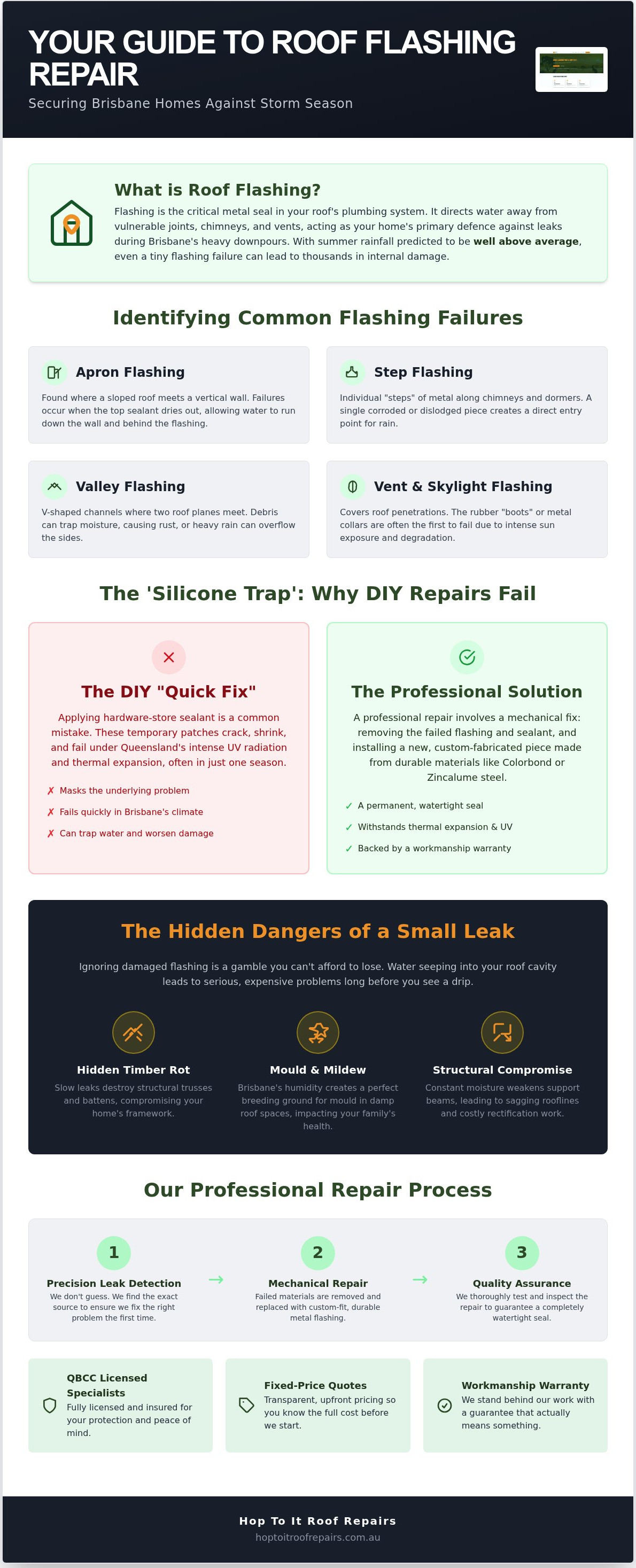
A professional repair is a structured sequence designed to eliminate leaks permanently. We don't rely on guesswork or superficial patches. In Queensland, roof flashing falls under the category of roof plumbing. This means any significant roof flashing repair Brisbane project must be handled by a QBCC licensed specialist to ensure it meets legal and safety standards. Our process follows five decisive steps to secure your home before the next storm cell arrives.
- Step 1: Precision Leak Detection. We begin by confirming the flashing is the true culprit. Water often tracks along beams, so we verify the entry point before starting any work.
- Step 2: Removal of Failed Materials. We strip away old, rusted, or incorrectly installed metal. This includes removing brittle lead or failed sealants that have reached the end of their service life.
- Step 3: Custom Fabrication. Every roof joint is unique. We fabricate or adjust new flashing sections for a precision fit that accounts for the specific pitch and profile of your roof.
- Step 4: Mechanical Securing. Following Australian Standard AS 2050:2018, we mechanically fix the flashing using rivets and correct overlaps. This ensures the structure remains watertight even during high-wind events.
- Step 5: Water Testing and Reporting. We perform a final water test to verify the seal. You receive a detailed written report documenting the work, which is essential for insurance purposes and your own peace of mind.
If you suspect your joints are failing, don't wait for the ceiling to sag. Book a professional inspection today to receive a fixed-price quote and a comprehensive assessment of your roof's condition.
Special Considerations for Metal Roofs
Metal roofs require specific technical knowledge to prevent galvanic corrosion. This occurs when incompatible metals, such as lead and Zincalume, touch and create a chemical reaction that eats through the sheets. During a roof flashing repair Brisbane, we ensure all materials are compatible and replace any rusted screws or fixings. We also pay close attention to 'Dektite' seals. These rubber boots around pipe penetrations often perish in the sun and require specialized replacement to maintain a watertight seal.
Special Considerations for Tile Roofs
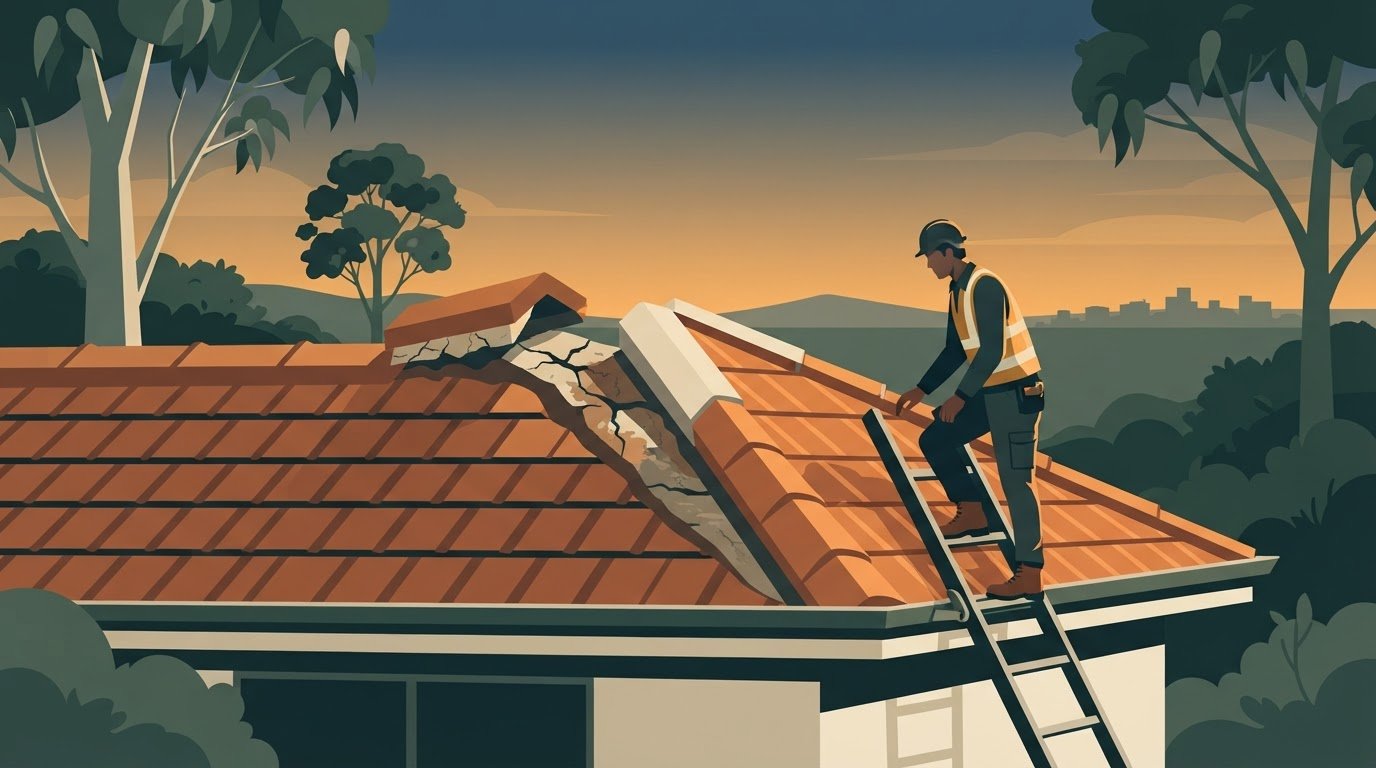
Tile roofs present different challenges, particularly where the roof meets brickwork. We focus on re-seating lead or lead-free flashing into mortar joints using professional pointing techniques. This prevents water from running behind the flashing and into your wall cavity. We also check the condition of your sarking, the under-roof insulation, which often sustains damage near failed flashing points. If we find broken tiles near the valleys or chimneys, we replace them immediately to ensure the entire drainage path is clear and functional.
Why Choose a QBCC Licensed Roof Plumber for Your Brisbane Repair?
Hiring the right person for a roof flashing repair Brisbane is about more than just stopping a leak; it's about legal compliance and long-term protection. Many homeowners make the mistake of hiring a general handyman for what seems like a small metal patch. In Queensland, however, roof flashing is strictly classified as roof plumbing. This means the individual performing the work must hold a specific QBCC license. A general builder or handyman without this specialised qualification isn't just cutting corners; they're potentially voiding your home insurance and leaving you without a safety net.
The QBCC license acts as your primary shield against "dodgy tradies" and temporary fixes. For any work valued over $3,300, including labour and materials, a licensed contractor is a legal requirement. More importantly, choosing a licensed specialist ensures your project is covered by the Queensland Home Warranty Scheme. If a repair fails or is performed poorly, you have a clear path to resolution through the commission. Without that license, you're on your own when the next storm hits and the "repair" starts dripping again.
Hop To It Roof Repairs operates with a focus on transparency and immediate relief. We understand that trade quotes are often confusing and vague. That's why we provide fixed-price quotes upfront. You won't deal with "bill shock" or unexpected hourly rates. Every job we undertake is backed by a workmanship warranty that actually means something, providing the peace of mind that your home will stay bone-dry during the peak of the storm season.
Transparency Through Written Reports
We don't expect you to climb a ladder to verify our work. Our process includes a detailed written report for every inspection and repair. These reports are essential tools for homeowners, especially when dealing with insurance companies after a severe weather event. We document our findings with clear photos, showing you the exact state of your flashing before and after the fix. We look for the root cause, such as thermal expansion gaps or rusted fixings, rather than just slapping on a temporary sealant. This evidence-based approach ensures you have a permanent record of your home's structural integrity.
Serving Brisbane, the Gold Coast, and Beyond
Our team brings local expertise to every corner of South East Queensland. We understand the specific roofing styles and weather patterns unique to Moreton Bay, Ipswich, and Logan. Whether you have a heritage tile roof or a modern Colorbond structure, we have the specialized tools to handle the job. We're ready to act with a decisive, "can-do" attitude to secure your property. Get your fixed-price roof flashing repair quote today.
Secure Your Home Before the Next Storm Hits
Brisbane's storm season is relentless, and your roof flashing is the only thing standing between a heavy downpour and a damaged ceiling. We've seen how temporary DIY patches fail under the intense Queensland sun, often leading to hidden timber rot and voided insurance claims. Permanent protection requires more than just a tube of sealant; it demands the mechanical precision and technical expertise that only a licensed professional can provide. Investing in a specialised roof flashing repair Brisbane service now prevents minor gaps from turning into major structural headaches later.
At Hop To It Roof Repairs, we remove the anxiety from trade services with upfront clarity and expert workmanship. As QBCC licensed roof plumbing specialists, we provide the detailed written reports and fixed-price quotes you need for total peace of mind. Every job is backed by a workmanship warranty, ensuring your home remains bone-dry when the next weather cell rolls in. Don't wait for the first drip to appear on your plasterboard. Book Your Professional Roof Flashing Inspection & Fixed-Price Quote today and stay confident that your home is ready for whatever the weather throws its way.
Frequently Asked Questions
How much does it cost to repair roof flashing in Brisbane?
Costs vary based on the complexity of the joint and the materials required for a permanent fix. A simple penetration repair differs significantly from a full valley replacement. We provide fixed-price quotes after a physical inspection to ensure you have a clear, transparent figure before work begins. This removes the anxiety of hourly rates or hidden fees common with general contractors who don't specialise in roof plumbing.
Can I repair roof flashing myself with sealant?
You should avoid using hardware-store sealants as a permanent fix because they quickly fail in Queensland's high UV environment. As discussed in the 'Silicone Trap' section, these products often trap moisture, leading to accelerated rot and corrosion. Professional repairs rely on mechanical fixings and high-grade materials that meet Australian Standards. A DIY attempt might seem cheaper now but usually leads to more expensive structural repairs later.
How long does a roof flashing repair typically take?
Most standard flashing repairs are completed within two to four hours, depending on accessibility and the extent of the damage. More complex projects involving multiple chimney steps or long valley runs may take a full day. We prioritise efficiency to ensure your home is secure before the next storm rolls in. Our team provides a specific timeframe during the initial inspection so you can organise your day with confidence.
Is roof flashing repair covered by home insurance in Queensland?
Insurance usually covers damage caused by sudden storm events but rarely pays for repairs due to general wear and tear or lack of maintenance. If a severe cell damages your flashing, your policy might apply. However, if the leak is caused by rusted metal or old, cracked sealants, insurers often classify this as a maintenance issue. A detailed written report from a licensed specialist is vital for supporting your claim.
What is the best material for roof flashing in Brisbane's climate?
Colorbond and high-grade Zincalume are the most durable choices for Brisbane's intense heat and humidity. These materials offer excellent resistance to corrosion and thermal expansion. For older tile roofs, lead-free flashing alternatives are becoming popular due to their longevity and environmental safety. We select the specific material that matches your existing roof profile to ensure a seamless, watertight finish that lasts for decades, even under the harshest sun.
How often should I have my roof flashing inspected?
You should have your flashing inspected every two years or immediately after a significant hail event. Early detection is the key to avoiding internal water damage. Because flashing is the primary joint in your roof plumbing, regular checks ensure that small gaps caused by thermal expansion are caught before the storm season peaks. Proactive maintenance is significantly more affordable than emergency repairs and helps you avoid the stress of a leaking ceiling.
Why is my roof still leaking after I replaced the flashing?
Persistent leaks often occur because the water is "tracking" from a different entry point or the new flashing wasn't installed with correct mechanical overlaps. If a generalist performed the work without proper leak detection equipment, they might have missed the true source. A professional roof flashing repair Brisbane specialist uses precision detection to ensure every vulnerable joint is sealed, preventing water from bypassing the new installation during heavy, wind-driven rain.
What is the difference between a roofer and a roof plumber for flashing work?
A roof plumber holds a specialised QBCC license specifically for managing stormwater and waterproofing joints, whereas a general roofer may only be licensed for tiling or sheeting. In Queensland, flashing installation is a plumbing task. Choosing a licensed roof plumber ensures the work complies with the National Construction Code. This distinction is critical for your workmanship warranty and ensures the roof flashing repair Brisbane project meets the legal standards required for insurance.