Emergency Make Safe Roof Repair: Urgent Protection for Storm Damage in 2026
23 September 2026 · 14 min read
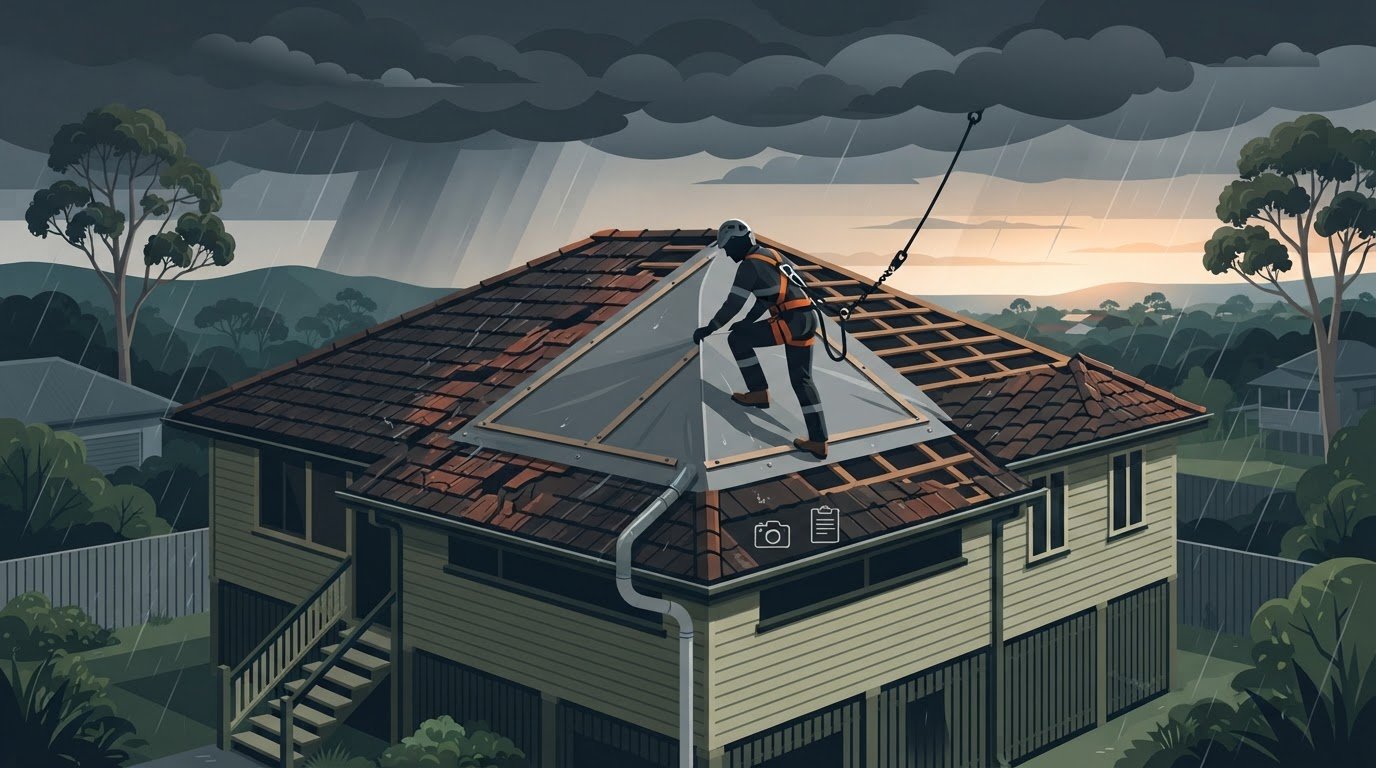
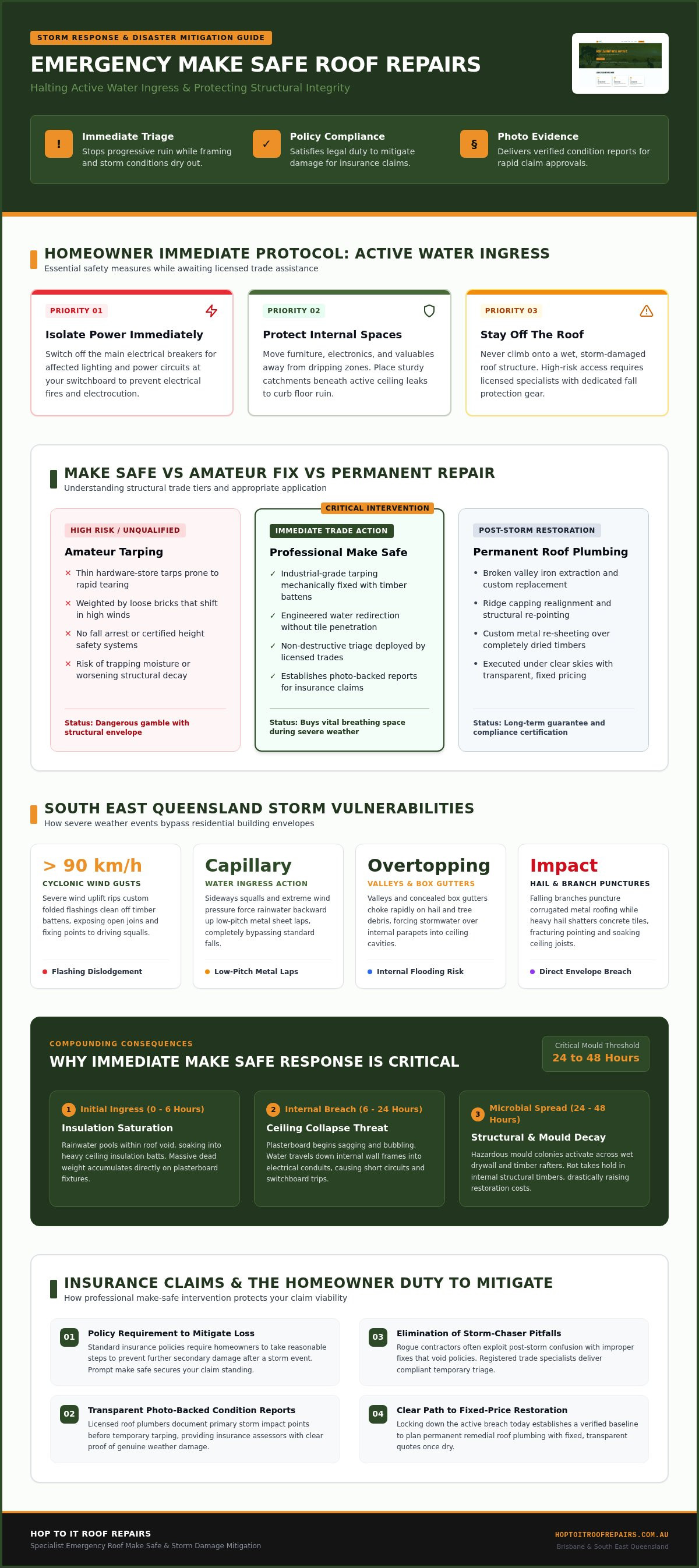
Tossing a thin hardware-store tarp over broken tiles is not technical disaster mitigation; it is a dangerous gamble with your home's structural integrity. When driving rain breaches your building envelope, securing a professional emergency make safe roof repair is the single most critical action you can take to stop active water ingress before it destroys your living space.
Watching water bubble behind your ceiling plaster is genuinely terrifying. Between the imminent threat of electrical hazards, the fear of ceiling collapse, and the confusion surrounding insurance claim obligations, you need rapid clarity rather than guesswork from rogue storm-chasing contractors. Your immediate priority is securing your property and preventing secondary ruin.
Discover how professional emergency make safe roof repairs halt active leaks, protect your home from compounding water damage, and streamline your insurance claim with transparent, photo-backed reporting. Below, we step through how licensed trade specialists stabilise compromised rooflines and keep your family safe until permanent repairs begin.
Key Takeaways
- A professional emergency make safe roof repair halts active water ingress immediately, securing your building envelope before permanent re-roofing or re-sheeting begins.
- Recognising storm damage early, from cracked tiles to displaced flashings, prevents secondary ceiling collapses and hazardous electrical faults.
- Licensed roof plumbers deploy specialised fall protection and non-destructive triage techniques to redirect water safely without causing further structural damage.
- Prompt make-safe action satisfies your insurance policy duty to mitigate loss, generating the photo-backed condition reports required for fast claims approval.
- Transitioning from temporary stabilisation to permanent trade repairs with transparent, fixed-price quotes eliminates unexpected costs during storm recovery.
What Is an Emergency Make Safe Roof Repair?
An emergency make safe roof repair is an urgent, targeted structural intervention designed to halt active water ingress and stabilise a damaged building envelope. It is not an aesthetic touch-up or a permanent replacement. Instead, it serves as immediate disaster mitigation, creating a robust, watertight barrier that protects your home during or immediately after severe weather events. While unqualified handymen often toss lightweight plastic sheets weighted down by loose bricks, professional weatherproofing requires heavy-duty materials, mechanical fastenings, and deliberate water redirection.
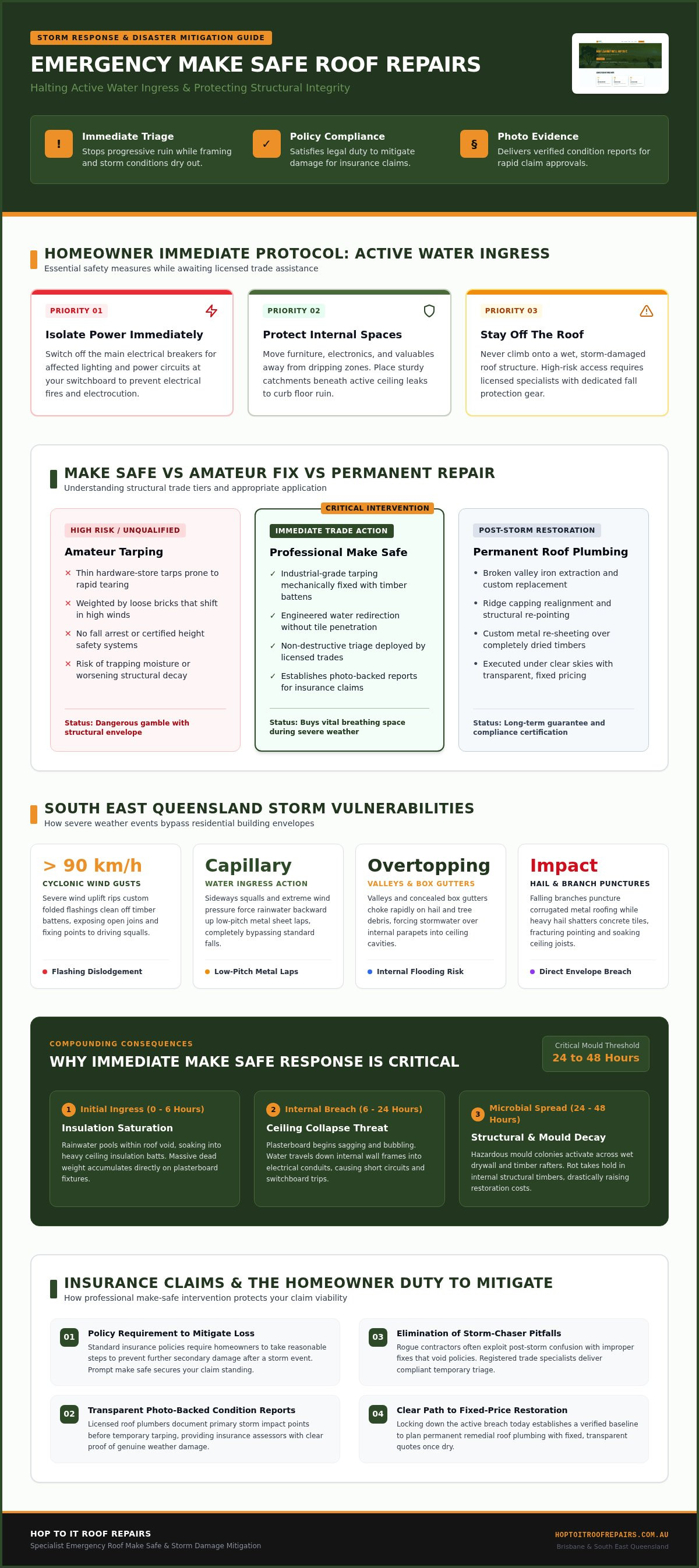
If water is actively entering your home, your immediate priorities must centre on safety rather than DIY heroics. Follow these critical steps while awaiting trade assistance:
- Isolate power immediately: Switch off the main electrical breakers for affected lighting and power circuits at your switchboard to prevent electrical fires and electrocution.
- Protect internal spaces: Move furniture, electronics, and valuables away from dripping zones, and place sturdy buckets under active leaks.
- Stay off the roof: Never climb onto a wet, storm-damaged roof structure. Leave high-risk access to licensed roof plumbers equipped with appropriate height safety systems.
The Core Purpose of an Urgent Make Safe
The primary objective of this emergency intervention is stopping progressive internal destruction. Water pooling within a roof cavity quickly saturates heavy ceiling insulation, placing massive dead weight on plasterboard until it collapses into your living space. By deploying industrial-grade emergency roof tarping secured with timber battens, technicians halt the flow of water before it rots structural rafters, destroys wall frames, and triggers hazardous mould colonies within 24 to 48 hours.
Emergency Temporary Repairs vs Permanent Roof Plumbing
A make safe buys vital breathing space. Lasting remedial roof plumbing, like replacing broken valley irons, realigning shifted ridge capping, or custom metal re-sheeting, demands completely dry framing and engineered trade materials. Attempting permanent installations during torrential rain compromises sealants and risks trapping residual moisture inside the roof void.
Engaging professional roof make safe services Brisbane bridges this high-risk transition securely. The trade specialist locks down the immediate breach today, providing the verified baseline needed to plan and execute compliant permanent repairs once the storm system clears.
Common Storm Scenarios Requiring Urgent Roof Make Safe
South East Queensland supercells hit with intense ferocity. Gale-force wind gusts lift roof sheets, while heavy hail shatters aging tiles within minutes. When your building envelope fails during violent weather, understanding your post-storm obligations is critical. Taking immediate steps satisfies your duty to mitigate damage, protecting both your property and your future insurance claims. Commissioning an emergency make safe roof repair targets these sudden vulnerabilities, sealing active breaches before water undermines internal timber framing.
Severe Weather and Impact Damage
Severe local storms routinely generate cyclonic wind gusts exceeding 90 km/h. Powerful wind uplift rips custom folded flashings clean off timber battens, exposing fixing points and open joins. Falling tree branches regularly puncture corrugated metal roofing or crush fragile concrete tiles. Once structural pointing fractures or tiles shift out of alignment, driving rain bypasses the primary roof barrier entirely, soaking ceiling joists and wall cavities below.
Water Ingress from Torrential South East Queensland Downpours
Subtropical downpours test residential drainage far beyond ordinary limits. During sideways squalls, extreme wind pressure forces water backward up low-pitch metal sheet laps through capillary action. Roof valleys and concealed box gutters quickly choke on hail and tree debris, forcing stormwater over internal parapets directly into your living spaces. If roof drainage fails to channel stormwater away cleanly, arranging specialised gutter repairs Brisbane is essential to restore proper flow and prevent secondary flooding.
Watch for these telltale signs that demand urgent professional triage:
- Sagging plasterboard: Water pooling on ceiling sheets causes visible deflection and damp rings around downlights.
- Displaced metal ridge caps: Unfastened ridge capping allows direct water entry into the roof cavity.
- Wall cavity moisture: Damp, bubbling paint along internal walls indicates hidden water tracking down studs.
- Overflowing internal gutters: Water spilling backward into eaves instead of discharging through external downpipes.
If your home shows any of these structural failure points, contacting the trade specialists at Hop To It Roof Repairs ensures immediate, professional triage that safeguards your interior until full restoration begins.
How Licensed Roof Plumbers Execute a Safe Make Safe
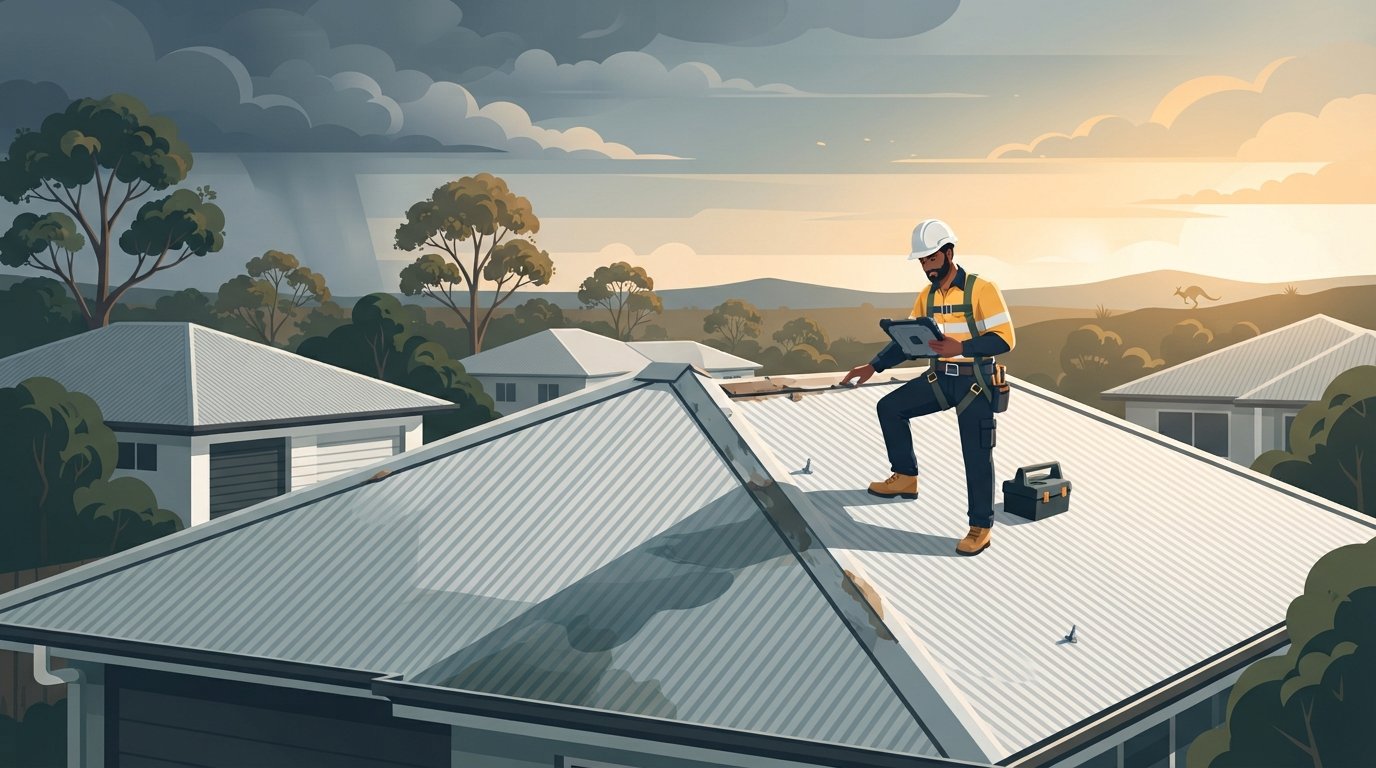
Executing an emergency make safe roof repair in wet, hazardous conditions demands stringent fall protection and trade precision. Navigating slick roof sheeting or brittle tiles without proper controls is dangerous. Licensed roof plumbers establish static line fall-arrest systems, temporary anchor points, and specialized harness setups before stepping onto compromised profiles. This disciplined approach ensures rapid property protection without risking worker safety or causing secondary structural impact.
Step-by-Step Triage and Immediate Stabilization
A systematic triage protocol eliminates guesswork when securing an active leak zone. Qualified trades follow an exact, sequential plan:
- Step 1: Rapid site hazard assessment. Technicians survey overhead electrical service drops, nearby tree branches, roof slope pitch, and underlying rafter integrity before ascending.
- Step 2: Non-destructive leak tracing. Trades pinpoint the exact ingress point rather than guessing. Water often travels metres along purlins before dripping through a ceiling.
- Step 3: Mechanical tarp deployment. Heavy-duty, UV-rated tarpaulins are mechanically battened directly over damaged sections. Timber battens screwed through profile crests prevent wind lift during trailing squalls.
- Step 4: Perimeter flashing seals. High-grade waterproof tapes and temporary aluminium flashings bridge cracked valleys, open gutters, and split seams to guide run-off safely into drainage lines.
Specialist Protocols for Metal vs Tile Roofs
Every roofing material behaves differently under storm loads, requiring distinct mechanical solutions during an emergency make safe roof repair.
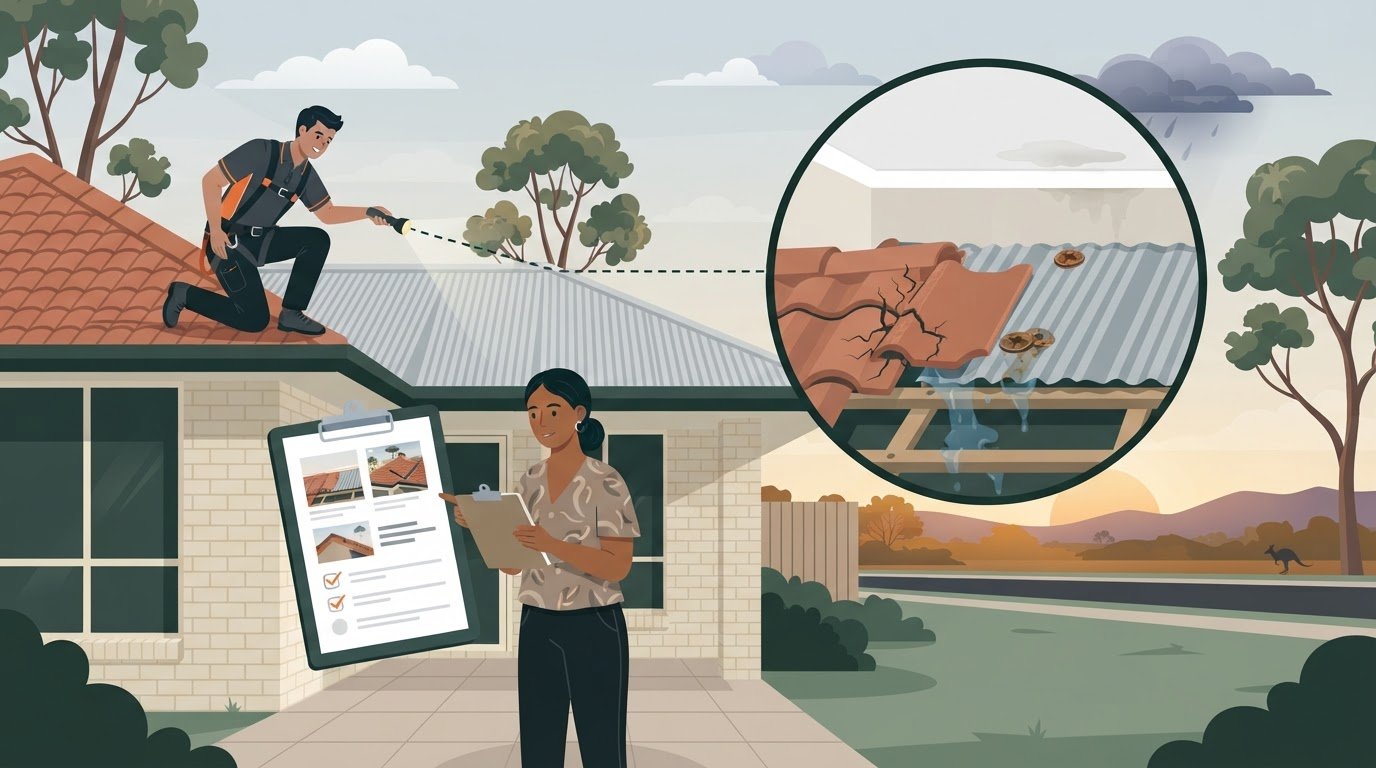
For custom orb and trimdeck metal profiles, trades secure lifted sheets with oversized cyclonic fixings, replace sheared neoprene washers, and tape over split lap joints. On tiled structures, technicians replace or realign cracked concrete units, install temporary underlay blankets beneath missing sections, and seal shattered ridge pointing. Coupling this urgent physical stabilisation with methodical professional roof leak detection Brisbane guarantees that every hidden moisture channel is logged accurately, protecting your building envelope until permanent restorative works commence.
Insurance Claims and Your Duty to Mitigate Roof Damage
Every standard building insurance policy in Australia contains a clear mitigation clause. As a property owner, you hold a strict legal obligation to take reasonable, practical steps to prevent progressive water destruction following a storm event. Ignoring an active ceiling leak while waiting weeks for an insurance assessor to visit your property can severely jeopardise your payout. If an insurer determines that secondary water ruin occurred because you failed to arrange an emergency make safe roof repair, they may legally reduce or reject your internal repair settlement.
Navigating Insurer Expectations After Severe Weather
Insurers expect policyholders to act decisively to secure a damaged building envelope. Waiting passively creates compounded damage: ceiling timbers warp, mould spores colonise plasterboard, and carpets rot. Insurers classify this worsening damage as avoidable neglect rather than direct storm impact.
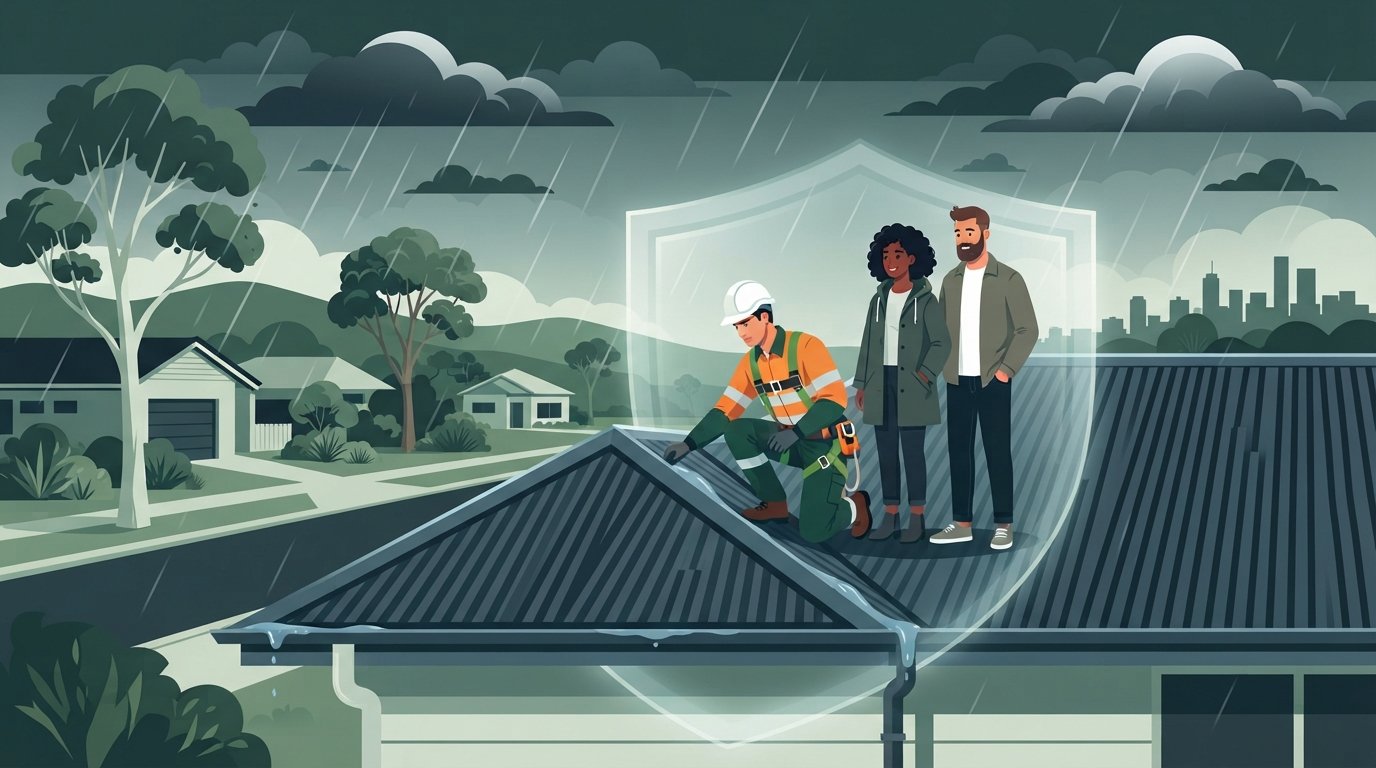
By engaging a licensed roof plumbing specialist to execute immediate temporary containment, you establish clear evidence of proactive care. The cost of an emergency make-safe is generally claimed back through your insurer, provided you supply legitimate trade invoices and evidence of immediate peril. Acting quickly protects both your internal assets and your financial claim.
Essential Evidence: Written Reports and Photo Documentation
Insurers often scrutinise storm claims closely, attempting to attribute sudden leaks to pre-existing wear and tear, rust, or poor maintenance. Robust physical documentation shuts down these disputes before they begin. To guarantee seamless claim approval, your make-safe contractor must provide an evidence file containing specific technical data:
- Timestamped photographic proof: High-resolution photos capturing the fractured flashings or broken tiles before any tarpaulins or emergency seals are applied.
- Post-mitigation photos: Clear imagery demonstrating that the leak zone has been mechanically secured and weatherproofed.
- Identified failure points: Clear explanations defining exactly how storm pressure, debris impact, or wind uplift forced water entry.
- A formal condition assessment: A comprehensive written report produced by a licensed tradesperson validating that the damage was storm-induced rather than gradual deterioration.
Do not let insurer red tape compromise your storm recovery. Contact Hop To It Roof Repairs today to secure your building envelope with an emergency temporary make-safe backed by comprehensive condition reporting for your insurer.
From Temporary Make Safe to Guaranteed Permanent Repair
An emergency make safe roof repair neutralises an immediate crisis, but it is only the first phase of complete property recovery. Once rain stops and the roof structure dries out completely, the focus shifts from temporary containment to permanent trade restoration. Navigating this transition systematically ensures your home regains its structural integrity without lingering moisture traps or compromised flashings.
Planning the Permanent Roof Plumbing Rectification
Permanent remediation requires clear weather and technical trade execution. Technicians remove temporary tarpaulins and battens to conduct an exhaustive inspection of underlying rafters, battens, and valley boards. Any hidden dampness or rot is addressed before fresh materials are installed.
Remedial work involves replacing damaged sections with engineered materials matching your original roofline. Whether that means replacing compromised corrugated sheets with genuine Colorbond steel or installing matched profile terracotta tiles, licensed roof plumbers ensure every lap, screw, and flashing complies with Queensland building codes. Entrusting this work to a QBCC licensed specialist guarantees that permanent fixes are backed by a comprehensive roof repair workmanship warranty, delivering complete peace of mind through future storm seasons.
Why Choose Hop To It Roof Repairs for Make Safe Solutions
When storm damage strikes, you need decisive action without predatory pricing or trade ambiguity. Hop To It Roof Repairs delivers rapid, calm trade expertise across Brisbane, Gold Coast, Logan, Redlands, and Ipswich. We eliminate financial anxiety during high-stress weather events by providing upfront, transparent fixed-price quotes on permanent works, completely free from storm-surge markups.
Our team provides the complete solution property owners need:
- QBCC licensed expertise: Specialised metal and tile roof plumbing rather than generic handyman guesswork.
- Insurer-ready evidence: Detailed written condition reports and high-resolution photographic proof supplied with every inspection.
- Guaranteed permanent repairs: Durable, warrantied trade solutions that secure your home for the long term.
Take control of your storm recovery immediately. Contact Hop To It Roof Repairs to organise an emergency temporary make-safe and safeguard your property against further damage.
Secure Your Roofline and Protect Your Home Today
When severe weather breaches your ceiling, speed and trade precision make all the difference between minor remediation and catastrophic interior loss. Securing a professional emergency make safe roof repair halts active water ingress immediately, fulfilling your insurance obligations while protecting your family's living areas. You don't have to weather the storm alone.
As QBCC licensed roof plumbing specialists in Queensland, Hop To It Roof Repairs provides calm, decisive trade support during high-stress weather events. We supply comprehensive written inspection reports and photo evidence to fast-track your insurance assessment, followed by lasting remedial works backed by our dedicated workmanship warranty.
Take immediate action to stop progressive structural damage. Request an Urgent Roof Make Safe & Condition Report today and restore lasting security to your property.
Frequently Asked Questions
What is the main difference between an emergency make safe and a permanent roof repair?
An emergency make safe roof repair is an urgent, temporary barrier designed to stop active water ingress and protect your property during severe weather. Permanent roof repairs involve structural rectification, such as replacing damaged Colorbond sheets, resetting valley gutters, or re-bedding ridge tiles under completely dry conditions. Make safes stabilise the building envelope immediately, whereas permanent repairs restore the roofline to compliance with full trade warranties.
Will my home building insurance cover the cost of an emergency roof make safe?
Most Australian building insurance policies cover the cost of emergency make-safe works under your policy's reasonable mitigation provisions. Insurers require homeowners to take prompt action to prevent progressive internal water damage after a storm event. Provided you supply legitimate trade invoices, condition reports, and clear photographic evidence demonstrating immediate risk, make-safe costs are typically reimbursed as part of your broader insurance claim.
How quickly should an emergency make safe be completed after storm damage occurs?
Emergency mitigation should occur as soon as conditions are safe for trades to access the roof. Mould begins colonising wet plasterboard and framing timbers within 24 to 48 hours of water intrusion. Arranging prompt professional triage as soon as active squalls subside minimises structural ceiling rot, prevents electrical circuit damage, and ensures compliance with your insurer's strict mitigation timelines.
Can I install a temporary tarp on my roof myself during a storm?
Climbing onto a wet, storm-damaged roof during or immediately after severe weather is extremely hazardous and not recommended. Slick surfaces, damaged framing, and proximity to powerlines create life-threatening fall risks. Professional contractors use specialised static lines, harness systems, and edge protection to secure heavy-duty tarpaulins safely. Property owners should focus on internal safety, such as isolating electrical circuits and catching drips below.
What specific details must be included in a roof make safe condition report?
An insurer-ready condition report must provide clear, timestamped photographic evidence of the storm impact before and after temporary tarping. It needs to specify the exact entry points, such as fractured tiles or displaced flashings, and detail the technical cause of water ingress. The report should also outline required permanent repairs to ensure insurance assessors can distinguish genuine storm damage from gradual maintenance wear.
What happens if secondary leaks occur after an emergency make safe is installed?
Severe follow-up weather can occasionally test temporary installations if torrential downpours shift direction or winds intensify. If you spot secondary moisture after an emergency make safe roof repair, contact your roofing contractor immediately for rapid adjustment. A qualified trade team will inspect the timber battening, reinforce perimeter seals, and adjust flashing tapes to keep water redirected away from the primary failure point.
Why is a QBCC licensed roof plumber required instead of a standard handyman?
In Queensland, work on metal roofing, flashings, and rainwater systems is legally regulated trade plumbing requiring QBCC licensing. Handymen lack the specialised technical training and statutory insurance needed to redirect high-volume stormwater correctly. A licensed roof plumber understands capillary action, roof pitch dynamics, and compliant fixing methods, ensuring that temporary triage withstands subsequent weather while keeping your manufacturer and insurance warranties valid.