Dripping Sound in Attic During Rain? How to Find the Cause Safely
1 October 2026 · 14 min read
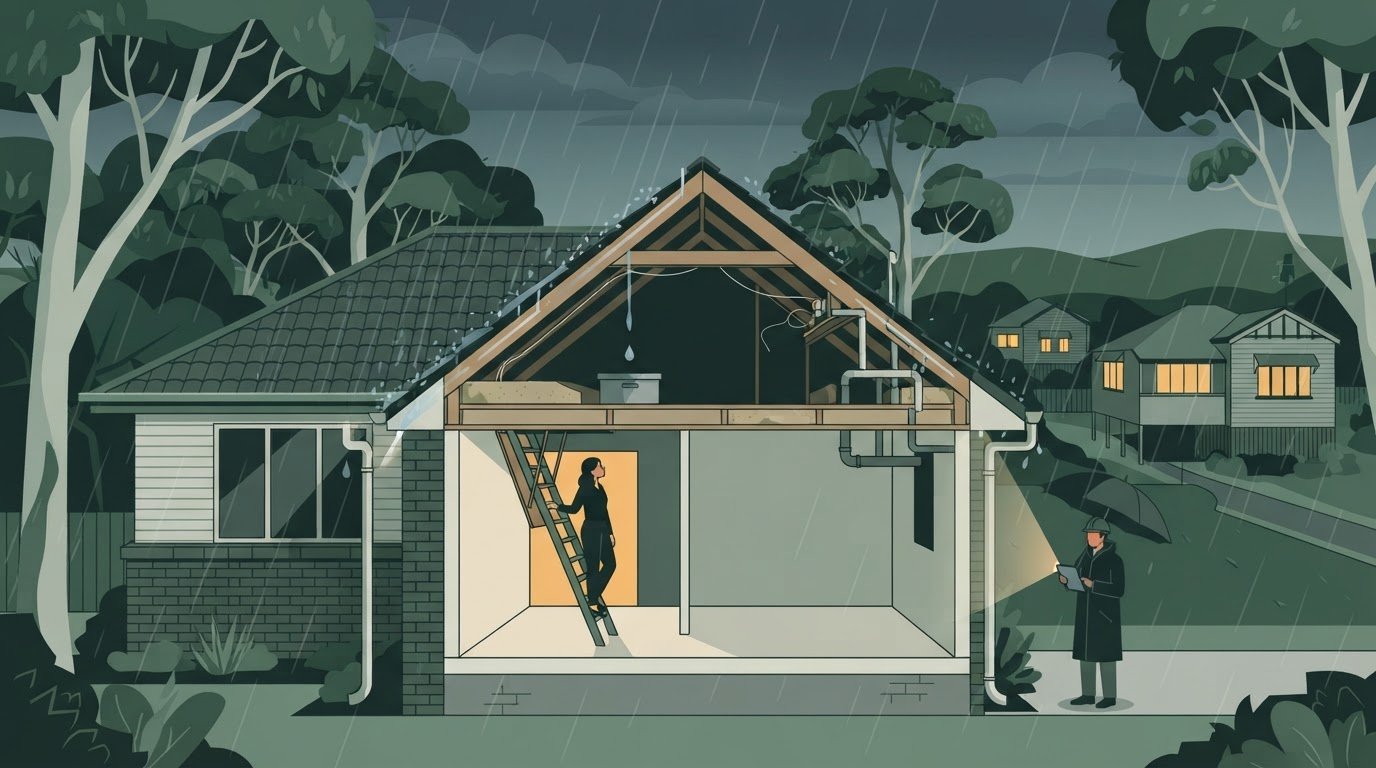
What if the drip you hear isn’t coming from directly above you? A dripping sound in attic during rain can point to a roof leak, but it doesn’t show where water is getting in. Rainwater may travel along rafters before it drips, while blocked gutters, plumbing or condensation can create similar sounds. It’s understandable to worry about hidden damage to insulation, ceilings or timber, especially when the source is difficult to find during a storm.
You can look for clues without climbing onto a wet roof or entering an unsafe roof space. This guide explains what the sound may mean, what to check safely during and after rain, and which warning signs call for a professional inspection. You’ll also learn why the sound’s location is only a clue, and how a roof leak specialist can investigate the source rather than relying on guesswork.
Key Takeaways
- A dripping sound in attic during rain is a clue to investigate, not proof that the roof is the source.
- Note when the sound starts and where moisture appears. These details can help distinguish possible roof, gutter, condensation or plumbing causes.
- Stay off wet roofs and out of unsafe roof spaces during storms. Record visible signs from a safe position instead.
- Move valuables away and contain drips only if you can do so safely, then keep a record of what you observed.
- A roof leak inspection can assess roof coverings, flashings and drainage to build an evidence-led picture of the likely source.
What a dripping sound in the attic during rain can tell you
A drip during rain is unsettling, particularly when you can’t see where it’s coming from. It deserves attention, but it isn’t a diagnosis. The sound suggests that water may be moving or collecting somewhere in the roof space. It could be related to roof ingress, but the noise alone can’t confirm the cause or identify a damaged component.
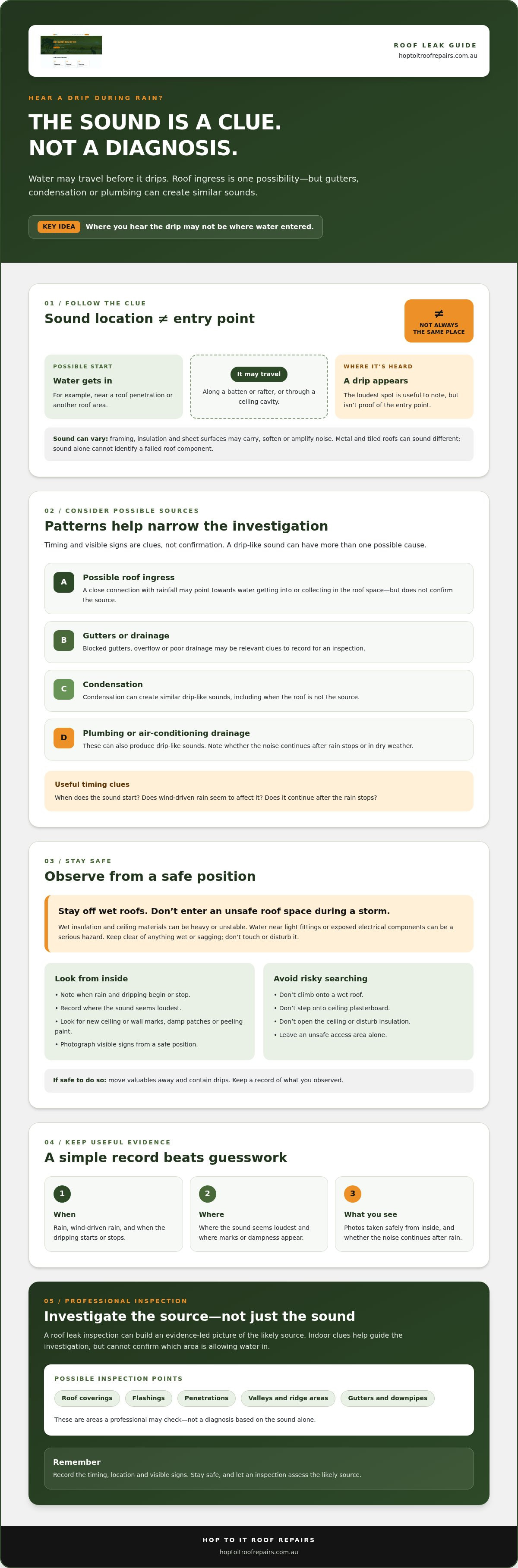
The point where you hear water falling isn’t necessarily where it entered the roof. Water can follow a path before it drips, so the entry point and the sound may be some distance apart. For background on what a leak is, remember that a sound is evidence to investigate, not proof of a particular fault.
Why the sound may not come from directly above
Roof framing, insulation and sheet surfaces can carry, soften or amplify noise. For example, water entering near a roof penetration might track along a batten or rafter before reaching a low point and dripping. A ceiling cavity can also carry sound away from the water’s path. The spot that sounds loudest isn’t reliable proof of where rain entered.
Metal roofing may make rain and drips sound different from a tiled roof, but sound alone can’t identify a failed flashing, tile or other roof component. Treat the sound’s location as a useful observation for an inspection, not a repair map.
When rain is the likely trigger, and when it may not be
Notice when the noise begins and how it changes. Does it start with rainfall, become louder in wind-driven rain, or continue after the rain stops? A close connection with wet weather can point towards water getting into or collecting in the roof space, but it doesn’t confirm the source. Plumbing, air-conditioning drainage or condensation can also create drip-like sounds.
If you hear a dripping sound in attic during rain, record the time, weather and room or area where it seems loudest. Note whether the sound continues in dry weather, and photograph any visible water marks or damp patches from a safe position. Don’t open the ceiling or disturb insulation to search for the source. These materials can hide the water’s path, and disturbing them may create additional risks. Careful observations give a roof specialist more useful evidence than guesswork.
How to check likely sources of an attic drip without taking risks
If you hear a dripping sound in attic during rain, start with observations from inside your home. Note when the rain began, whether it is being driven by wind, and when the sound starts or stops. Look for visible signs, take photos and arrange a professional inspection if you suspect water is getting in.
Stay on the ground: observe from a safe position inside, and do not climb onto a wet roof or enter an unsafe attic during a storm. Wet insulation and ceiling materials can be heavy or unstable, while water near light fittings or exposed electrical components can create a serious hazard. Keep clear of anything wet or sagging. Do not touch it or disturb the area to investigate.
What to look for from inside the home
Check ceilings and walls for new marks, damp patches, peeling paint or water near the roof-space access. Use a torch from a stable position, but do not step onto ceiling plasterboard, which is not designed to support your weight. If the access area looks unsafe, leave it alone. You can still record where the sound is loudest and photograph visible signs from below.
For general background, Wikipedia can help explain roof-related terms, but it cannot assess the conditions in your home. Treat what you see as clues, not confirmation of the leak entry point.
Roof areas that may need a professional check
A roof inspection may consider penetrations such as vents, the flashings around them, valleys, ridge areas and visibly damaged roof coverings. Gutters and downpipes may also need attention if water appears to overflow or drain poorly. These are possible inspection points, not a diagnosis. Clues seen indoors cannot confirm which area is allowing water in.
Keep a short record to share when arranging an inspection:
- When the dripping starts and whether wind-driven rain seems to affect it.
- Where the sound seems loudest, and where you see any marks or dampness.
- Photos taken safely from inside, plus whether the noise continues after rain.
This gives a roof leak specialist useful evidence to investigate rather than relying on sound alone. If the clues point to possible roof ingress, learn more about professional roof leak detection and what an inspection may involve.
How to tell a roof leak from gutters, condensation or plumbing
Timing and location can help narrow down what to investigate, but no pattern proves the cause. A dripping sound in attic during rain may relate to water entering through the roof or overflowing drainage. Wind direction and drainage paths can affect where water travels and appears, so a stain or drip near an eave doesn’t necessarily mark the entry point.
| Possible source | Timing and rain connection | Possible location or visible clue |
|---|---|---|
| Roof ingress | May start or intensify during rain, including wind-driven rain. | Moisture may show away from the entry point, along a ceiling or roof-space path. |
| Gutter overflow | May coincide with heavy rain or water draining poorly. | Water or dampness may appear near eaves; overflow may be visible from a safe position. |
| Condensation | May occur in humid conditions, including when it hasn’t rained. | Dampness may appear on cool surfaces in the roof space, but needs assessment. |
| Plumbing or appliance drainage | May relate to water use or an appliance running rather than rainfall. | The sound may occur near pipes, bathrooms or air-conditioning drainage routes. |
Clues that point towards roof or gutter water ingress
If the noise begins or gets louder as rain sets in, roof coverings and drainage are worth checking professionally. Blocked outlets, overflowing gutters or downpipe issues may leave water around the eaves, while a roof leak can follow a less direct path. These clues can guide an inspection, but they don’t confirm the fault. For a closer look at how specialists trace water beyond a visible stain, read about professional roof leak detection in Brisbane. If you’ve noticed overflow or drainage symptoms, see this guide to gutter repairs and drainage issues.
Clues that may suggest condensation or plumbing
Dampness that appears in humid weather without rain may suggest condensation, but it still needs assessment to rule out other causes. Note whether the sound coincides with taps, toilets, showers or an air-conditioning unit operating. For general background on condensation, see wikipedia.org. If the evidence appears linked to plumbing or an appliance rather than rain, contact an appropriate plumbing professional.
What to do during and after rain if you hear dripping
Stay calm and deal with immediate hazards first. If water is near a light fitting, the ceiling is sagging or damage is spreading quickly, keep people out of the affected area. Don’t touch wet electrical fixtures or try to inspect the roof space. If you’re concerned about an electrical hazard, contact a suitably qualified professional.
From a safe position, move valuables away from the water. Place a bucket or other container beneath a drip only if you can reach the spot without standing under a sagging ceiling, touching electrical fittings or climbing. Don’t risk a fall to catch water. If you can’t place a container safely, leave it and keep clear.
If the signs persist or return with rain, get help investigating a roof leak. A roof specialist can assess whether temporary make-safe work may help protect the property while permanent repairs are planned.
When to treat the situation as urgent
Active water around electrical fittings, a visibly sagging ceiling or rapidly spreading damage needs prompt attention. Leave the affected area and keep others away. Don’t touch wet switches, lights or exposed electrical components, and don’t try to patch the roof during a storm. Focus on keeping people safe and arranging appropriate professional help.
What to record for a useful roof inspection
Once it’s safe, capture clear details. A short record helps a specialist compare what you heard with visible signs and weather conditions.
- Write down the room and approximate location where the sound seems loudest.
- Note when the rain began, whether wind was driving it, and when the dripping started or stopped.
- Photograph visible marks or damp patches from a safe position. Take another photo later if they change.
- Record whether the roof is metal or tile, and whether the issue has happened before.
Keep your notes and photos. Don’t remove roof materials, open the ceiling or disturb insulation to look for the source. If water is still entering after the rain, or the same signs return in later showers, those records can help guide a professional roof inspection.
How a roof leak inspection can confirm the source in Queensland
A professional inspection looks beyond the spot where water becomes audible or visible. A QBCC-licensed roof plumber can assess roof coverings, flashings, drainage and possible water paths to build an evidence-led picture of the cause. If you’ve heard a dripping sound in attic during rain, your notes about timing, location and visible moisture give the inspection a useful starting point.
The source may not be obvious straight away. Water can travel before it drips, and a sound or ceiling mark alone can’t confirm where it entered. The specialist’s findings can guide next steps for a metal or tile roof, or indicate that another cause needs to be considered.
What to expect from a specialist roof leak investigation
Share what you’ve observed: which room the sound is in, when it occurs, whether you’ve seen damp patches, and whether the issue has happened before. Mention whether your roof is metal or tile. The specialist can assess relevant roof areas and drainage rather than relying on the sound alone. If active water ingress needs temporary protection, read this roof make-safe guidance for storm damage.
Inspection findings should explain what was checked and what evidence supports the likely cause. They may identify a repair path, though some leaks require further investigation to trace fully.
Choose clear findings and a practical repair plan
Ask what areas were inspected, what the findings show and what work is proposed. A written report helps you understand the evidence and keep a record of the assessment. A fixed-price quote sets out the proposed repair cost before you agree to the work. Hop To It Roof Repairs provides a detailed written report and fixed-price quote for every job, along with a workmanship warranty.
Hop To It Roof Repairs serves Brisbane, the Gold Coast, Redland Bay, Moreton Bay and Ipswich. If you suspect a roof leak, contact Hop To It Roof Repairs to discuss the signs and arrange an inspection.
Take the next step towards finding the source
A dripping sound in attic during rain is a reason to investigate, not proof of where water is entering. The sound may travel, and gutters, condensation or plumbing can create similar clues. Note when it happens, photograph visible signs from a safe position, and stay off wet roofs and away from unsafe roof spaces.
If the noise or damp patches persist or return, a professional roof inspection can help identify the likely source and clarify what needs attention. Hop To It Roof Repairs is a QBCC-licensed roof plumbing specialist. Every job includes a fixed-price quote, detailed written report and workmanship warranty, so you can understand the findings and proposed work before proceeding.
Contact Hop To It Roof Repairs to discuss a suspected roof leak. With clear observations and an evidence-led inspection, you can take the next step with confidence and protect your home from further water ingress.
Frequently Asked Questions
Does a dripping sound in the attic during rain always mean the roof is leaking?
No, a dripping sound in attic during rain doesn’t always mean the roof is leaking. Rain may enter through roof coverings or flashings, but gutter overflow, condensation and plumbing can create similar noises. Note when it starts, where it sounds loudest and whether you can see moisture. Don’t climb onto the roof in wet weather. If the noise recurs or water appears, arrange an assessment from the appropriate roofing or plumbing professional.
Can water enter the roof and drip somewhere away from the leak?
Yes. Water can travel along roof components, framing or other surfaces before it reaches a point where it drips or becomes visible. A ceiling mark or sound may not be directly below the entry point, so treat its location as a clue rather than a diagnosis. A roof inspection can assess likely water paths and guide repair recommendations. Hop To It Roof Repairs provides roof leak detection across Brisbane, the Gold Coast, Redland Bay, Moreton Bay and Ipswich.
Is it safe to go into the attic while it is raining?
It’s safest to stay out of the attic during a storm, particularly if access is dark, slippery or near wet electrical components. Never step on ceiling plasterboard, and don’t touch wet light fittings or wiring. If the ceiling is sagging or water is near electricity, leave the area and seek appropriate help. You can still note the sound and photograph visible signs from a safe position inside your home.
What should I do first if I hear dripping in the ceiling?
Keep people away from wet or sagging areas and stay clear of nearby electrical fittings. If it’s safe, move valuables and place a container under the drip without climbing or reaching unsafely. Photograph visible signs and note the rain conditions and when the sound starts or stops. Don’t cut into the ceiling or climb onto the roof. If moisture appears or the noise returns, arrange an inspection to investigate the cause.
Could a dripping sound during rain come from a gutter?
Yes. An overflowing or poorly draining gutter can create water sounds near the eaves or allow water to affect nearby roof areas. The noise alone can’t confirm a gutter problem. From the ground, note any visible overflow and where the sound occurs, but don’t lean a ladder or reach over a roof edge to check. If drainage symptoms persist, arrange a safe professional assessment of the gutters and roof drainage.
How can I tell whether the sound is plumbing rather than a roof leak?
Notice whether the sound happens only during rain or also when taps, toilets or appliances are used. A noise that follows water use may need assessment by a plumber; a clear link to rainfall may point towards checking the roof and drainage. These patterns aren’t conclusive, especially if pipes run through the roof space. Record the timing and any visible moisture so the appropriate professional can investigate the likely source.