Chimney Flashing Repair Brisbane: The Homeowner’s Guide to Professional Sealing
3 September 2026 · 17 min read
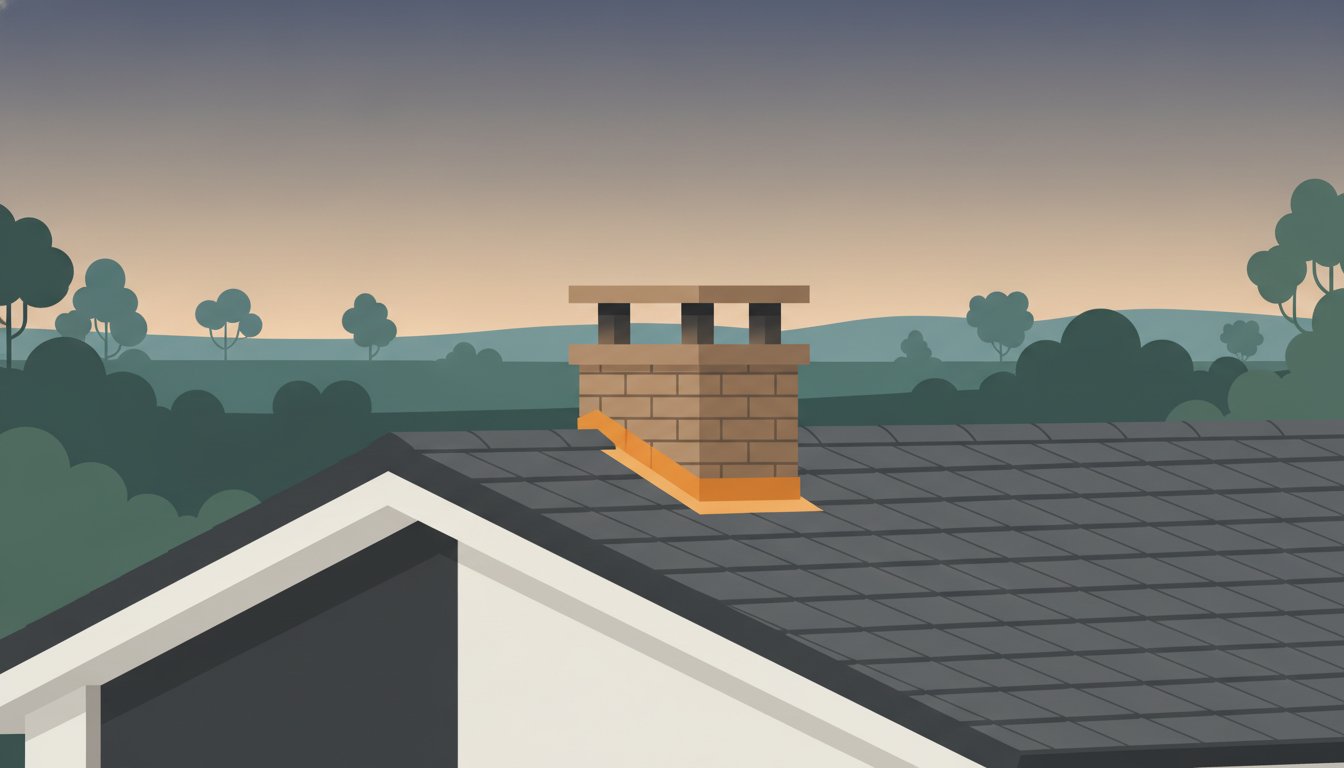
That "quick fix" silicone tube from the local hardware store is likely the reason your chimney still leaks during a fierce Brisbane summer storm. While a dab of sealant might look like a solution, it simply cannot withstand the intense thermal expansion cycles that characterise our local climate. If you're searching for a chimney flashing repair Brisbane experts can stand behind, you likely already know that damp patches on your plasterboard won't wait for a "convenient" time to be fixed.
It's understandable to feel anxious about "dodgy" repairs that fail the moment a storm cell rolls over the suburbs. You need a watertight result that survives the heat, not a temporary patch-up. This guide provides a clear path to professional sealing that protects your property from costly internal water damage. We'll cut through the jargon to explain why your flashing is failing and how a specialist approach ensures a permanent, structural seal.
Learn how to identify structural weaknesses before they become expensive emergencies. We'll preview the essential steps to secure your roof, giving you the confidence to choose a solution that prioritises accountability and professional workmanship over risky shortcuts.
Key Takeaways
- Understand why Brisbane’s extreme heat cycles cause generic sealants to fail and why a professional chimney flashing repair Brisbane service is essential for long-term protection.
- Learn to spot the difference between masonry issues and flashing failure to avoid paying for repairs that don't actually stop the leak.
- Discover why DIY silicone applications often backfire by trapping moisture against your home's timber frame, leading to hidden rot.
- See how a fixed-price quote and a detailed written report remove the anxiety and "hidden extras" often found with general builders.
- Identify the specific QBCC licensing requirements you must verify to ensure your roof plumber is qualified to perform structural flashing work.
Understanding Chimney Flashing Failure in Brisbane
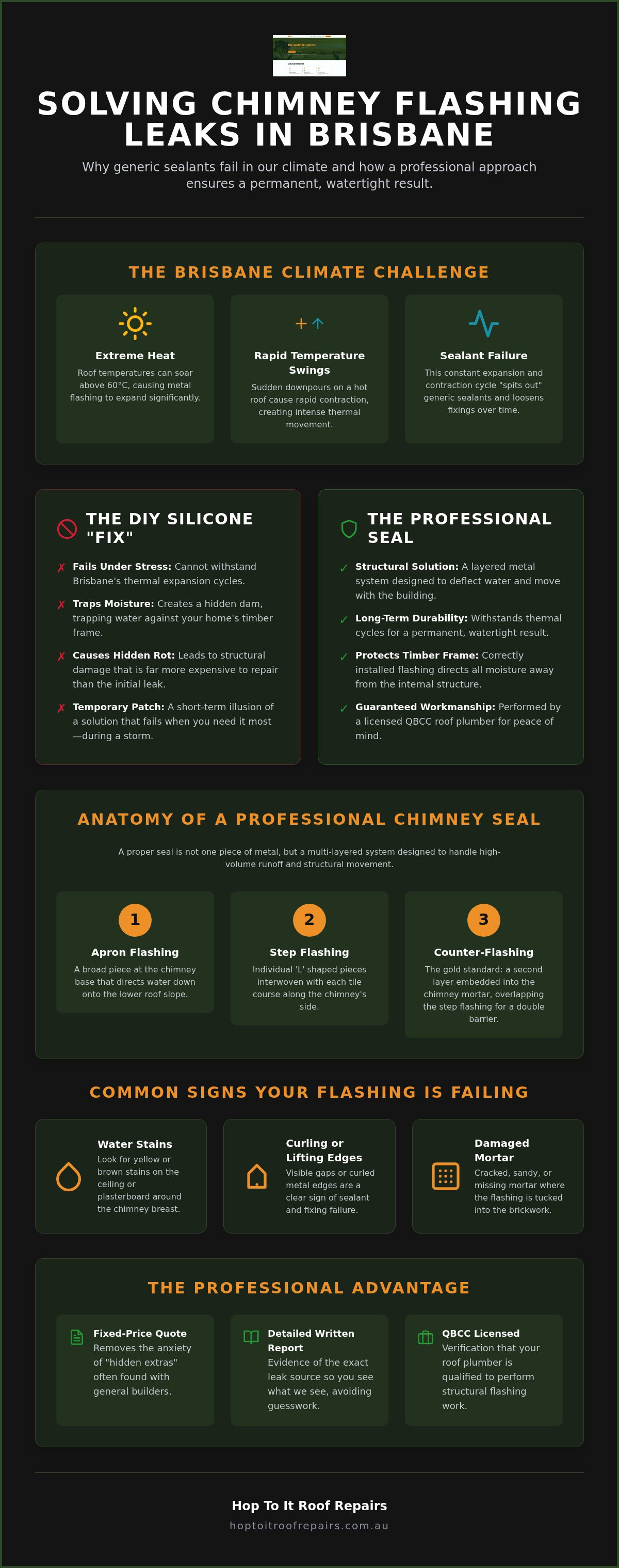
Chimney flashing serves as the vital, watertight bridge between your roof’s surface and the vertical masonry of the chimney. Without it, water would simply pour into the gap where these two different structures meet. This system of flashing (weatherproofing) is designed to deflect water away from the joint and onto the roof material, where it can safely drain into your gutters.
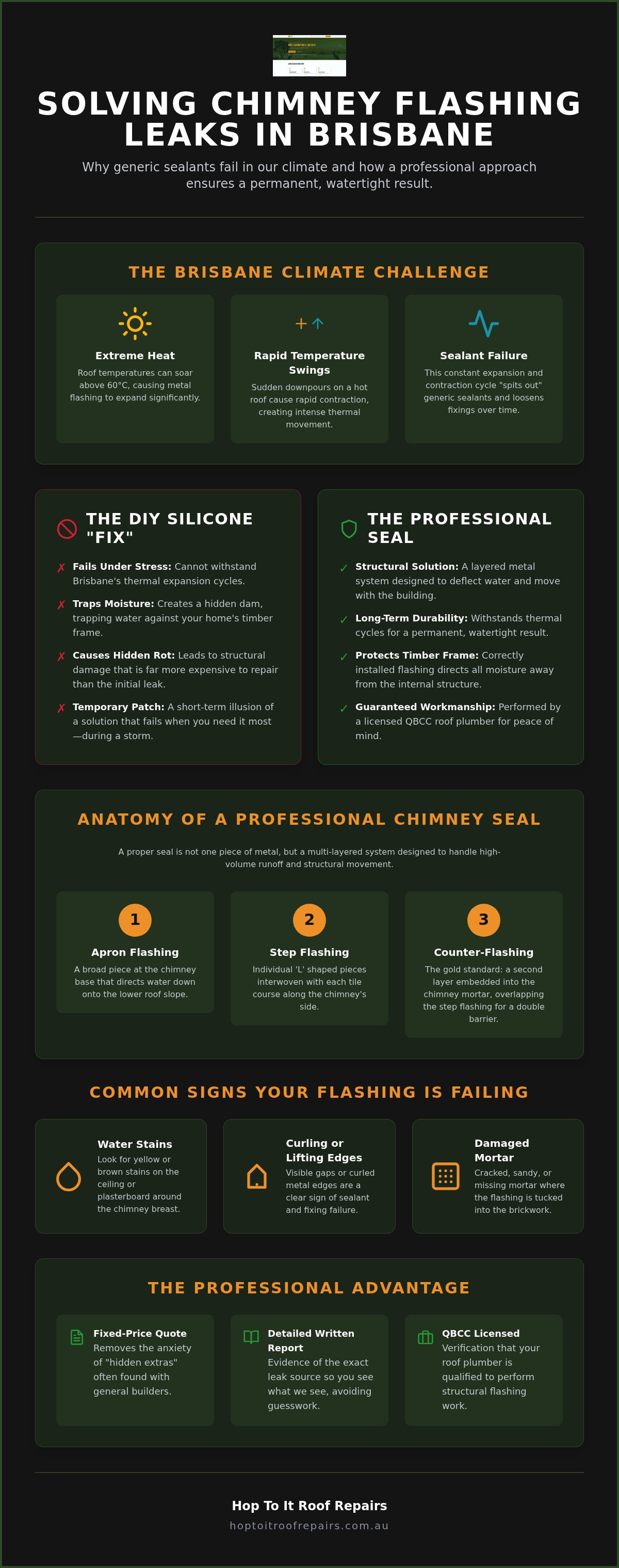
In South East Queensland, our roofs face a unique set of stressors. A typical Brisbane summer day can see roof temperatures soar above 60 degrees Celsius, only to be hit by a sudden, freezing downpour during a late-afternoon storm. This rapid temperature swing creates intense thermal movement. Metal expands in the heat and contracts in the cold. Over time, this constant shifting "spits out" generic sealants and pulls nails loose. It is the leading cause of chimney flashing repair Brisbane homeowners face after a decade of local weather.
For those living in older Brisbane homes or closer to the coast, corrosion is a silent enemy. Salt-laden air accelerates the breakdown of older galvanised steel flashing. Once the protective zinc coating wears thin, rust holes appear, creating direct entry points for water that are often invisible from the ground. Identifying these failures requires a specialist eye before they compromise your internal ceiling structure.
The Different Layers of a Chimney Seal
A professional seal isn't just one piece of metal; it's a layered system designed to handle high-volume runoff. We look for three specific components during an inspection:
- Apron flashing: The broad, front-facing piece that sits at the base of the chimney, directing water onto the lower roof slope.
- Step flashing: Essential for tiled roofs, these are individual L-shaped metal pieces interwoven with each course of tiles along the chimney's side.
- Counter-flashing (Cap flashing): This is the gold standard for protection. It is a secondary metal piece embedded directly into a groove in the chimney's mortar, overlapping the step flashing to create a double-layered barrier.
Common Signs Your Flashing is Failing
Spotting a problem early saves thousands in plasterboard repairs. Look for these red flags during your next maintenance check:
- Yellow or brown water stains on the ceiling or walls immediately surrounding the chimney breast.
- Visible curling or lifting of the metal edges where the flashing meets the roof tiles or metal sheets.
- Cracked, missing, or sandy mortar where the metal is supposed to be tucked into the brickwork.
If you notice these signs, a professional chimney flashing repair Brisbane specialist should assess the situation. Ignoring a small gap today often leads to a major internal leak during the next storm cell.
Identifying the Source: Is it the Flashing or the Masonry?
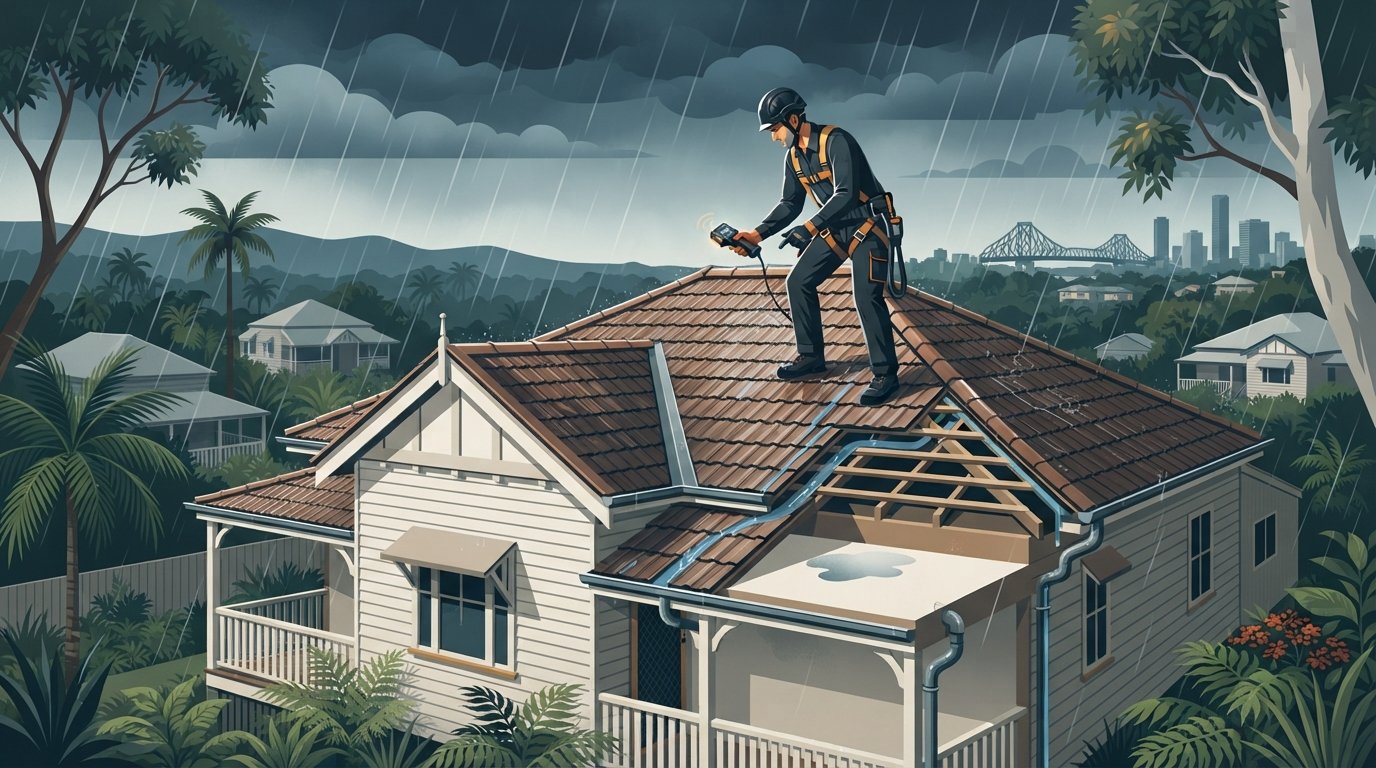
Finding the exact source of a leak is the first hurdle in any successful repair. Water is deceptive. It rarely drops straight down from the point of entry. Instead, it often travels along a timber batten or the underside of a roof sheet for several metres before finally dripping onto your ceiling. This "water tracking" trap means a stain in your lounge room might actually be caused by a failure two metres away at the chimney base. This is why professional roof leak detection Brisbane is the only way to avoid wasting money on a "guesswork" fix that doesn't work.
We also pay close attention to the "saddle" or "cricket". This is a small, peaked structure built behind the chimney on the high side of the roof. Its job is to divert water around the chimney rather than letting it pool against the masonry. If this was never installed or has rusted through, even the best flashing won't stop a leak during a heavy Queensland downpour. Data from the Australian Bureau of Statistics reflects the diversity of our local building stock, and we see everything from heritage brickwork to modern metal cladding in South East Queensland. Each requires a specific approach to chimney flashing repair Brisbane homeowners can rely on. We provide a detailed written report for every inspection, documenting the exact point of ingress with evidence so you see what we see.
The Visual Inspection Checklist
Before making any recommendations, we run through a rigorous physical checklist. We look for rusted valley trays where they meet the chimney and check the "soaker" flashing on the high side for cracks or displacement. We also inspect older lead or zinc-alum flashing for tiny pinholes caused by decades of oxidation. These small holes are often enough to let in significant water during sustained rain events, even if they look solid from a distance.
When the Problem Isn’t the Metal
Sometimes, the roof plumbing is perfect, but the chimney still leaks. Porous bricks can act like a sponge during three days of rain, eventually soaking through to the internal plasterboard. Alternatively, a cracked chimney crown—the concrete slab on top—can allow water to drop straight down the flue. At Hop To It Roof Repairs, we distinguish between these masonry faults and plumbing failures. This ensures you don't pay for a roof repair when you actually need a bricklayer or a new chimney cap.
Why DIY Silicone Fixes Usually Fail
It is tempting to grab a tube of silicone from the hardware store for a quick fix. It feels like a win. In Brisbane, however, generic sealants often peel away from metal surfaces within six months. This happens because metal expands and contracts significantly in our intense sun. If the sealant isn't specifically rated for high-movement roof plumbing, it loses its bond. This creates a "Silicone Band-Aid" that looks sealed from the ground but actually hides a growing gap where water can pool.
Surface preparation is 90% of a successful chimney flashing repair Brisbane. Most DIY attempts involve squiring new silicone over old, dirty, or oily metal. It simply won't stick. We spend the majority of our time removing failed sealants and loose mortar to expose a clean, structural joint. Without this level of detail, any repair is destined to fail before the next storm season. If your previous attempts haven't held up, it is time to organise a professional inspection to get it right the first time.
Mechanical fixings are also non-negotiable. Adhesive-only repairs rely entirely on the strength of the "glue" to hold everything together. We use physical fasteners and tuck metal into mortar joints. This provides a structural seal that stays put even when the building moves or the wind picks up. Relying on a tube of silicone alone is a gamble your timber frame cannot afford to lose.
The Dangers of Trapped Moisture
"Over-sealing" is a common amateur mistake. If you block every gap, you might inadvertently plug the drainage paths designed to let condensation escape. This traps moisture directly against your home’s timber frame. Instead of shedding water, the repair holds it in. This leads to silent rot that stays hidden behind your plasterboard until the damage is severe. Professional roof plumbers focus on "shedding" water off the roof, not just creating a dam of sealant that might cause more harm than good.
The Right Materials for Brisbane Roofs
Choosing the right material is a science. For modern Colorbond roofs, we use lead-free flashing alternatives to prevent drainage issues. We also strictly avoid "galvanic corrosion". This is a chemical reaction that occurs when two incompatible metals touch. Using the wrong screw or flashing material can cause your roof sheets to rust out in record time. Our team uses specialised, UV-resistant sealants that don't crack or go brittle under the intense Queensland sun, ensuring your repair survives the heat.
The Professional Chimney Flashing Repair Process
Every successful chimney flashing repair Brisbane project begins with total transparency. We don't provide vague estimates that balloon halfway through the job. Instead, we offer a fixed-price quote based on a thorough physical inspection. This removes the anxiety of hidden costs and ensures you know exactly what the resolution looks like before we even step onto your roof. Our goal is to provide immediate relief through a structured, evidence-based approach.
The repair itself follows a strict four-step protocol to ensure longevity. First, we strip away every trace of failed silicone, old tape, and loose mortar. This is the most labour-intensive part of the process, but it is critical to expose the true joint and create a clean bonding surface. Second, we perform metal remediation. We reshape buckled metal or replace rusted sections that are beyond salvage. Third, we install new counter-flashing, tucking it into the masonry and sealing it with industrial-grade polymers that remain flexible under the Brisbane sun. Finally, we perform a controlled water test. This verifies that the runoff path is completely clear of the chimney base and that your home is watertight.
If you want to ensure your roof is ready for the next storm cell, book your fixed-price chimney inspection today to secure your property.
Specialist Techniques for Tiled Roofs
Tiled roofs require a delicate touch to avoid collateral damage. We integrate new flashing with your existing tiles without cracking the surrounding materials. If we find broken tiles during the process, we replace them immediately to ensure a seamless seal. We finish the job by re-pointing the chimney junction using high-quality flexible pointing, creating a neat finish that matches your roof's aesthetic while providing a secondary water barrier.
Specialist Techniques for Metal/Colorbond Roofs
Metal roofs present different challenges, specifically regarding thermal movement. We custom-fold flashing on-site to match the specific profile of your roof sheets, whether it's corrugated or a modern tray profile. We pay close attention to "lap" distances. If these are too short, capillary action can actually suck water upwards and under the metal sheets. We also replace any rusted roof screws near the chimney base with new, Class 4 fasteners to prevent secondary leaks from forming in the future.
Choosing a Licensed Roof Plumber in Brisbane
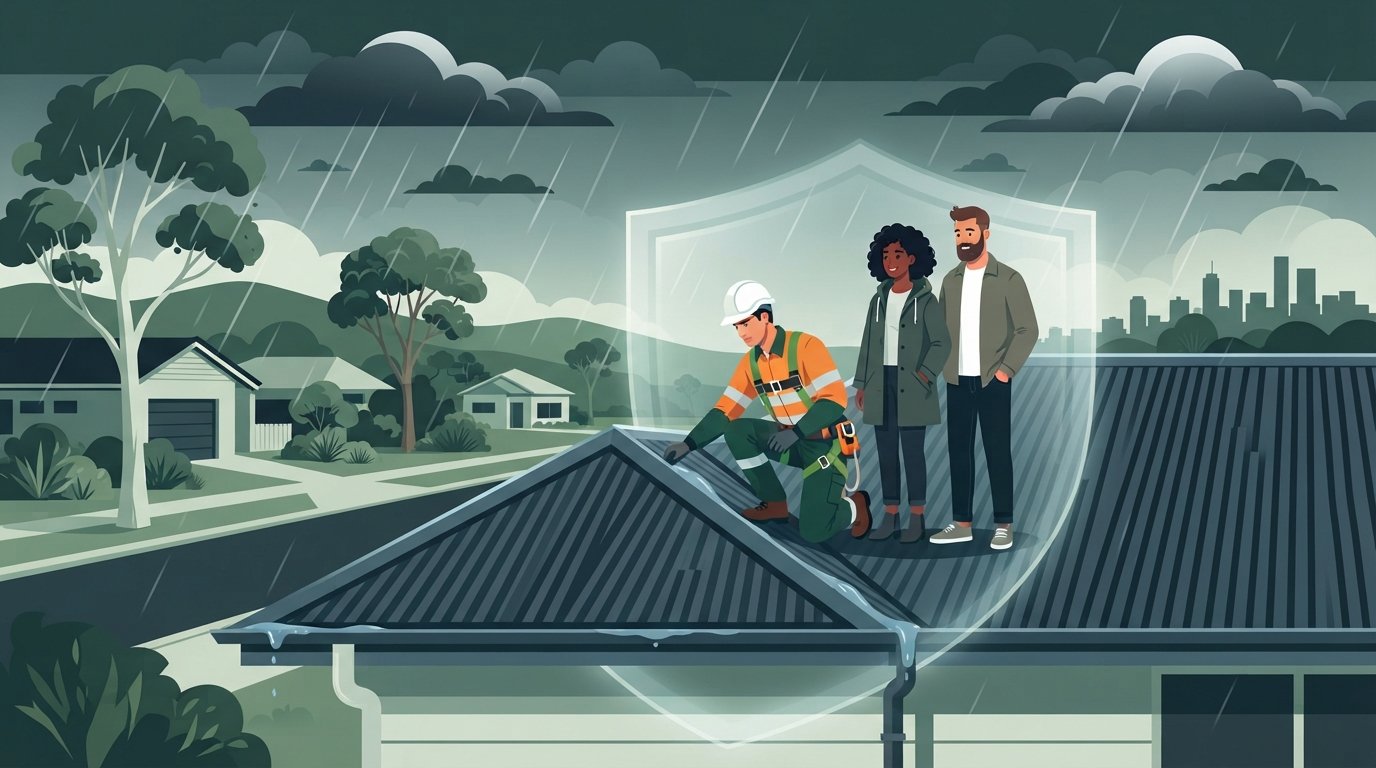
In Queensland, a QBCC license is a non-negotiable requirement for anyone performing roof plumbing work. This isn't just a matter of red tape. It is a critical safeguard for your property. If you hire an unlicensed individual for a chimney flashing repair Brisbane, you risk more than just a leaky roof. Most insurance providers will flatly reject claims for internal water damage if the underlying repair was not completed by a licensed professional. Verifying a contractor’s credentials via the QBCC website is the first step toward protecting your home from the financial fallout of a "dodgy" fix.
There is a vast difference between a local handyman and a specialist roof plumber. A handyman might be excellent at fixing a fence, but they often lack the technical training to manage complex water-shedding systems. While a generalist might reach for a temporary sealant, a licensed specialist understands the physics of roof drainage and thermal movement. Choosing a specialist ensures the repair is structural rather than cosmetic. At Hop To It Roof Repairs, we back every project with a workmanship warranty. This provides the immediate relief and long-term peace of mind you need when the clouds start to gather over the suburbs.
Accountability is built into our process through detailed written reports. If a storm has already caused internal damage to your plasterboard, our documentation becomes a vital asset. We provide clear evidence of the leak source and the specific steps taken to rectify it. This level of transparency removes the anxiety of dealing with "tradie-on-the-back-of-a-napkin" quotes and ensures you have the documentation required for any potential insurance assessments.
Protecting Your Home Investment
Proactive maintenance is always more cost-effective than reacting to an emergency storm damage roof repair Gold Coast. By addressing small gaps in your chimney flashing now, you prevent the slow, silent rot that destroys timber frames. Our fixed-price model is designed to help you budget effectively. You receive a definitive price upfront, meaning there are no "unforeseen extras" once the work begins. This transparency is why we provide a comprehensive written report for every client, ensuring you understand exactly how your home is being protected.
Ready to Organise a Professional Inspection?
Don't wait for the next Brisbane storm season to test your chimney seals. Heavy rain will find even the smallest weakness in your flashing, turning a minor maintenance task into a high-stress emergency. When you book an inspection with our team, you can expect a punctual, professional assessment that prioritises your home's integrity. We arrive on time, identify the root cause of the ingress, and provide a clear path to resolution without the jargon. Get your fixed-price chimney flashing repair quote today!
Secure Your Home Before the Next Storm
Your chimney is a complex junction. It requires more than a standard sealant to remain watertight. Understanding the impact of Brisbane’s thermal cycles on metal joints is essential for a successful chimney flashing repair Brisbane. Shifting from temporary DIY patches to professional, structural seals prevents timber rot and avoids expensive internal plasterboard damage. A single storm can turn a small gap into a major emergency if left unaddressed.
Our team provides immediate relief with Fixed-Price Quotes and Detailed Written Reports. As QBCC Licensed Specialists, our workmanship survives South East Queensland's weather extremes. You don't have to guess about the state of your roof or the final cost. We offer total transparency and results that protect your investment. Every repair is designed to provide long-term security rather than a temporary fix.
Take control of your home maintenance before the clouds gather. Book Your Professional Chimney Leak Inspection Now and ensure your property is ready for the next summer storm cell. Protecting your home starts with a clear, expert assessment.
Frequently Asked Questions
How much does chimney flashing repair cost in Brisbane?
Pricing for a professional chimney flashing repair Brisbane service varies based on the size of the chimney and the extent of the damage. We don't provide generic estimates because every roof profile is different. Instead, we offer fixed-price quotes after a physical inspection. This ensures you pay a definitive price for a permanent solution. Factor in the cost of specialist materials and the labour required to remove old sealants properly before new components are installed.
Can I repair chimney flashing from the inside of the house?
No, you cannot effectively repair flashing from the inside. Flashing is an external barrier designed to shed water before it enters your home. Attempting to seal a leak from the attic or ceiling only traps moisture against your home's timber frame, which leads to rot. A professional chimney flashing repair Brisbane specialist must access the roof to install structural metal components that divert water away from the masonry. This is the only way to ensure a watertight result.
How long does a professional chimney flashing repair last?
A high-quality repair using industrial-grade polymers and mechanical fixings should last 10 to 15 years. The lifespan depends on the exposure to Brisbane’s intense UV rays and the frequency of heavy storms. Unlike DIY silicone fixes that fail within months, our professional methods use materials designed for extreme thermal expansion. Regular inspections help ensure the seal remains intact as your home settles over time, providing long-term peace of mind for your property.
Do I need to replace my whole roof if the chimney is leaking?
Most chimney leaks are isolated issues that don't require a full roof replacement. If your roof sheets or tiles are otherwise in good condition, we can replace just the flashing components. However, if the leak has caused widespread rust or rot in the surrounding area, more extensive repairs might be necessary. We provide a detailed written report to clarify exactly what needs fixing, ensuring you only pay for the work required to secure your home.
Is a leaking chimney covered by home insurance in Queensland?
Insurance coverage typically depends on the cause of the leak. Most policies cover sudden storm damage but exclude "wear and tear" or lack of maintenance. If your flashing has simply reached the end of its life, you'll likely pay out of pocket. However, having a QBCC licensed specialist perform the repair is vital. Insurers often deny claims for consequential damage if the work wasn't completed by a licensed professional. Always check your specific policy details for confirmation.
What is the best material for chimney flashing in Brisbane?
Lead-free flashing is the modern standard for Colorbond roofs to prevent drainage issues. For traditional tile roofs, lead or zinc-alum is often used due to its flexibility. We select materials based on their UV resistance and compatibility with your existing roof. Using the correct grade of metal prevents galvanic corrosion, ensuring the new flashing doesn't cause your roof sheets to rust prematurely. This technical precision is what separates a professional repair from a temporary hardware store fix.
Can blocked gutters cause my chimney to leak?
Blocked gutters won't directly cause a chimney leak, but they can exacerbate water tracking. If your gutters overflow, water can back up under the eaves or tiles, potentially entering the roof cavity near the chimney. Effective water drainage is a holistic system. We check your gutters and downpipes during our inspection to ensure the entire roof is shedding water correctly away from the masonry joints. Maintaining clear gutters is essential for overall roof health and performance.
How do I know if my chimney leak is coming from the bricks or the metal?
Distinguishing between masonry and plumbing leaks requires specialist leak detection. If the water stain appears only after hours of sustained rain, the bricks might be absorbing moisture. If the leak starts immediately during a heavy downpour, it is likely a flashing failure. We use physical testing and detailed inspections to isolate the source. This ensures you don't spend money on metal repairs if your bricks need sealing. Our reports provide clear evidence of the exact ingress point.