Ceiling Stain Leak Detection: How to Track and Fix Roof Leaks in Brisbane
16 August 2026 · 17 min read

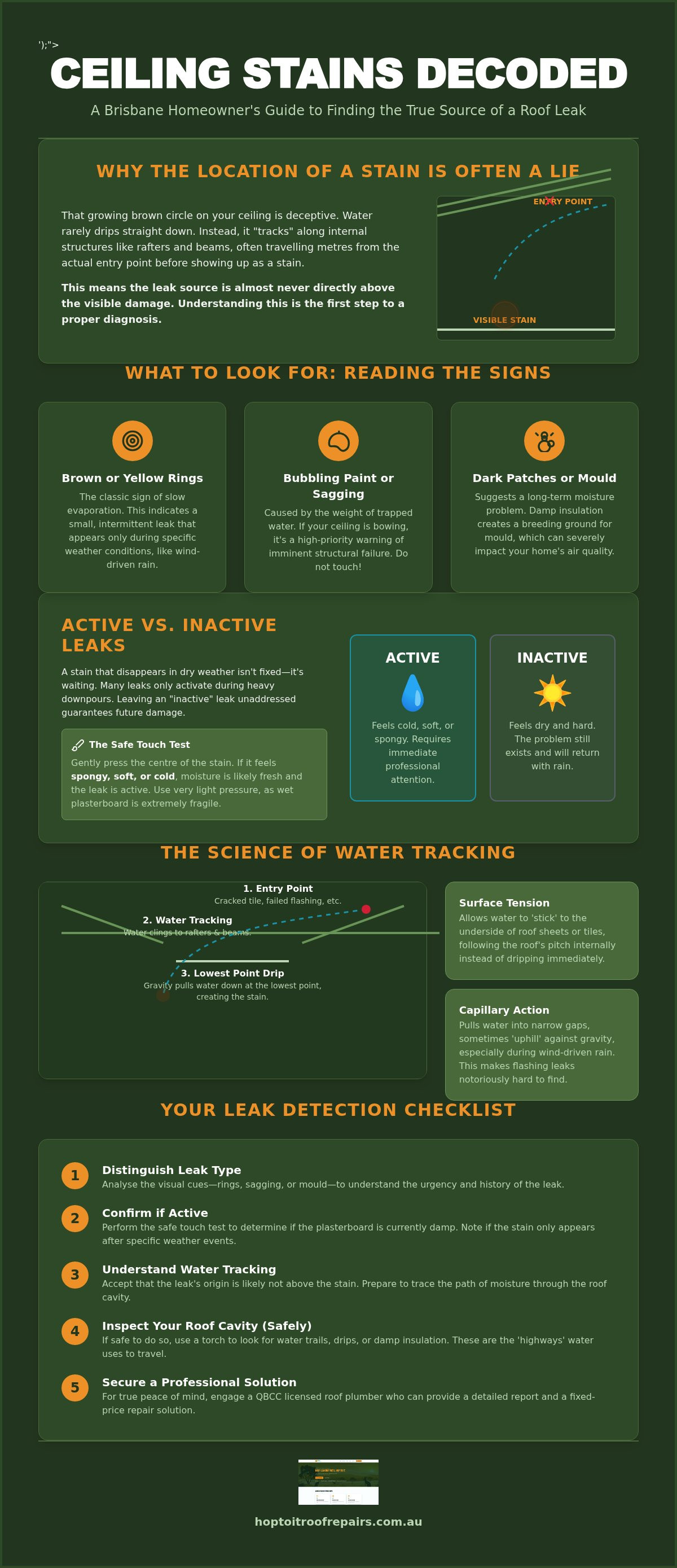
That growing brown circle on your lounge room plasterboard is a liar. While it's tempting to assume the source of the water is directly above the damage, "water tracking" means the actual entry point could be metres away. It's a frustrating reality for Brisbane homeowners who find themselves staring at a ceiling stain while the roof tiles or metal sheets directly overhead appear perfectly intact. This confusion often leads to a fear of open-ended repair costs and rising anxiety every time a heavy Queensland storm rolls in.
We've designed this guide to take the guesswork out of ceiling stain leak detection. You'll learn how to accurately determine if a leak is currently active and understand the physics of how water travels along internal rafters before dripping onto your ceiling. Stop worrying about "patch and hope" fixes that don't address the root cause. Instead, follow our structured approach to identify the true source of the moisture and discover how to secure a fixed-price repair solution that provides genuine peace of mind before the next big wet season arrives.
Key Takeaways
- Learn why the location of a ceiling stain is often a "lie" and how to distinguish between active leaks and historical water damage.
- Understand the mechanics of water tracking to master ceiling stain leak detection, tracing moisture from its entry point down to the visible damage.
- Recognise the common failure points for Brisbane homes, from cracked tile bedding to specific metal roofing vulnerabilities.
- Follow a safe, step-by-step checklist to inspect your roof cavity and identify the "trails" left by travelling water.
- Secure your home with a fixed-price repair solution and a detailed written report from a QBCC licensed roof plumber.
Why That Ceiling Stain is a Warning Sign You Can’t Ignore
Brisbane's storm season is relentless. When the sky opens up, your roof is the only barrier protecting your home's structural integrity. A ceiling stain is the first visual proof that this barrier has been breached. Understanding what is water damage and how it affects building materials helps you realise that by the time a mark appears on your plasterboard, moisture has already saturated your insulation and timber framing. Ignoring a small spot today often leads to a full ceiling collapse tomorrow.
The Visual Cues of Water Damage
Different marks indicate different levels of urgency. Identifying the specific visual characteristics of the damage helps us prioritise the repair process. Look for these common signs:
- Brown or yellow rings: These are the classic signs of slow evaporation. They usually indicate a small, intermittent leak that only occurs during specific weather conditions or wind directions.
- Bubbling paint or sagging: This occurs when the weight of the water becomes too much for the plasterboard to hold. If you see your ceiling bowing, this is a high-priority warning sign of imminent failure.
- Darker patches or mould: These suggest long-term moisture issues. When insulation remains damp for extended periods, it creates a perfect environment for mould to thrive, which can impact your home's air quality.
Active vs. Inactive Leaks
It's tempting to hope a stain is a "ghost" from a previous, forgotten repair. However, professional ceiling stain leak detection is the only way to be certain that your home is actually watertight. A stain that isn't growing right now might simply be waiting for the next heavy downpour.
You can perform a safe "touch test" by gently pressing the centre of the mark. If it feels spongy, soft, or noticeably cold, the moisture is likely fresh. Be extremely careful not to apply heavy pressure. Water-damaged plasterboard loses its structural strength quickly, and too much force can cause the material to crumble.
Many Brisbane residents notice stains that seem to "disappear" during the dry winter months. This doesn't mean the problem is solved. It simply means there hasn't been enough rainfall to trigger the water tracking process. Leaving these "inactive" leaks unaddressed ensures that the next heavy Queensland downpour will result in an expensive, high-stress repair. Identifying these patterns early allows for a more efficient, fixed-price solution before the damage spreads to your electrical systems or flooring.
The Science of Water Tracking: Why Leaks Travel
Water doesn't always take the shortest route. In the roofing industry, we call the movement of moisture across your internal structures "water tracking." This is the physical process where water clings to structural members, moving significant distances from the original entry point before gravity finally pulls it down onto your ceiling plasterboard. This is why professional ceiling stain leak detection is a specialised skill. You aren't just looking for a hole; you're tracing a journey from the sky to your lounge room.
Capillary Action and Surface Tension
Surface tension allows water to "stick" to the underside of metal roof sheets or tiles. Instead of dripping immediately, the moisture follows the pitch of the roof internally. Capillary action is even more deceptive. It occurs when water is pulled into narrow gaps between overlapping materials, such as where flashing meets a brick wall or where two tiles overlap. Wind-driven rain often forces water "uphill" through these tiny spaces, bypassing traditional barriers. Small gaps in your flashing might look insignificant, but they are often the hardest sources to track because they only fail during specific storm intensities.
Structural Pathfinding in the Roof Space
Once water enters your roof cavity, it seeks the path of least resistance. Rafters, battens, and even electrical conduits act as internal highways. A leak might start at a ridge cap, run two metres down a timber rafter, and only drip when it hits a junction or a knot in the wood. This "lowest point" rule explains why moisture often pools in the centre of a room where the ceiling naturally sags, even if the entry point is at the edge of the house.
Because the key to mold control is moisture control, identifying these hidden paths is a race against time. Water following electrical wiring is a particular hazard that requires immediate attention to prevent short circuits or fire risks. It's entirely possible for a blocked front gutter to overflow into the eaves and track along the wall plates until it reaches a back bedroom. Don't waste time guessing where the water is coming from. If you can't find the source, book a professional roof leak detection to get a definitive, fixed-price answer.
Common Culprits: Metal vs Tile Roof Leak Detection
Brisbane roofs endure some of the harshest conditions in Australia. The cycle of intense UV radiation followed by sudden, high-volume tropical downpours causes building materials to expand and contract rapidly. This thermal movement is the primary driver behind most structural failures. While the tracking science remains the same, the entry points differ significantly between metal and tile homes. Effective ceiling stain leak detection requires a deep understanding of these material-specific vulnerabilities.
Metal Roof Leak Detection
Metal roofing, particularly Colorbond, is exceptionally durable, but it isn't invincible. The most common failure point we encounter involves the thousands of fixings holding the sheets in place. Over time, the neoprene washers on roof screws perish due to UV exposure. Once the rubber cracks, water seeps through the screw hole. Because metal sheets are large, water often tracks along the underside of the rib for several metres before dripping.
We also frequently see damage caused by "solar cowboys." These are installers who walk across the delicate ribs of the metal sheets or fail to seal penetrations correctly when mounting brackets. This compromises the sheet's integrity and bypasses the capillary grooving designed to shed water. If your stain appeared shortly after a solar installation, the mounting points are the first place we look. Sheet overlaps are another concern; if the pitch is too low, wind-driven rain can be forced between the sheets, leading to internal moisture ingress.
Tile Roof Leak Detection
Tile roofs present a different set of challenges. While a single tile is waterproof, the system relies on thousands of individual units working together. Heavy Brisbane winds or hail can easily displace a tile or snap a corner. Even a gap of a few millimetres is enough to allow significant water entry during a storm. We pay close attention to the bedding and pointing. As the mortar (bedding) under ridge caps deteriorates and cracks, it creates direct channels for water to enter the roof cavity.
Many modern tile roofs use sarking as a secondary line of defence. This reflective foil is excellent for insulation, but it can mask leaks for years. Water may enter through a cracked tile, run down the sarking for five metres, and only enter the ceiling where the foil is punctured or ends. We also check for clogged weep holes in the bedding. If these small exit points are blocked by debris, water backs up under the ridge caps and spills into your roof space. Regular maintenance of these components is essential to prevent long-term structural rot.
Regardless of your roof type, valley trays and flashing remain universal weak points. These are the "traffic intersections" of your roof where high volumes of water converge. If a valley is rusted or a lead flashing has pulled away from a chimney or wall, the resulting leak will be substantial. Identifying these specific failures early is the only way to move from temporary patches to a permanent, fixed-price repair.
Your 5-Step Ceiling Leak Detection Checklist
Brisbane storms don't just rain; they dump. This high-intensity rainfall tests every millimetre of your roof's drainage system. If you've spotted a mark, follow this systematic approach to ceiling stain leak detection before calling in the professionals. Taking these steps early helps you provide accurate information to your repairer, ensuring a faster and more efficient fix.
- Step 1: Internal Measurement. Grab a pencil and lightly trace the outline of the stain. Note the date and time. This simple act tells you exactly how fast the leak is progressing after the next QLD downpour.
- Step 2: Roof Space Recon. If you have safe access, get into the ceiling cavity. You aren't just looking for wet spots; you're looking for the tracks water leaves behind on the timber.
- Step 3: Ground-Level Scan. Use binoculars to check for cracked tiles, rusted screws, or lifted flashing from the safety of the ground. Never walk on a wet or damaged roof yourself.
- Step 4: The Simulation. Use a garden hose to mimic rain on specific sections of the roof to see if you can trigger the leak under controlled conditions.
- Step 5: Photo Evidence. Take clear, well-lit photos of the stain, the internal roof cavity, and any external damage you find. These are vital for insurance claims and repair documentation.
Conducting a Safe Roof Space Search
Safety is your first priority. Wear non-slip footwear and use a high-powered LED torch. When you're up there, don't just look at the plasterboard. Look at the timber rafters and battens. Water often leaves "trails"-dark streaks or white mineral deposits-as it tracks toward the lowest point. Checking the roof space during a light shower is often the best strategy. It allows you to see the moisture moving in real-time before it fully saturates the insulation and becomes a larger problem.
The Hose Test Done Right
Never start at the top of the roof. If you spray the ridge first, water will run over every potential leak point below it, making it impossible to isolate the source. Start at the gutters and work your way up the pitch in small, concentrated sections. Have a "spotter" inside the house on a mobile phone. They must alert you the moment they see a drip. This method identifies those "hidden" leaks that only appear when the volume of water mimics a heavy Brisbane storm.
If these steps don't reveal the culprit, don't risk your safety by climbing higher or attempting complex repairs. Reach out for professional roof leak detection to get an expert assessment and a fixed-price repair quote that removes the guesswork.
Professional Leak Detection: Getting a Fixed-Price Solution
DIY tracking is a vital first step, but some leaks are masters of disguise. When your checklist doesn't reveal a clear entry point, continuing to guess becomes an expensive gamble. Professional ceiling stain leak detection moves the process from trial and error to forensic certainty. By using specialised knowledge of roof geometry and material behaviour, a specialist identifies the exact failure point without the need for invasive "exploratory" demolition of your plasterboard.
Why QBCC Licensing Matters
In Queensland, roof plumbing is a specialised trade that requires specific qualifications. Hiring a general handyman for roof repairs often leads to temporary "silicone fixes" that fail during the next heavy storm. A QBCC licensed roof plumber ensures all rectifications meet Australian Standards. This licensing is your guarantee of technical competence and professional accountability. It also provides the protection of a workmanship warranty, giving you long-term security that a "cash-in-hand" contractor simply cannot offer. Avoiding "cowboy" contractors is the best way to ensure your home remains watertight for years, not just weeks.
The Hop To It Difference
We pride ourselves on a "can-do" approach to the most difficult-to-find leaks across Brisbane and the Gold Coast. Our process is built on transparency and efficiency. You aren't just paying for a repair; you are paying for the peace of mind that comes with a detailed written report. These reports provide photographic evidence of the damage and a clear explanation of the tracking path. This documentation is vital for successful insurance claims and is a powerful asset if you are selling your property, as it proves the structural integrity of the home.
The most significant benefit we provide is removing the anxiety of open-ended repair costs. We provide fixed-price quotes for our repairs, ensuring there are no surprises when the job is done. You get a definitive solution to your ceiling stain with upfront clarity on the investment required. Stop staring at that brown mark and worrying about the next forecast. Take control of your home maintenance and Request your fixed-price roof leak detection quote today to secure a permanent, professional result.
Secure Your Home Before the Next Storm
Don't let a small brown mark turn into a structural disaster. You now understand that water tracking makes finding the source of a leak difficult, but it isn't impossible. Whether you have a metal roof with perished washers or a tile roof with cracked bedding, acting quickly is the only way to prevent expensive internal damage. Accurate ceiling stain leak detection requires more than just a ladder. It requires the expertise of a specialist who understands how Brisbane's unique weather impacts your home's specific materials.
Stop guessing and start solving. We provide the transparency you need through detailed written reports and fixed-price quotes for all repairs. As QBCC Licensed Roof Plumbing Specialists, we remove the anxiety of the unknown and replace it with professional certainty. You deserve a home that stays dry regardless of what the Queensland sky delivers. Protect your property and regain your peace of mind before the next heavy downpour arrives.
Book your professional roof leak detection and get a fixed-price quote today.
Frequently Asked Questions
Is a ceiling stain always caused by a roof leak?
No, it isn't always the roof. While roof leaks are common in Queensland, stains can also result from burst plumbing pipes, air conditioning condensation, or even pest infestations in the roof cavity. However, if the mark expands specifically during or after heavy rainfall, it's almost certainly a roofing issue. Professional ceiling stain leak detection will identify if the moisture is coming from your tiles, metal sheets, or internal plumbing.
How much does it cost to fix a leaking roof in Brisbane?
The total investment depends on the roof material and the complexity of the water tracking path. Small fixes like replacing perished washers or a few cracked tiles are less involved than repairing corroded valleys or deteriorating ridge capping. Because every home is different, we avoid vague estimates and instead provide fixed-price quotes. This ensures you know the exact cost of the repair before any work begins on your property.
Can I just paint over a water stain on my ceiling?
You should never paint over a stain without fixing the source first. Standard paint won't stop the underlying moisture from rotting your timber battens or causing the plasterboard to sag and eventually collapse. Once the leak is professionally sealed and the cavity is dry, you must use a specialised stain-blocking primer before applying a topcoat. This prevents the tannins and minerals in the water mark from bleeding through your new paint.
How do I know if my roof leak is an emergency?
A leak becomes a priority when it threatens your home's safety or structural integrity. If water is dripping through light fittings, the ceiling is visibly bowing, or multiple rooms are affected, you need immediate professional intervention. While we don't provide 24/7 emergency call-outs, we recommend isolating your electricity if water is near wires and placing buckets to catch drips. Addressing these signs quickly prevents expensive repairs to your internal flooring and furniture.
Why is my ceiling stain getting bigger even when it isn’t raining?
If a stain grows during dry weather, you likely have a plumbing issue or "stored" moisture. Water trapped in thick ceiling insulation can take days or weeks to fully migrate to the plasterboard. Alternatively, it may be a leaking pipe or a blocked air conditioning drain line. If the mark is consistently damp regardless of the forecast, it's a clear sign that a constant moisture source is present inside your roof cavity.
Does home insurance cover ceiling stains and roof leaks?
Insurance typically covers sudden, accidental damage caused by events like severe storms or hail. However, they rarely cover leaks caused by gradual deterioration, such as rusted gutters or cracked mortar that hasn't been maintained. This is why our detailed written reports are so valuable. We document the specific cause of the ingress, providing the professional evidence required to help your insurance provider determine if the damage falls under your policy coverage.
How long does a professional roof leak detection take?
A comprehensive inspection usually takes 60 to 90 minutes. This duration allows our licensed roof plumbers to conduct a safe internal check, enter the roof cavity to trace tracking paths, and perform an external scan of your tiles or metal sheets. We don't rush the process because finding the true entry point is the only way to provide an accurate, fixed-price quote that solves the problem the first time around.
What is the most common cause of leaks in metal roofs?
Perished neoprene washers on roof screws are the primary culprit for metal roof leaks in Brisbane. The intense UV exposure eventually cracks the rubber seal, allowing water to seep through the screw hole and track along the underside of the sheet. Other frequent issues include blocked valley trays, rusted sheet overlaps, and compromised flashings around penetrations. Regular inspections help identify these small failures before they result in significant internal ceiling damage.