Common Tile Roof Leak Causes in Brisbane: Myths vs. Reality
27 August 2026 · 17 min read

That tube of hardware-store silicone in your hand might be the most expensive "cheap fix" you ever buy. While it’s tempting to slap some sealant on a visible crack, the common tile roof leak causes Brisbane homeowners deal with are rarely that simple. It’s a frustrating reality; you see a damp patch in the hallway, yet the tiles directly above look perfectly intact.
We understand the anxiety that hits when a heavy afternoon storm rolls in over the suburbs. You don't want a temporary patch that fails by next Tuesday, and you certainly don't want to be overcharged for work you don't need. This guide debunks the dangerous misconceptions about tile roof maintenance and identifies the real culprits threatening your home’s structural integrity. We’ll show you how to find the actual source of water ingress and explain why a fixed-price, professional repair is the only way to stop the drip for good. By moving past the "patch-it" mentality, you can secure your roof against the elements with total confidence.
Key Takeaways
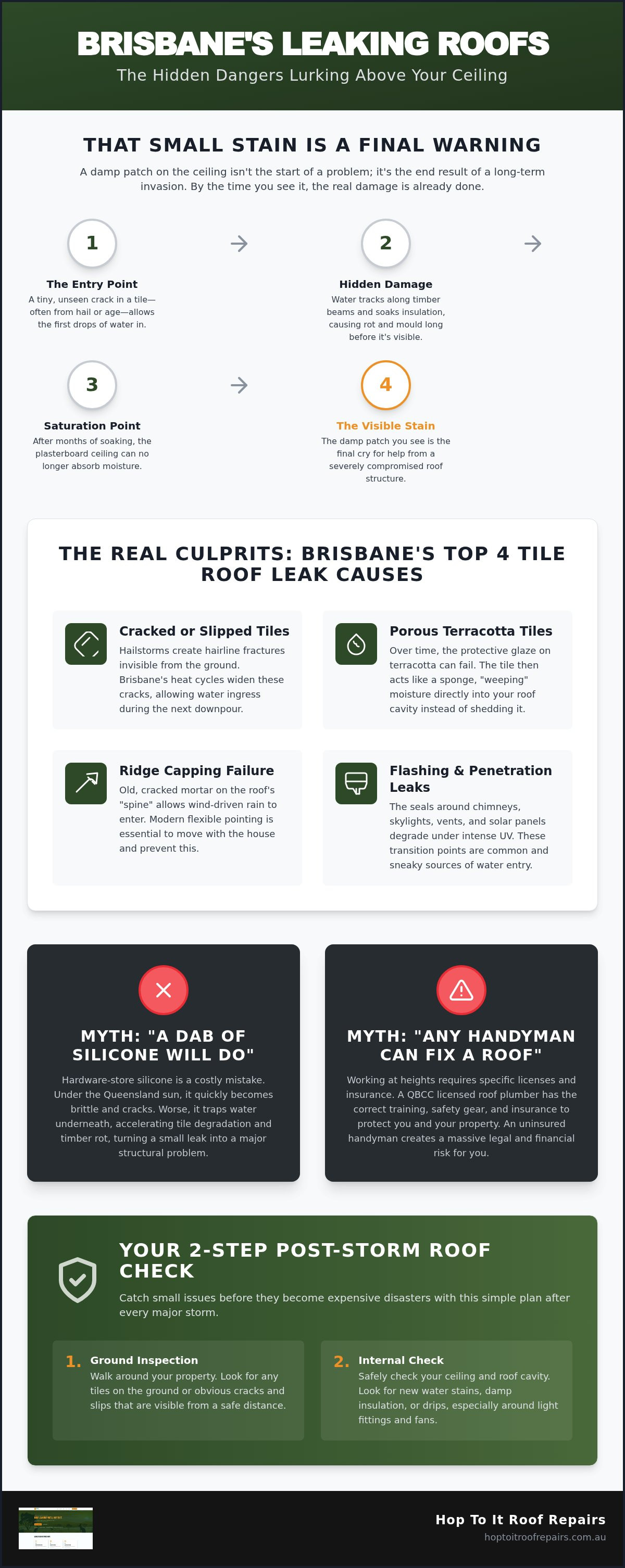
- Learn why a ceiling stain is actually the final warning sign of a long-term problem rather than a new issue.
- Understand the most common tile roof leak causes Brisbane homes face, from hailstorm damage to the "weeping" effect of aging terracotta.
- Discover why hardware-store silicone is a dangerous temporary fix that often causes more structural damage in the Queensland sun.
- Recognise the legal and safety importance of hiring a QBCC licensed roof plumber instead of an uninsured handyman for heights work.
- Get a clear, two-step plan for monitoring your roof after storms to catch small issues before they become expensive disasters.
Myth #1: "If the Ceiling Isn’t Dripping, the Leak Isn’t Urgent"
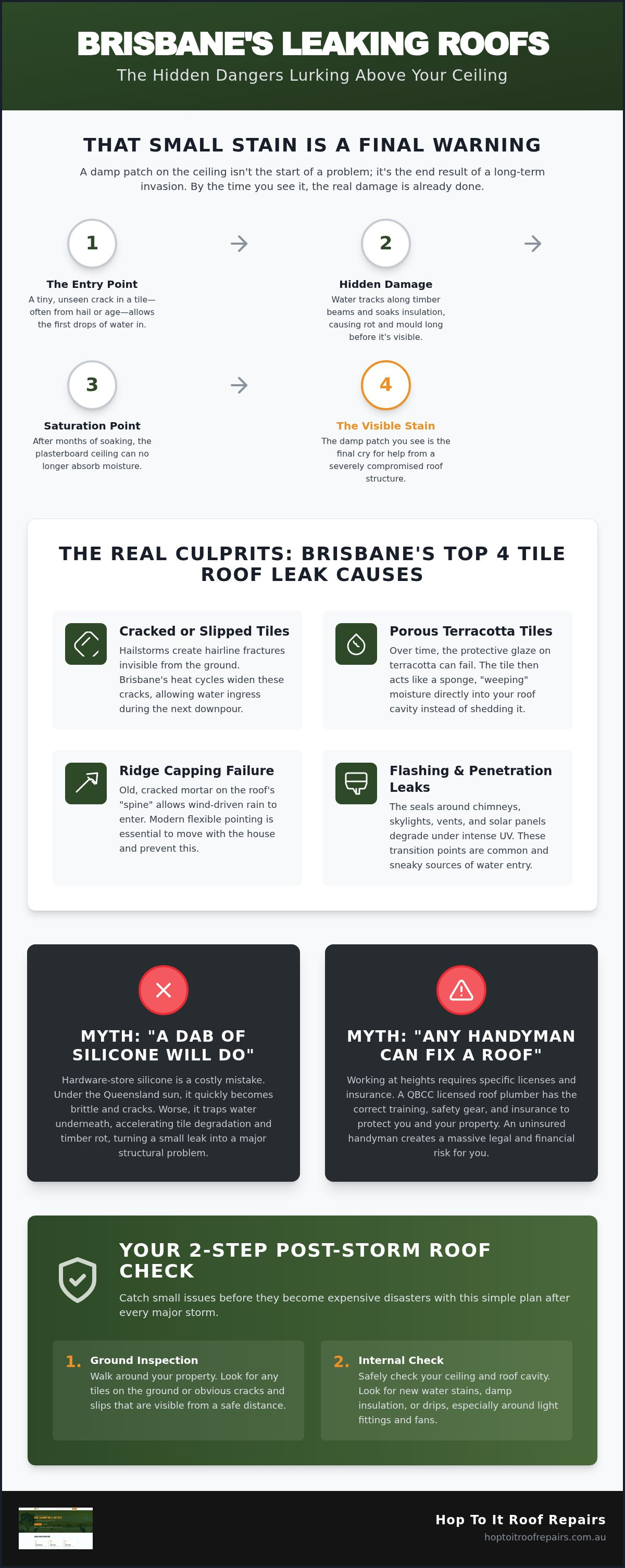
Waiting for a physical drip before calling a roofer is a mistake that costs thousands. Many homeowners assume a small brown patch on the plaster is merely a cosmetic issue that can wait until the next renovation. In reality, a ceiling stain is the final stage of a leak that has likely existed for months. By the time moisture penetrates the plasterboard, the internal environment of your roof cavity has already changed for the worse.
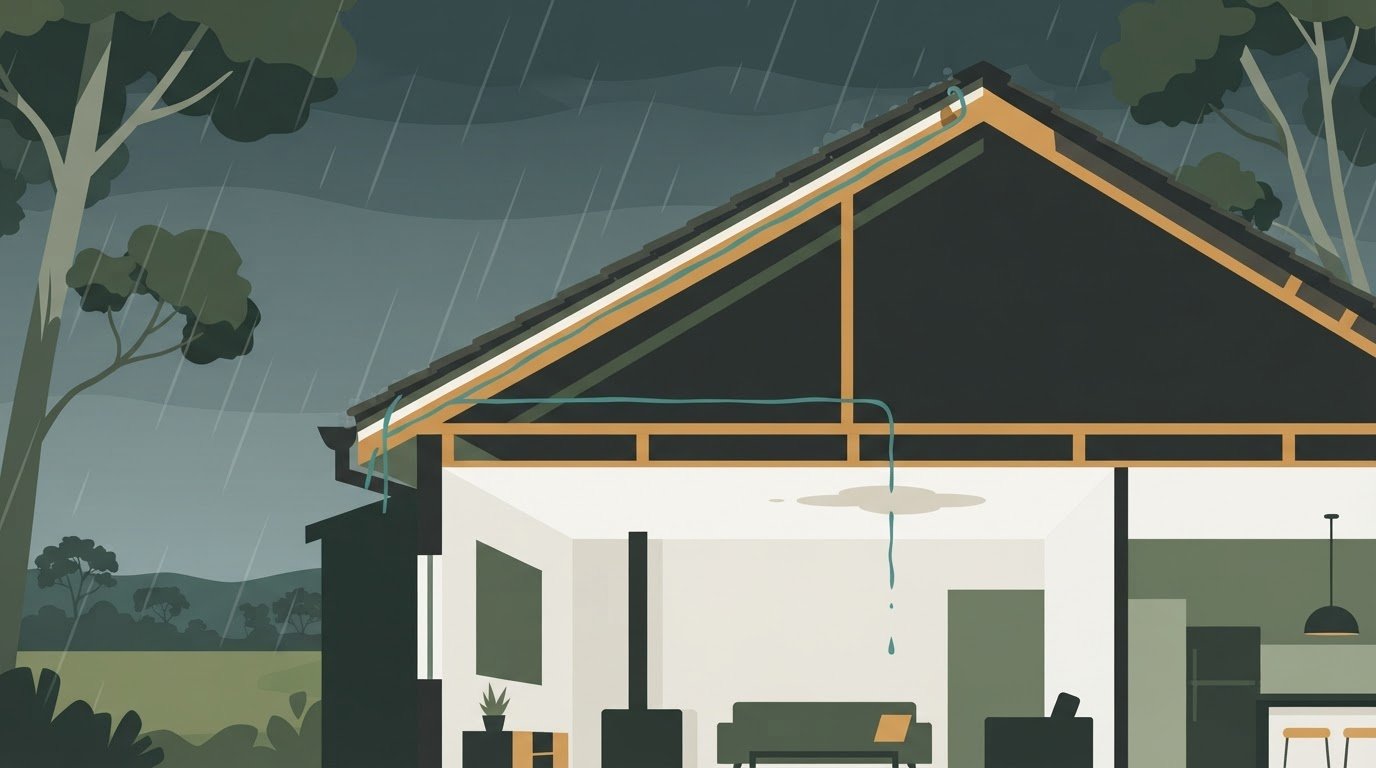
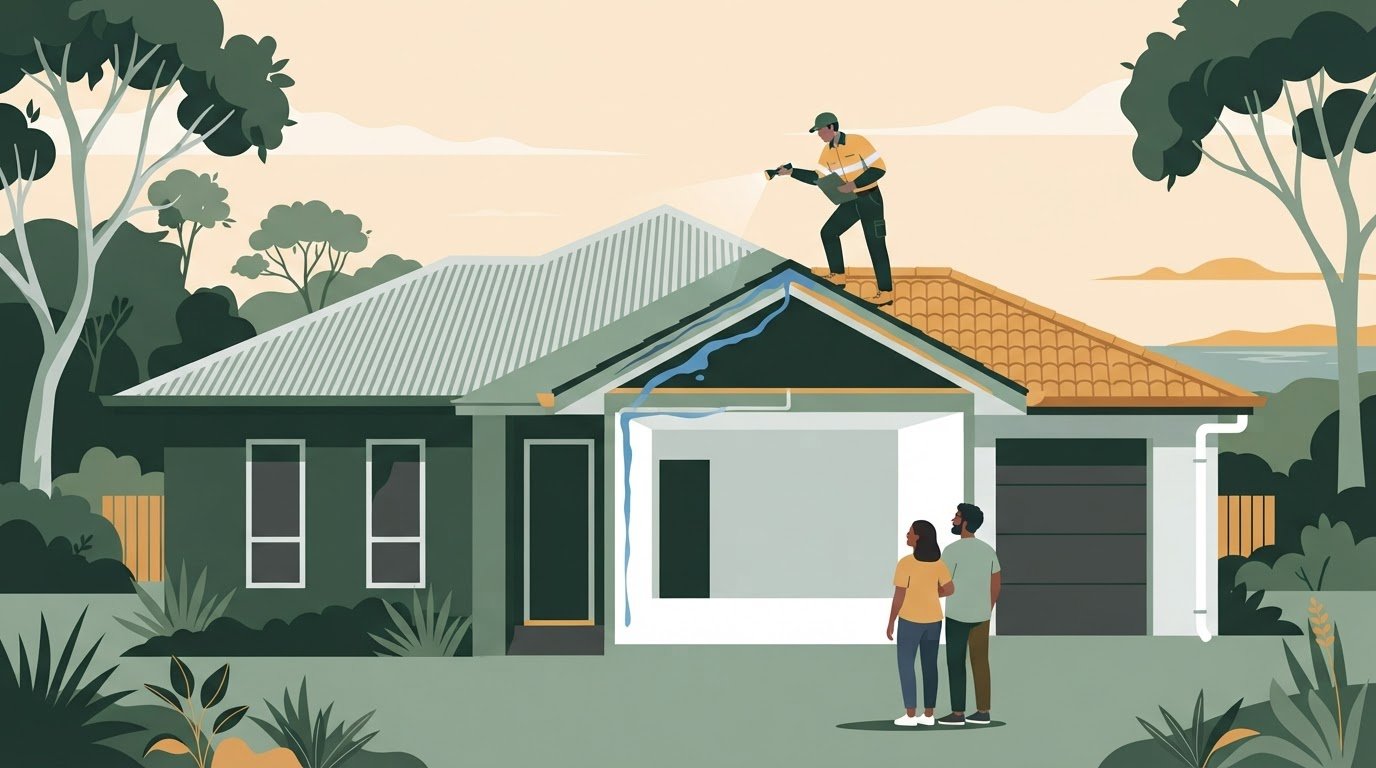
Water tracking is the path water travels from the entry point to the visible ceiling stain. Because water follows gravity along the easiest route, the actual hole in your roof is rarely directly above the stain. It might be three metres away, where a cracked tile allows water to run down a rafter before finally dripping onto your ceiling. Identifying common tile roof leak causes Brisbane residents overlook requires understanding this hidden journey. If you ignore the stain because it isn't "dripping" yet, you're giving the water more time to find new paths through your home's structure.
The Hidden Dangers of Slow Water Ingress
A slow, consistent leak is often more destructive than a major burst during a storm. Your roof tiles are incredibly heavy; they rely on solid timber battens for support. When water tracks along these battens, it causes structural rot that compromises the entire roof's weight-bearing capacity. Consider these specific risks:
- Structural rot: Damp timber softens and warps, eventually requiring expensive structural replacement rather than a simple tile fix.
- Insulation saturation: Wet insulation loses its R-value immediately. This ruins your home’s thermal efficiency and causes your air conditioning bills to skyrocket.
- Electrical safety: Water naturally gravitates toward ceiling penetrations, such as light fittings or fans, creating a genuine fire hazard or the risk of a short circuit.
Why Brisbane’s Climate Worsens "Minor" Leaks
Brisbane’s weather is particularly unforgiving on compromised tile roofs. We experience a brutal cycle of intense UV heat followed by sudden tropical downpours. This causes roofing materials to expand and contract rapidly, widening small cracks in seconds. Trapped moisture in a humid roof space also creates "attic rain," where condensation forms on the underside of tiles and drips everywhere, even when it isn't raining outside. This high-humidity environment is a perfect breeding ground for mould. Waiting for the next storm to see if the leak persists usually doubles the eventual repair bill as the damage spreads from a single tile to the timber and electrical systems below.
The Real Culprits: Common Tile Roof Leak Causes in Brisbane
Brisbane’s storm season is the ultimate stress test for any home. Most leaks aren't random accidents; they are the result of specific material failures or environmental impacts that occur over time. Cracked or slipped concrete tiles are the primary issue we see after a typical South East Queensland hailstorm. Even a small piece of hail can create a hairline fracture that remains invisible from the ground. Over several months, the cycle of heating and cooling widens these cracks until the next downpour finds a way in.
Terracotta tiles face a different challenge. While they are known for their longevity, they can eventually become porous if the protective glaze fails. This leads to the tile "weeping" moisture. Instead of shedding water into the gutters, the tile absorbs it like a sponge, allowing dampness to seep into the roof cavity. Identifying these common tile roof leak causes Brisbane homeowners often miss requires a technical eye and an understanding of how different materials age in our sub-tropical climate.
Ridge Capping and Pointing Failures
Ridge capping is the spine of your roof, and the mortar holding it together is often the weakest link. Traditional roofs used a simple sand and cement bedding, which is prone to cracking as the house settles. Modern standards require flexible pointing, a polymer-based compound that moves with your home. If your pointing is cracked or falling out, wind-driven rain can easily enter the roof apex. We also frequently find that "weep holes" are either missing or blocked. These small gaps are essential; they allow moisture trapped behind the ridge to drain safely onto the tiles. Without them, water builds up and eventually spills over the internal top-edge of the tile.
Flashing and Penetration Leaks
Waterproofing a roof isn't just about the tiles; it’s about the transitions. Flashing is the metal or lead shielding used around chimneys, skylights, and vent pipes. In Brisbane, the intense UV exposure can cause lead flashing to crack or sealants to dry out and pull away. We also see a recurring issue known as the "solar panel effect." During solar installations, technicians may inadvertently crack tiles while walking on them or fix frames in a way that creates a water trap.
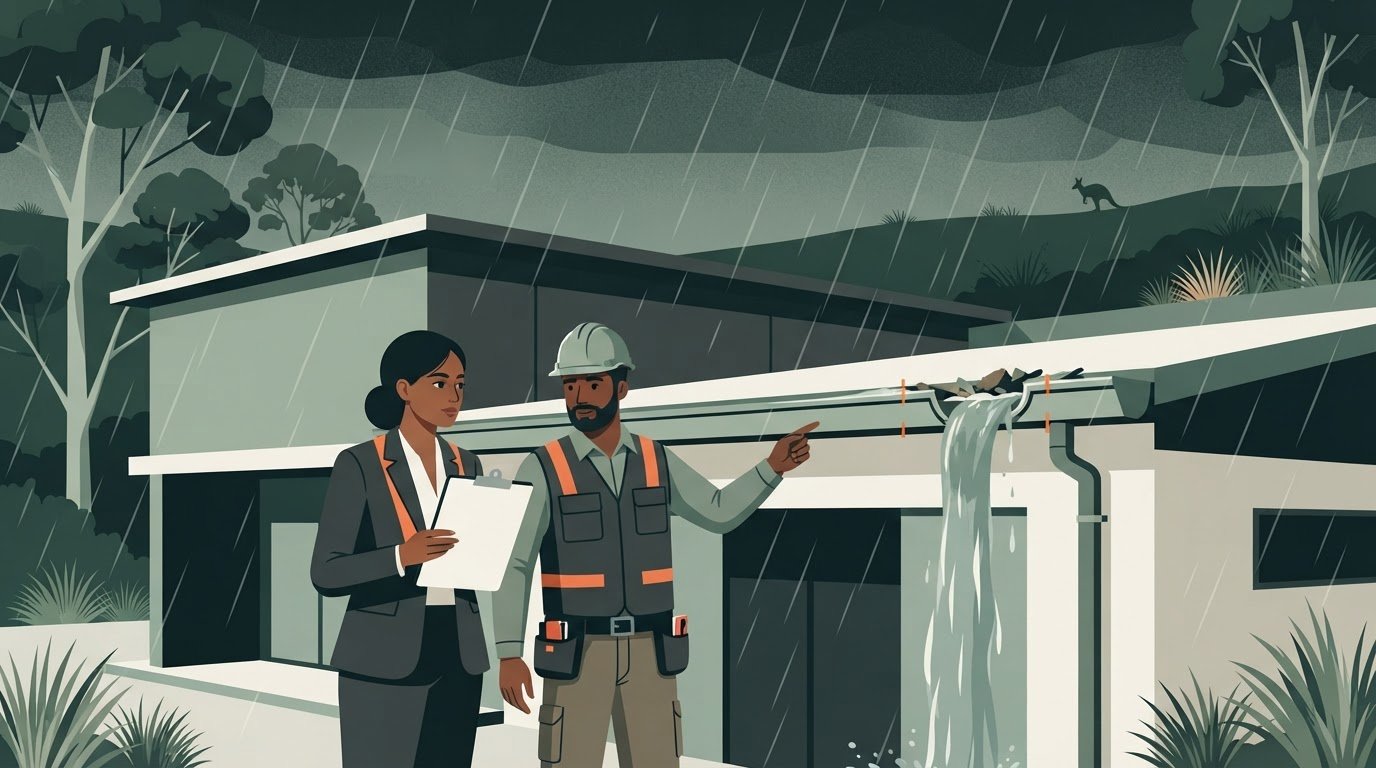
Valley trays are another critical area. These metal channels act as the motorways for your roof's drainage. If they become blocked with leaf litter or debris, the water has nowhere to go but sideways, forcing it under the tiles and into your eaves. If you suspect your valleys are overflowing, getting a professional tile roof repair assessment can prevent a minor blockage from turning into a major internal disaster. Clear valleys and intact flashings are your best defence against the heaviest summer deluges.
Myth #2: "A Quick Dab of Silicone Will Fix a Leaking Tile"
Silicone is often the first thing people reach for when they spot a crack. It’s cheap, accessible, and seems like a logical fix. However, in the context of common tile roof leak causes Brisbane homes endure, silicone is often the culprit behind secondary damage. It acts as a temporary bandage that hides the problem rather than solving it. Because silicone doesn't bond permanently to dusty, porous tiles or old mortar, it eventually peels away, creating a pocket where water sits. This trapped moisture rots the timber battens underneath, turning a simple tile replacement into a structural repair job.
Queensland’s intense UV radiation is the primary enemy of the DIY patch. Standard hardware-store sealants aren't designed to withstand 35-degree summer days followed by sudden tropical downpours. The heat causes the tiles to expand, stretching the silicone until the seal "pops." Once that seal is broken, capillary action pulls water into the roof cavity with surprising force. Professional repairs involve replacing the damaged component entirely, ensuring the roof's natural drainage system remains unblocked and functional.
Why DIY Patches Fail in Queensland Storms
Heavy Brisbane rainfall creates significant hydrostatic pressure. During a storm, water doesn't just sit on your roof; it's pushed by wind and gravity into every available gap. If you’ve used excessive sealant, you might accidentally block the tile’s natural watercourse. This creates a "dam" effect. Instead of the water flowing down into the gutter, it backs up and spills over the side of the tile, directly onto your ceiling insulation. We frequently see DIY repairs where the homeowner has inadvertently diverted a minor leak into a major internal flood by blocking these essential drainage paths.
The Right Way to Repair Tile Damage
A professional repair focuses on restoration, not just concealment. If a tile is cracked, the only permanent solution is a full replacement. We ensure the new tile matches your existing profile exactly. This is critical because the interlock between tiles is what keeps your roof watertight. If the profiles don't match, the tiles won't sit flush, leaving your home vulnerable to wind-driven rain. For larger areas of damage, re-bedding and re-pointing with flexible compounds provide the structural integrity required to handle house movement. To get a clear picture of what's actually happening under your tiles, start with Professional Roof Leak Detection Brisbane. We find the source of the ingress so you don't waste time and money on patches that are destined to fail.
Myth #3: "Any Handyman Can Repair a Tile Roof Leak"
Hiring a general handyman for your roof might seem like a budget-friendly move, but it often backfires. A tile roof isn't just a collection of heavy plates; it is a complex hydraulic system. While a handyman might be able to swap a visible broken tile, they often lack the technical training to understand the common tile roof leak causes Brisbane homes face. Without a deep understanding of water flow and pressure, an amateur "fix" can inadvertently trap moisture against your timber rafters, leading to the structural rot we discussed earlier.
There is also a significant legal and financial risk. In Queensland, roof plumbing is a specialised trade regulated by the Queensland Building and Construction Commission (QBCC). Unlicenced repairs can void your home insurance policy. If a storm hits and the insurer discovers the previous repair was done by an unlicenced worker, they have grounds to reject your claim. Most handymen also carry general liability insurance that excludes work at heights, leaving you personally liable if an accident occurs on your property.
The Importance of a QBCC Licensed Roof Plumber
A licensed roof plumber brings a level of expertise that a general builder or handyman simply doesn't have. They understand the physics of water drainage, including how pitch, valley width, and gutter capacity work together. This technical knowledge is vital for identifying the root cause of a leak rather than just treating the symptom. When you hire a professional, you are also legally entitled to a workmanship warranty. This provides long-term protection that a "cash-in-hand" handyman cannot offer. Always verify a contractor’s licence on the QBCC website before they step foot on your ladder.
Detailed Reports vs. "Trust Me" Quotes
Transparency is the foundation of a reliable repair. You should never accept a verbal quote that lacks specific details. A professional service provides a written report with dated photographic evidence of the damage. This documentation is essential for insurance purposes and ensures you aren't being overcharged for unnecessary work. At Hop To It Roof Repairs, we prioritise evidence-based reporting. We provide fixed-price quotes so you know exactly what the job costs before we begin. If you want a solution that actually stops the water, book a professional tile roof repair and get the peace of mind you deserve.
Protecting Your Brisbane Home from Tile Roof Leaks
Protecting your home from water damage isn't a matter of luck; it’s about establishing a proactive maintenance routine. While we have already explored the common tile roof leak causes Brisbane homeowners encounter, knowing how to mitigate these risks is your best defence. Follow these four steps to secure your property before the next big cell rolls in from the west. This simple process removes the guesswork and ensures your roof performs as designed during the heaviest tropical downpours.
- Step 1: Conduct a visual ground-level inspection after every major storm. You don't need to climb a ladder; a simple scan with binoculars can reveal slipped tiles or hail-damaged sections that require immediate attention.
- Step 2: Clear your gutters and downpipes regularly. If water cannot exit the roof system rapidly, it will seek the path of least resistance, which usually leads directly into your eaves and ceiling space.
- Step 3: Book a professional leak detection service if you see internal stains. Even a faint discolouration on the plaster indicates that water has already bypassed your primary defences.
- Step 4: Review the evidence-based written report provided by your contractor. Always opt for permanent component replacement over temporary patches to ensure long-term structural integrity.
Storm Season Preparation for Brisbane Homeowners
November marks the start of the heavy storm season in South East Queensland. Before the first cell hits, check your ridge capping for visible cracks and inspect valley trays for leaf litter from overhanging Gum trees. These native trees are notorious for clogging drainage channels and forcing water under your tiles. If a leak occurs during a severe weather event, an Emergency Temporary Make-Safe provides immediate protection until a permanent repair can be safely completed.
The Hop To It Difference: Fixed Price and Peace of Mind
We use specialised leak detection to find the exact entry point, not just the stain. Identifying the common tile roof leak causes Brisbane properties face requires the technical expertise of a QBCC licensed roof plumber. Every repair we perform comes with a workmanship warranty and a detailed report for your records. Contact Hop To It Roof Repairs for a fixed-price quote today and secure your home with total confidence.
Secure Your Roof Before the Next Brisbane Storm
Stop treating symptoms and start addressing the structural reality of your roof. We’ve debunked the myths that keep homes vulnerable; from the danger of "quick-fix" silicone to the legal risks of unlicenced repairs. Understanding the common tile roof leak causes Brisbane residents face is the first step toward long-term security. Whether it’s porous terracotta tiles or failed ridge capping, a professional approach ensures the water stays outside where it belongs. You shouldn't have to worry every time a storm cell develops over the horizon.
Don't let a minor ceiling stain turn into a structural disaster. Our team of QBCC Licensed Specialists provides detailed written reports with photos and a workmanship warranty on every job. You deserve transparency and a fix that actually lasts through the summer. Stop your roof leak now with a fixed-price quote from Hop To It Roof Repairs. It’s time to regain your peace of mind and protect your most valuable asset from the unpredictable South East Queensland elements. We are ready to help you get it right the first time.
Frequently Asked Questions
Why is my tile roof leaking only during heavy rain?
Heavy rain creates a volume of water that overwhelms minor defects in your roof's drainage system. When gutters or valley trays are blocked with leaf litter, the water backs up and spills over the internal edge of the tile. Similarly, high-pressure wind can force rain upward under the tile laps during a severe storm cell. These common tile roof leak causes Brisbane residents notice often point to drainage failures rather than just broken tiles.
How much does it cost to fix a leaking tile roof in Brisbane?
Repair costs vary based on the height of the building, the type of tile, and the extent of the damage. A simple tile replacement is far more affordable than a full re-bedding of the ridge capping. To ensure transparency, always request a fixed-price quote after a professional inspection. This avoids the risk of hidden costs once the work on your roof begins, providing you with financial certainty before any tools are lifted.
Can I walk on my tile roof to find the leak myself?
Walking on your roof is dangerous and often causes more damage than the original leak. Concrete and terracotta tiles become brittle with age; an untrained step can easily crack multiple tiles, creating new entry points for water. Professional roof plumbers use specific weight-distribution techniques and safety harnesses to navigate the surface safely. It is always better to conduct a visual inspection from ground level using binoculars before calling a licensed specialist.
Does home insurance cover tile roof leak repairs?
Most insurance policies cover "resultant damage," such as a collapsed ceiling or ruined carpet, but they rarely cover the repair of the roof itself. Insurers view roof maintenance, like replacing cracked tiles or re-pointing ridge capping, as the homeowner's responsibility. If a leak is caused by a sudden, definable event like a hailstorm, you may be covered. Check your specific Product Disclosure Statement for details on maintenance requirements and event-based coverage.
How do I know if my ridge capping needs re-pointing?
Inspect the mortar lines along the peaks of your roof for visible cracks or missing chunks. If you find pieces of cement in your gutters or on the ground after rain, your bedding is likely failing. Modern flexible pointing should look smooth and adhere tightly to the tile. Any gaps allow wind-driven rain to enter the roof apex, which is one of the common tile roof leak causes Brisbane storms exploit during the summer months.
What is the difference between a roof repair and a roof restoration?
A roof repair is a targeted fix designed to stop an active leak, such as replacing a broken tile or fixing a flashing. A roof restoration is a comprehensive overhaul that usually involves high-pressure cleaning, full re-pointing, and painting the entire surface. While restoration improves street appeal and aesthetics, a targeted repair is often the most efficient and cost-effective way to address specific water ingress issues and protect your home's structural integrity.
How long do concrete roof tiles typically last in Brisbane?
Concrete tiles are designed to last 50 years or more, but the components holding them together have a shorter lifespan. In Brisbane’s harsh climate, the mortar bedding and flexible pointing typically require attention every 10 to 15 years. While the tiles themselves remain structurally sound, the sealant and flashings around penetrations often dry out and fail much sooner due to intense UV exposure and the constant thermal movement of the building.
What should I do if my roof starts leaking in the middle of a storm?
Prioritise safety and stay off the roof during active rain. Place a bucket under the leak and move furniture or electronics away from the area to minimise damage. If the ceiling starts to bulge, you may need to carefully poke a small hole to drain the water and prevent a plaster collapse. Once the storm passes, contact a professional for an Emergency Temporary Make-Safe to prevent further internal damage until a permanent repair is possible.